


Why I stopped reading journalism—and what I learned when I started again
Sydney Jansen

Listen on Spotify
Listen on Apple Music
Listen on YouTube
Want to hear the full interviews? Click here
I can demolish a 600-page fantasy novel in five days. Dragons, court intrigue, enemies-to-lovers subplots — hand me that book on a Monday and I'll finish it before Friday, eyes burning at 2 a.m., unable to stop turning pages. I read the entire “Fourth Wing” series in two weeks. I devoured “Beach Read” and everything else Emily Henry has ever written so fast that I had to reread passages to make sure I didn't miss anything.
But I cannot finish a 3,000-word investigative piece.
Not even when it's about true crime. Not even when it's about something that happened at my university. Not even when it's the kind of story I theoretically care about. Last month, I opened an article about a serial killer — 9,000 words, meticulously reported, published in a reputable publication. I read the first two paragraphs. A notification pinged. I checked my phone. I opened another tab. I closed the article. Three days later, I still haven't returned to it.
But I can listen to a podcast about the same topic for an hour straight.
This contradiction has haunted me, especially since I decided to spend my senior capstone defending the thing I can't seem to read: longform journalism.
I'm 22. I'm a journalism student who doesn't read journalism. The math doesn't work. Or maybe it does — and that's precisely the problem.


The Crisis Everyone Gets Wrong
The standard narrative is familiar: Gen Z has the attention span of a goldfish. TikTok destroyed our brains. They want bite-sized content, quick dopamine hits, shallow engagement. They can't focus on anything longer than a tweet. Longform journalism is dying because readers like me are broken.
Except I'm not broken. I'm not short on attention. I'm short on something else: a reason to care.
That's the distinction nobody makes. And I think it matters.
When I started this capstone in August, I was supposed to investigate why longform journalism is struggling in the digital age. I gathered the standard hypotheses — algorithm-driven feeds, mobile-first reading, the rise of short-form video, the economic collapse of newsrooms. But mostly, I wanted to understand why I felt like a traitor: a journalism student who loved reading but couldn't force herself to read journalism.


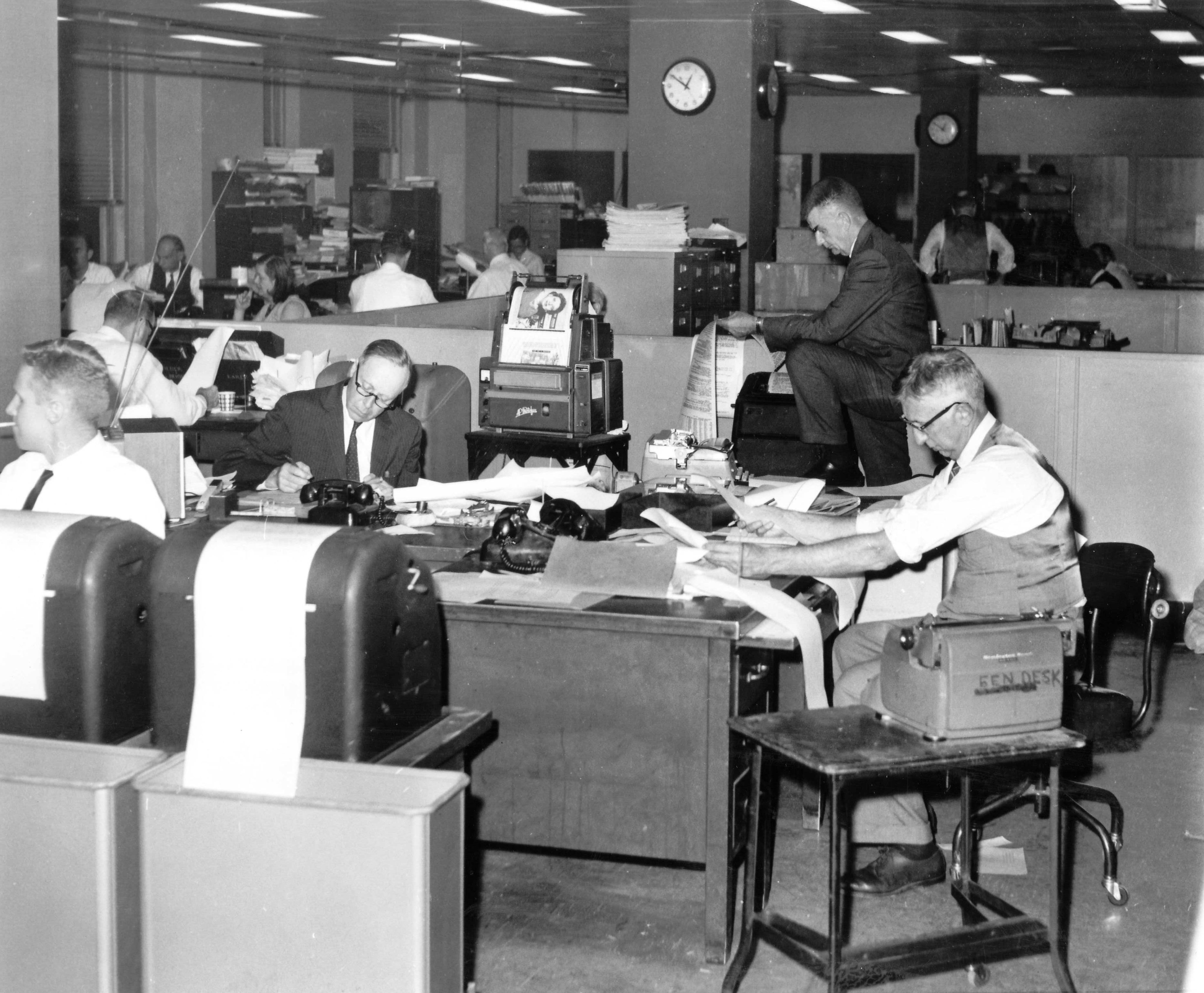
A general view of the Associated Press bureau in Chicago, I.L., taken August 1958. (AP Photo/AP Corporate Archives)
A general view of the Associated Press bureau in Chicago, I.L., taken August 1958. (AP Photo/AP Corporate Archives)
So I did what journalism students do. I interviewed the masters. Skip Hollandsworth has been at Texas Monthly for 36 years, writing crime stories that have become movies. Jerry Mitchell leads the investigative team at Mississippi Today, known for his work on civil rights cold cases. Ross McCammon is the editor-in-chief of Texas Monthly, who spent two decades at the most prestigious magazines in New York. Mark Horvit, a current professor of journalism at the University of Missouri and previous executive director of Investigative Reporters and Editors. Roxanna Asgarian is a freelance investigative journalist who writes about the criminal justice system and child welfare.
I expected them to tell me that longform was dying. Instead, they told me something far more interesting: longform isn't dying. It’s loved by many, but it's also being strangled. And the difference matters.
The Hook: What Skip Knows That We Forgot
Skip Hollandsworth grew up in Wichita Falls, the son of a preacher. Piano lessons, Boy Scouts, afternoons at the country club pool. Then one day, an oilman was found murdered in his own bed, his wife shot dead beside him in their heavily guarded estate. Rumors exploded across the town. Then the truth emerged: the wife had shot him, then herself.
Hollandsworth was 16. He couldn't stop thinking about it.
He began swimming slowly past the gossiping ladies at the country club pool, straining to hear their whispered theories. His heart pounded. He'd never even known someone who'd been arrested. The mystery of people who appeared ordinary but "did things so unexpected and so flabbergasting that you couldn't look away" became his life's obsession.
Forty years later, Hollandsworth still carries this compulsion. He's written hundreds of crime stories for Texas Monthly — stories about women who murdered their husbands, about corruption in small Texas towns, about people who crossed invisible lines. But there's something he told me that stuck with me more than any of his stories:
"I still don't know how to do it," he said. "Writing is hard."
Then he told me the one thing that separates the good sentences from the bad ones.
"You have to keep the reader hurtling toward the next paragraph."
I understood that intellectually. But I didn't feel it until I thought about my novels. Every single page of every fantasy book I've loved was structured exactly like this: short chapters that ended on cliffhangers. Information doled out strategically. Tension built deliberately. The writer's entire job was to make me need to turn the page.
Most journalism doesn't do this. Most journalism assumes that being informative is enough. It treats readers like we owe it our attention because the topic is important. But Hollandsworth knows something most journalists have forgotten.
We as readers don't owe anything. You have to earn it.
Chris Tomlinson, columnist for the Houston Chronicle and the author of bestselling books “Tomlinson Hill” and “Forget the Alamo”, put it even more bluntly.
“The reader has one trillion other ways to spend that time. We have to convince them to pay us with their attention — sometimes literally with a subscription, but also emotionally.”
He calls it the “what-the-fuck factor”. Even when writing about policy or money, Tomlinson says, “there’s got to be a narrative arc, a protagonist and an antagonist. Otherwise, readers, even if the topic matters, won’t stick. Without conflict or color, there’s just not enough story for longform.”
Tomlinson also told me, “You have to be authentic and honest. Readers can smell the bullshit. When you’re present as a reporter, if you changed the room just by being there, be honest about it. If you don’t know something, say you don’t.” For him, the best compliment from readers is when someone says a long column “didn’t feel like it.”
When I read a novel, the author makes a deal with me. ‘Stick with me,’ the story says, ‘and I'll take you somewhere you can't look away from.’ Every paragraph, every page, every chapter is part of that bargain. Break it once — spend three pages on boring exposition, lose focus, put me down — and I'm scrolling TikTok instead.
The difference between fiction and journalism, I realized, isn't that fiction is made up and journalism is true. It's that fiction writers know how to make people care. Journalism has forgotten how.

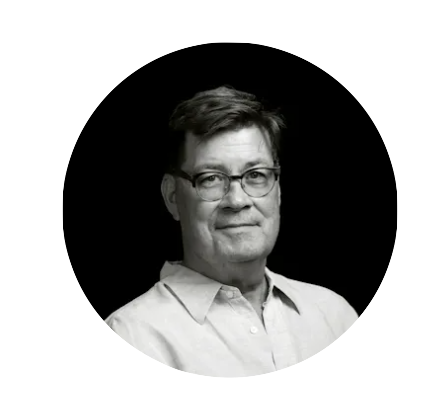
Skip Hollandsworth, staff writer at Texas Monthly specializing in longform narratives. (Courtesy of texasmonthly.com)
Skip Hollandsworth, staff writer at Texas Monthly specializing in longform narratives. (Courtesy of texasmonthly.com)
Skip Hollandsworth, staff writer at Texas Monthly specializing in longform narratives. (Courtesy of texasmonthly.com)
Skip Hollandsworth, staff writer at Texas Monthly specializing in longform narratives. (Courtesy of texasmonthly.com)
Skip Hollandsworth, staff writer at Texas Monthly specializing in longform narratives. (Courtesy of texasmonthly.com)
Skip Hollandsworth, staff writer at Texas Monthly specializing in longform narratives. (Courtesy of texasmonthly.com)


Chris Tomlinson, business columnist at the Houston Chronicle. (Courtesy of the Houston Chronicle)
Chris Tomlinson, business columnist at the Houston Chronicle. (Courtesy of the Houston Chronicle)
The Structure: What Jerry Knows About Tension


Jerry Mitchell, senior investigative reporter at Mississippi Today (Courtesy of Mississippi Today)
Jerry Mitchell, senior investigative reporter at Mississippi Today (Courtesy of Mississippi Today)
Jerry Mitchell became obsessed with stories as a grad student at Ohio State. In a literary journalism class, he discovered writers like Joan Didion and Eric Larson. He learned about something called "the uninterrupted dream" — John Gardner's concept of keeping readers so entranced in a narrative that they don't notice the real world around them.
"You want to keep people connected into that narrative," Mitchell told me. "It's like a movie playing out in their heads."
This is exactly how I feel when I'm reading those 600-page novels. I'm inside someone else's consciousness, living in their story so completely that reality fades. Time dissolves. My phone could blow up and I wouldn't notice until chapter's end.
Mitchell is most known for his novel “Race Against Time”, a detailed recollection of his efforts to reopen civil rights cases. His work significantly contributed to bringing justice to notorious murders, such as the assassination of Medgar Evers and the Birmingham church bombing. There’s even a movie titled “Ghosts of Mississippi” starring Alec Baldwin, James Woods and Whoopi Goldberg about the Evers case. Mitchell is played by Jerry Levine, director of TV shows like “Hawaii Five-0” and “Elementary”.

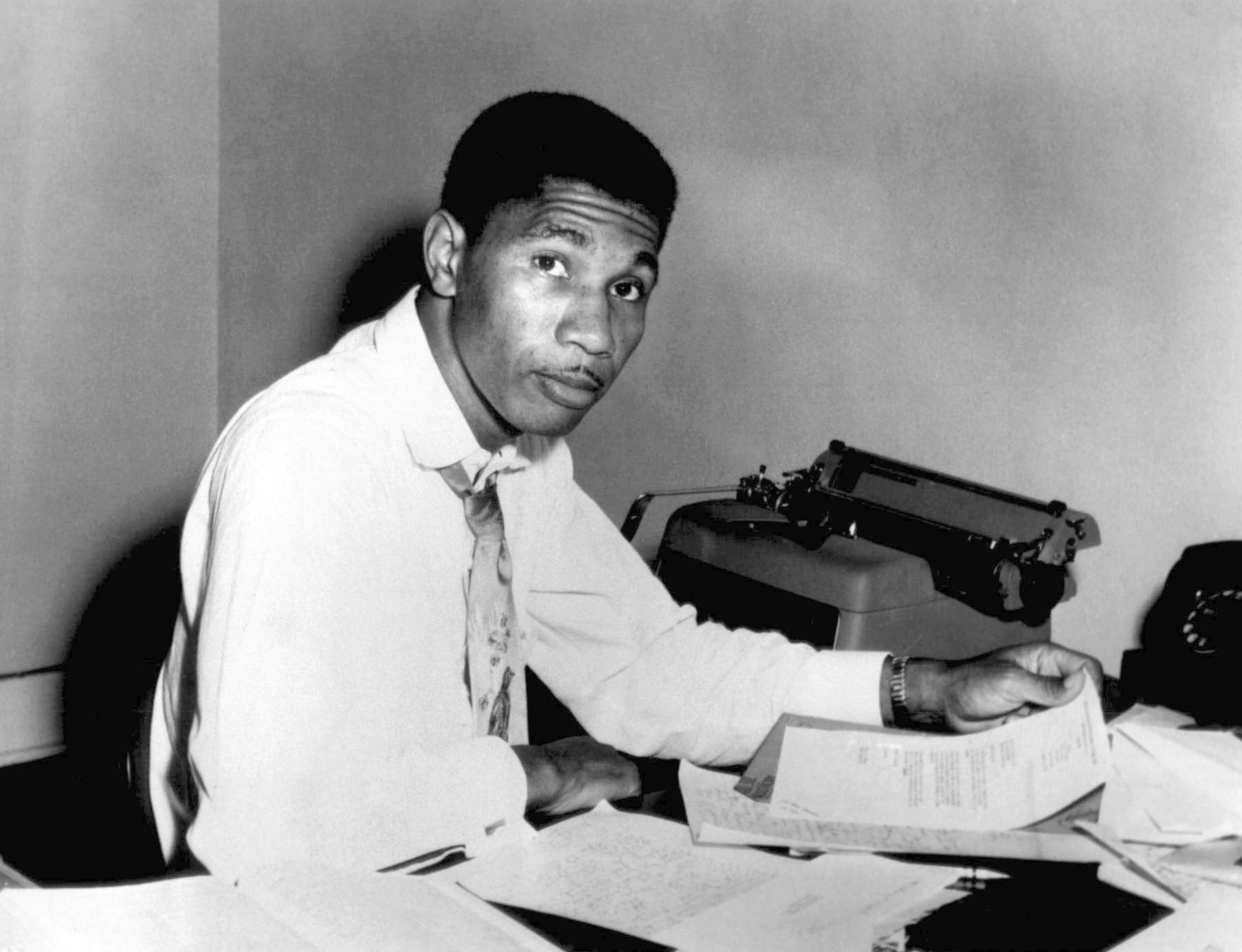
Medgar Evers, Mississippi field secretary for the National Association for the Advancement of Colored People (NAACP), poses for a photo, Aug. 9, 1955, in Jackson, Miss. (AP Photo, File)
Medgar Evers, Mississippi field secretary for the National Association for the Advancement of Colored People (NAACP), poses for a photo, Aug. 9, 1955, in Jackson, Miss. (AP Photo, File)
Mitchell discovered the power of this when he started writing serialized narratives — stories broken into chapters that ran for days. For one series called The Preacher and the Klansman, the Clarion-Ledger, a newspaper in Jackson, Mississippi, carved out space on the editorial page for 13 consecutive days. Each section was more than 1,000 words. Each day, the story continued.
For another series Mitchell wrote, a woman subscriber of the Clarion-Ledger, later told Mitchell she woke up at 5:30 a.m. waiting for the paper to hit her driveway so she could find out if Mitchell had a genetic disease running in his family. She wasn't forced to care about Jerry's family medical history. The story made her care so much that she rearranged her morning around discovering what happened next.
That's the power of structure.
But here's what Mitchell also noticed: structure doesn't work if you interrupt it. He worries about all the multimedia embedded in digital stories — the videos that pop up, the ads that slide in, the related articles that tempt you away. Gardner's "uninterrupted dream" requires exactly that: no interruption.
"I always worry," Mitchell said, "that you're gonna go down this rabbit hole. Oh, there's a YouTube video. Let me click on this. And the next thing you know, you've been there two hours."
Mitchell ends each chapter on tension, not resolution. He ends on a note that pulls you forward. Mitchell wrote about James Meredith a narrative titled “The Last Days of Ben Chester White”. Meredith is a civil rights activist who was shot on June 6, 1966 during his march through Mississippi. In Mitchell’s article, he embedded the AP's initial mistaken report that Meredith had died. Readers wouldn't know until later that he'd survived. Mitchell left them hanging, desperate to keep reading, needing to know what happened.
"It's almost like a musical scale," he said. "You don't end on a finishing note. You end in a way that creates tension or drama or a setback. So people are going like, 'Wait a minute. I've got to keep reading.'"
That's a technique that predates the internet by centuries. But journalism has mostly abandoned it in favor of the inverted pyramid — put the most important information first, then trail off into less important details that readers will never reach.
I've read both structures. The inverted pyramid puts me to sleep. The narrative arc that ends in tension makes me physically unable to stop.
The Caring Problem: What Roxanna Knows About Stakes
Roxanna Asgarian has been a freelance journalist for 15 years. She writes about the criminal justice system and child welfare.
When I asked her about the economics of freelance writing, her answer was brutal. "$6,000 for a 6,000-word story," she told me. "I worked on it for a year and a half."
That's four dollars an hour, if you do the math. But Asgarian doesn't dwell on the money (though she probably should). Instead, she talked about something that resonated more deeply: she spent 18 months reporting because she knows that raw information isn't enough. You can tell people about systemic injustice until you're blue in the face. They'll nod and scroll past.
But give them one specific person — one wrongfully incarcerated man counting days in a cell, one mother separated from her child — and suddenly it's unbearable. That’s what’s called an anecdotal lede.
"The work has to be a banger," she said. "Because there's no room for merely good anymore."
She said it best and I understood why I don't read most journalism articles. Most articles aren't bangers. They're competent. Well-researched. Accurate. But they don't make me feel anything except a vague sense of obligation.
My fantasy novels, though? Those are bangers. They create characters I love or love to hate. They build worlds I want to inhabit. They embed me in someone else's consciousness so thoroughly that I forget where I end and the story begins.
Asgarian knows that real journalism can do this, too. She spent those 18 months finding the human details that transform an abstract problem into something visceral. She's not just writing about the criminal justice system. She's writing about Margaret's hands shaking as she testifies, or Tommy's voice breaking when he talks about the years he lost.
That specificity is what turns "systemic injustice" into a reason to sit with a story for an hour. That's what makes you care.
The economics of longform journalism isn't just a freelancer problem. The whole industry is struggling.
Don Van Natta spent 16 years at the New York Times, won three Pulitzer Prizes, and now works at ESPN. He's watched the collapse firsthand. Van Natta has watched this transformation firsthand: “There’s far less [longform journalism] than when I started. The Miami Herald used to have a Sunday circulation of 700,000 or 800,000. Now it’s 20,000.” Even as local news contracts, Van Natta adds, “there’s less, but there’s still quite a bit, which is a good thing. There’s still a need.”
“I’m cognizant of attention spans shrinking, not just for young people but for everyone. But if the story is compelling enough, younger readers will find it and read it. That’s the hope,” Van Natta said. His 4,000-word exposé on Dan Snyder, for example, “got millions of hits.” “I heard from lots of young people that read the story. The Commanders fans loved it.”
A circulation that plummeted from 700,000 to 20,000 raises the question. What caused this massive drop in readership? The audience didn't disappear. The business model did. When the business model collapsed, newsrooms made a choice: cut staff, hire freelancers, chase clicks instead of craft. The bar for "good enough" disappeared. Now it's either a banger or nothing.

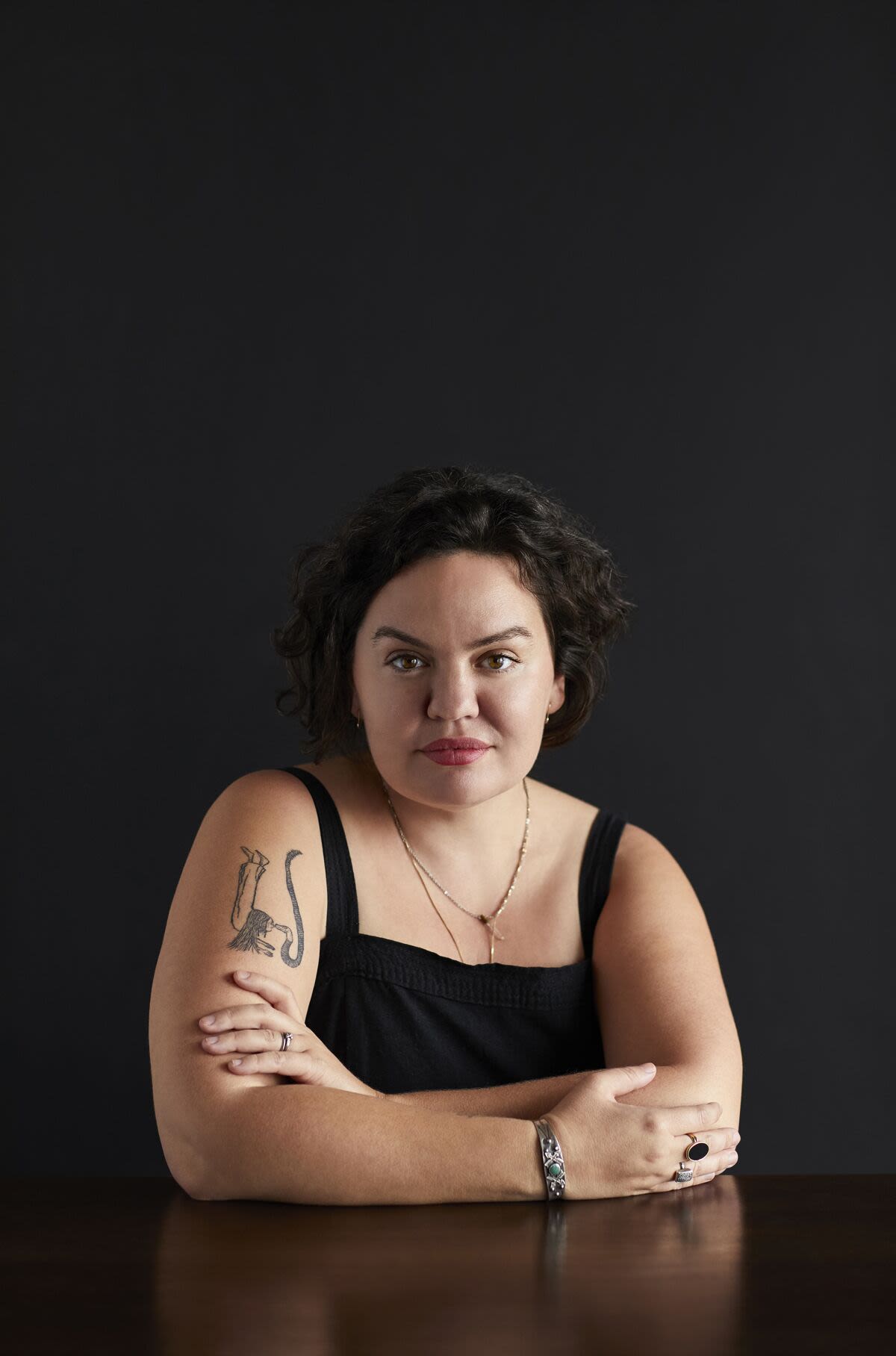
Roxanna Asgarian, freelance investigative journalist. (Courtesy of latimes.com)
Roxanna Asgarian, freelance investigative journalist. (Courtesy of latimes.com)
Roxanna Asgarian, freelance investigative journalist. (Courtesy of latimes.com)
Roxanna Asgarian, freelance investigative journalist. (Courtesy of latimes.com)


Don Van Natta, investigative reporter at ESPN. (Courtesy of espnpressroom.com)
Don Van Natta, investigative reporter at ESPN. (Courtesy of espnpressroom.com)
The Foundation: What Mark Teaches About Endurance


Mark Horvit, journalism professor and chair of Journalism Professions Faculty at the University of Missouri (Courtesy of the Missouri School of Journalism)
Mark Horvit, journalism professor and chair of Journalism Professions Faculty at the University of Missouri (Courtesy of the Missouri School of Journalism)
Mark Horvit has spent decades in the field — first as an investigative reporter and editor for major Texas newspapers, then as executive director of Investigative Reporters and Editors, and now as a professor at the Missouri School of Journalism. If anyone knows how longform has changed — and how it hasn’t — it’s Horvit.
When I asked Horvit what defines longform journalism today, his response surprised me: “I wouldn’t define it any differently than when I started. It’s a story you’ve taken time to report, that takes time for the audience to consume.” For Horvit, the essence of longform is the depth — both of the reporting and the engagement it asks of readers or listeners. “What’s changed is everything around the story: the platforms, the tools, the technology. But the core? That’s still craft.”
He’s quick to push back against nostalgia for a time when “everyone read 3,000-word stories.” In reality, Horvit said, most readers have always bailed partway through. “People say attention spans are short now. That’s probably true, but it’s always been true. The longform stuff was always for a portion of the audience who wanted it — often a small minority. And that’s okay, as long as it’s the group that needs or values it.”
At Missouri, Horvit teaches investigative journalism “in a totally platform-agnostic way.” His students turn in text, video, podcast, or interactive projects — sometimes all at once. “Reporting is reporting, and the skills haven’t changed. How you present it — well, that’s constantly changing. You can’t just spew facts for column after column and expect people to stick. It’s on us to use whatever platforms help the story find an audience: photos, video, audio, graphics, even VR if it fits.”
The heart of his teaching for young journalists? “Get good at the basics: find the information, conduct interviews that get answers, organize your thoughts, and communicate what you found. You can’t tell a great longform story if you can’t tell a good short one. The rest is practice, curiosity, and realizing that the storytelling devices that make fiction irresistible — character, scene, color — are what you need to bring to journalism, too.”
As Horvit summed it up: “The way you tell your stories has changed, but the skills you need are the same. You just have to think more creatively about the way you package it and the way you provide it.”
The Adaptation: What Ross Knows About Platforms
Ross McCammon came back to Texas to become editor-in-chief of Texas Monthly. But before that, he worked at the most prestigious magazines in New York for two decades — Esquire, GQ, Men's Health. He watched the business transform from print-first to digital-first, from a few hundred thousand readers to millions chasing clicks.
"The issue for me is not that audiences are not ready to engage with something long and in depth," McCammon told me. "The issue is that we haven't been doing a very good job as an industry of maintaining that tradition."
He wasn't defending old ways. Texas Monthly isn't a magazine that just publishes print. It's a full media operation. The same story can exist as a 13,000-word feature in print, as a five-episode podcast with original scoring, as a 12-minute PBS documentary segment. McCammon described one story about a missing Vietnam airman — reported over months, crafted with the same narrative depth as a novel, then distributed across every platform simultaneously.
"Either you have a great story or you don't," McCammon said. "We're just interested in great stories."
But here's what he also said that most people miss: "I love TikTok. I use TikTok. I'll go home and I'll spend 30 minutes on TikTok as a way to unwind. I also have about seven big fat novels on my nightstand, and I'm not ignoring them. I'm making a decision about reading one or the other, and that's what people do."
This shifted something in my understanding. The problem isn't that I can't choose longform. The problem is that most longform isn't compelling enough to win that choice.
McCammon told me about his early career — 1995, when dial-up was a luxury and the internet wasn't even imagined as a distribution platform. The editors of that era didn't know digital was coming. They just focused on one thing: making each story as undeniably good as possible. Once digital arrived, they already had the muscle memory for quality.
"Every paragraph is a fight for someone's attention," McCammon said. "That's the same as it was in 1955. It's the same as it is in 2025. You have to give people a reason on the sentence level to stick with a story, and they will."
This made me realize something crucial: my fiction novels and the best journalism are doing the exact same work. They're both fighting for my attention on a sentence level. The difference is that the novels won, consistently, and most journalism surrendered.


Ross McCammon, editor in chief at Texas Monthly. (Courtesy of texasmonthly.com)
Ross McCammon, editor in chief at Texas Monthly. (Courtesy of texasmonthly.com)
The Moment Everything Changed
It was mid-September when I finally read the story McCammon insisted I read. Skip Hollandsworth had written it years ago — a piece called “Still Life” about a high school football player named John McClamrock who was paralyzed during a violent tackle thirty-five years ago in Dallas. Beyond the immediate tragedy, it was a story about what happened next: a mother's fierce love, a son's perseverance, a family's quiet courage in the face of irreversible change.

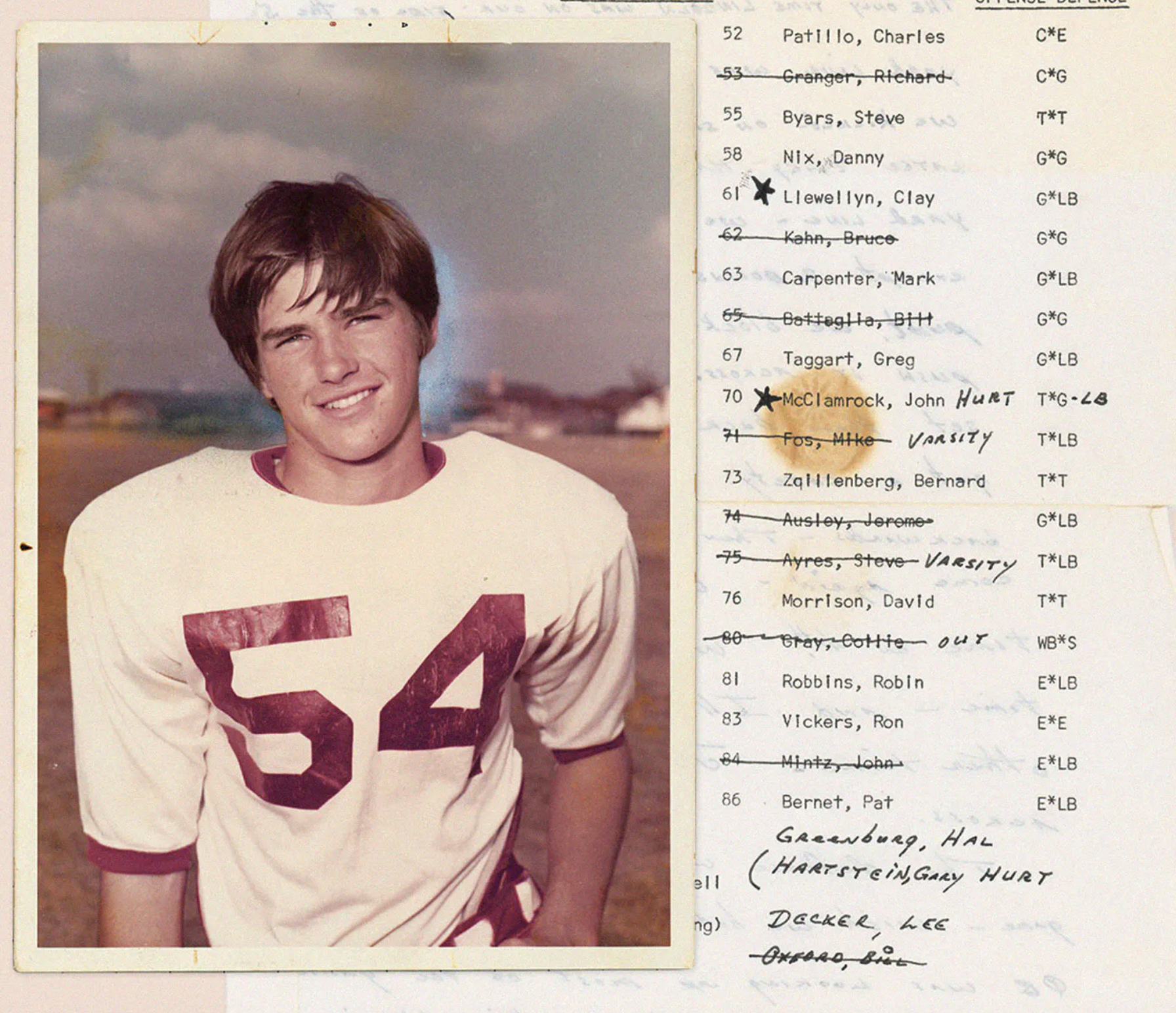
John McClamrock, wearing his Hillcrest Panthers uniform. His team’s game-day roster, which listed John as “hurt.” (Courtesy of texasmontly.com)
John McClamrock, wearing his Hillcrest Panthers uniform. His team’s game-day roster, which listed John as “hurt.” (Courtesy of texasmontly.com)
13,000 words. I'd seen it cited in sources a dozen times. I'd told myself I'd get to it. I hadn't.
That Wednesday night, I opened it on my laptop. Just the first page, I thought. I'll read the lead and see if it hooks me.
I didn't stop.
I don't even know what time I finished. I know I forgot my phone was a thing. I know I forgot I had homework. I know I got to the last word and felt that specific ache of closure — the one I usually only feel at the end of a novel, when a world closes and you're returned to reality.
Hollandsworth didn't open “Still Life” by telling me about a football tackle. He opened it with John's mother. He opened it with presence and specificity. He made me see this woman, understand her, before anything else. By the time the tragedy happened, I was already invested. I already cared. The tragedy became unbearable not because I read about it, but because I knew John and his mother as complete human beings.
That's what Hollandsworth does. He creates characters so fully realized that you can't look away.
Hollandsworth had done exactly what my favorite novels do. He'd created a character I couldn't look away from. He'd structured the story so that every paragraph led to the next. He'd embedded himself in John and his mother's consciousness until I forgot I was reading journalism. It felt like a story. It felt like something real that mattered.
That's when I understood: this isn't about length. This isn't about attention spans. This is about craft.
The Question That Matters
Here's what I realized over the course of this semester: my generation doesn't have an attention problem. We have a caring problem. And the journalism industry created that problem by choosing speed over depth, clicks over craft, information over emotion.
I can sit for six hours reading about fictional characters. I can binge an entire podcast series in two days. I can watch a YouTube video on an obscure topic I didn't know existed an hour earlier. My attention isn't broken. It's just that most journalism isn't making the choice worth my while.
But when journalism does do the work — when it creates characters instead of sources, when it structures narrative tension instead of information density, when it embeds specificity instead of abstractions — I read it like I read novels. I read it twice. I call the writer to ask how they did it.
The real crisis in longform journalism isn't that readers can't focus. It's that publishers stopped demanding that writers make us focus. It's that somewhere along the way, the industry decided that being informative was enough. That the public would read important news out of obligation. That we as journalists didn't need to earn attention — we could just demand it.
Hollandsworth told me something that's stuck with me. He was talking about how he rewrites his own work now, cutting sentences he once thought were clever. "Why is that?" I asked.
"Because I get bored with my own stories," Hollandsworth said.
He gets bored. After 36 years at Texas Monthly. After hundreds of published stories. If he doesn't believe every sentence deserves to be there, why should we as journalists expect readers to?
The answer is: we shouldn't. We shouldn't expect anything. We should earn it.
What Happens Next
This semester, I spent months learning why I didn't read longform journalism. I interviewed the people who've mastered it. I studied their techniques. I understood, finally, that the problem was never me.
I came into this project as a 21-year-old who could devour fantasy novels but couldn't finish think pieces. I'm now a 22-year-old — but one who's just finished reading her third longform narrative feature this month, and already waiting impatiently for the next one.
I was broken not by my attention span but by journalism that didn't think I was worth trying for.

AP top news executives studying election news reports in the main news room in Rockefeller Center, New York City, circa 1964. On the left is Deputy General Manager Harry T. Montgomery, center background is General Manager Wes Gallagher and on the right is General News Editor Samuel G. Blackman. (AP Photo/Corporate Archives)
AP top news executives studying election news reports in the main news room in Rockefeller Center, New York City, circa 1964. On the left is Deputy General Manager Harry T. Montgomery, center background is General Manager Wes Gallagher and on the right is General News Editor Samuel G. Blackman. (AP Photo/Corporate Archives)
Now that I've experienced what it feels like when journalism does try — when it applies the same narrative craft, the same character development, the same structural tension that keeps me reading fiction at 2 a.m. — I can't unsee it. I can't go back to thinking this is about TikTok or dopamine or my generation's inability to focus.
The choice now is whether the industry will do the same.
As I move forward, I'm going to write stories that compete not with other media, but with novels people can't put down. I'm going to spend the time. I'm going to embed the specificity. I'm going to make sure every paragraph earns the next one. Because I've lived on both sides of this equation — as the reader who couldn't care, and as the reader who suddenly couldn't stop reading — and I know which version of journalism is worth fighting for.
If I can read 600 pages about fictional characters in five days, you can absolutely make me read 6,000 words about something real.
You just have to make me give a damn.
And now I know you can.
 Built with Shorthand