
Trending Toward the Polls
How TCU students find information about political candidates in the digital age
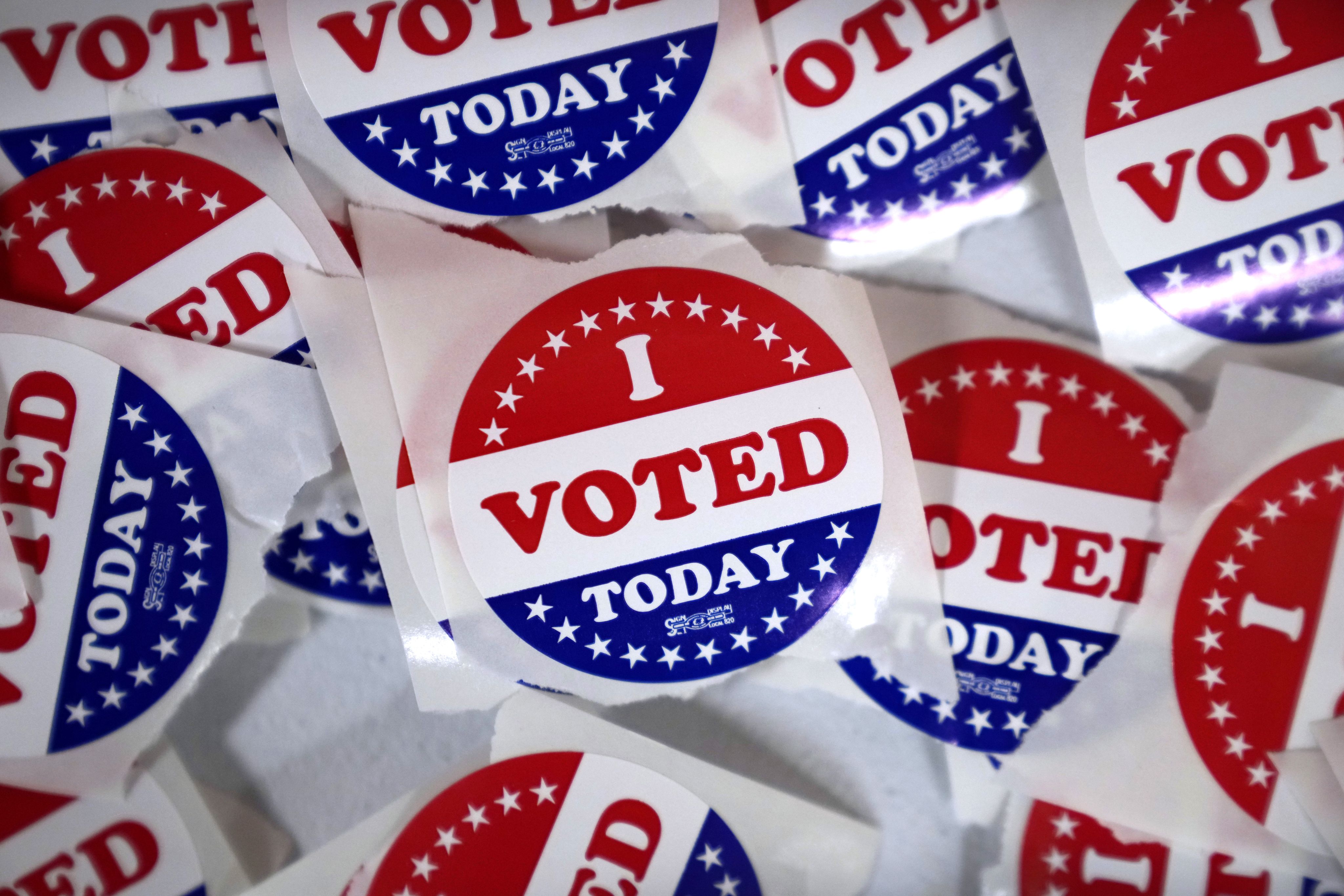

Every four years, a familiar rhythm grips the country. Campaign trails, televised debates and yard signs sprout like weeds, marking the start of a new election season. For many TCU students, however, the journey to choosing a candidate doesn’t start with an analysis of policy or party platforms. It starts with a swipe, a scroll and a screen.
On college campuses across the country, political discovery increasingly happens through an Instagram reel, a TikTok sound bite or a shared post that feels more like entertainment than education. For a generation raised online, candidates are often encountered through curated social media feeds.
“Social media is often a starting point for me,” said Ailicec Valdez, a TCU student. “It’s easier to be introduced to political candidates on social media and then do my own research with news websites after.”
This layered approach is increasingly common among students navigating an evolving political media ecosystem. While traditional sources like newspapers and TV broadcasts still play a role, digital platforms—particularly social media—now dominate how young adults discover, evaluate and form opinions about political candidates. With this shift comes a reckoning over bias, misinformation and the emotional intensity of a hyper-personalized internet.
A survey of 148 TCU students across every college at the university found that 50.7% of respondents said social media was their primary source of information about political candidates. Written news sources like websites or newspapers were second at 26.4%, while discussion with friends and family trailed at 8.1%.
The numbers reflect a generational transformation in how civic information circulates.
“It’s easier to focus on the issues you care about with social media and find out more about those issues specifically,” Valdez said. “That allows me to evaluate candidates easier.”
But ease of access does not always translate to clarity of content. Of those at TCU who rely on social media for news about political candidates, 69% said Instagram was their main news source, followed by 25% on TikTok. Just 5% cited X (formerly known as Twitter) and 1% said Facebook.
This social-first approach to political discovery mirrors broader national trends. According to the Pew Research Center, three-quarters of users who post political content on TikTok or X say they do so because they feel it’s something they should do. On Instagram, the number is even higher at 70%. But despite the enthusiasm, just 34% of U.S. adults believe social media has been good for democracy, while 64% say it has had a negative impact.
Dr. Literat and Dr. Kligler-Vilenchik, researchers and authors of “Not Your Parents’ Politics: Understanding Young People’s Political Expression on Social Media,” argue that social media can serve as a form of informal civic education.
“That's a core argument that we're making in the book,” Literat said on the Social Media and Politics podcast. “Youth use social media in very creative, culturally meaningful ways to explore and to express their political voice.”
She noted that while this kind of political expression may not look like traditional civic engagement, it’s no less significant.
“To not pay attention to them or dismiss them or look down upon it is a big mistake,” Kligler-Vilenchik said. “And ultimately, it doesn't pay justice and respect to the youth voice.”

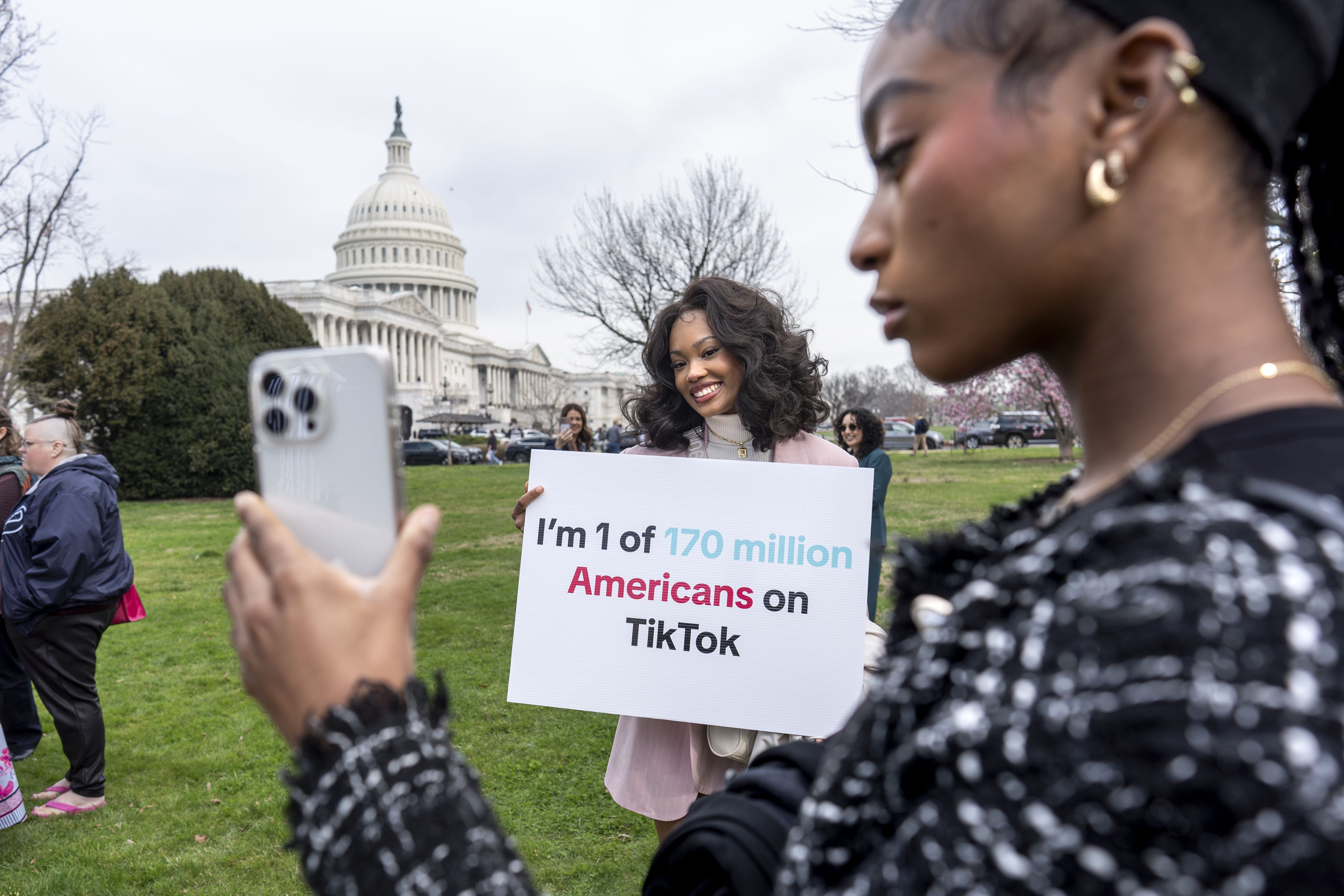
Platforms like TikTok, in particular, have opened up new avenues for young people to explore political identity and candidates in public.
“I’m thinking about things like stitching on TikTok, things that we couldn’t have even imagined 10 years ago,” Literat said.
But while creativity flourishes, clarity often suffers.
“I 100% see bias in the political news on social media platforms, especially on TikTok,” said TCU student Ailicec Valdez. “The algorithms there especially cater to your preferences. You might watch one thing, maybe even something that you don’t believe or are not interested in, and your whole feed becomes that. It could be biased toward just one candidate.”
That observation reflects a growing concern among experts. “The Social Dilemma,” a documentary on Netflix, explains how social media algorithms are designed to increase engagement by reinforcing users’ existing views. This manipulation structure makes it easier to control the flow of political information people see.
“Algorithms and manipulative politicians are getting so expert at how to trigger us, getting so good at creating fake news that we absorb as if it were reality, and confusing us into believing those lies," Justin Rosenstein, a former Google and Facebook project lead, said in the film. "It's as though we have less and less control over who we are and what we really believe.”
The danger, researchers warn, is that users may form strong opinions about candidates based on distorted or incomplete information. A 2020 Pew Research Center survey found that people who relied on social media as their main news source tended to be less knowledgeable. And while the meme-ification of political figures can increase visibility, it can also deepen cynicism and fuel misunderstandings.

App logos for Facebook, left, and X, formerly known as Twitter, are seen on a mobile phone in Los Angeles, Saturday, March 16, 2024. (AP Photo/Paula Ulichney)
App logos for Facebook, left, and X, formerly known as Twitter, are seen on a mobile phone in Los Angeles, Saturday, March 16, 2024. (AP Photo/Paula Ulichney)
During the 2024 election, for example, the Harvard Public Opinion Poll found that 53% of young adults encountered memes about former Vice President Kamala Harris within a single month. Of those, 34% said the memes positively influenced their opinion of her. Meanwhile, 56% saw memes about President Trump, and 26% reported a negative impact.
Valdez acknowledges these problems, observing that trendiness takes precedence over truth for TCU students.
“I think a lot of people don’t actually know a lot about the candidates they’re voting for, but because they might be the ‘trendy’ or ‘cool’ person on social media, they’ll vote for them,” she said. “It’s almost like a form of peer pressure.”

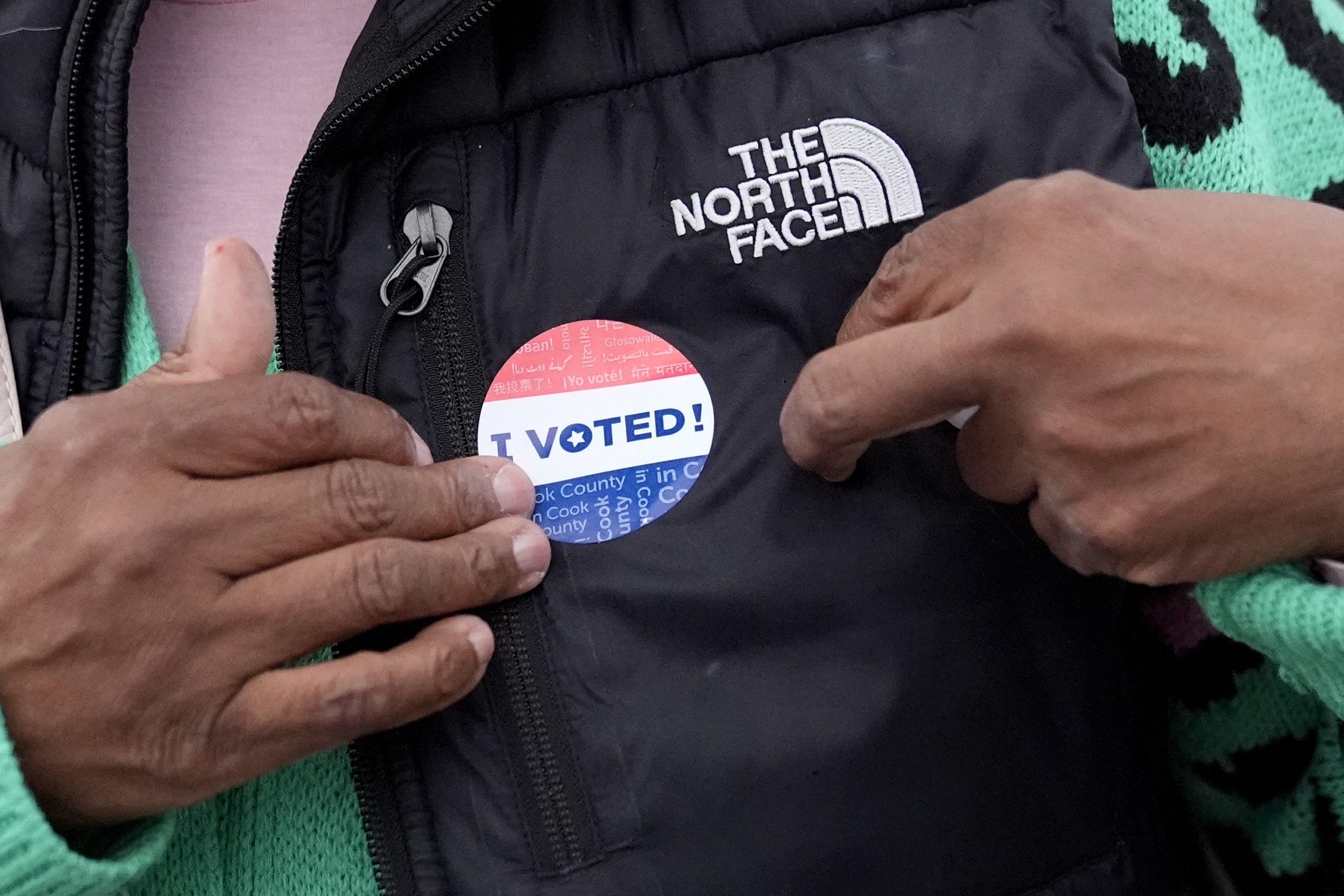
Alpha Kappa Alpha sorority member Linda Evans secures her I Voted sticker Tuesday, Nov. 5, 2024, in Matteson, Ill. (AP Photo/Charles Rex Arbogast)
Alpha Kappa Alpha sorority member Linda Evans secures her I Voted sticker Tuesday, Nov. 5, 2024, in Matteson, Ill. (AP Photo/Charles Rex Arbogast)
In the TCU survey, students themselves showed a healthy skepticism. 79.2% said their primary news source has some form of bias, while only 20.3% believed their source was unbiased. However, 63% of those who said their source had “no bias” also said their primary source was social media – a contradiction that reveals how algorithmic bias can masquerade as objectivity.
Still, students aren't entirely passive consumers. 20.9% of survey respondents said they always fact-check political information, while 43.9% said they often do. When asked how they determine credibility, 59.5% said they check the source’s reputation.
That level of awareness is critical, Literat said.
“It enables [students] to experiment with voice and develop civic norms, to situate themselves in relation to this broader public,” Literat said. “The fragmented nature of these environments, however, means that civic norms are not necessarily held in common… They can be empowering in some spaces or exclusionary or misinforming in others.”
Across the board, the picture is mixed. Globally, 84% of adults say access to the internet and social media has made people easier to manipulate with false information. Yet 73% say it has made people more informed, and 77% believe it raises awareness about political issues. In the U.S., young adults are among the most optimistic. 71% of Americans under 30 say social media has helped people stay informed about current events, compared to 60% of those over 50.
In terms of what students prioritize when evaluating a candidate, the TCU survey revealed that 62.8% care most about policy positions. That suggests students are actively searching for substantive political content, though they may be finding it in unconventional ways.
Even the medium of delivery seems to affect engagement. Literat noted that youth often prefer cultural or humorous forms of political commentary on candidates.
“We pay close attention to these modes of expression because they tell us a lot about what kind of issues young people care about, how they frame them and then how they really creatively, imaginatively engage with politics,” she said.
But not everyone sees the current shift as positive.
“One meta-cause of the [rise of misinformation] is obvious: the rise of social media,” wrote journalist Steve Waldman in an opinion piece published in Politico. “The other is more indirect but still significant: the collapse of local news.”
As Waldman highlights, the U.S. has lost one-third of its local newspapers and 60% of reporters in two decades, leaving a vacuum filled by social media and partisan content.
That vacuum has consequences. In the TCU survey, only 4.1% of students said voter guides were their primary source of information on political candidates. Just 2% relied on a candidate’s official website. The loss of shared, verified public knowledge means students may have to work harder to build a well-rounded picture of the political landscape.
Yet despite the noise, students remain politically engaged. 97.3% of TCU respondents said they were involved in some form of political engagement, and 85.1% said they voted in the 2024 election.
That enthusiasm, according to Literat, is worth celebrating, even if the methods don’t match past norms.
“We believe that for better or worse, [social media] is better at supporting this mobilizational model… than supporting discursive.” In other words, it gets people involved, even if it doesn’t always encourage dialogue.
As platforms evolve, the onus will fall increasingly on young voters to balance the power and pitfalls of social media as a political tool. For students like Valdez, the solution lies in using the internet as a launchpad—not a final destination.
“I think it’s good that young people are learning about politics,” Valdez said. “But yes, it also raises some important challenges."
For TCU students, the future of political literacy may no longer depend on traditional sources, but rather on the delicate balance students strike between instant access and thoughtful, critical engagement.

This photo shows the mobile phone app logos for, from left, Facebook, Instagram and WhatsApp in New York, Tuesday, Oct. 5, 2021. (AP Photo/Richard Drew)
This photo shows the mobile phone app logos for, from left, Facebook, Instagram and WhatsApp in New York, Tuesday, Oct. 5, 2021. (AP Photo/Richard Drew)
 Built with Shorthand