
The Power of Going on a Walk
Connecting with the mind and body in the post Covid-19 era
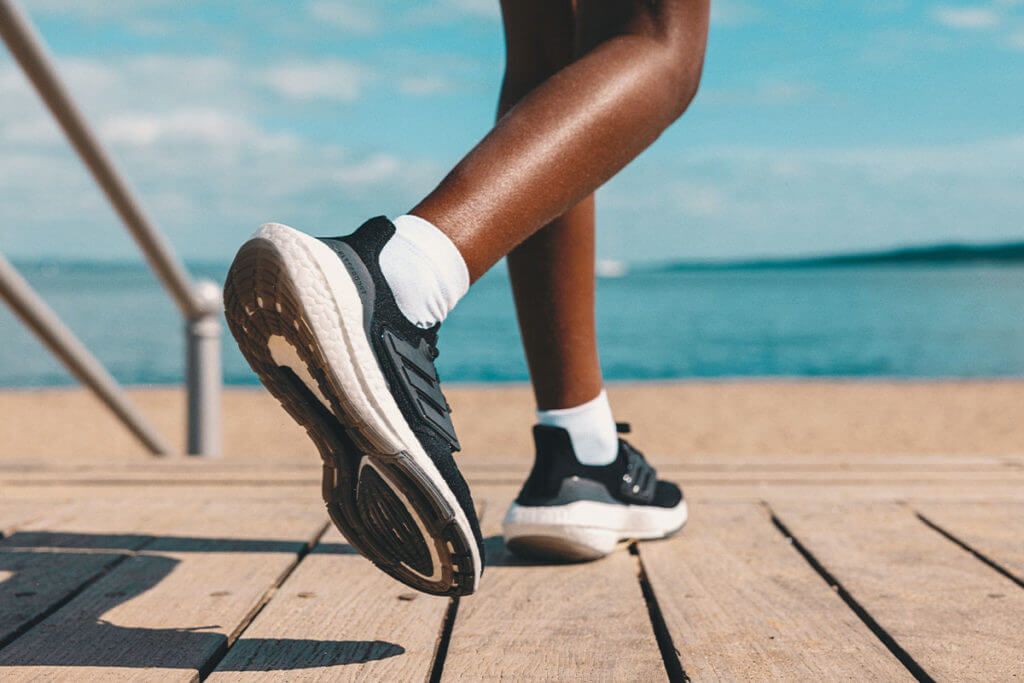

The world, at large, is still recovering from one of the most significant health pandemics to sweep through the globe, COVID-19.
The public health crisis kept people locked in their homes and weary of physical contact for months. Suddenly, people had to adapt and change their everyday routines; from how people worked to how people exercised, nothing looked the same. Society became eager to get outside and embrace one of the simplest physical activities available to humans, walking. Walking allowed people to move their bodies outside their homes in a safe and socially distanced way. It did not take long for society to follow suit after people began to see the many physiological, mental, and emotional rewards going on a walk brought them. Promptly, soon after the pandemic started, walking became one of the most popular forms of exercise.
Walking has quickly become one of the easiest ways for individuals to create healthy habits and enrich their mind, body, and soul within the madness of their hectic and often overwhelming schedules.
It is one of the only physical activities one can do every day with no preparation or special equipment required, and it can fit whatever time an individual wishes into their schedule.
The places for an individual to walk are almost endless and help prevent boredom and burnout.
What if it is raining?
Go to the recreation center and use the indoor track or treadmill.
Want to feel a burn?
Pick a walking route with hills.
Not feeling your best but still want to move your body?
Go for a 15-minute stroll around your neighborhood or college residence.
Not only are there several options for one’s walk to take place, but what they choose to do with that time can put them on track for the rest of their day.

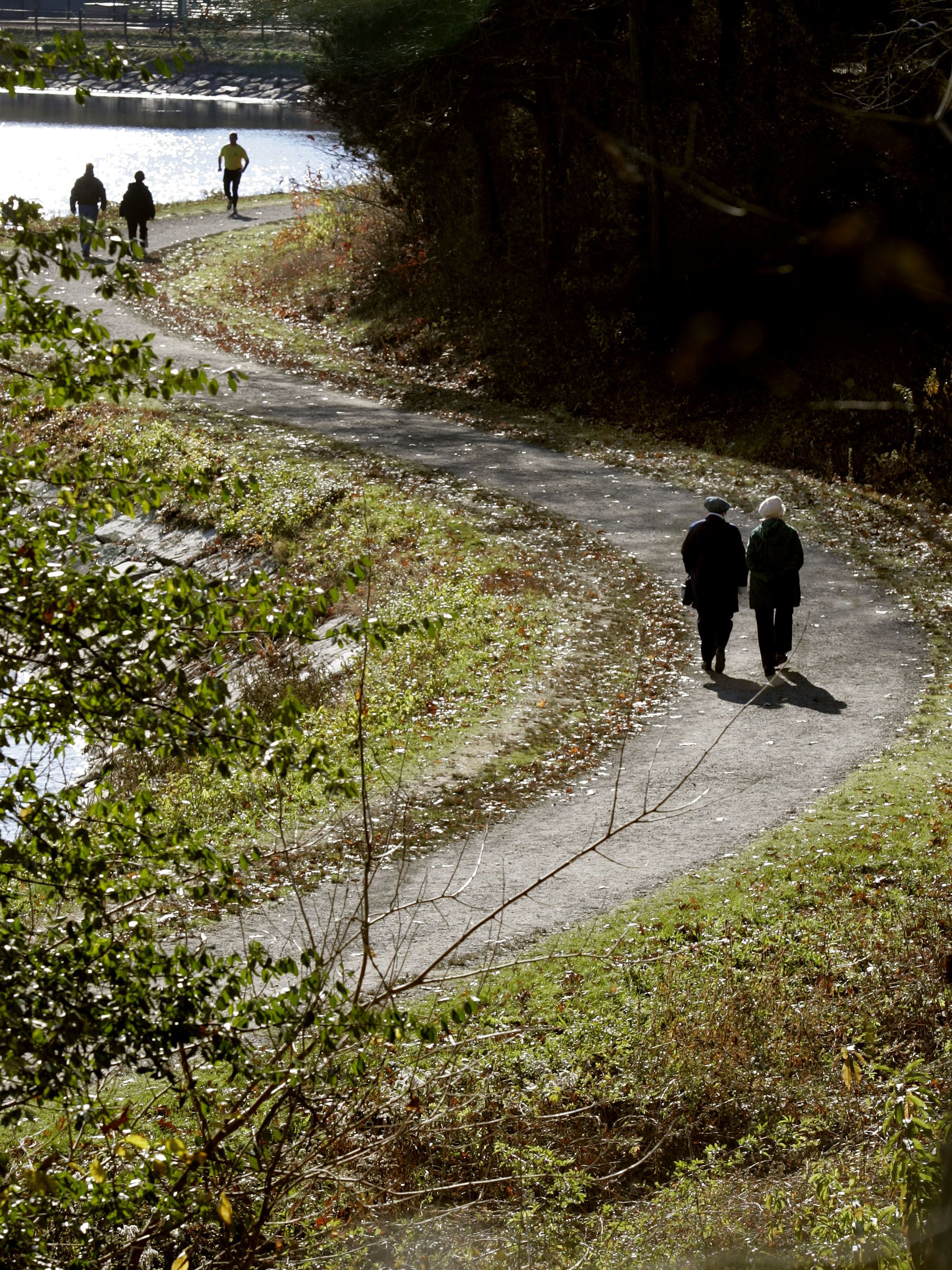


Make the most of your walk.

Link provided to help you get started.
Link provided to help you get started.
Walk for perspective.
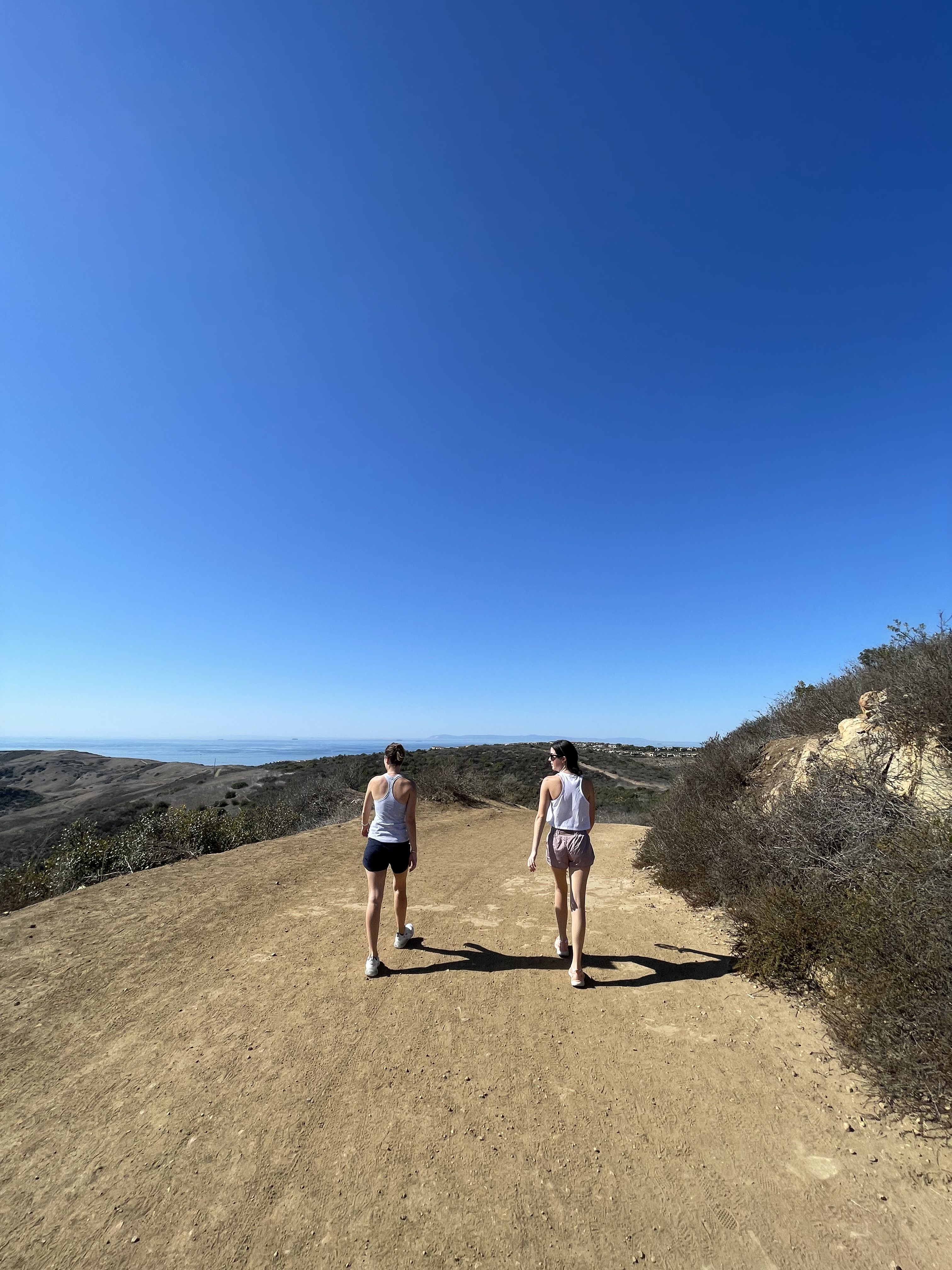
Walking for perspective allows students to put their feet on the ground, realize they are one tiny human in this giant universe, and let their problems no longer feel all-consuming.
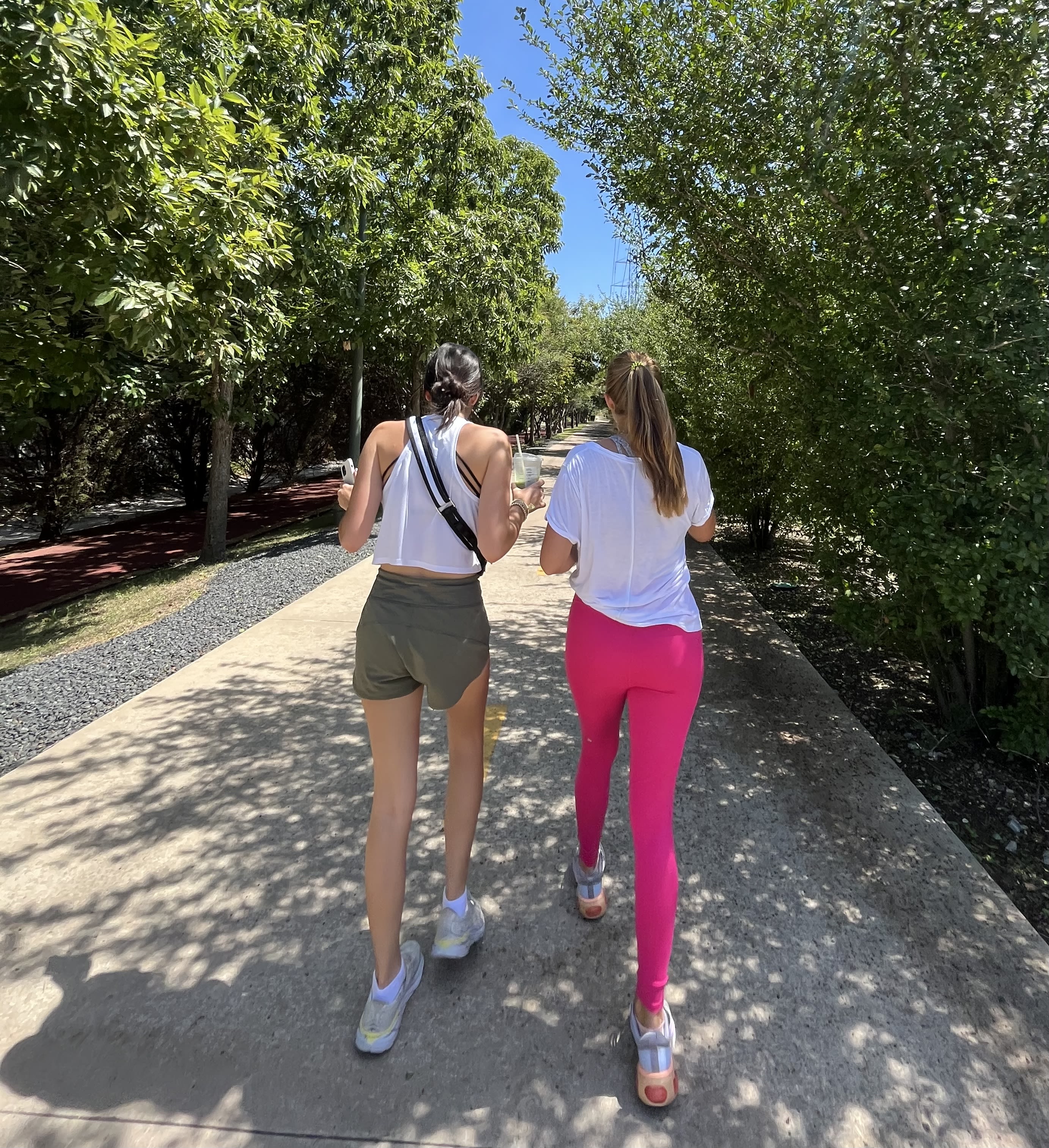
Photo courtesy of Elizabeth Burns
Photo courtesy of Elizabeth Burns
Walk for connection.
Invite a family member or friend to join and spend quality time with the people who make you feel most comfortable when stressed. This connection can be in-person or on the phone.

AP Photo
AP Photo
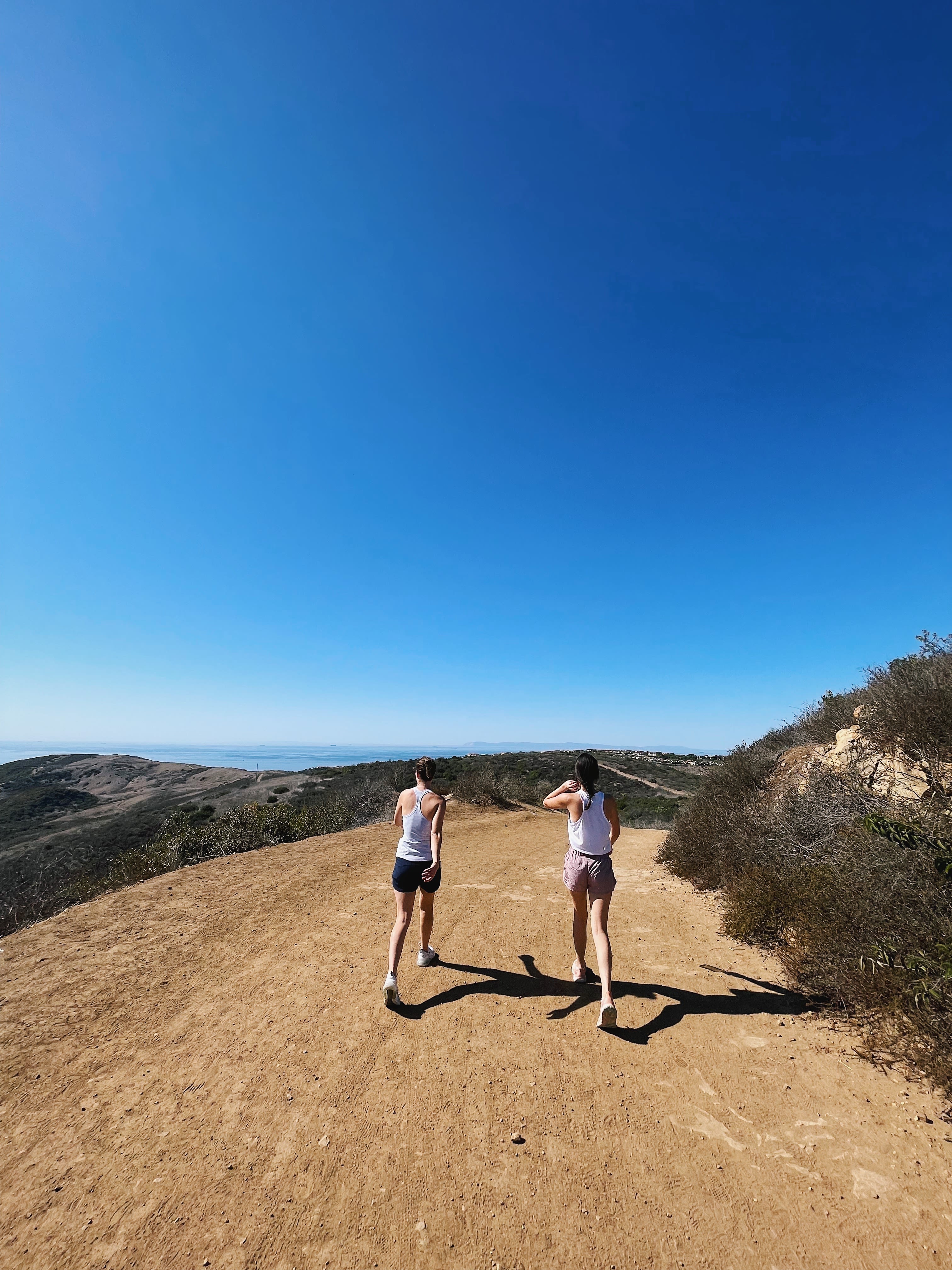
Walk for learning.
Walking for learning is an opportunity to expand your knowledge on a topic you have always found interesting by listening to a podcast or book.

Link provided to help you get started.
Link provided to help you get started.
Walk for gratitude.
Something simple like taking a moment while walking and appreciating that your legs are moving with you from point A to point B reminds us not to take the small things for granted and the power of the working body.
Mental and Emotional Benefits
The benefits of going on a walk for mental and emotional health start with generating ideas and go as far as enhancing one's overall subjective well-being.
Dr. Felice Mayes, a part-time Clinical Counselor to TCU students, has worked at TCU for eight years counseling students.
When asked how best a student can spend their time during a walk, she said we need to allow our minds to wander and allow whatever is pressing our minds to come to the surface.
“It is about allowing yourself that free time to relax when you walk.”
Mayes is a Licensed Professional Counselor who works with students on various issues, such as anxiety, depression, grief/loss, adjustment to college, and so much more.
Mayes recounts a helpful breathing technique one could do while walking to decompress and reset.
According to Dr. Jo Barton, Senior Lecturer of the School of Sport, Rehabilitation and Exercise Sciences at the University of Essex, one can improve their self-esteem and mood with just five minutes of exposure to walking in nature. Barton explains that when walking outside, we shift from voluntary attention to involuntary attention, which takes less focus and energy from the person, allowing their mind to wander and begin recovering from mental fatigue (Riegel, 2021).
When one reaches this relaxed mental state, one often thinks of their most innovative ideas and strokes of insight.
Thus, when a student feels stuck in their work or that they do not have the answers to whatever problem they are facing, simply going on a 15-minute walk can bring an individual the clarity they were dwelling over for an hour sitting in the library.
With this graphic in mind, it is no surprise that some of the world's most influential thinkers and philosophers, such as Charles Darwin, Friedrich Nietzsche, and Aristotle, were all obsessive walkers to help them generate their ideas.
Regularly walking promotes new connections between brain cells, staves off the usual withering of brain tissue that comes with age, increases the volume of the hippocampus, and elevates levels of molecules that both stimulate the growth of new neurons and transmit messages between them (Jabr, 2014)—ultimately, starting the process of recycling old thoughts and creating space for new ideas to come in.
"All truly great thoughts are conceived by walking."
Marily Oppezzo and Daniel Schwartz of Stanford published a set of studies that directly measured how walking changes creativity in the moment by conducting four experiments with 176 college students. The study asked students to complete different creative thinking tests while sitting or walking through Stanford's campus.
The research found that 95 percent of students who went for a walk could successfully complete the activity, compared to only 50 percent of those who sat the entire time.
Furthermore, on average, walking through campus reduced anxiety/depression, anger and increased revitalization, positive engagement, and tranquility in the students (Oppezzo & Schwartz, 2014).
These findings confirm the importance for college students to implement a walking routine so their brains have time to restore, relax, and be most beneficial to the individual in their work and studies.


Physical Benefits
Going on a walk is also an excellent place for people to start their fitness journey because walking speed, duration, and frequency can be adjusted to fit anyone's starting fitness level.
Health authorities recommend regular brisk walking as a moderate-intensity activity through which people can maintain a healthy weight, prevent various conditions, such as many types of cancers and dementia, strengthen bones and muscles, and improve one's balance, mood, and coordination (e.g., Haskell et al., 2007).
Brad Stewart, the Associate Director for Fitness and Wellness Education with Campus Recreation and Wellness Promotion at TCU, has a concentration in Health Promotion from Colorado State University in Exercise Science, where he earned his Bachelor's degree, and strives to promote a culture of wellness on the TCU campus, where students feel healthy from the inside out.
When asked if walking could be considered an exercise, he was quick to say yes.
"I 100% think walking can be considered an exercise because you can still increase your endurance and improve your lungs, metabolism, heart rate, and health."
After spending ten years as the Fitness and Wellbeing Coordinator for the Wellbeing Program at Washington State University, Stewart found his passion for helping college students create a healthy lifestyle leading him to return to school and earn his Master of Education in Higher Education Administration from WSU.
Stewart shared the following tips for using a daily walk as your workout.
For those who are still weary of walking as a sufficient workout, a study conducted by the Harvard School of Public Health analyzed a large cohort of walkers and runners and found that after six years, when individuals exuded an equal amount of energy, moderate-intensity walking offered almost identical benefits as higher intensity running when it came to reducing one's risk of high blood pressure, high cholesterol, and diabetes.
The research also found that "Walking helps boost energy levels by releasing certain hormones like endorphins and delivering oxygen through the body and brain."
What makes the activity even greater is that a moderate-intensity, low-impact workout like walking does not put the same stress on one's joints making frequent walkers less susceptible to injury down the road compared to their high-impact counterparts.
Suggesting that going on frequent walks improves and helps stabilize a student's physical health and is readily accessible to anyone who is physically capable.
Walking has even become a popular topic on TikTok, making "working out" enjoyable for countless people and leading many to regularly crave physical activity rather than dreading the start of their workout.
@rebeccakennedynyc WALKING IS ONE OF THE HEALTHIEST THINGS YOU CAN DO. 👉🏻 It’s adds life to your days and days of your life. #walking #fittok #hiking #hiketok #cardio #bestworkout ♬ Pretty Girls Walk - Big Boss Vette
Do TCU students think walking is worth their time?
To evaluate my research question, I conducted an anonymous survey with 79 TCU students and interviewed two random TCU students walking to class. The survey consisted of two questions and one open response. Results were overtly positive, with 74 out of 79 students believing going on a walk is worth their time.
One student wrote, "I choose to go on walks because it is a form of self-care crucial for my mental and physical health." Another wrote, "I choose to go on walks because the Fort Worth community feels like my neighborhood at home, with families surrounding TCU." The student went on to say, "Walking allows me to get off my phone and computer, destress from my day, and shut out any anxieties or worries that have come up."
The gap slightly decreased in the second question, with 58 participants believing walking could be considered their daily exercise, compared to 21 who did not. The gap's decline can be explained by the misconception that you must sweat, lose your breath, and be in pain to experience an efficient workout. It is also important to note that the five participants who answered no to the first question also answered no to the second, suggesting that there are still many students who are unaware of the benefits of walking and its ability to make a positive impact on how one looks, feels, and thinks.
Walking Near TCU!
There are a few different walking routes nearby TCU’s campus.
The first one is walking around the Worth Hills loop. The loop even has mile markers and a couple of different hills to challenge yourself.
The second option is walking around the border of the central campus, which is approximately a mile-long walk and can be completed in various directions.
The many neighborhoods surrounding TCU are a student favorite known to help cure any homesickness.
Trinity Trail is another close option for a more traditional walking path with multiple trailhead openings within a couple of miles of TCU.
Lastly, Trinity Park, which runs through Trinity Trail, adds a whole new variety of different terrains, locations, and sites.
Conclusion
The simplest changes in one’s life can create the habit of walking.
When you grab the mail, do a lap around the block.
If you drive to work, park in the farthest spot from the entrance.
Take public transportation?
Get off one to two stops early.
Whatever it is, just start walking.
References
Jabr, F. (2014, September 3). Why walking helps us think. The New Yorker. Retrieved May 5, 2023, from https://www.newyorker.com/tech/annals-of-technology/walking-helps-us-think
Oppezzo, M., & Schwartz, D. L. (2014). Give your ideas some legs: The positive effect of walking on creative thinking. Journal of Experimental Psychology: Learning, Memory, and Cognition, 40(4), 1142–1152. https://doi.org/10.1037/a0036577
Johansson, M., Hartig, T., & Staats, H. (2011). Psychological benefits of walking: Moderation by company and outdoor environment. Applied Psychology: Health and Well-Being, 3(3), 261–280. https://doi.org/10.1111/j.1758-0854.2011.01051.x
Riegel, D. G. (2023, January 30). Don't underestimate the power of a walk. Harvard Business Review. Retrieved May 5, 2023, from https://hbr.org/2021/02/dont-underestimate-the-power-of-a-walk.
The life changing benefits of regular walking. Human Fitness. (2019, January 25). Retrieved May 5, 2023, from https://wearehuman.com.au/the-life-changing-benefits-of-regular-walking/.
The President and Fellows of Harvard College. (2023, April 19). Walking for exercise. The Nutrition Source. Retrieved May 5, 2023, from https://www.hsph.harvard.edu/nutritionsource/walking/.
 Built with Shorthand