
TCU: Exploring the Link Between Admissions and Athletics in Marketing to Prospective Students
By Ian Napetian
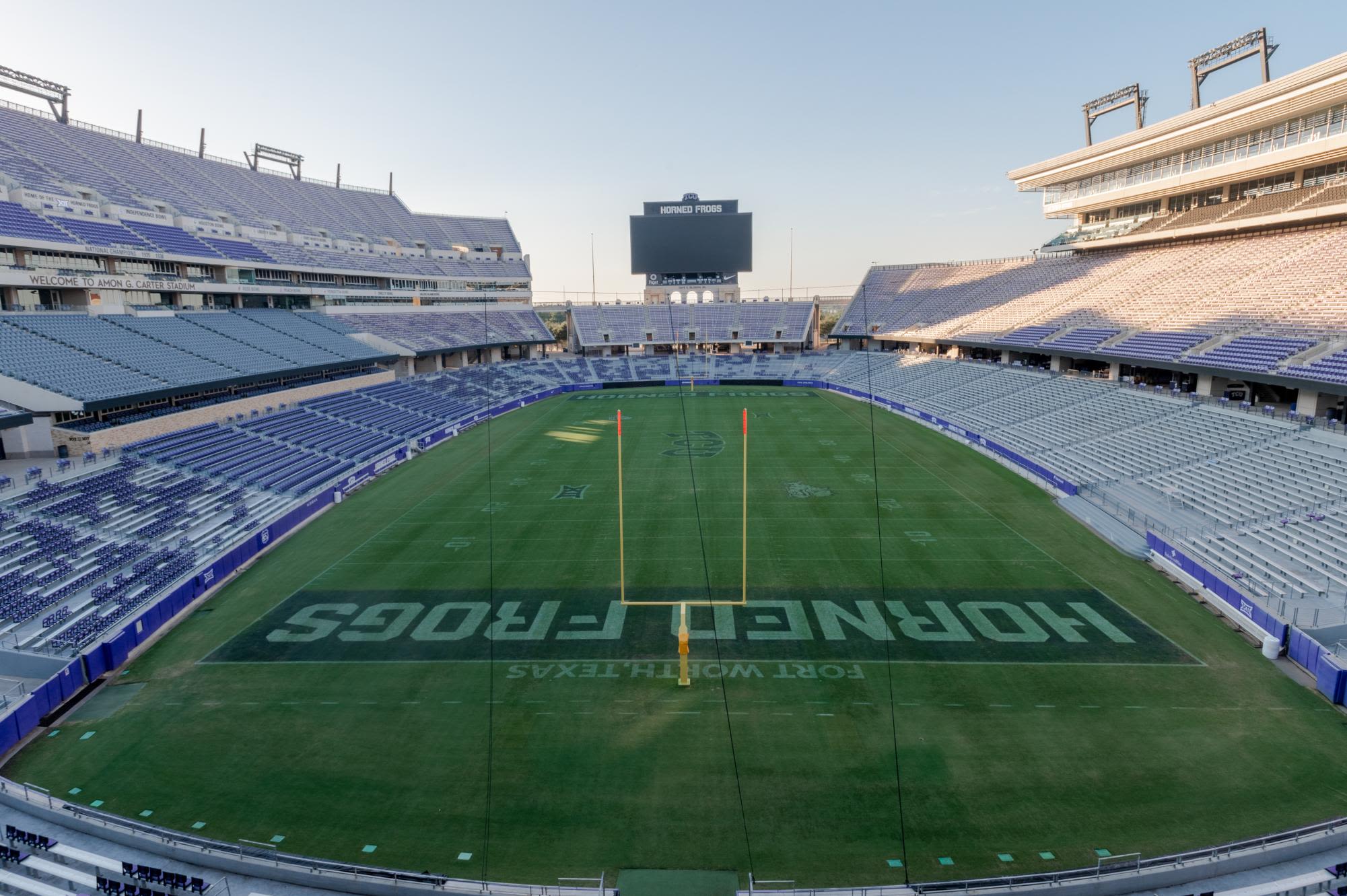

Texas Christian University and the Horned Frogs have rapidly grown in both reputation and influence since its founding in 1873, with significant progress in the last two decades. TCU is now investing heavily in its future through expanded academic programs, campus growth, increased student diversity, and celebrations of its sesquicentennial, solidifying its national brand recognition.
While there are various reasons for the university’s growth over the last 20 years, many perspectives allude to athletics as being the front doorstep to the school. For what is considered to be a small, private Christian institution, TCU’s athletics programs are decorated with a profound history across 22 sports.
With that said, none looms larger than that of Horned Frogs football. TCU Football is what it is today because it stands on the shoulders of some of the sport's most talented and impactful players, including Sammy Baugh, Bob Lilly and LaDainian Tomlinson.
While these players provide just a mere peek into the legacy of TCU Football and Athletics, Mark Cohen, the Associate Athletics Director for Strategic and Football Communications, said, “You have to include Chancellor Boschini because in his 20-plus years, he gets it, you know? What athletics means. He took advantage of it for institutional marketing.”


Texas Christian University drone show celebrating 150th anniversary in Campus Commons, on January 27th, 2023 (TCU 360).
Texas Christian University drone show celebrating 150th anniversary in Campus Commons, on January 27th, 2023 (TCU 360).

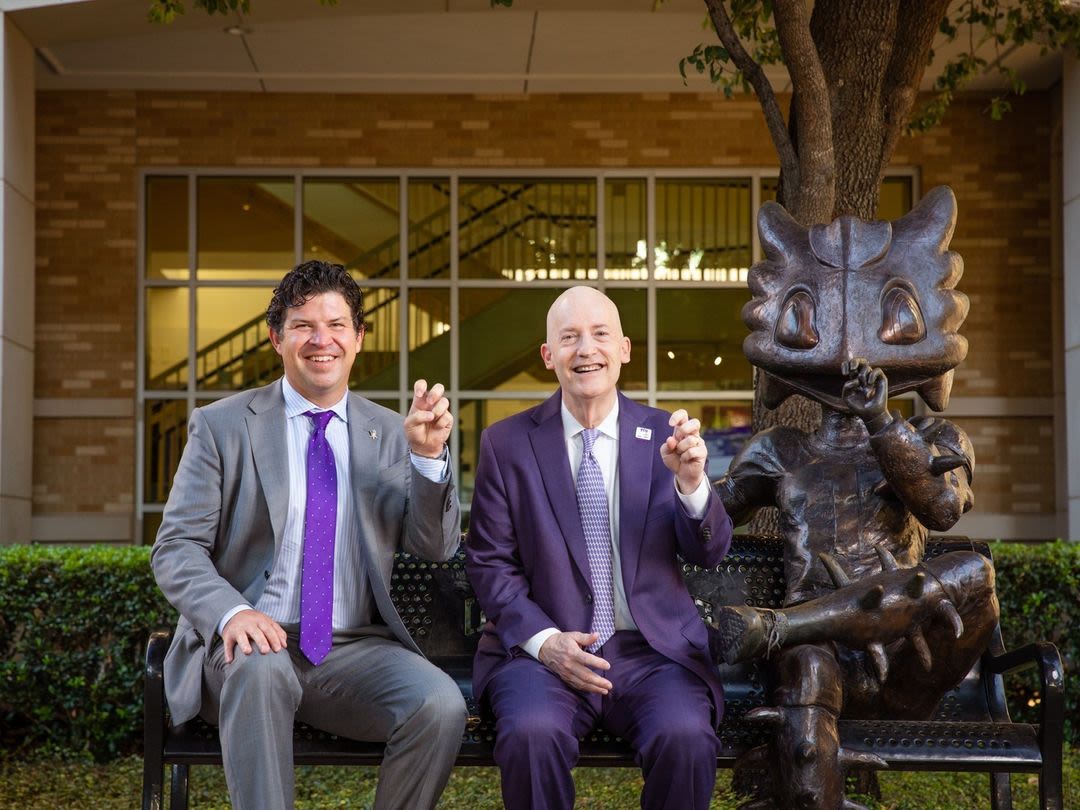
President Pullin and Chancellor Boschini (@texaschristianuniversity)
President Pullin and Chancellor Boschini (@texaschristianuniversity)
Since we joined the Big 12, we’ve done nearly $500 million in athletic facility upgrades–all donor funded. That shows you the commitment we have.

“That was the best thing that happened to us [and] the biggest wake up call to TCU,” said Cohen. “We got left behind. We were in the Western Athletic Conference, so there was a renewed investment and commitment to athletics because all of a sudden your university is viewed as a little bit of a second tier university.”
With TCU further investing in its football program, there became a rejuvenated interest in the university. The more the university invested, the more people knew about TCU–especially out-of-state.
Vice Provost for Undergraduate Enrollment Heath Einstein says, “TCU is far more visible nationally than we were even in 2012,” upon his arrival.
Einstein was first hired as Director of Admission for four years. In 2016 he served as interim dean before being permanently named Dean of Admission in 2017. Where Einstein then centered his focus on recruiting students to TCU, his role as Vice Provost for Undergraduate Enrollment deals works in parallel with the office of admission, including financial aid and the registrar's office.
As Einstein said, “I’m no longer just responsible for students getting to TCU, but it is also getting through TCU.”

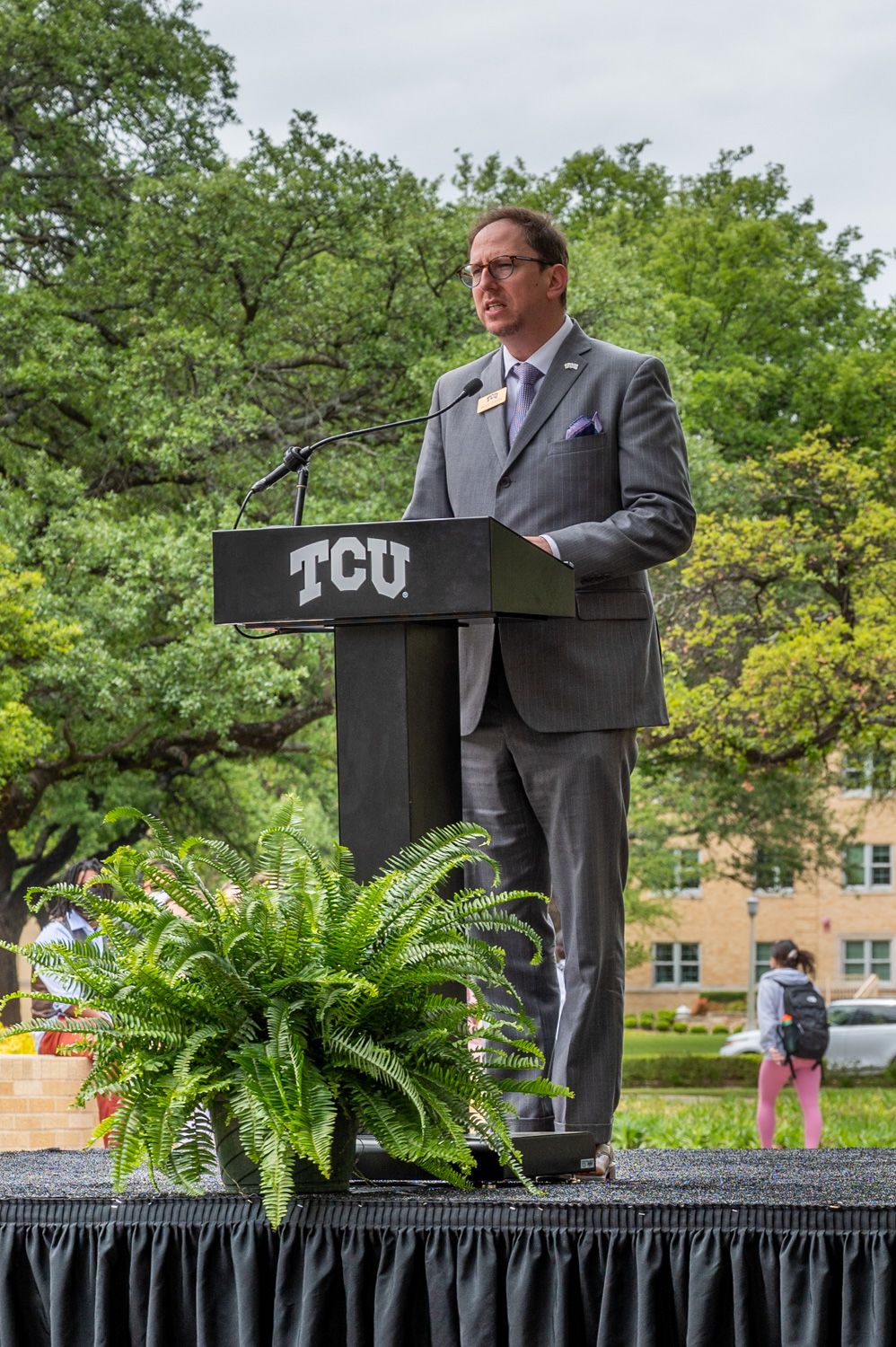
Heath Einstein speaks during the Race and Reconciliation event on Wednesday, April 21, 2021 behind the founder's statue. (Esau Rodriguez Olvera/Staff Photographer)
Heath Einstein speaks during the Race and Reconciliation event on Wednesday, April 21, 2021 behind the founder's statue. (Esau Rodriguez Olvera/Staff Photographer)
When discussing the university’s out-of-state population growth and national reputation, Einstein is undeniably precise.
The 2004 TCU Fact Book reported 76% of the university’s undergraduate population came from Texas. 20 years later in Fall 2024 that same number has been reduced to just 54.1%, according to TCU Student Demographics. In the span of two-decades, TCU’s out-of-state student population has ballooned from 25% to 45.9%.
Einstein alludes to TCU Football’s 2011 Rose Bowl victory in Pasadena, CA as a “watershed moment” that put the university on a national stage. He also alluded to the potential for a continuation of California students following TCU’s trip the National Championship in 2023.
Looking back at the university’s recent developments, Einstein equally indicated the considerable investments in enriching TCU’s physical makeup of the campus, particularly the development of the BLUU, the Campus Commons and most recently the Burnett School of Medicine, which opened in 2019.
“We physically became a much more attractive place over time. Once we hit that mark nationally and people started coming to visit TCU in bigger numbers, then [people realized] what a hidden gem this place is.”



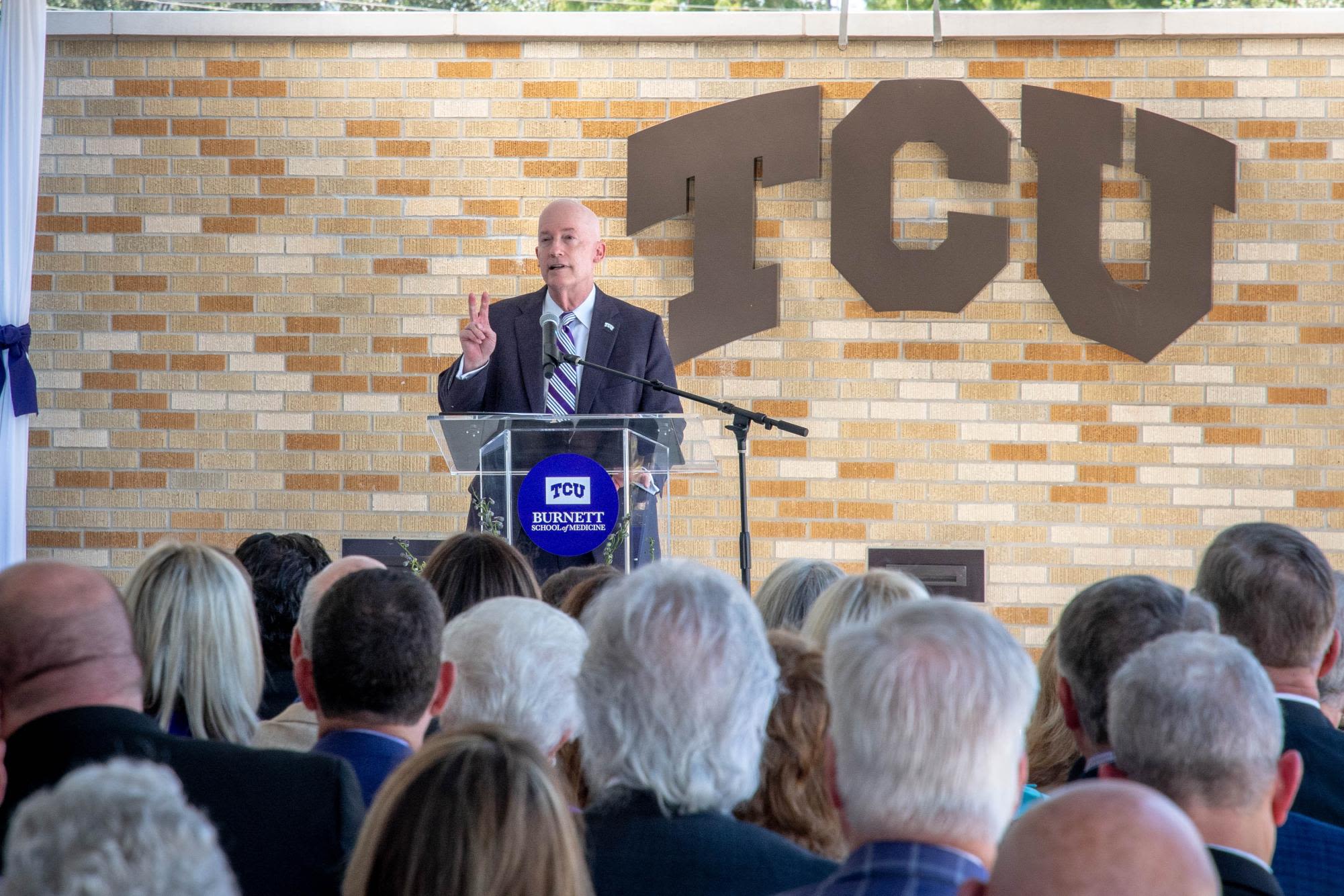

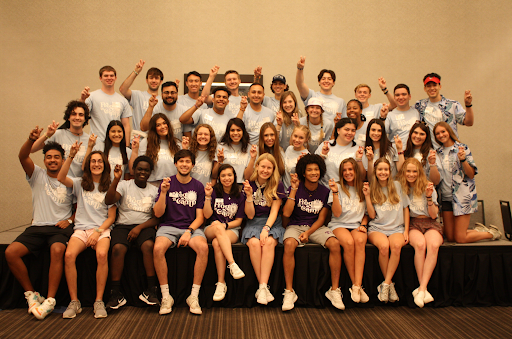
Photo by Elise Lemire, Frog Camp Director of Casa Nueva
Photo by Elise Lemire, Frog Camp Director of Casa Nueva

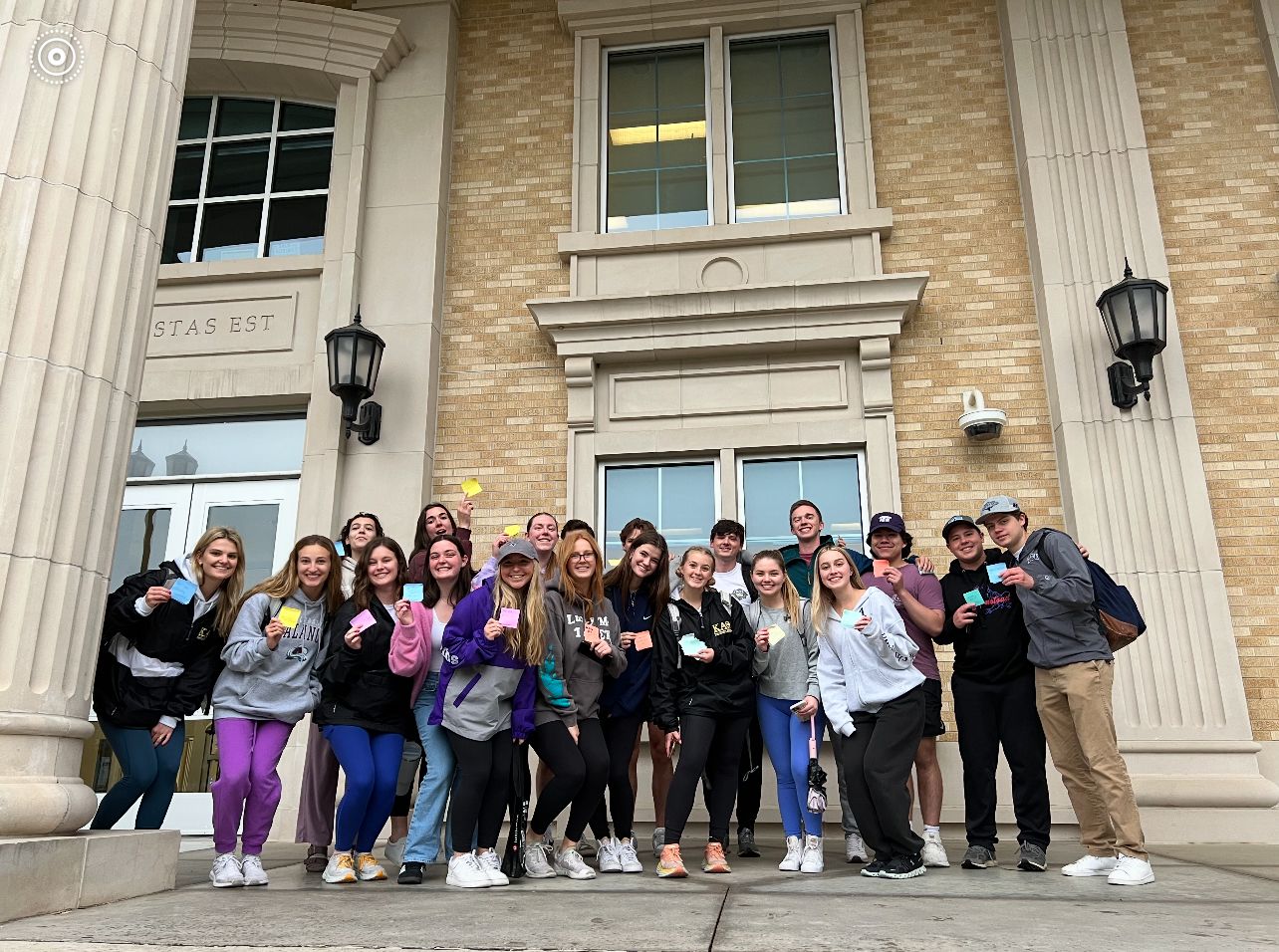
Club members outside of a TCU campus building as they hand out their weekly kind-worded sticky notes. (Courtesy of Katie Nguyen/IOW Marketing Chair)
Club members outside of a TCU campus building as they hand out their weekly kind-worded sticky notes. (Courtesy of Katie Nguyen/IOW Marketing Chair)
|
Semester |
Student Population |
Students from California |
|---|---|---|
|
Fall 2011 |
9,518 |
535 |
|
Fall 2024 |
12,275 |
1,572 |
With that said, it is a fact that TCU has been able to attract students at an exponential rate. In Fall 2011, TCU had a total of 9,518 students. That number has increased to 12,275 now in Fall 2024–that is a 28.9% population increase in just 14 years.
Regarding the link between TCU Athletics and Admissions, Einstein said, “You can’t get away from that and the popularity of the university. Those two go hand-in-hand, but if you don’t have the chops on the academic side of the house, then you’re not going to have a student body that is satisfied.”
He continued, “We have a 93% retention rate from this past year, and we have, by some metrics, the happiest students in America. That doesn’t just happen by having a winning football team.”
With the university’s growth of its general student population also comes a distinct increase and influx of California students.
As reported by the institution, student demographic data shows California students made up 23.3% of TCU out-of-state population in 2011. That year, there were 535 students from California. Now in Fall 2024 there are 1,572–approximately a 193% growth.
Einstein notes that, “TCU enrolls more Californians than any other college in the state of Texas, and that we enroll more Californians than any private university outside of California with the exception of three other schools.”
He narrowed down the explanation for the link between California and Texas to a few possibilities. The first deals with similar academic standards, such as the University of California (UC) school system, which is made up of 10 campuses, and has incredibly selective academics.
To this point Einstein said, “Because of budget shortfalls in California, they rely on out-of-state tuition dollars. It used to be a lot easier for in-state students [to get in] than it is now. And so those ‘would-be’ UC students are now seeking other places where they can get a comparable education.”
Secondly, Einstein believes politics in California has played a critical role in people leaving the state. He said, “We see this not just in college enrollment, but the population in general. There are a lot of people who are leaving California and moving to Texas and Florida. So I think we’re the beneficiaries of that.”
Einstein also pointed to Texas and California’s proximity, explaining they are just a three hour plane ride away, therefore, allowing students to stay close to home. Adam Beck, a senior at TCU, said, “I wanted to leave California for college. I wanted to try something new, but feel close. I have that at TCU.”
While Einstein alluded to several variables that have helped TCU grow its brand to a nationally recognizable scale, “that victory over Wisconsin in the Rose Bowl was a game changer.”
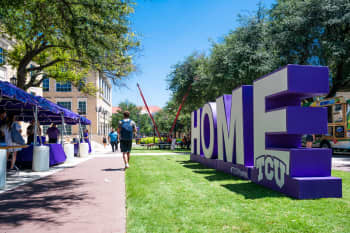


TCU Athletics is often the first exposure that prospective students get to the university. To that, it is critical the university leverages its athletics arm in the right moments. In recent years, with the successes of TCU Baseball, the university has hosted several events in Omaha, NE during the College World Series. In turn, TCU has seen an increase in applicants from Nebraska.
With that said, Einstein doubled-down. “While many students see TCU as this great athletic school, the reality is there’s a heck of a lot more to TCU than that. So we have to be really careful to not overplay that [athletics aspect] because it would not do justice to our faculty and the other elements of the university that make TCU so special.”
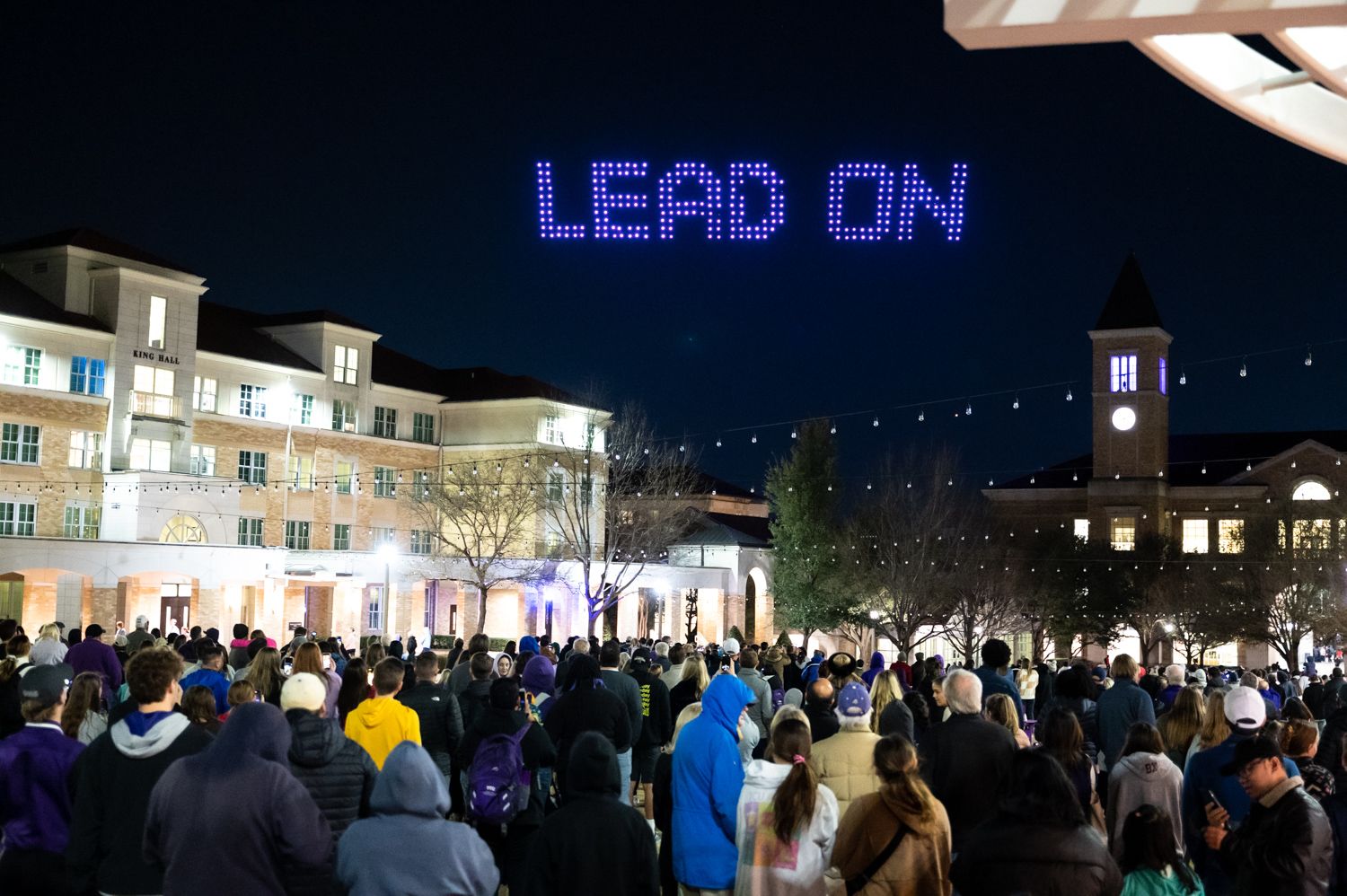
Texas Christian University drone show celebrating 150th anniversary in Campus Commons display Lead On, on January 27th, 2023.
Texas Christian University drone show celebrating 150th anniversary in Campus Commons display Lead On, on January 27th, 2023.
Admissions and academics go hand-in-hand, and you can’t have one without the other. Cohen concurs with this ideology, but specifies that when football does well the university equally benefits. “The more you have applications, the selectivity in admissions goes up. Then your academic profile goes up. So I think TCU is a great example of knowing what athletics means to an institution,” he said.
Over the last 20 years, TCU has committed itself to growing and diversifying as a university. Utilizing its various sectors, including the parallels between admissions and athletics to market to prospective students, the university will continue to flourish and Lead On for years to come.
 Built with Shorthand