
Swipe, scroll, repeat: but at what age?


As smartphones are becoming increasingly integrated into children’s daily lives, a growing divide is emerging among parents:
when should they allow their kids to get a phone?


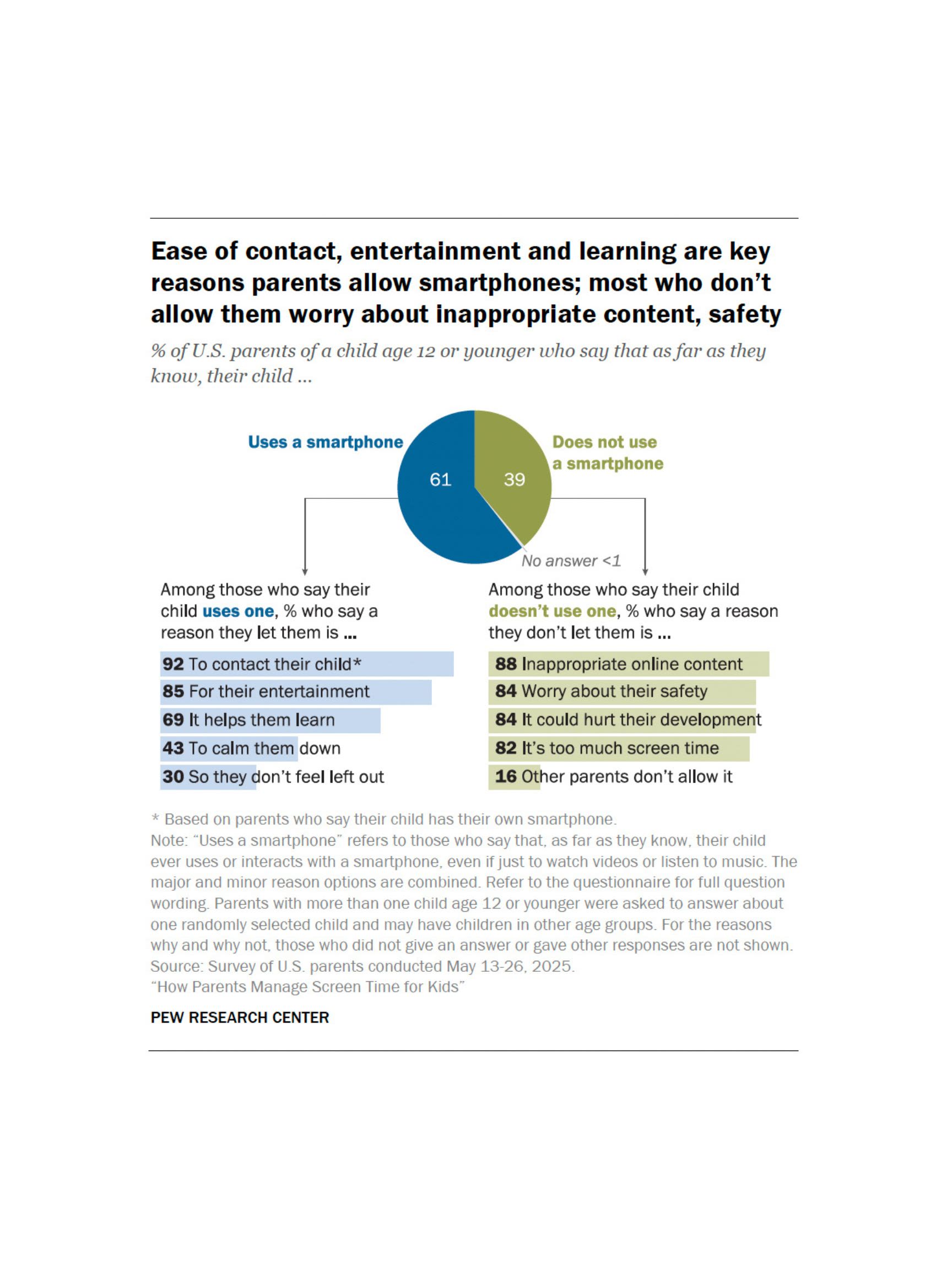
About 92% of parents say that the primary reason they let their children use smartphones is to get in contact with them, according to a Pew Research Center survey.
However, the same survey found that 88% of parents do not want their children to use a smartphone because of the potential exposure to inappropriate online content.

Tom Kersting, a clinical psychotherapist who gives lectures about teenagers and their technology use, said the number one question that parents ask pertains to when they should get their child a smartphone.
He warns parents that early smartphone access can be serious.


“And my response is, when you feel comfortable with your child watching pornography, because that is what is going to happen at an age when they shouldn’t be looking at that stuff,” he said, calling this viewpoint his “woah moment.”
Along with the potential of being exposed to extremely mature content, Kersting raised another concern: exposure to violence.
“Now, every single thing is caught on camera — shootings, carjackings, violence and bombings. When you’re exposed for the first time, it’s like — woah,” he said. “But if you’re seeing that over and over again, you become desensitized to the violence. When you become desensitized, it almost becomes normalized.”


Whitni Waldrop, a mother of three, said her youngest, Mila, got her first smartphone at 11 years old.
“I didn't want her to get a phone at all,” she said.
Waldrop said her husband disagreed with her, arguing that Mila should be able to get a phone at the same age as her siblings.
But Waldrop’s reasoning was simple: access to a phone depends on the child, not the age.
“For some reason, I just didn’t feel like Mila was quite as ready,” she said.
After Mila got her phone, Waldrop’s concerns about her readiness were confirmed.
“She’s had it taken away more than my other two have,” she said, recalling times when Mila’s texting — like repeatedly messaging her friend’s parents to sign their kids up for a camp — went beyond what was respectful. “I started trying to control it a little bit more after that.”

This conflict between parents and children over smartphone use isn’t uncommon.
“If a parent is already fully enveloped with their kid, and it’s constant conflict, one of the reasons why they are hesitant to do something is because of the oppositional defiant behavior that's going to ensue inevitably,” Kersting said.
Kersting said that, in his experience, these struggles often leave parents second-guessing their choice to give their child a smartphone.


“In all the lectures I've done all over the country over the years, I've had countless parents come up to me and say the biggest mistake ever made was getting their kid a smartphone,” he said. “I never had a parent come up to me and say the smartest thing they ever did was get their kid a smartphone.”
 Built with Shorthand