
Shaping the Future
Political Engagement Among TCU Students in a Polarized Era



Political engagement among college students is a cornerstone of shaping the future of the nation. At TCU, students are navigating the complexities of practicing civic involvement in an era defined by political polarization and increasing demands for political literacy. Through a recent research project, I delved into the political actions, behaviors, and barriers faced by TCU students, uncovering insights into their engagement while identifying opportunities to foster deeper involvement. The findings reveal not only the challenges but also the potential for TCU students to play a transformative role in their communities and beyond.
https://www.youtube.com/watch?v=eWV_xvkDc7s


As young voters on college campuses, students hold crucial political power. This sentiment was emphasized during my interview with a local Fort Worth congressman who emphasized the importance of youth participation in the democratic process: “The voice and the vote of the young folks is what matters the most. We are building a world for your future families to live in.” His words underscore the critical need for empowering college students to engage with policies that will shape their lives and the lives of future generations. Yet, despite this acknowledged importance, barriers such as time constraints, lack of information, and discomfort with political discussions persist, limiting full participation.

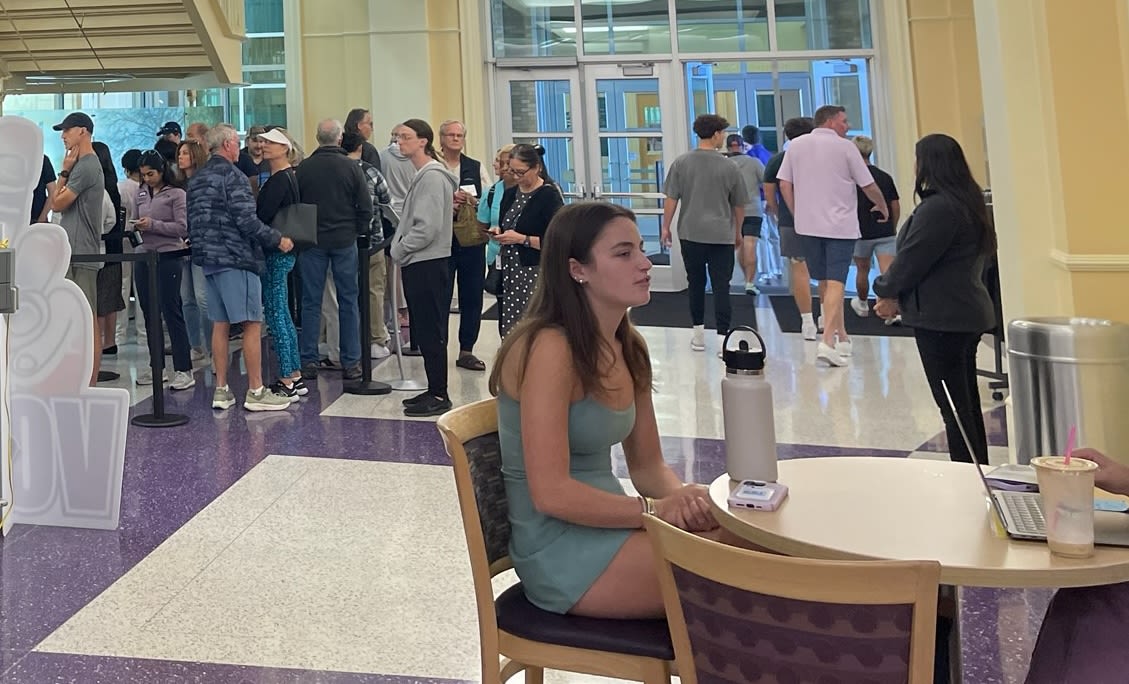
The premise of my research included but was not limited to an anonymous survey conducted among 30 TCU students. The respondents represented various academic classifications, with 20 percent being first-year students, 33 percent sophomores, 26.7 percent juniors, and 20 percent seniors. This level of diversity suggests a broad interest in civic engagement across the university. However, when it came to political leanings, the responses echoed a significant imbalance: among the 30 students who disclosed their party registration, 92.3 percent identified as Republican, and only 7.7 percent as Democrat.

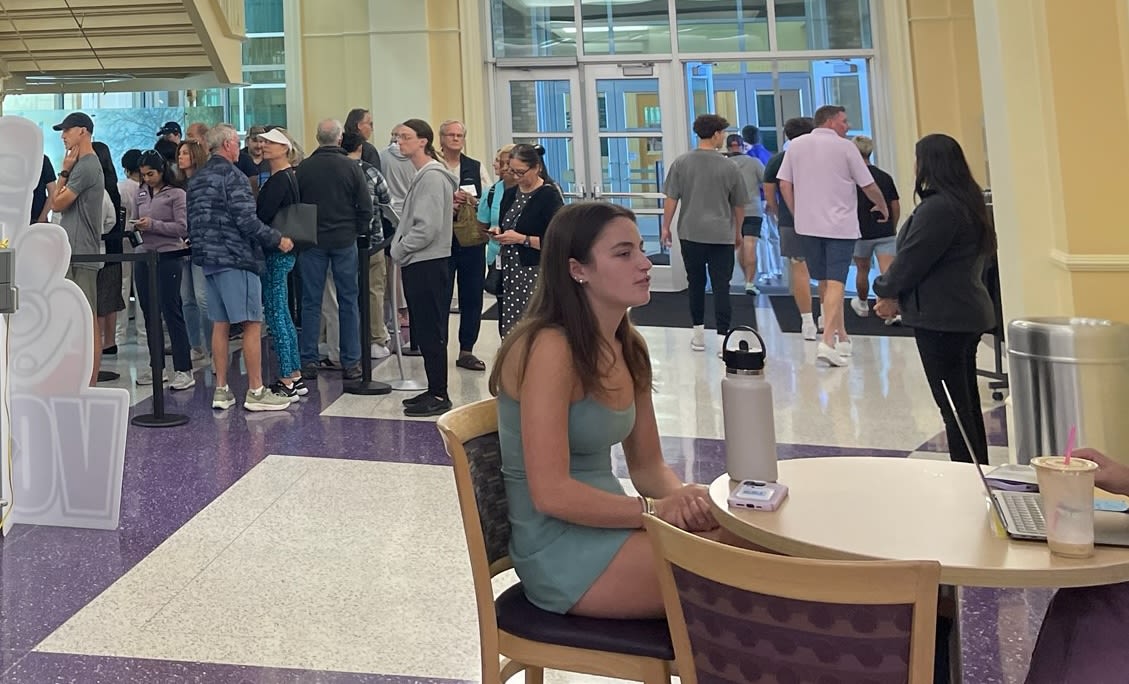
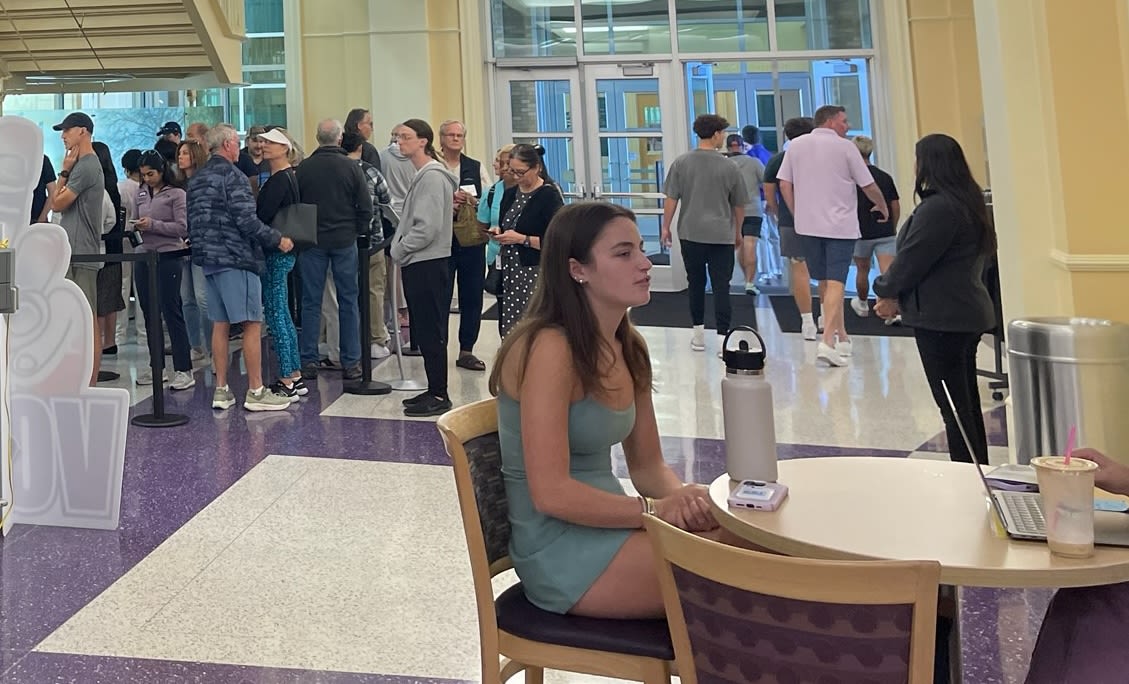
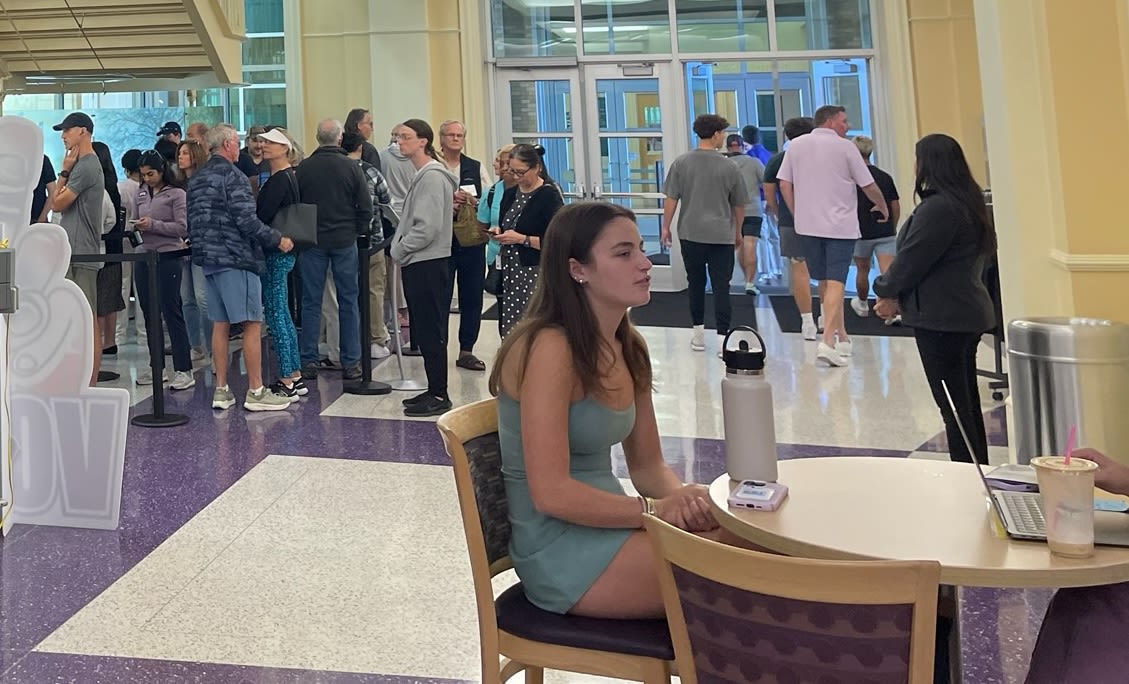
Who Won the Campus Vote
This profound disparity reflects both the influence of Texas’ traditionally conservative political climate and the campus culture at TCU. The state’s political landscape has long been shaped by Republican dominance, with 56.2 percent of Texans voting for Donald Trump in the 2024 presidential election. This external environment undoubtedly impacts the political leanings of students. Yet, the internal dynamics, including the tone of political discussions in and out of the classroom and the inclusivity of differing perspectives, also play a major role.


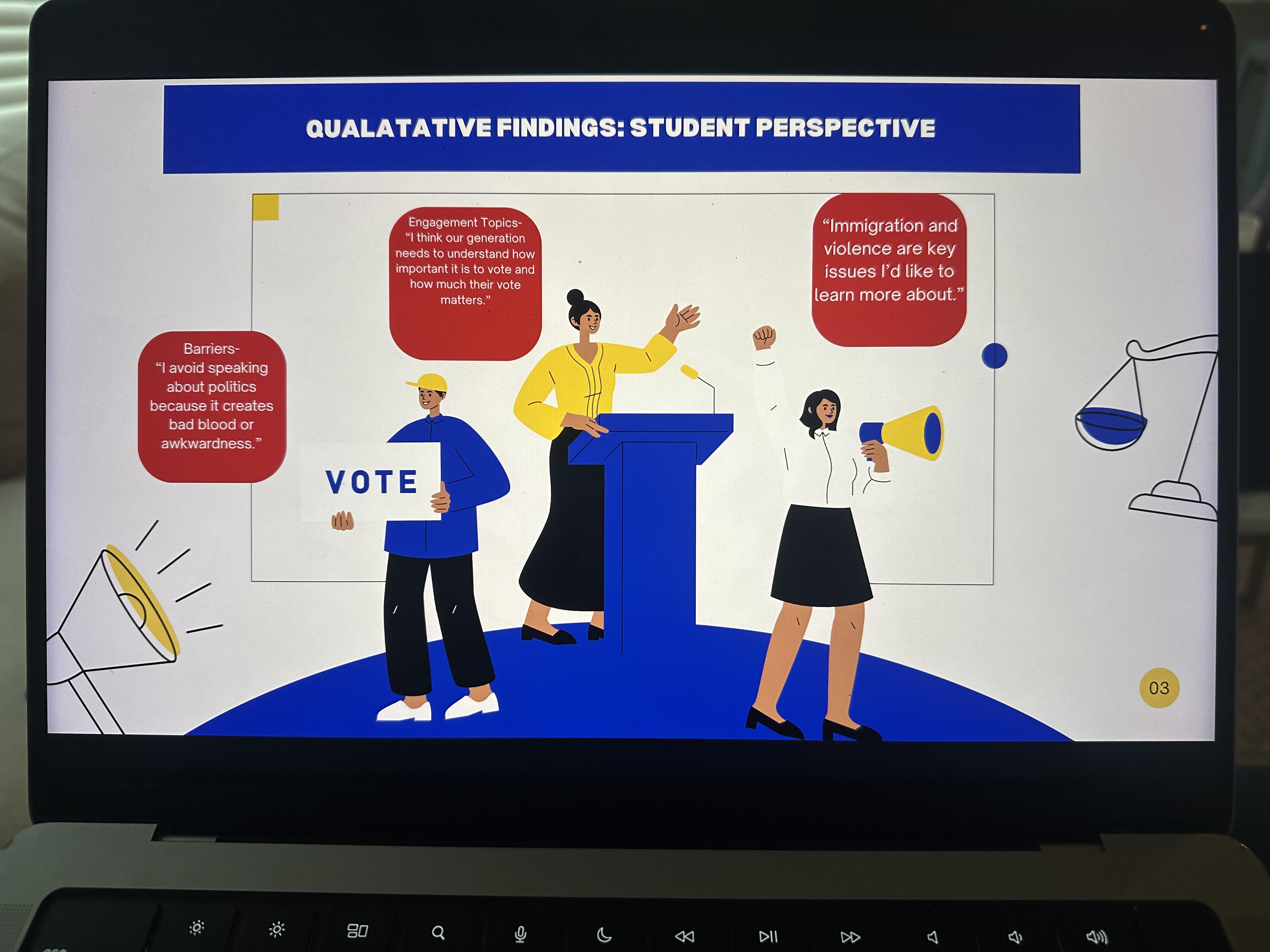
Many students described barriers to political participation that mirrored broader trends among young voters nationwide. These included lack of time (36.7 percent), uncertainty about how to get involved (40 percent), and feeling uninformed about political issues 40 percent). One respondent candidly shared, “I avoid speaking about politics because it creates bad blood or awkwardness.” This sentiment resonates with the current climate of polarization, where civil discourse often gives way to heated arguments, discouraging open dialogue.

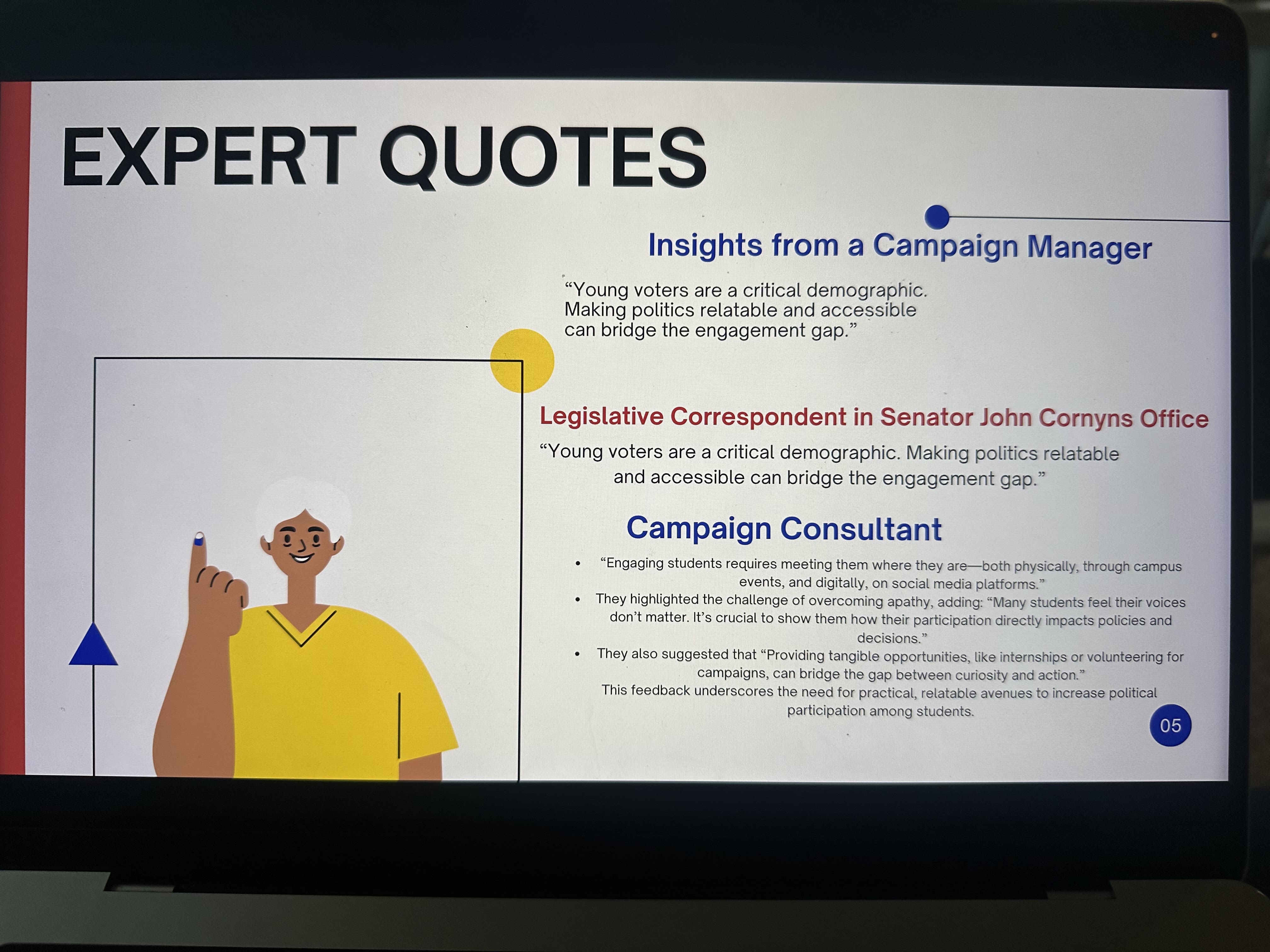
These challenges are not unique to TCU but reflect a major national trend of disengagement among young voters. According to data from the U.S. Census Bureau, while voter turnout among 18- to 24-year-olds increased to 50 percent in the 2024 election, it still lagged behind older age groups. Factors such as inaccessible resources, lack of civic education, and disillusionment with political processes contribute to this disparity. However, as a legislative director on Capitol Hill noted during our interview, young people are beginning to make their presence felt in government spaces: “We see a lot of engagement with young people on Capitol Hill. We have thousands of college-level students interning each year.” This observation echoed the untapped potential of young voters to influence policy and political discourse when given the right tools and encouragement.
Despite the barriers identified in the survey, there were promising signs of civic participation among TCU students. A remarkable 86.7 percent of respondents reported voting in their local, state, or national elections, a significant level of engagement compared to national averages for college-age voters. However, other forms of political involvement, such as advocacy or activism (16.7 percent) and attending rallies or events (13.3 percent), were notably less common. This suggests that while students recognize the importance of voting, they may lack opportunities or motivation to engage in other meaningful forms of political expression.

When asked what would inspire greater involvement, 63.3 percent of respondents pointed to the need for more information about political issues. This finding underscores the importance of education in fostering engagement. Other common suggestions included opportunities to participate in political events (40 percent) and hosting workshops or discussions on political topics (36.7 percent). One student in my surveying remarked, “TCU should host voting and put out more signs for students to be aware that they can register to vote. A lot of my roommates missed that this year, so they didn’t vote here in Texas.” This practical suggestion highlights how simple measures like increased visibility and accessibility can significantly impact voter turnout.
Creating spaces for open dialogue is another critical avenue for fostering engagement on campus. Several respondents expressed a desire for political discussions to become more normalized on campus. One student suggested, “I think politics should be an open discussion in the classroom to broaden every student’s views and beliefs.” By encouraging respectful and inclusive conversations, TCU can help students navigate the discomfort often associated with political discourse while fostering a culture of understanding and collaboration.
The survey also accessed the topics students believe have the greatest impact on their generation. Responses revealed a diverse array of concerns, including immigration laws, abortion rights, economic challenges, and the role of media in shaping political perceptions. One respondent emphasized the importance of voting, stating, “Our generation should learn how important it is to get out and vote and how much their vote matters.” These insights reflect a deep awareness of the issues facing young people today and highlight opportunities for targeted educational initiatives to address these concerns.
One of the most striking findings from the survey was the overwhelming support for Donald Trump among respondents in the 2024 election. An astonishing 90 percent of participants reported voting for Trump, compared to just 10 percent who supported Kamala Harris. This stark divide underscores the challenges of fostering bipartisan dialogue on a campus where political affiliations are heavily skewed. Several students acknowledged the difficulty of navigating such a polarized environment. As one respondent put it, “I typically like to keep my political opinions to myself, but I will definitely voice why I voted for a specific candidate.” This tension between self-expression and conflict avoidance reflects the broader challenges of promoting open and respectful political discussions in today’s climate.
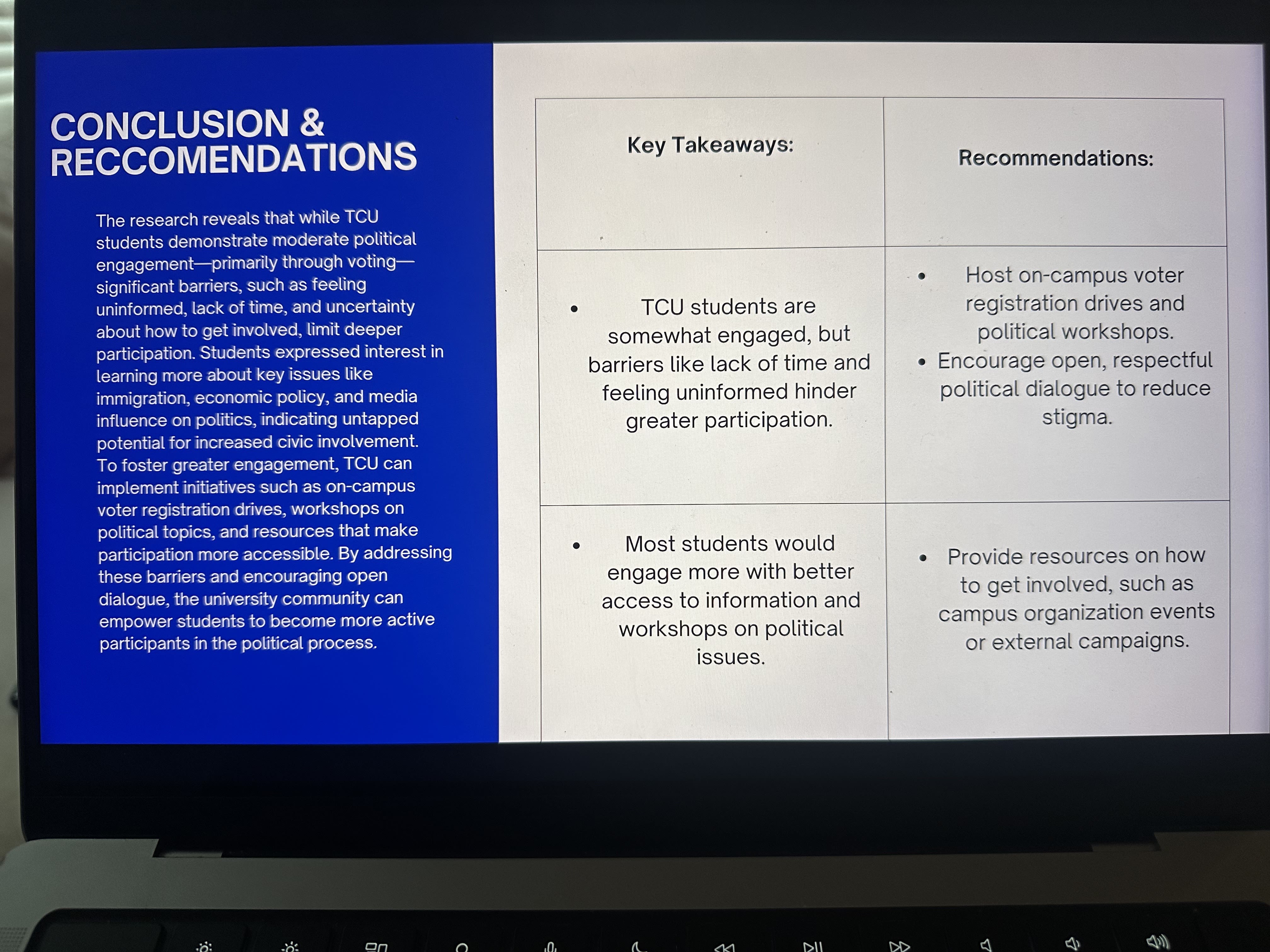
Moving forward, TCU has a unique opportunity to support its students in becoming active participants in democracy. Several respondents offered strategies for how the university could enhance political engagement. These included hosting voter registration drives, inviting guest speakers, and creating a monthly newsletter with updates on political events and issues. One particularly compelling idea was integrating political education into the curriculum. As one student explained, “I think politics should be an open discussion in the classroom to broaden every student’s views and beliefs.” By incorporating political literacy into academic programs, TCU could equip students with the knowledge and confidence to navigate complex political landscapes.
Additionally, fostering a culture of civic engagement requires addressing the barriers identified in the survey. This includes providing resources to help students overcome time constraints, creating accessible platforms for political involvement, and ensuring that students feel informed and empowered to participate. Practical measures, such as partnering with local organizations to host political events or offering workshops on activism and advocacy, can make a significant difference.
In the words of the Fort Worth congressman, “The voice and the vote of the young folks is what matters the most.” This sentiment captures the immense potential of TCU students to become leaders in their communities and beyond. By addressing the barriers to political engagement and creating opportunities for meaningful participation, TCU can empower its students to take an active role in shaping the future. With the right support and resources, the Horned Frog community can build on its enthusiasm and make a lasting impact on the democratic process.
 Built with Shorthand