
Same household, different screens
How 16-year-old twins navigate social media


Julie Vitek waited until her twins turned 13 before she gave them their first cell phone.
At 15, she sat them down to talk about social media. Her biggest concern: it promotes boredom and pulls children away from being present.
A year later, the twins have become something of an experiment, as one navigates social media and the other ignores it.
Henry is part of the 5% of American youths ages 13 to 17 who don’t use a social media platform, according to the National Library of Medicine.
His iPhone screen is barebones when it comes to social media.
“I'm a people person,” he said. “So, I'm worried that if I got it, it would possess my life and take away my ability to stay focused on one thing at a time.”
Whether it is during school lunches or weekend dinners, Henry said it bothers him that even while they’re together, his friends often interact with each other on their devices.
“I think a big part of the reason that I choose not to go towards social media is because I see how it affects my friends,” he said.



Henry’s concerns reflect a broader trend.
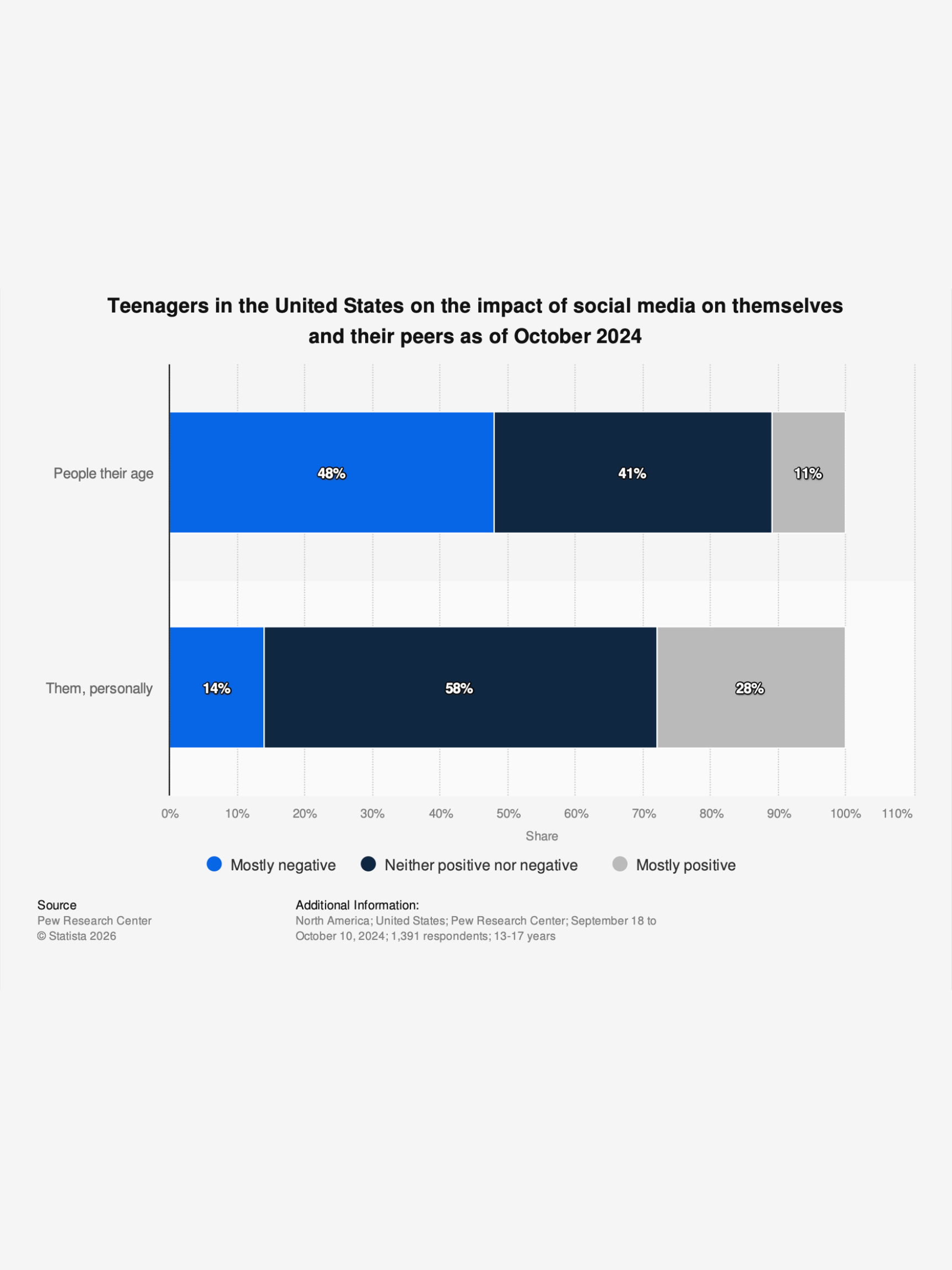
A Pew Research Center survey found that 48% of U.S. teenagers thought that social media had a mostly negative effect on their peers.
Henry said without social media, his outlook on life is simpler. He said the topics trending on social media, such as other people’s lives, politics and sports, would fog up his vision.
“I think a lot of the time, social media can leave a thought burning in your head about something that keeps you preoccupied and takes away your ability to look at what is happening in the present moment,” he said. “I think throughout the day, it’s a lot more meaningful to see exactly what is happening without thinking about what’s coming next.”

Meanwhile Sylvie, his twin sister, is on two platforms.
Snapchat came first, at the end of her sophomore year. She downloaded Instagram at the beginning of her junior year.
Sylvie said before she downloaded these apps she was rarely on her phone.
“Before I got Instagram and Snapchat, my screen time was maybe an hour a day,” she said. “And now, it’s gone up maybe three or four hours. I probably use Snapchat more, just because I text my friends on it. With Instagram, I just like to look at my friends’ posts.”
Still, Sylvie said she is not on social media as often as her friends. While she acknowledges these platforms can be addictive, she said she is intentional about balancing her time on the apps.
“I can’t really scroll for that long because I’ll just get so bored of it,” she said. “The longest I’ve really scrolled is maybe like an hour. Most of the time, I’ll scroll for 20 minutes and then try to do something else.”


Although Henry and Sylvie took different paths, Julie said she is proud of both her children and the decisions they have made.
“Sylvie is wonderful with self-esteem and self-regulation. She does a really good job about monitoring herself,” she said. “Henry has made a really, really mature decision for himself to not have it. Being his personality, he feels that it wouldn’t be the best thing for him.”
In a household shaped by two different choices, there is no single right way — only what works best for each child.
 Built with Shorthand