
Generative AI: a transformative force at TCU

Generative artificial intelligence has taken higher education by storm, and at TCU, it is changing how students study, write papers and complete assignments.
In a 2024 global AI student survey conducted by the Digital Education Council, 86% of students said they use AI in their studies; 54% use AI on a weekly basis and 24% use it every day.

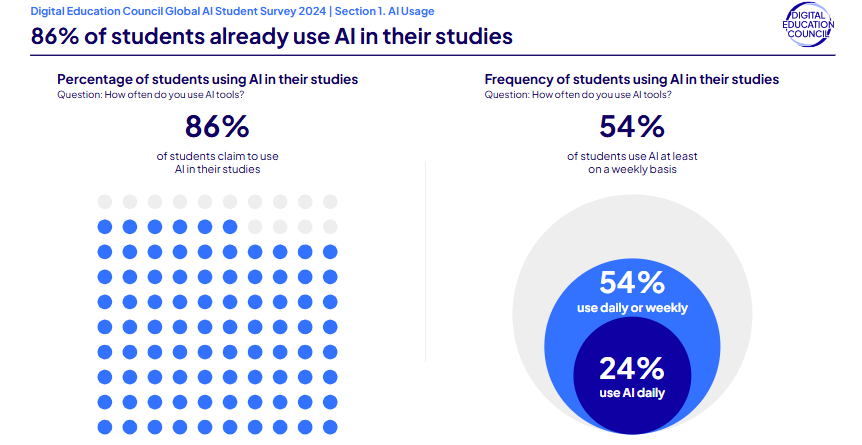
The Digital Education Council surveyed 3,839 students across 16 countries and found that AI tools were prominent on a daily and weekly basis in academics (Courtesy of the Digital Education Council).
The Digital Education Council surveyed 3,839 students across 16 countries and found that AI tools were prominent on a daily and weekly basis in academics (Courtesy of the Digital Education Council).

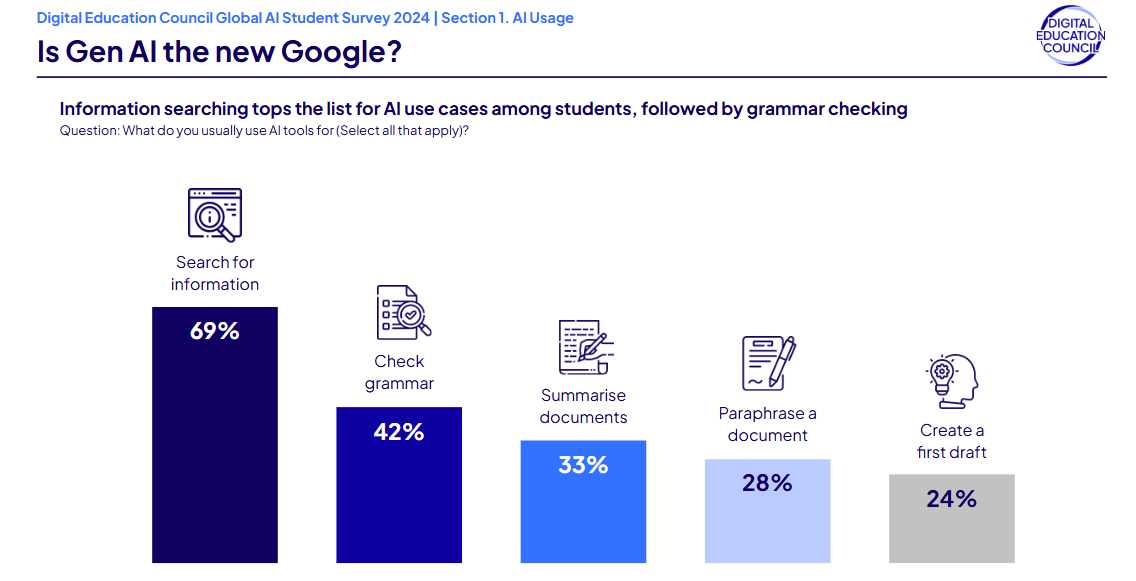
According to the 2024 Global AI Student survey, information searching tops the list for academic generative AI uses (Courtesy of the Digital Education Council).
According to the 2024 Global AI Student survey, information searching tops the list for academic generative AI uses (Courtesy of the Digital Education Council).
"Generative AI refers to deep-learning models that can generate high-quality text, images, and other content based on the data they were trained on," according to IBM Research. "At a high level, generative models encode a simplified representation of their training data and draw from it to create a new work that’s similar, but not identical, to the original data."
Searching for information was the top academic use for generative AI, with 69% of students surveyed reporting using AI tools for that reason. Other leading uses included checking grammar, summarizing or paraphrasing documents and creating a first draft.
At TCU, students credit a variety of AI tools for boosting their productivity and aiding with their studies. The university has plans to substantially invest in AI in fiscal year 2026, and a new workshop initiative is helping faculty members develop generative AI literacy to facilitate student success.



ChatGPT
ChatGPT is the most used AI tool, with 66% of students in higher education claiming to utilize it in their studies, according to the global AI student survey. Launched in November 2022 by OpenAI, the chatbot was trained using reinforcement learning from human feedback (RLHF), which uses conversations from human AI trainers to create a dialogue response format.


ChatGPT is available as a website and an app, generating human-like dialogue based on its Reinforced Learning from Human Feedback (RLHF) training (Courtesy of AP Photo).
ChatGPT is available as a website and an app, generating human-like dialogue based on its Reinforced Learning from Human Feedback (RLHF) training (Courtesy of AP Photo).

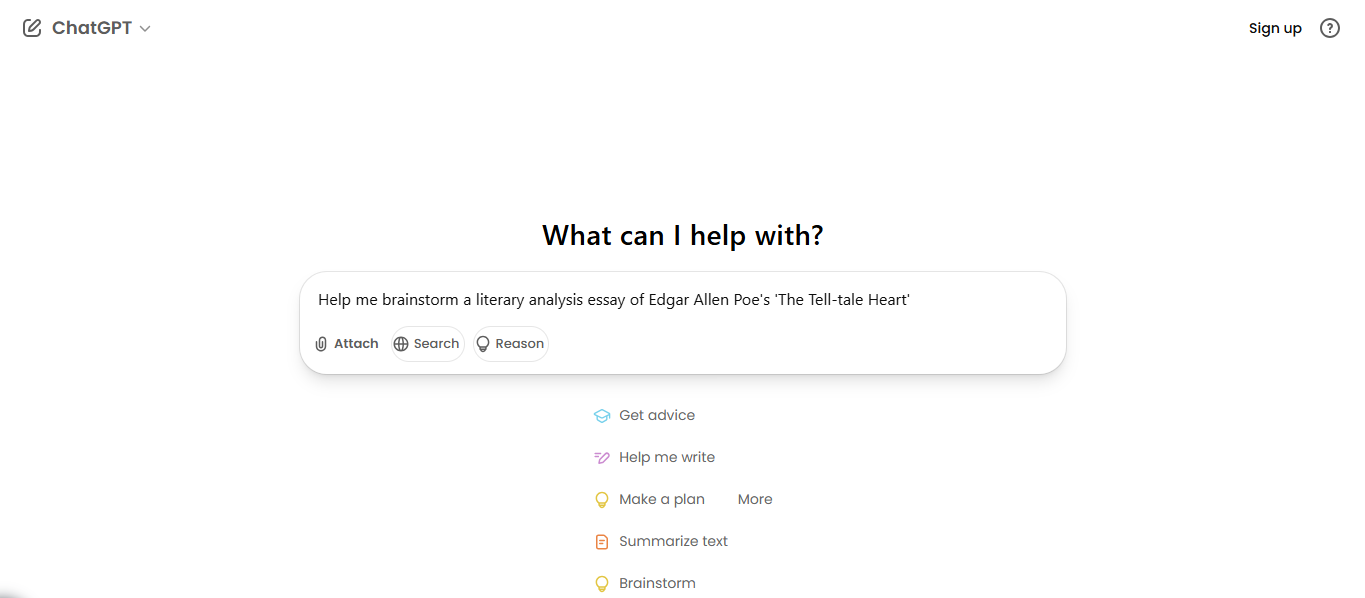
Brainstorming essay topics is one of the many uses TCU students consult ChatGPT for (Courtesy of Eleni Simatacolos/ChatGPT).
Brainstorming essay topics is one of the many uses TCU students consult ChatGPT for (Courtesy of Eleni Simatacolos/ChatGPT).
Sophomore pre-business major Elle Nicholas said she started using ChatGPT as a first-year student in October 2024. Nicholas subscribes to ChatGPT Plus, for $20 a month.
The chatbot helped her drastically improve both her grades and productivity, she said.
"I use ChatGPT for every class," Nicholas said. "It helps me complete my biology exams, checks my economics answers before I turn them in and it brainstorms writing ideas for my English class."
But Nicholas said she is not reliant on ChatGPT.
“I could do all the same things on my own, but ChatGPT helps me save so much time and mental energy,” she said.
Maddie White, a sophomore accounting major, said ChatGPT boosted her productivity when she was a first-year student and it helped her craft a strongly-worded resume.
Still, White said she worries her over-reliance on the chatbot has damaged her critical thinking skills.
“Using ChatGPT so heavily meant I didn't have to concentrate or think as hard, which I believe has harmed my ability to think critically and creatively,” White said.

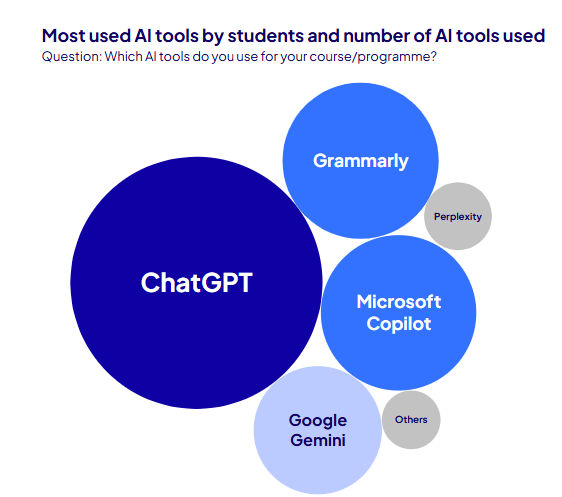
ChatGPT emerged as the most used for coursework among other AI tools, according to a 2024 global AI student survey (Courtesy of the Digital Education Council).
ChatGPT emerged as the most used for coursework among other AI tools, according to a 2024 global AI student survey (Courtesy of the Digital Education Council).

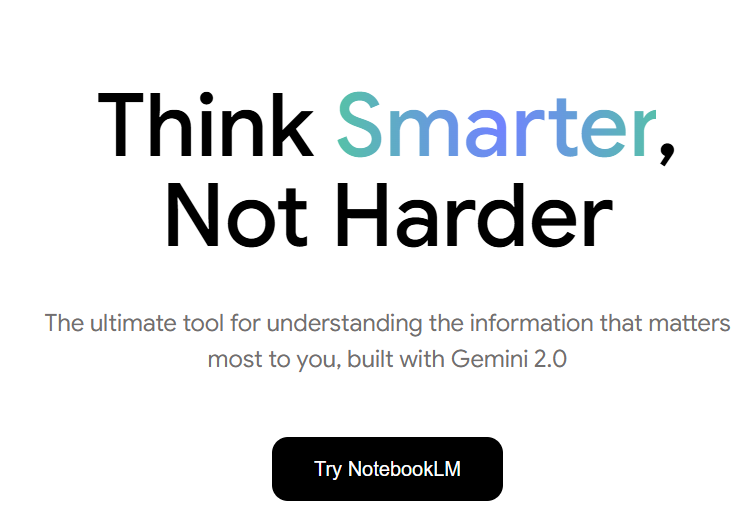
The homepage for Notebook LM, a generative AI research and note-taking tool (Screenshot by Eleni Simatacolos/NotebookLM).
The homepage for Notebook LM, a generative AI research and note-taking tool (Screenshot by Eleni Simatacolos/NotebookLM).
NotebookLM
Some TCU students are using NotebookLM, a generative AI application, to help with their coursework. Developed by Google Labs, NotebookLM is a research and note-taking tool that works as a personal assistant to help students study uploaded materials.
Luke Farr, a junior majoring in biology, said during his sophomore year, NotebookLM was a time-saving tool that helped him balance his pre-med workload with clubs, religious obligations and other on-campus involvements during the spring semester.
Farr said NotebookLM was the most useful when he studied for cell biology. He said he uploaded 50-minute lecture recordings, notes and class PowerPoints to the the tool, which in turn generated study guides that provided a broad overview of the materials with key terms defined.
NotebookLM’s Audio Overview feature, which creates podcasts from uploaded materials, was the most advantageous, Farr said. He described the feature as a dialogue between two AI-generated personas that sounded like normal conversation.
“LM’s Audio Overview feature allows me to listen to an engaging podcast about my uploaded material while doing chores or going on a walk,” he said. “The AI people even used human filler words like ‘um’ and ‘like’ during the podcast, which shocked me the most.”
Listen here for a podcast generated by NotebookLM that helped Farr study cell membrane transport for cellular biology.
He compared NotebookLM's Beta Mode to visiting a professor in office hours. He said it let him ask the AI-generated personas questions by audio and receive responses by podcast form.
“I was able to ask the AI people by audio more questions than I was able to ask any professor during office hours because of their packed schedules,” Farr said.

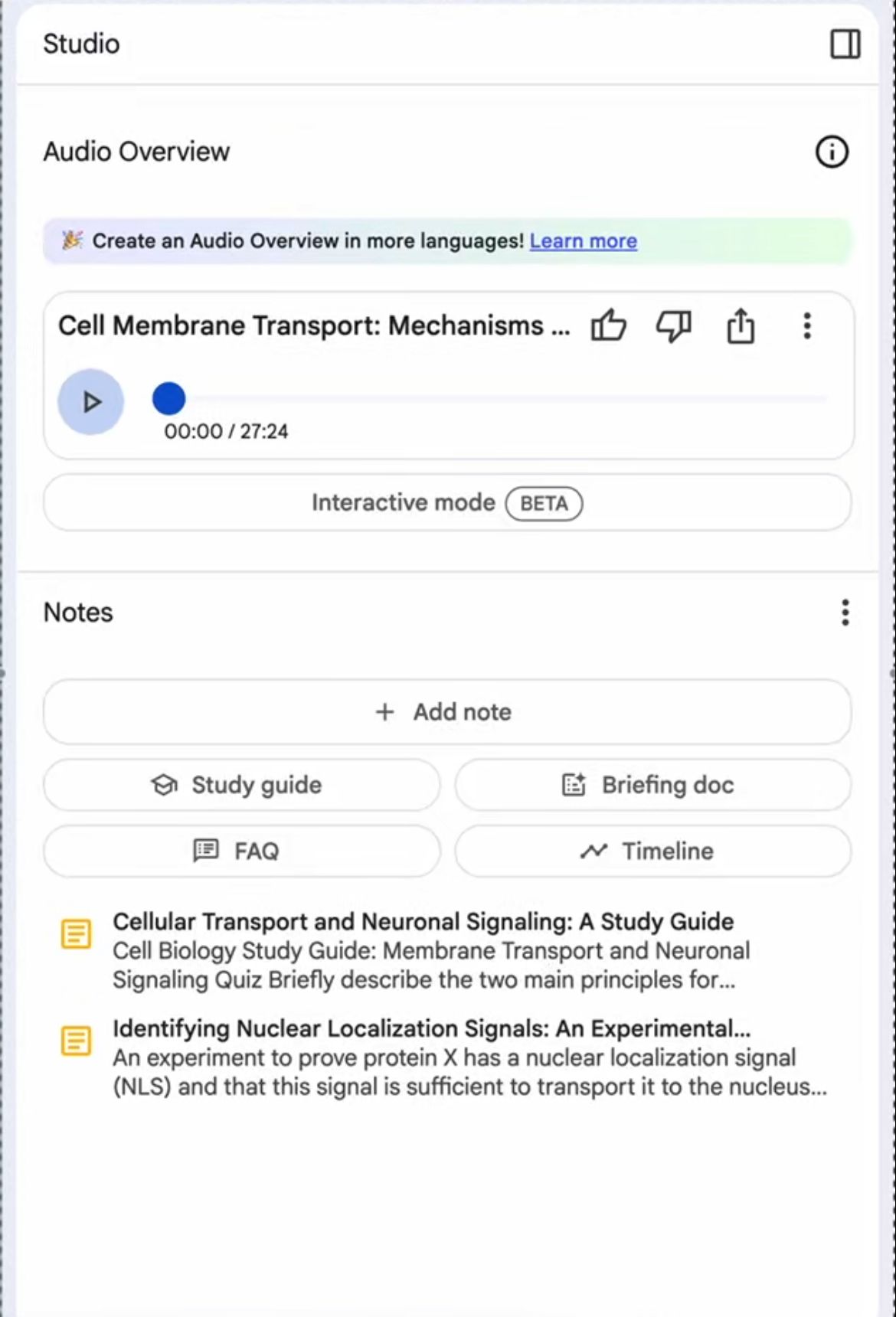
Screenshot of the NotebookLM Audio Overview feature helping Farr review cell membrane transport in podcast form (Screenshot courtesy of Luke Farr/NotebookLM).
Screenshot of the NotebookLM Audio Overview feature helping Farr review cell membrane transport in podcast form (Screenshot courtesy of Luke Farr/NotebookLM).
How will AI evolve at TCU?
During a spring town hall meeting, TCU Chief University Strategy and Innovation Officer Tom Wavering said the university is planning to heavily invest in AI looking forward.
“We’ll be bringing in significantly more capabilities around AI infrastructure,” Wavering said.
This investment will promote the research, scholarship and creative activity pillar of the LEAD ON: Values in Action Strategic Plan. Wavering said in a Values In Action blog post that TCU plans to implement a comprehensive AI framework in fiscal year 2026 to accelerate academic, research, scholarship and creative activities.



Equipping faculty with generative AI skills
As part of TCU’s effort to invest in AI infrastructure, the Koehler Center for Instruction, Innovation and Engagement is equipping faculty with the ability to effectively implement generative AI in their teaching.
The Koehler Center started offering generative AI faculty workshops in January 2025.
Dr. Rebecca Putman, a faculty developer at the Koehler Center, led 22 generative AI workshops. Putman said the faculty members who attend the workshops were motivated by teaching excellence.
“They truly care about the student experience in their classrooms at TCU, and they want to integrate AI meaningfully into their courses so that students are successful now and in their future careers,” she said.
The Koehler Center offered five categories of generative AI workshops this semester.
Putman directed eight AI 101 workshops, which she repeated every month. These workshops offer a brief introduction to generative AI in higher education. They focus on modeling AI literacy and ethical use of AI tools.


Dr. Rebecca Putman is a faculty developer dedicated to enhancing faculty capability and student-centered approaches to teaching, according to the Koehler Center website (Headshot courtesy of Glen E. Ellman/The Koehler Center).
Dr. Rebecca Putman is a faculty developer dedicated to enhancing faculty capability and student-centered approaches to teaching, according to the Koehler Center website (Headshot courtesy of Glen E. Ellman/The Koehler Center).
Eight workshops focused on leveraging generative AI to integrate it meaningfully into assignments and communicate clear expectations of AI use through syllabi and rubrics. These workshops also focus on limiting AI use in assignments focused on developing foundational knowledge.
The Koehler Center offered two workshops on AI challenges and solutions in writing emphasis classes, two on boosting efficiency through generative AI and two on how to create and use custom generative pre-trained transformers (GPTs).
TCU’s investment in AI, faculty workshops and the student adoption of AI tools signal a new chapter in the student experience — one that will transform how students learn and prepare for their future careers.



 Built with Shorthand