
Frogs at the ballot box:
How TCU students formulate their political views
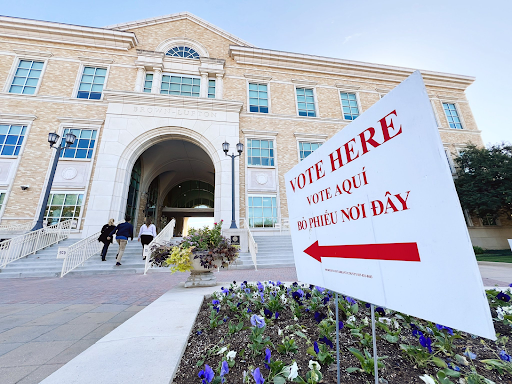

In the aftermath of one of the most pivotal elections in our nation’s history, there has been one glaring group that had a sway in the results: college students. According to a study by Tufts University, college students are historically one of the lowest turnout groups- 52-55% of registered voters aged 18-29 voted in 2020, yet about 42% of voters in that demographic voted in 2024. Additionally in 2024, 14% of the electorate was made up of college-aged voters. However, they still were a force to be seen as Donald Trump won the presidency with the help of his improved performance with college-aged voters.
There are a variety of reasons TCU students voted the way they did this election and why they hold the political beliefs they do.
Student responses
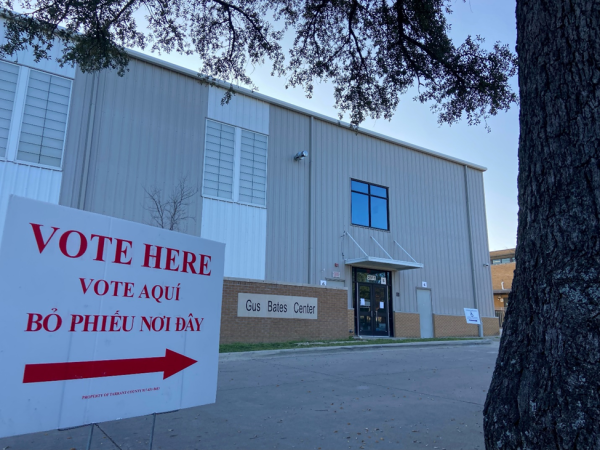
Between Oct. 28 to Nov. 12, 2024, 82 TCU students filled out a survey to understand their voting patterns and the roots of why they form the political opinions they do.
Most indicated they are registered voters, albeit most not in Texas. 70 respondents (85%) indicated they would be voting, however 53.6% of respondents indicated they were less than enthusiastic about the candidates.
TCU’s geographically diverse student body was reflected within the survey. 39.5% of respondents were from Texas, with the Midwest and southern California following. According to TCU Institutional Research, 12,273 students (as of Sept. 4, 2024) attended TCU and 54.1% hailed from Texas alone; the survey provided a more balanced number of students from other areas. In addition, 41.4% of respondents were seniors- indicating a large majority of older students being represented.
No college was left unrepresented. Every undergraduate college was represented, with most students studying in the AddRan College of Liberal Arts or the Schieffer College of Communication.

What exactly mattered to voting Horned Frogs?
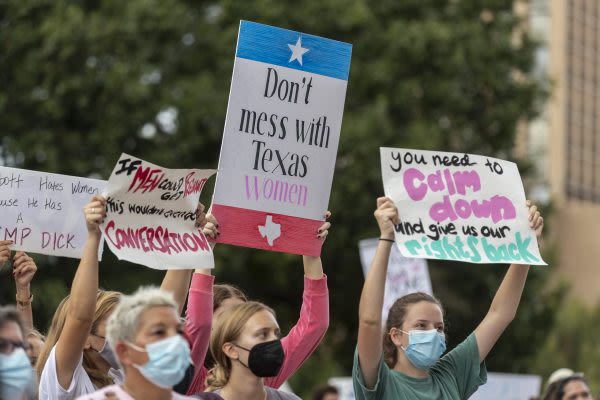
TCU students mirrored many college-aged voters regarding top issues. The top issues to respondents were the economy (60%), abortion (49%) and gun reform (33%). According to Forbes, these issues at the top of TCU students’ minds align not only with other college-aged voters nationwide, but also with voters overall.
Dr. Grant Ferguson, a political science professor at TCU who focuses on political behavior, found many TCU students have similar concerns as students nationwide, despite their outlook on these concerns being different.
He also notes “you don't need to be personally affected by a policy to have strong opinions on it. An example might be people who are really concerned about the economy… or people who are not at all concerned about jobs and the economy [can be equally concerned about the economy.]”

What do TCU students have to say about top issues?
Economy
Abortion
Gun rights & reform

Upbringing and outside influence
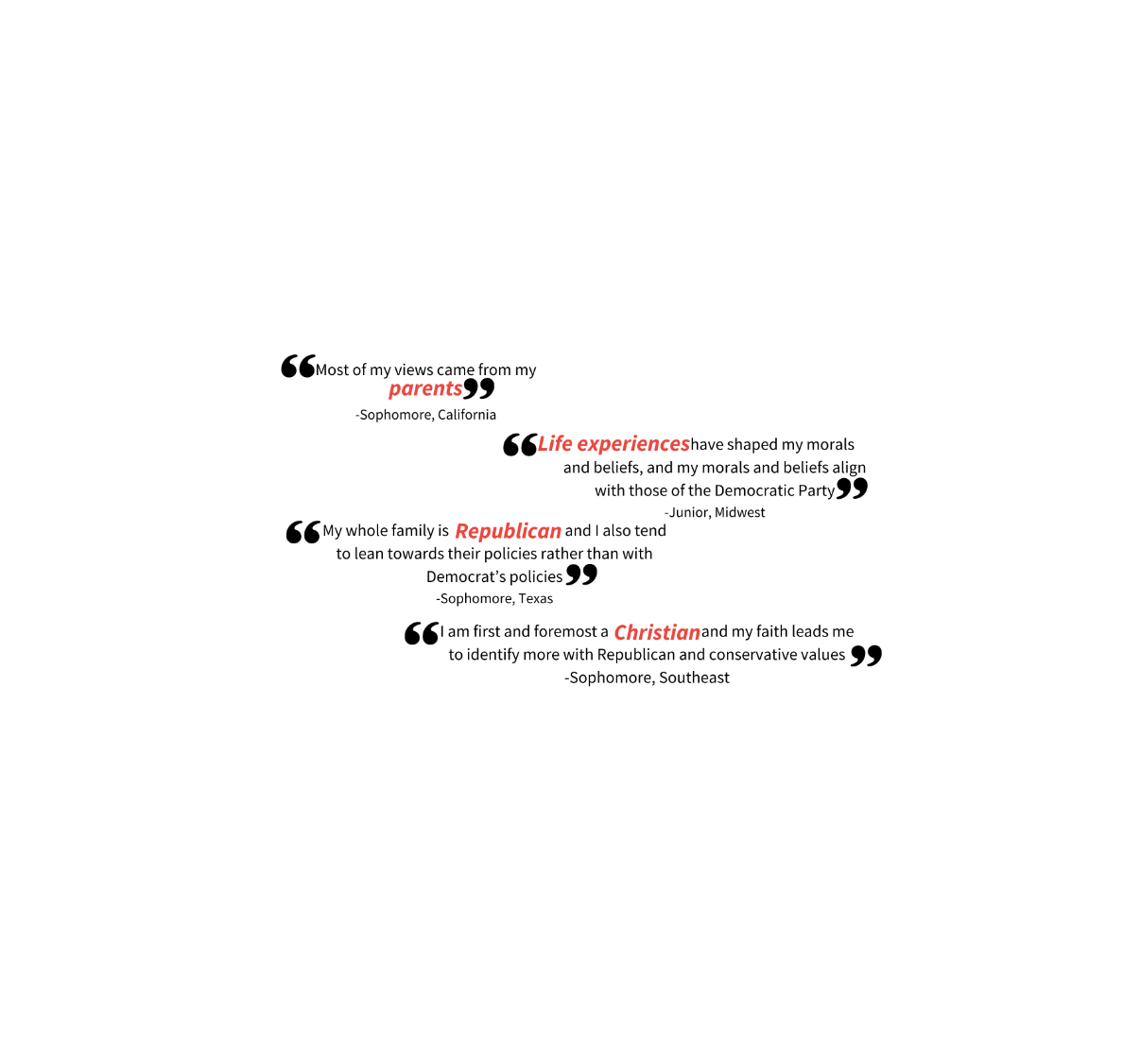
A student’s upbringing and how their parents vote and align themselves politically affects their outlook on politics. Dr. Jasmine Jackson, a political science professor at TCU who focuses on political behavior and black politics, notes that students tend to cling to their parents’ political views, especially younger students. “Students are not serving as a checking mechanism for their parents or having those conversations with their parents of why [they vote] this way,” Jackson said.
Jackson has also observed as students get older, the more free-thinking and diverse they become. She attributes this to younger students, like those in her Introduction to American Politics class, still retaining their parents’ views because they have not been as exposed to other perspectives. However, students in her upper-level Data Science & Public Policy course have more formulated views. “My upper level students are probably a little more liberal, but they are more diverse as well. I have non-traditional students and students of color in my upper level classes and they are coming from different walks of life,” Jackson said.
Not only does a student’s family affect their political views, so does their spiritual life. According to Dr. Ferguson, “the more religiously observant you are… you're more likely to take more conservative positions on issues.” This trend holds true to TCU students- of the 44 out of 82 students who answered they at least lean Republican, over half cited faith and religious upbringing as a key reason they choose to identify with the Republican Party.

Social media
Dr. Adam Schiffer, a political science professor at TCU who focuses on news media, attributes social media as one attribute to the formation of how college students’ form their political views.
Because social media is so quick and algorithm-based, Schiffer said, one is constantly simply swiping one way and receiving an overload of news. Because college students, and even Americans in general, are so busy, they don’t have much time to dissect all the news they absorb and likely remember only the most clickable headlines. According to Pew Research, 91% of adults aged 18-29 receive their news digitally, predominantly from social media.
96% of survey respondents indicated they receive news from social media. Social media is designed to generate talk and clicks, and political news is no exception. “The outrage narrative in the attention economy is made to get their clicks, they get their views by telling you that if your side doesn't win, America's going to be destroyed,” Schiffer said. With this outrage narrative at play, coupled with college students not having much time to do their own research, they are more likely to be susceptible to the threat of misinformation and disinformation.
Dr. Jackson also believes misinformation and disinformation influence students’ political opinions. “How misinformation and disinformation are presented and where it is rampant or where it comes from has evolved as we have also evolved as a society,” Jackson said.

Voting trends
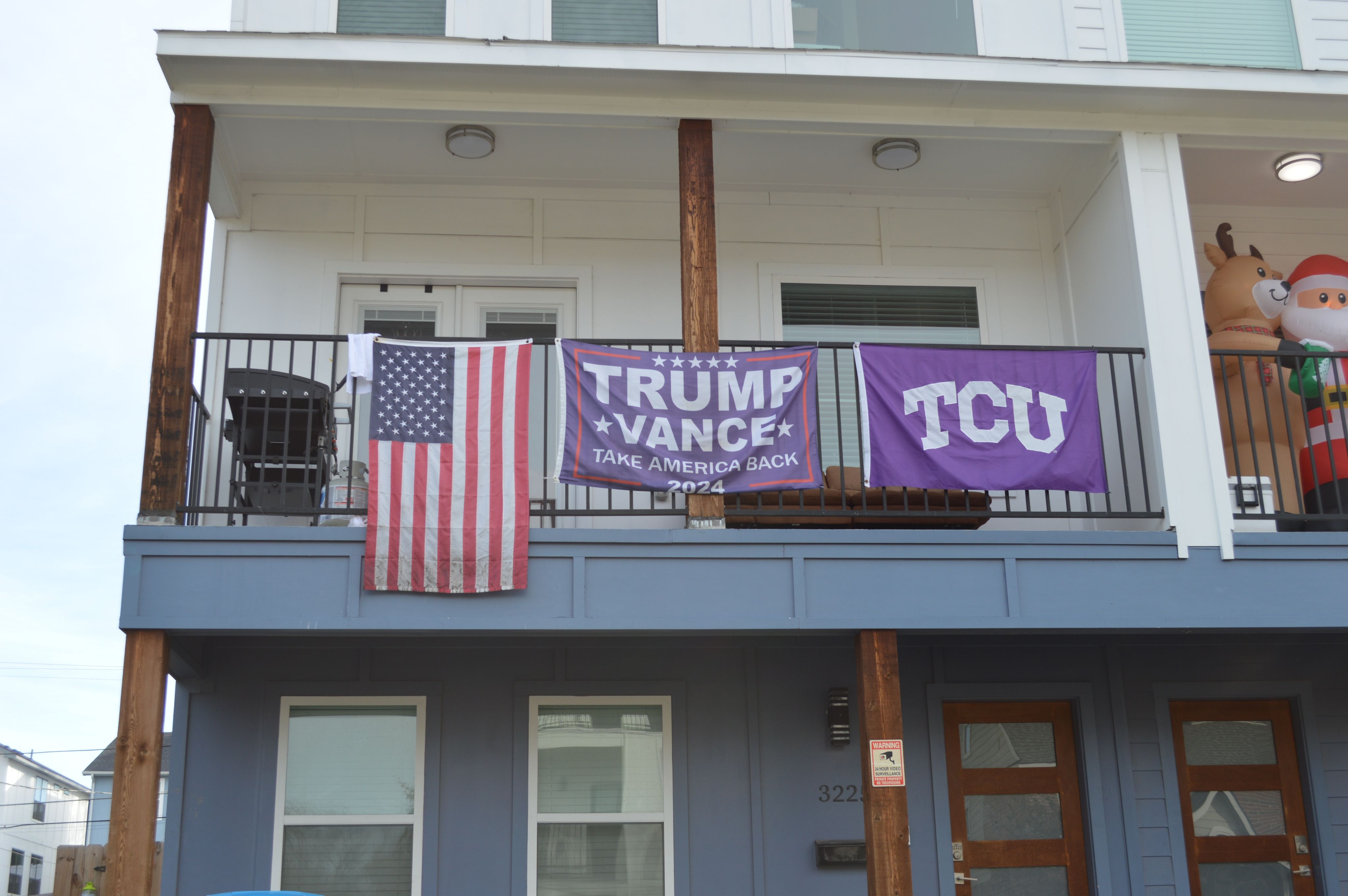
Nationally, the college-aged vote trended rightward. Dr. Jonathan Benjamin-Alvarado, TCU’s Chief Inclusion Officer, explains this was partly due to President-elect Trump’s appeal to young voters and capitalizing on a constant social media presence. “There's an effective capture in American society today of the notion of working for clicks more than anything substantive and I think that's what a lot of what Donald Trump has done really effectively… that speaks volumes of the influence of the media on social development and the political socialization of young people in the education sector,” he said.
Compared to 2020, the 18-29 age group shifted six points in favor of Trump, and Harris fell five points. 44 of the 82 survey respondents who leaned Republican or farther right all voted for Trump and 36 of those 44 cited the economy being in better hands under Trump as a catalyst for their vote. This reflects a nationwide trend of the youth vote shifting rightward.

Conclusions post-election
This research presents several conclusions about how TCU’s student body formulate its political opinions. First, it solidifies TCU’s reputation as a conservative campus compared to many across the country. This is influenced by students’ upbringing, strong religious beliefs being present, and social media’s hold on college-aged voters.
Second, it reveals that despite students’ more right-leaning views, they still share the same concerns as many college-aged voters nationally, such as the economy, abortion and gun reform. They may have different, more conservative opinions overall on these issues but they still care about them just college-aged voters in general do.
Third, the voting trend of TCU students leaning Republican and voting for Trump also reflects a national shift rightward.
This research is indicative of the TCU student body’s political opinions and why they have formulated these opinions in this election year. However, it does not represent an overarching trend and these students’ opinions may change.
References
Ardoin, P. J., Bell, C. S., & Ragozzino, M. M. (2015, November). The Partisan Battle Over College student voting - wiley ... Wiley Online Library. https://onlinelibrary.wiley.com/doi/pdf/10.1111/ssqu.12167
Cain, T. R. (2024, May 20). “Isn’t it terrible that all these students are voting?”: Student suffrage in college towns: History of education quarterly. Cambridge University Press. https://www.cambridge.org/core/journals/history-of-education-quarterly/article/isnt-it-terrible-that-all-these-students-are-voting-student-suffrage-in-college-towns/43A4F9171ED21687A3D47B956D043D7B
Critelli, T. (2024, October 9). Importance of voting in 2024: Why it should top your college to-do list. Importance of Voting as a College Student in 2024. https://www.stjohns.edu/news-media/johnnies-blog/importance-of-voting-2024-why-it-matters
Gasman, M. (2022, November 8). College student political beliefs and voting - what matters?. Forbes. https://www.forbes.com/sites/marybethgasman/2022/10/31/college-student-political-beliefs-and-voting---what-matters/
Marcus, J. (2024, November 12). Once-low college student voting rates are trending up. The Hechinger Report. https://hechingerreport.org/a-surprising-shift-in-the-political-equation-once-low-college-student-voting-is-way-up/
Molski, M. (2024, November 6). How voting demographics changed between 2020 and 2024 presidential elections. NBC4 Washington. https://www.nbcwashington.com/decision-2024/2024-voter-turnout-election-demographics-trump-harris/3762138/
Pew Research Center. (2024, September 17). News platform fact sheet. Pew Research Center. https://www.pewresearch.org/journalism/fact-sheet/news-platform-fact-sheet/
TCU. (n.d.). Student demographics. TCU Institutional Research. https://ir.tcu.edu/facts-data/students/student-demographics/
Tufts University. (n.d.). The youth vote in 2024. Circle at Tufts. https://circle.tufts.edu/2024-election#economy-was-the-top-youth-issue,-drove-youth-vote-for-trump
 Built with Shorthand