
Finding the perfect balance


For many parents, the question is no longer whether technology belongs in childhood; it is how to manage it.
By age two, 40% of American children have their own tablet device. By age four, that number rises to 58%, and by age eight, 25% of children have their own cellphone.
“Technology came in like a freight train and completely reshaped our lives in a relatively short period of time,” said Holly Moscatiello, a New Jersey mother of three girls ages 7, 5 and 3.



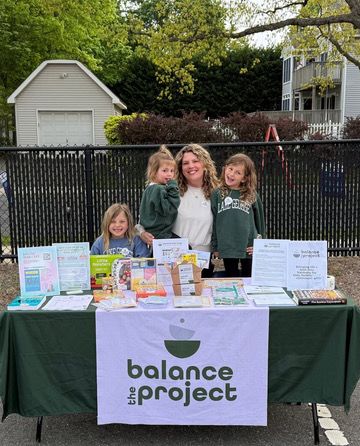
Holly Moscatiello tables with her daughters to promote the Balance Project. (Holly Moscatiello)
Holly Moscatiello tables with her daughters to promote the Balance Project. (Holly Moscatiello)
Moscatiello founded the Balance Project, a non-profit that has local chapters that provide guidance and community-based support to help families set shared norms around technology use and childhood independence.
“I think the whole mission of the Balance Project is rebalancing and bringing that modern childhood back into balance,” she said.
“I think parents are generally overwhelmed. We’re the last generation to have that analog childhood. We’re navigating these murky waters alone,” she said. “I started talking to other people and realizing that there were a lot of other parents who felt the same way and really didn’t know what to do.”
The idea grew out of her desire to better understand how childhood has shifted in recent decades with the increase in technology usage.
“There’s less independence. There’s less free play. There’s more structured activities. There's more pressure on our kids than ever before. And then of course, there's technology,” she said. “When I started to learn about all of these different components and the impacts to childhood development and mental health, I knew that I had to do something.”

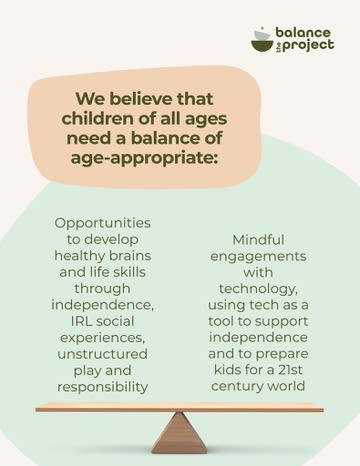
The Balance Project's guidelines for children of all ages. (Holly Moscatiello)
The Balance Project's guidelines for children of all ages. (Holly Moscatiello)
From there, what began as a personal concern quickly expanded to a broader community effort.
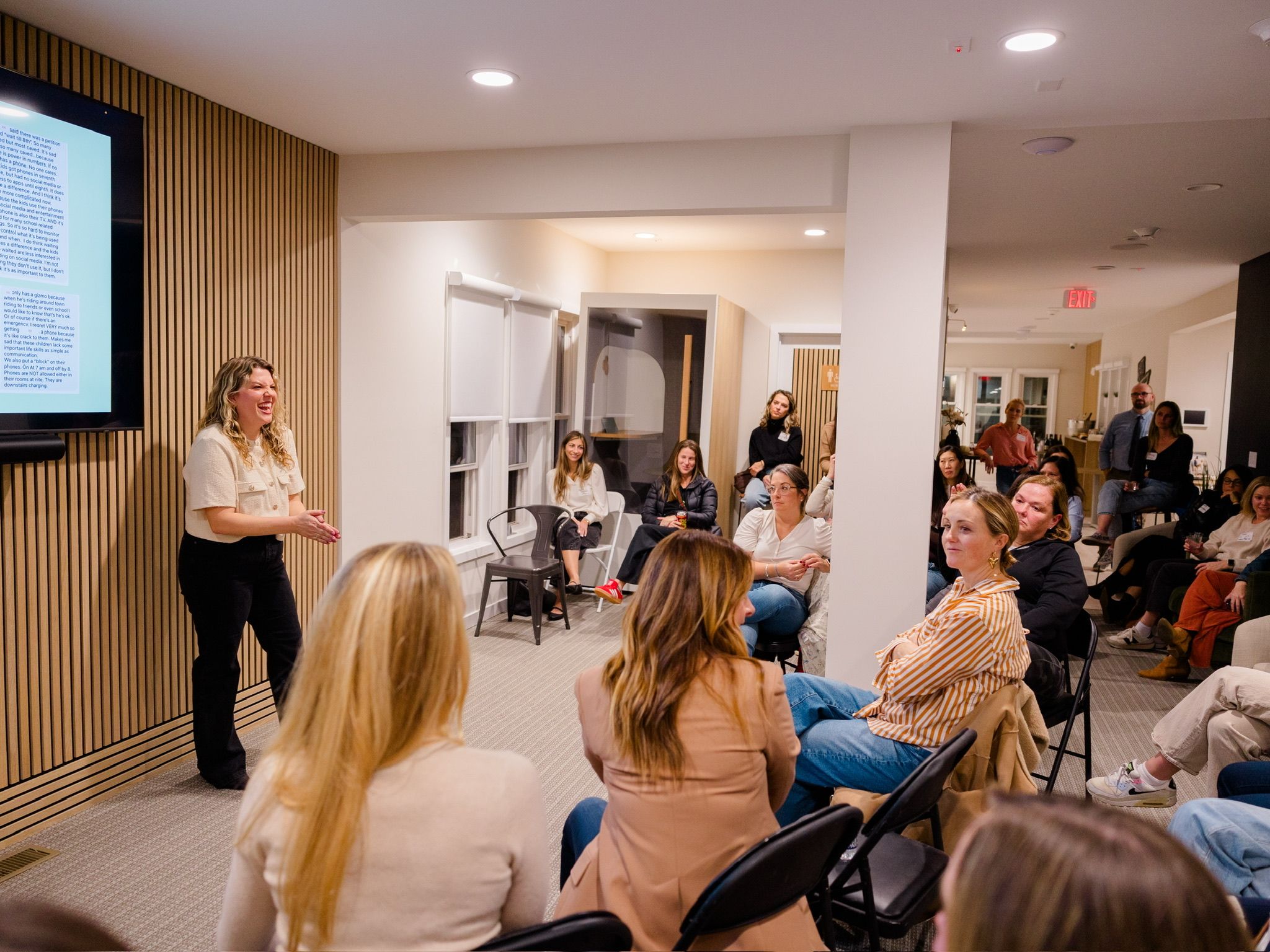
“We originally had six families on board. We had a meeting where we shared what we had learned and what we thought our approach should be with a larger group of about 60 parents,” Moscatiello said.
By the end of that meeting, she said the idea had already begun spreading beyond her local community.
“We had other communities reaching out that had heard about what we were doing and wanted to do it, too. And it just snowballed from there,” Moscatiello said.


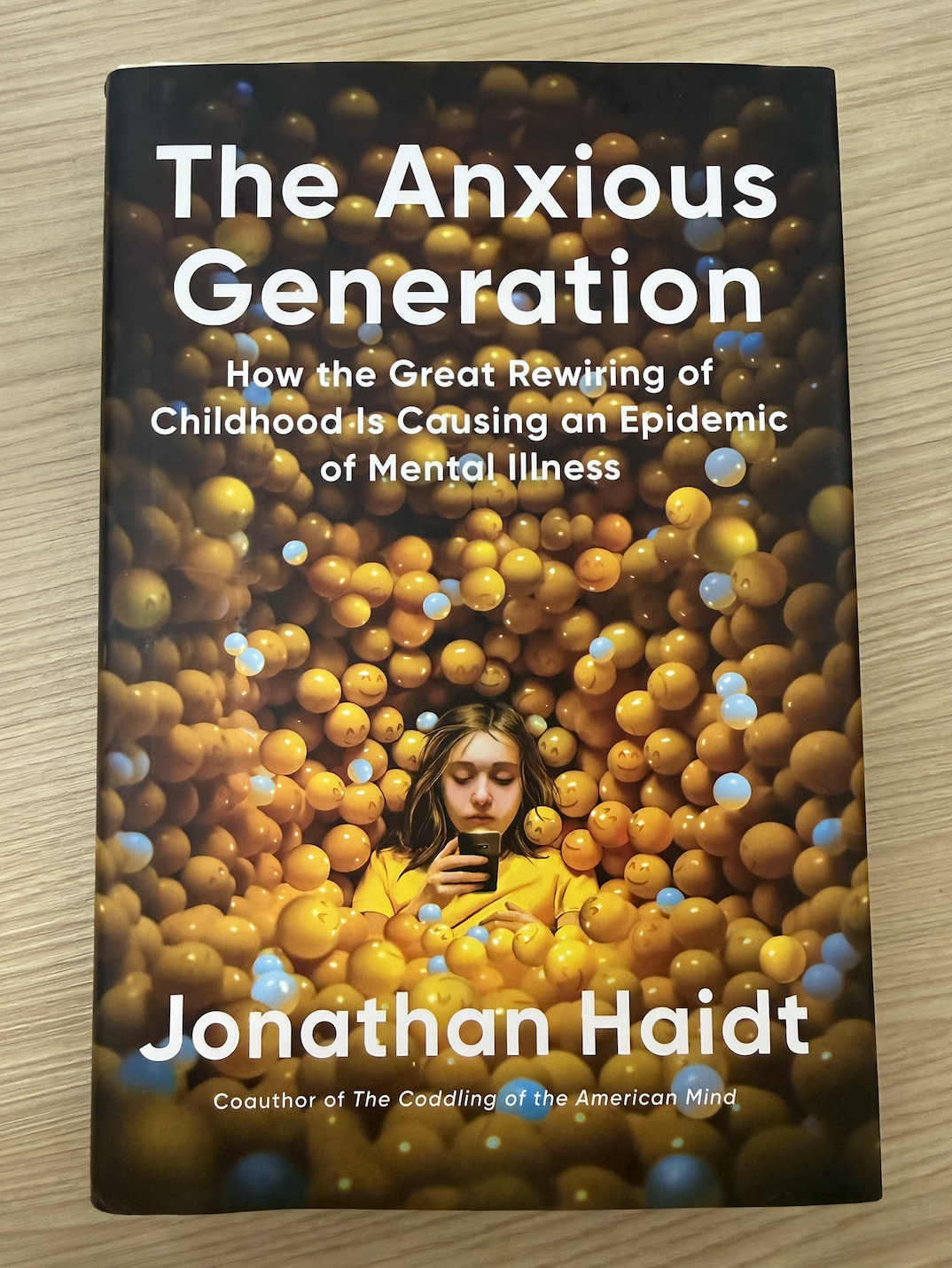
A photo of "The Anxious Generation" by Jonathan Haidt. (Perrin Gilman)
A photo of "The Anxious Generation" by Jonathan Haidt. (Perrin Gilman)
The turning point that influenced her to start the Balance Project was after she read “The Anxious Generation” by psychologist Jonathan Haidt.
“It was really scary to realize that all of the work and love that I am pouring into my kids could be at risk if I don’t change the norm. I was just not willing to accept that,” she said.
In the book, Haidt argues there are four reforms that are crucial for a healthier childhood in the digital age:


1.
No phones before high school (roughly age 14)


2.
No social media before 16


3.
Phone-free schools


4.
Far more unsupervised play and childhood independence
Moscatiello based the Balance Project around these reforms, which, she said, allowed her to create programming, support, education and clear solutions to give to parents.
“We are not anti-technology. We believe in age-appropriate, developmentally-appropriate introduction of technology,” she said. “I think having those norms really helped us establish that baseline.”
Moscatiello said the Balance Project prioritizes real-life experiences, gives kids engaging activities and rebuilds a sense of “village mentality” that has faded in a more screen-centered culture.

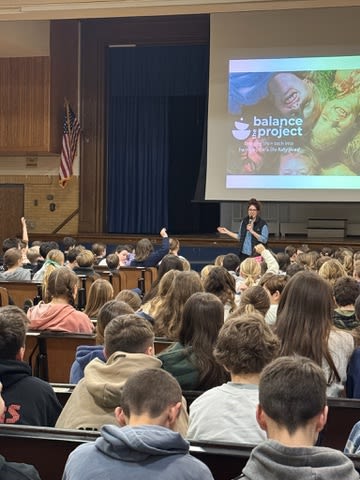
Students engage during a school assembly about the Balance Project. (Holly Moscatiello)
Students engage during a school assembly about the Balance Project. (Holly Moscatiello)
As of Feb. 2026, there were 232 chapters nationwide.
Now, the Balance Project has 272 active groups; that number continues to grow as more parents look for guidance when navigating childhood in the digital age.
 Built with Shorthand