
Education in immense poverty
Inside the life of students in Zambia


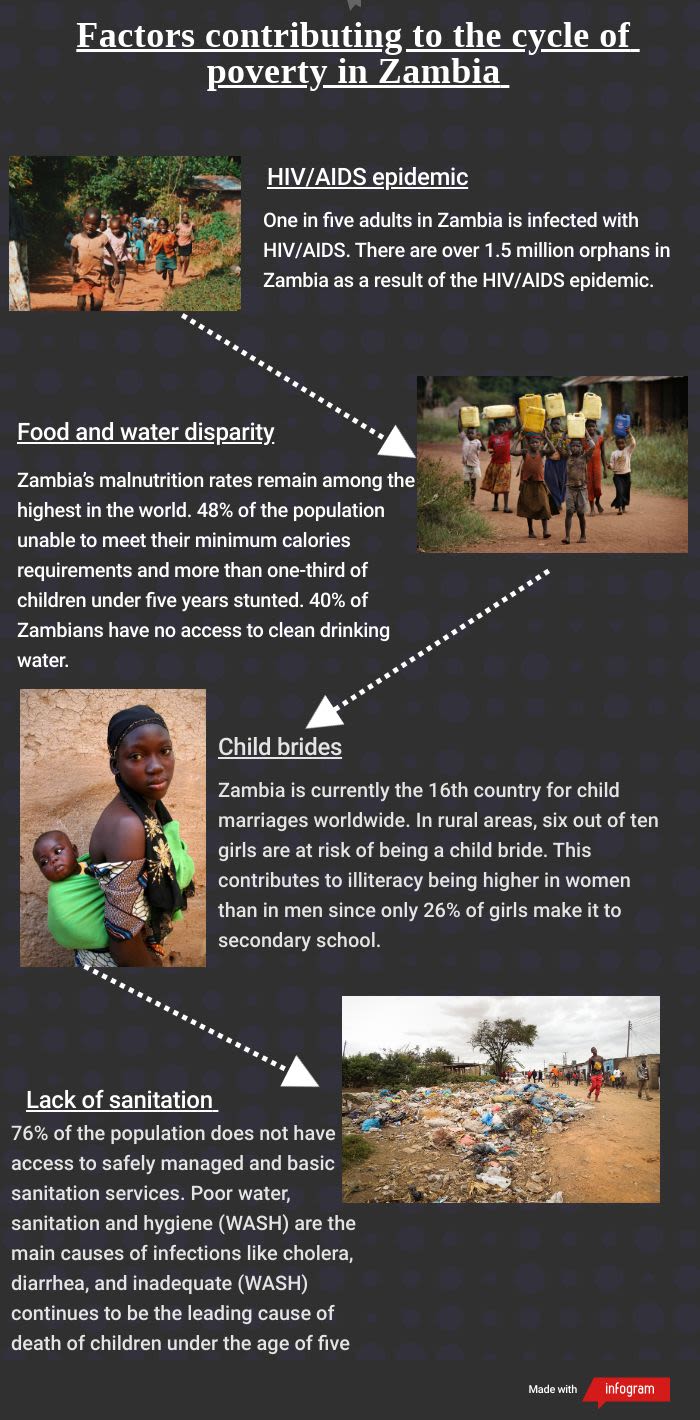
With more than 75% of its population existing on less than $1 a day, Zambia is one of the world’s poorest nations.
The south-central African country is beset with a cycle poverty aggravated by AIDS, illiteracy, and a lack of clean drinking water.
There are few options for most people: farming a small plot of land, selling consumer products, or doing “ odd jobs.” As a result, 90% of Zambians are “informally employed.”
Parents who are unemployed often supplement the family’s income by sending their children into the village to sell things in the streets. Young girls often marry as young as 15. Child labor abuses and sex trafficking are rampant. In rural areas, women do most of the farming and labor work, men are the ones who go to the market and sell the produce.
Education is often an afterthought. Increasing fees, or the need to make money for their family keep many children out of the classroom.
African Vision of Hope was established as a nonprofit organization in 2003 by Judi and Bob Bertels. This organization has built five schools throughout Zambia, providing 4,680 students with a free education they once believed was impossible to obtain. African Vision of Hope schools give children meals, a uniform, medical care, leadership skills, spiritual mentoring, and most of all, hope.
According to its most recent report in 2021 to Charity Navigator, an independent auditor of nonprofits, African Vision of Hope has provided: over 1,086,792 meals to students and surrounding communities, wellness checkups to over 4,000 students, and over 1,800 youth being provided HIV prevention services.
Through education, their lives are transformed from despair to hope, from forsaken to loved, and from powerless to leader. The African Vision of Hope staff leads with integrity, wisdom, and yearning to disciple students to become godly leaders for Africa.
An example of that is Alice Chikwa, a grade one teacher at the African Vision of Hope Kabulonga school. Kabulonga is the largest school within African Vision of Hope due to the school's demand, and the poverty levels in the communities around the school.
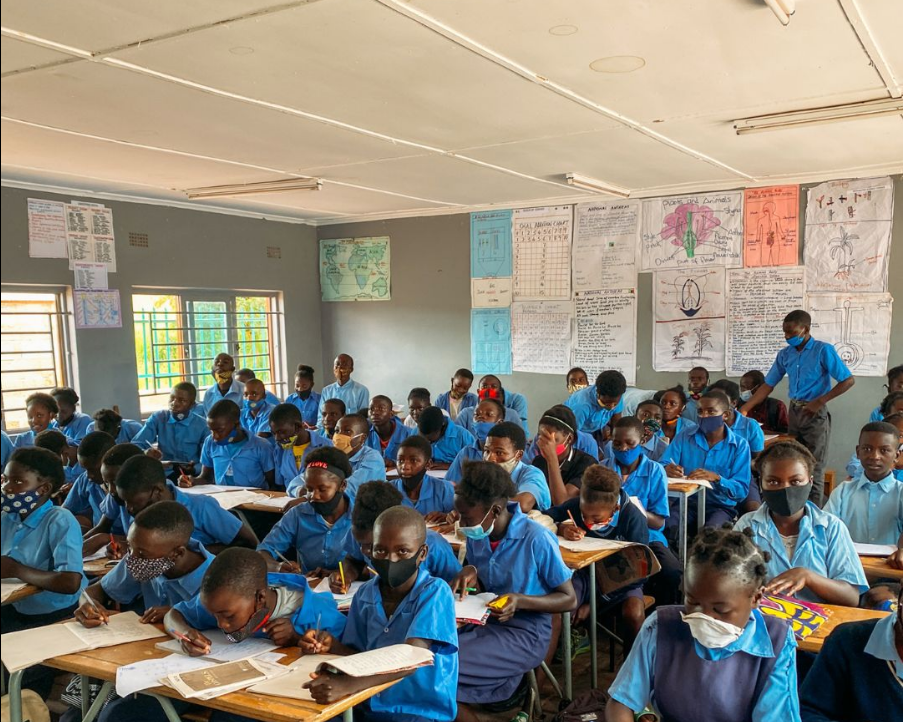
Chikwa’s grade one class consists of 70 students.
Seven first-graders are squished into a desk built for two. Children without a desk to cram into, huddle along the floor, obscuring the cement.
There are no complaints about the cramped learning space. There are no complaints about the lack of resources and the sharing of pens and paper. There is only gratitude
“To me teaching the grade ones it's a great privilege and an honor,” Chikwa said. In Zambia most grade one students are enrolled at seven years old, but due to the poverty and lack of accessible education some students are 15 when enrolled.
Regardless of the students’ age, each grade one class is different with the education level ranging from children who have never been to school, to those who were enrolled in early childhood class/pre-school.
“Many children come without knowing how to read and write, they have no knowledge on how to even hold a pencil," Chikwa explained. "As a teacher you need to teach them how to hold one, along with helping them adapt to skills used in school.”
As Chikwa makes her way across the cement floor to the chalkboard, the eyes of the students follow her every move with adoration.
To create an inclusive environment within the classroom, a learners centered way of teaching is used to ensure that all students are involved and take part in the lessons taught each day. “During this kind of teaching, as a teacher you are able to identify who gets information quickly and who struggles to process the information,” Chikwa said.
The class divided into groups as they were instructed to identify the shapes of a circle, rectangle, and triangle that were drawn on the chalkboard.
“Miss Alice we got it!” “Miss Alice is this it?”
The room echoes the students calling out for their teacher, seeking the approval they receive nowhere else.

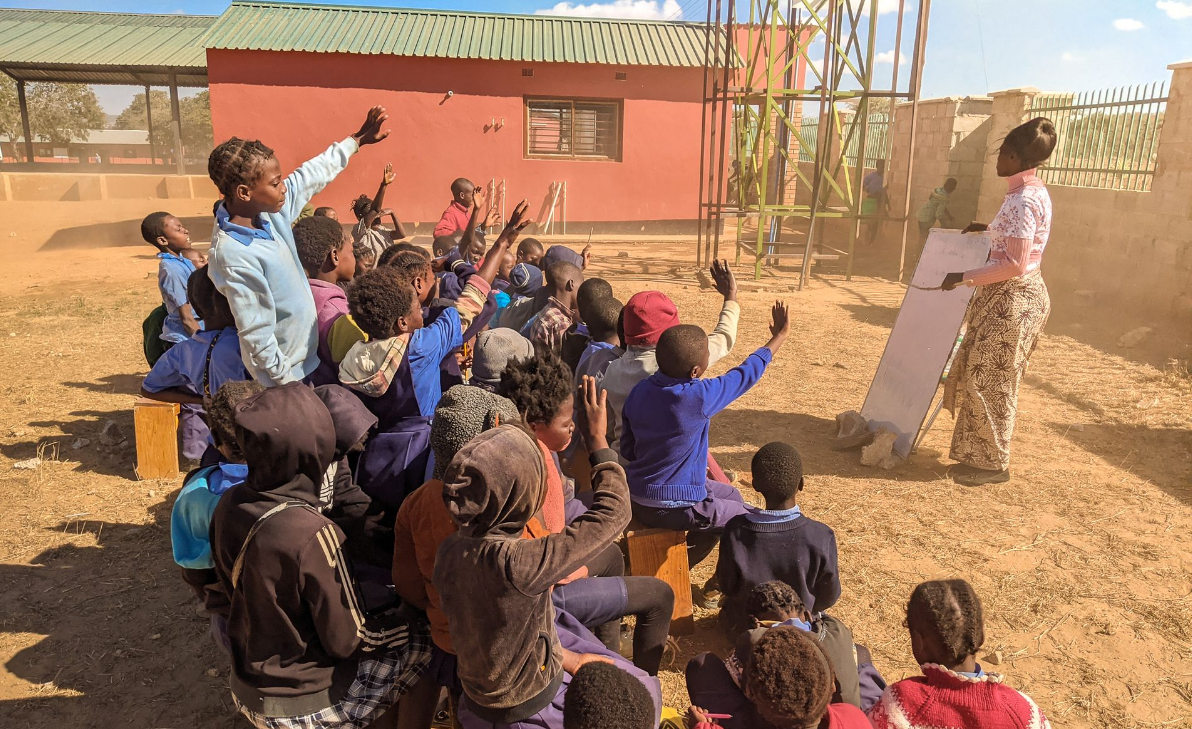
Many classrooms in Zambia look like this – no actual classroom building, a piece of chalkboard, no real curriculum, and cinderblocks as benches. African Vision of Hope provides students trained teachers, real classrooms, learning materials, and actual desks.
Many classrooms in Zambia look like this – no actual classroom building, a piece of chalkboard, no real curriculum, and cinderblocks as benches. African Vision of Hope provides students trained teachers, real classrooms, learning materials, and actual desks.
Many classrooms in Zambia look like this – no actual classroom building, a piece of chalkboard, no real curriculum, and cinderblocks as benches. African Vision of Hope provides students trained teachers, real classrooms, learning materials, and actual desks.
Many classrooms in Zambia look like this – no actual classroom building, a piece of chalkboard, no real curriculum, and cinderblocks as benches. African Vision of Hope provides students trained teachers, real classrooms, learning materials, and actual desks.

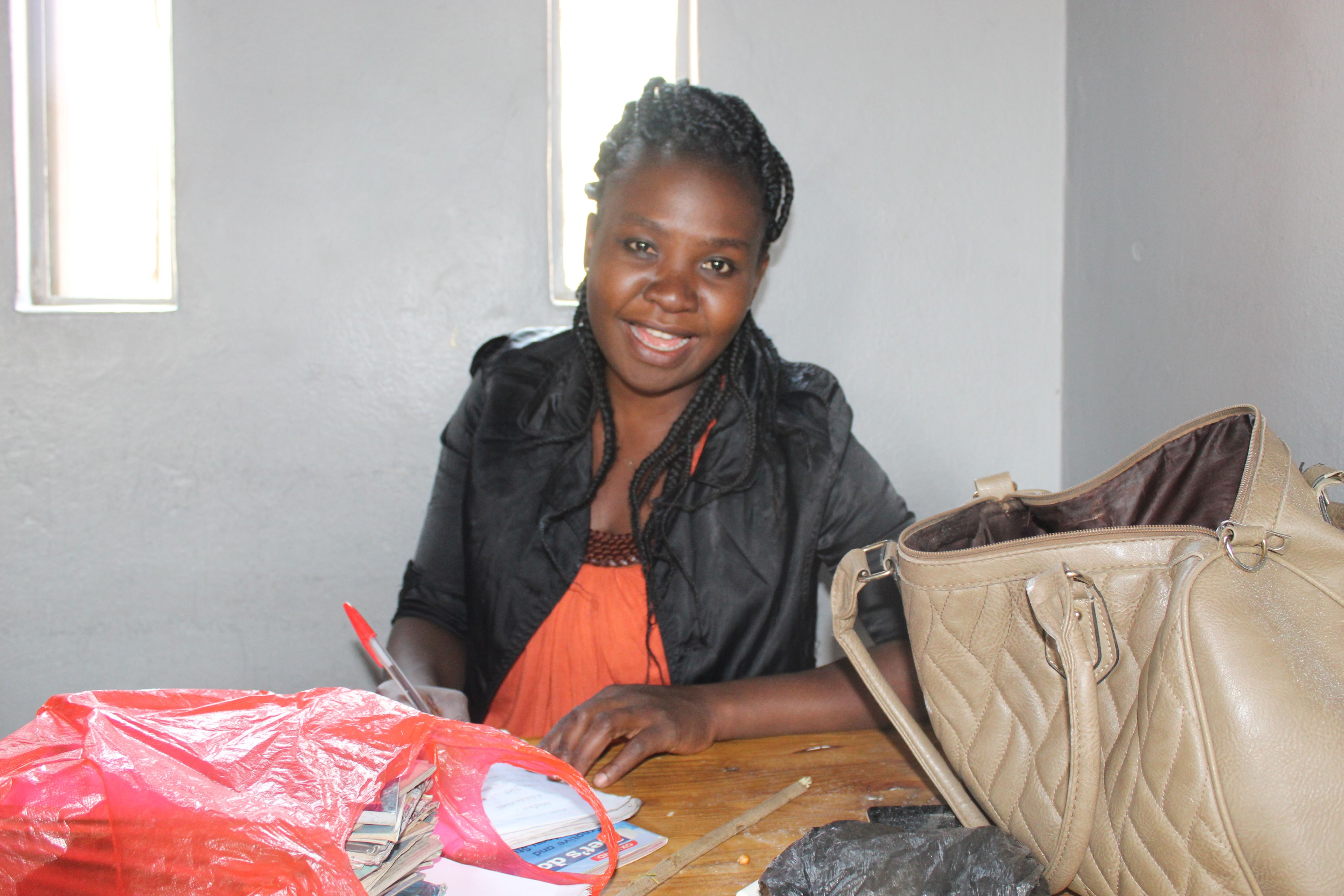
Chikwa has been a teacher at African Vision of Hope since 2017,
Chikwa has been a teacher at African Vision of Hope since 2017,
Chikwa has been a teacher at African Vision of Hope since 2017,
Chikwa has been a teacher at African Vision of Hope since 2017,
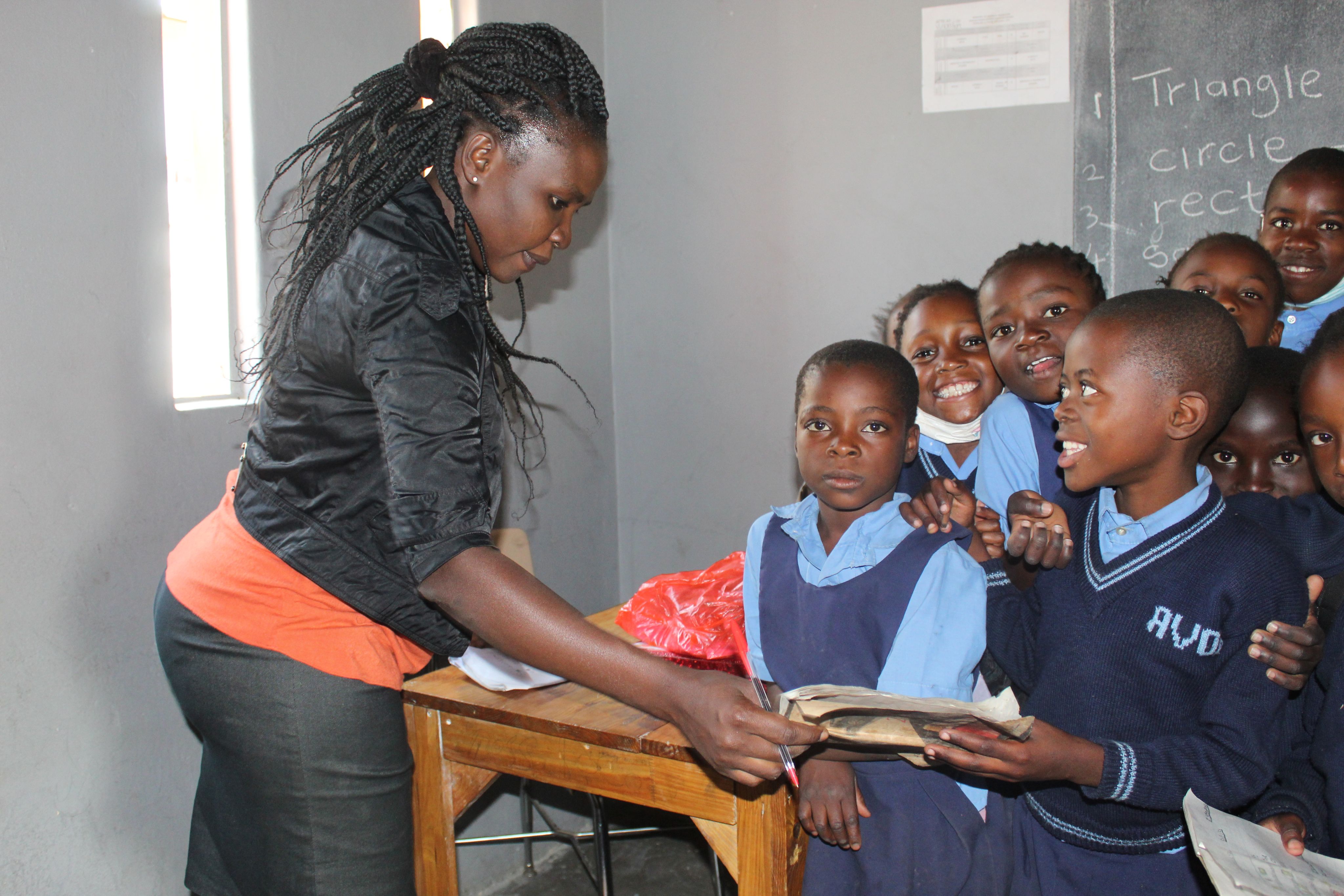
Chikwa interacts with her students throughout the lesson, and encourages students get to ask questions and answer questions. Through this she is able to identify who gets information quickly and who struggles to process the information, in order to determine who she needs to spend extra time with to ensure they understand the material.
Chikwa interacts with her students throughout the lesson, and encourages students get to ask questions and answer questions. Through this she is able to identify who gets information quickly and who struggles to process the information, in order to determine who she needs to spend extra time with to ensure they understand the material.
Chikwa interacts with her students throughout the lesson, and encourages students get to ask questions and answer questions. Through this she is able to identify who gets information quickly and who struggles to process the information, in order to determine who she needs to spend extra time with to ensure they understand the material.
Chikwa interacts with her students throughout the lesson, and encourages students get to ask questions and answer questions. Through this she is able to identify who gets information quickly and who struggles to process the information, in order to determine who she needs to spend extra time with to ensure they understand the material.
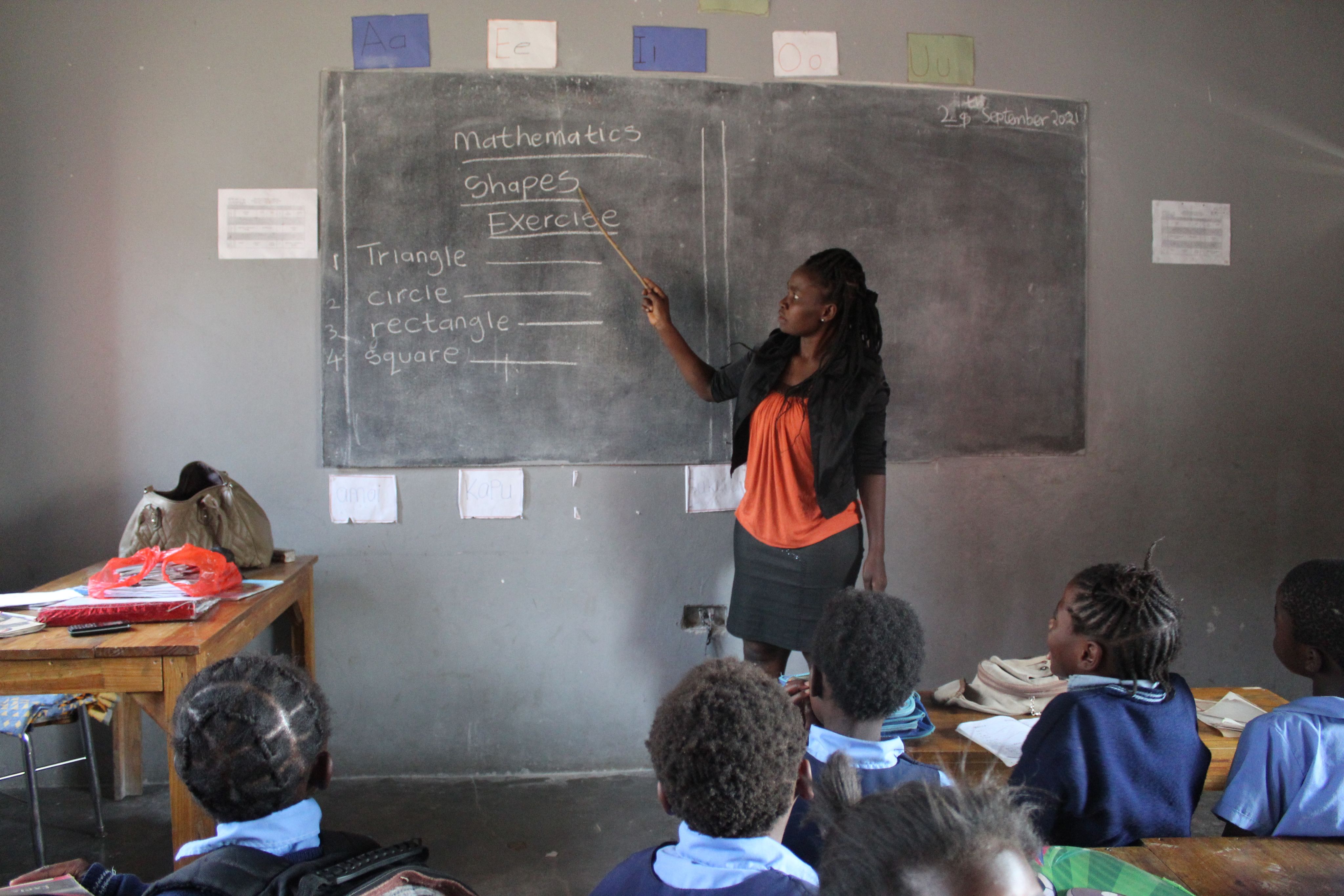
The grade one class learns the elementary mathematical shapes. Learning these shapes will allow the students to understand categories along with introducing spatial relations, a way to introduce problem-solving skills.
The grade one class learns the elementary mathematical shapes. Learning these shapes will allow the students to understand categories along with introducing spatial relations, a way to introduce problem-solving skills.
The grade one class learns the elementary mathematical shapes. Learning these shapes will allow the students to understand categories along with introducing spatial relations, a way to introduce problem-solving skills.
The grade one class learns the elementary mathematical shapes. Learning these shapes will allow the students to understand categories along with introducing spatial relations, a way to introduce problem-solving skills.

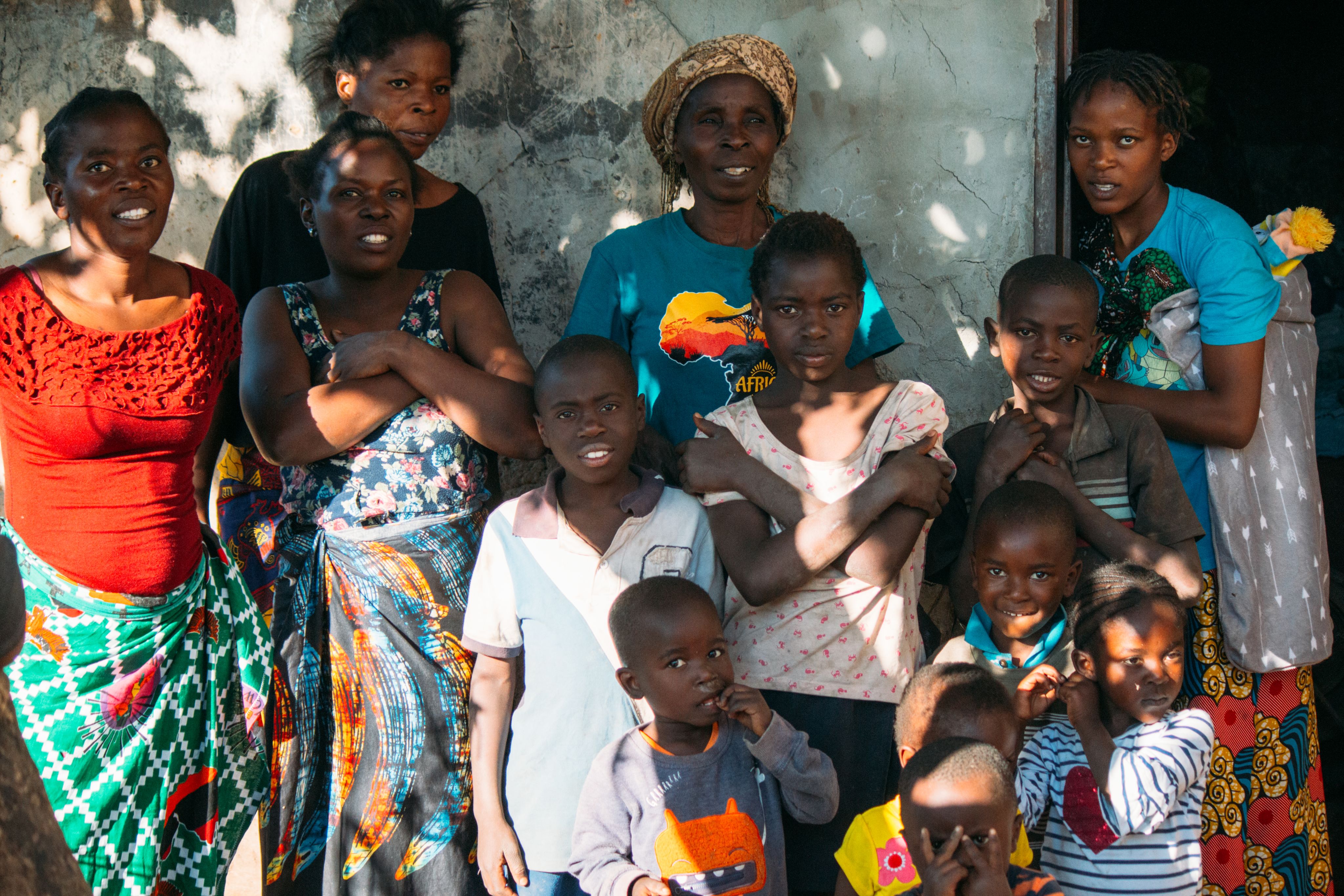
Catherine (center) with the thirteen family members she lives with outside their one room home.
Catherine (center) with the thirteen family members she lives with outside their one room home.
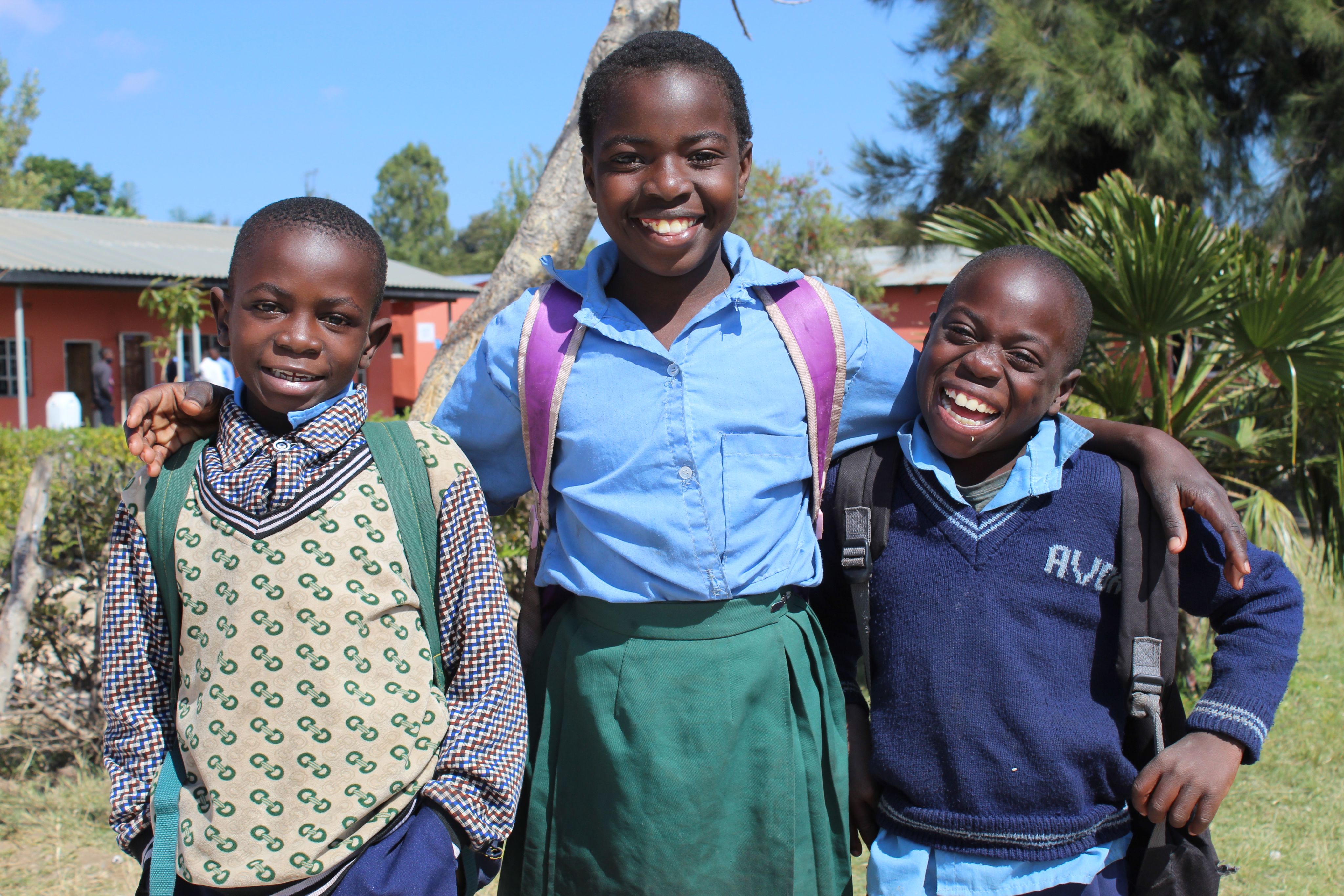
Catherine (center) with her cousin Sims (left) and nephew Steven (right).
Catherine (center) with her cousin Sims (left) and nephew Steven (right).
After the morning lessons, a bell is rung to alert the teachers that the meal is ready for the students in grade one and two
As the students stand in a single file line, one girl whose eyes no longer have the innocence of a child towers over the other students.
Catherine is 11 years old, currently enrolled in grade two.
In a voice too old for her age, Catherine shared how her mother enrolled her in community school for grade one, but was unable to pay for tuition resulting in Catherine staying at home for more than two years.
Living in a house of 13 with one income provider, Catherine used to sneak into the school during mealtime to eat the rice provided, since the meals at home were sporadic.
Child protection officers, located at each school, heard about Catherine’s home life and food disparity, resulting in the immediate enrollment at Kabulonga of Catherine, her cousin Sims, and nephew Steven.
“Not only do I eat rice, I have now been given a shirt for a uniform, I have my first backpack with books and school supplies. I am so thankful I was given clothes so I can now go to school and learn, this school gives me happiness and shows me love,” said Catherine.
In a voice now full of pride and hope, Catherine shared her dream of finishing school to become a nurse in order to help her family and the people of Zambia.
Shouts echo across the courtyard as the rest of the students are released for lunchtime.
Due to such impoverished conditions, the majority of those living in Zambia only eat a few meals a week. The lack of nutrition makes it impossible for the children to fight off even the simplest of infections. With only one doctor per 100,000 people, a cut on the foot could mean death without the proper nutrition to help keep their immune system healthy.
Knowing that this is the only meal of the students’ day, fortified rice packed with essential nutrients and plant protein is served to the students, with two children per plate.
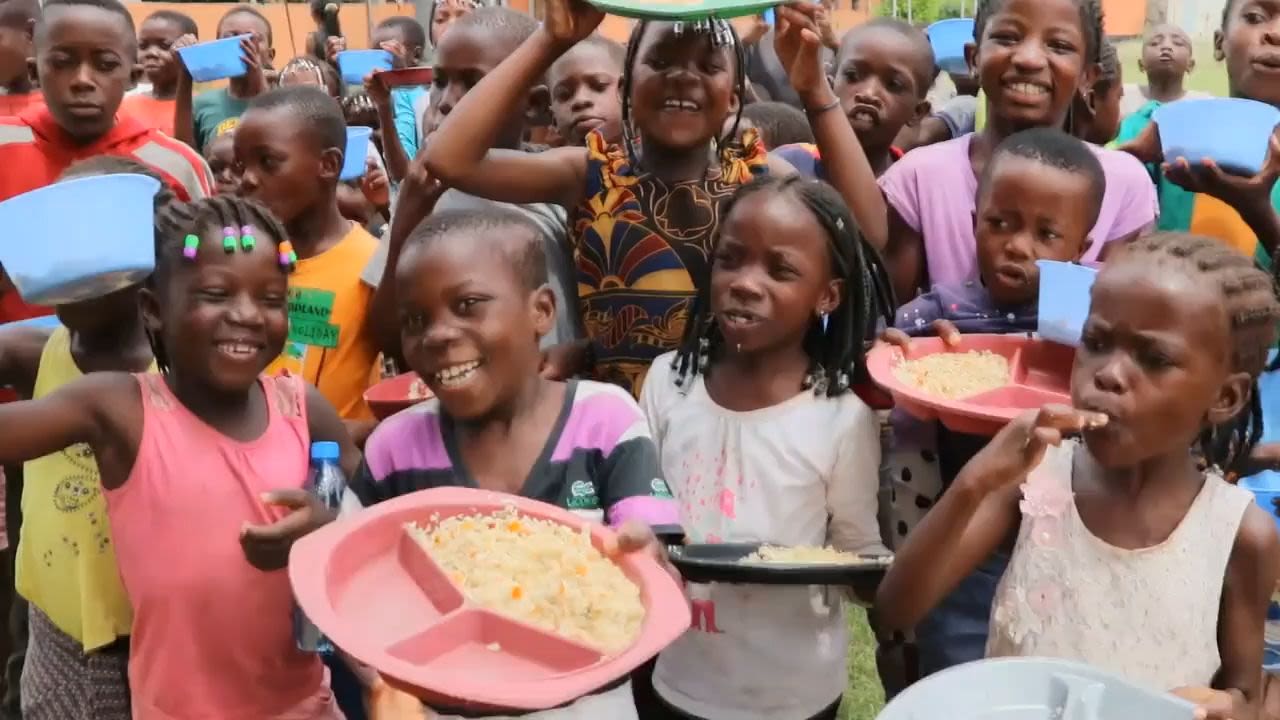

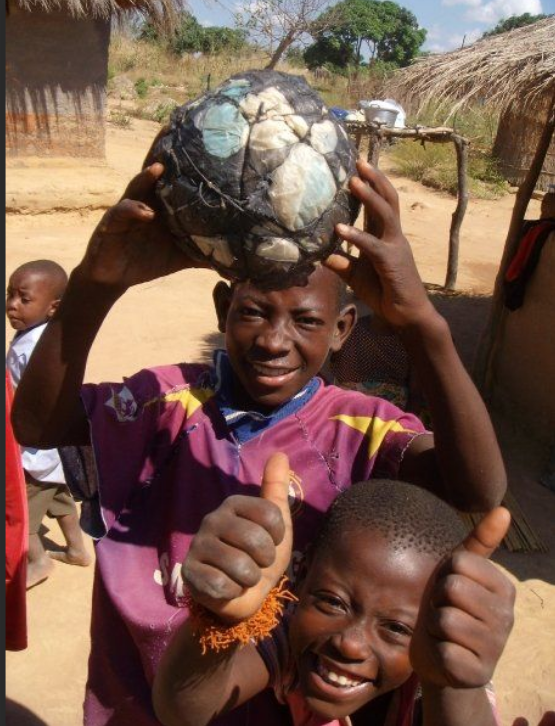
A swarm of students run to the dirt field behind the outhouse to play the game loved by all around the world. Football.
At this moment is where the students are children again.
No longer consumed by the constant growling in their stomach.
No longer thinking of how much longer their families will allow them to continue school before they pull them out to work.
No longer thinking of how the AIDS epidemic stripped them of their families leaving them orphans.
Here they are students kicking makeshift football constructed by plastic bags being tied together, picturing themselves playing for Zambia at the World Cup.
The students head back to the classrooms for afternoon classes, but Catherine comes forward carrying a young boy with his face buried in her shoulder as an attempt to hide.
The boy wears a teenage mutant ninja turtle t-shirt worn beyond repair is then introduced as Sims, Catherine’s cousin in grade one.
A child protection officer explains how we are going to the home of Sims and Catherine in the compound where several of the students live.
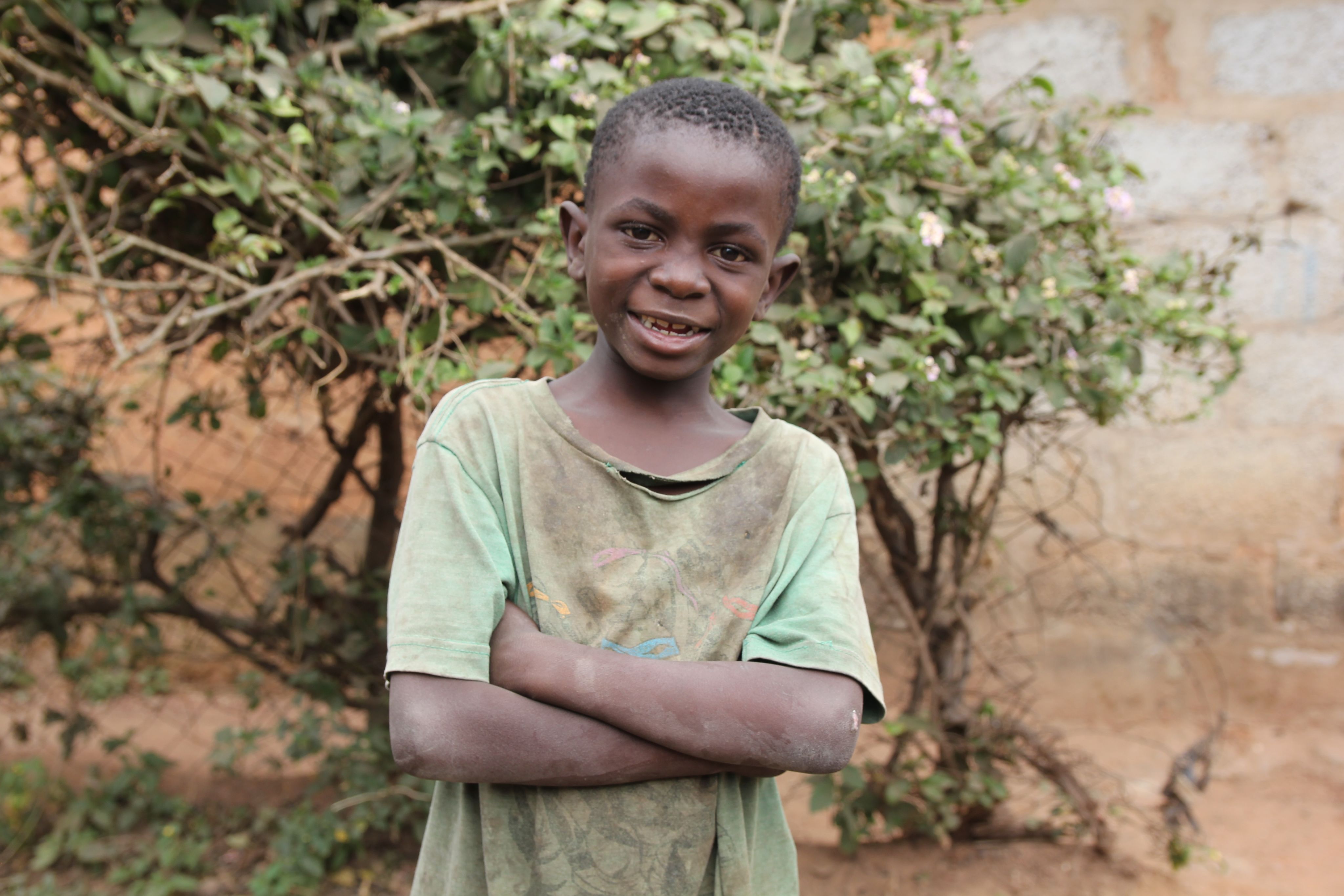
At home, nine-year-old Sims’s duties include household chores such as sweeping, washing, and fetching water. He also has responsibilities in caring for his younger siblings and “extended” family.
At home, nine-year-old Sims’s duties include household chores such as sweeping, washing, and fetching water. He also has responsibilities in caring for his younger siblings and “extended” family.
Where the students live
Located five miles from the school, the compound is filled with families, often taking care of children who are not their own. Compounds are highly populated areas with houses that are typically 10 ' X 10'. The student's houses are usually one room, with no electricity, running water or plumbing. With many families torn apart by the HIV/AIDS epidemic, the children in Zambia have been orphaned by one or both parents. When the family loses one parent, oftentimes the surviving parent can no longer afford to send their children to school. Therefore, the child is often forced to drop out of school to help find some way to help provide food for the rest of the family. Without an education, the children will never be able to break this cycle of poverty.

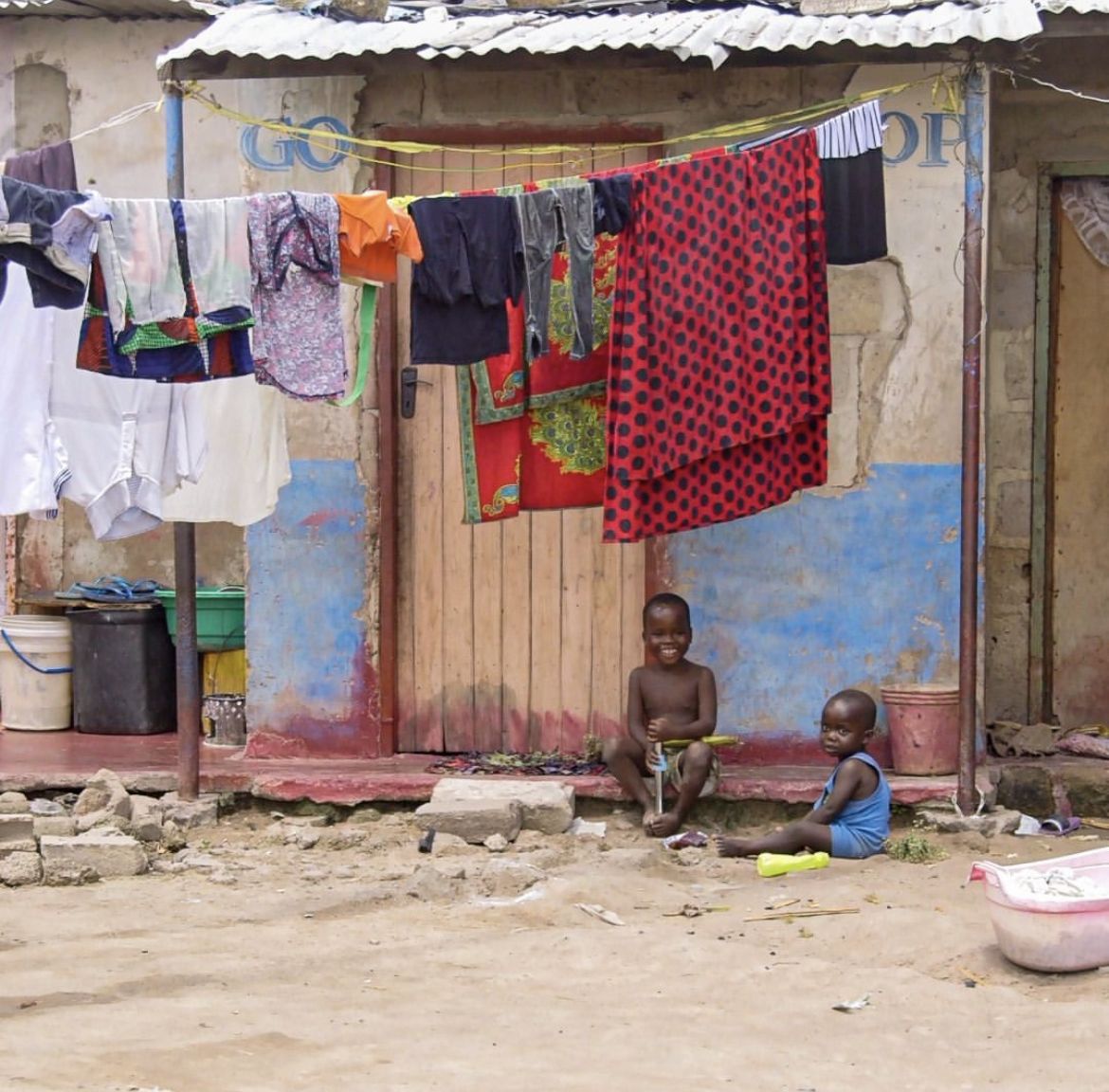

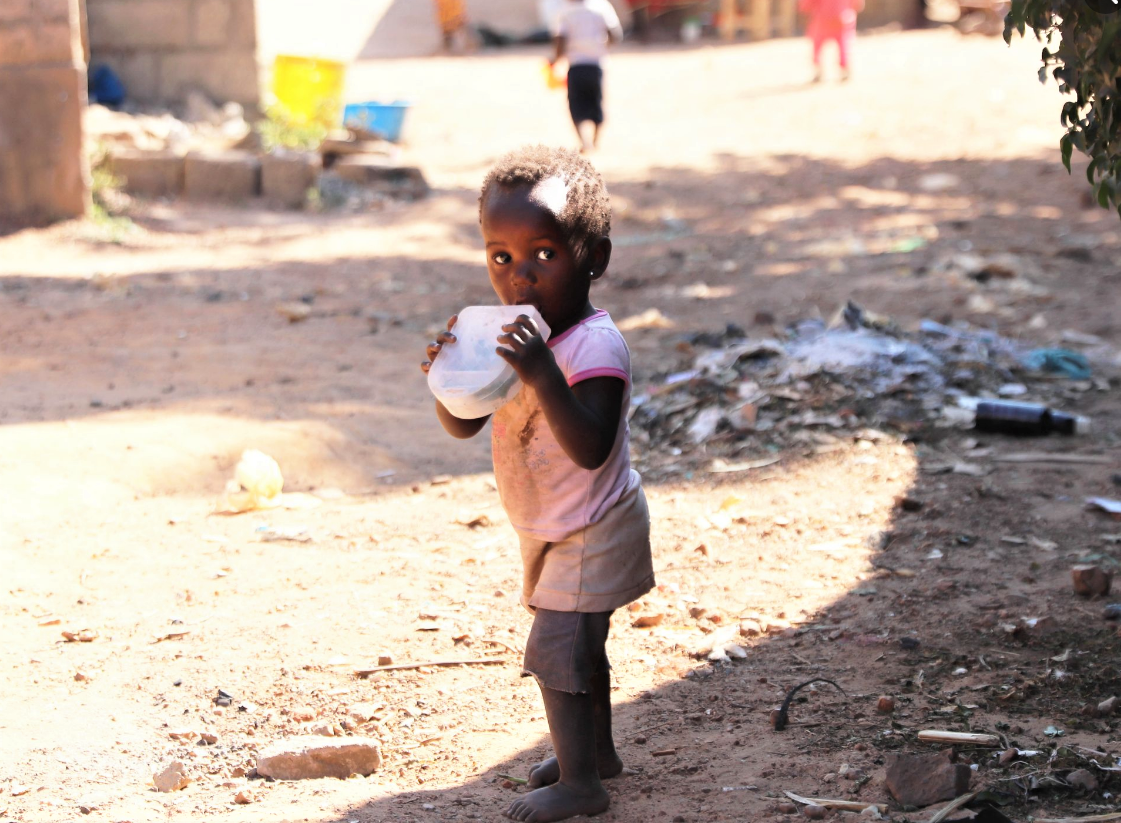
Dust fills the air as the van stops at makeshift road into the compound.
Cement block rooms with tin roofs stretch as far as the eye can see
Children run to the dirt road, holding up their arms pleading for a chance to be held.
“Buy a chicken! Three dollars! I need to feed my girls! Please give me money - my family has not eaten for two days!”
Cries of despair follow down the road as Sims takes the lead to the middle of the compound.
There in the middle of rubble is a one room cement home approximately 12 ft by 12 ft with a tin sheet pulled over the roof. Inside is a single mattress covered in blankets, the only bed for the 13 people living there.
Coming closer, the stench of urine and filth fills the air.
An old woman sits at the side of the house, with her hands - gnarled but full of power, crushing rocks until all that's left is a pile of gravel.
Sims runs to children that have begun to pile out of the cement house as the woman rises and introduces herself as Sims’s and Catherine’s grandmother.
When asking about where Sims mother is, the child protection officer explained that Selina had Sims at 14 due to her boyfriend promising her marriage to escape the poverty levels she faced at home, but ultimately denied responsibility abandoning her with a newborn. This resulted in Selina moving in with Sims to her grandmother's one roomed home, already occupied by twelve other dependents.
Selina remarried, but Sim’s stepfather refused to claim Sims as his own, leaving Sims at his grandmother's house while Selina left to live with her new husband.
The grandmother, who is providing for a household of 13, earns money selling crushed stones for a living. She makes about $1.44 per bag.
“It can be hard for me to provide everything for my family, sometimes we have to spend the whole day without food,” she said. “We are not able to buy household requirements such as bathing and washing soap.”
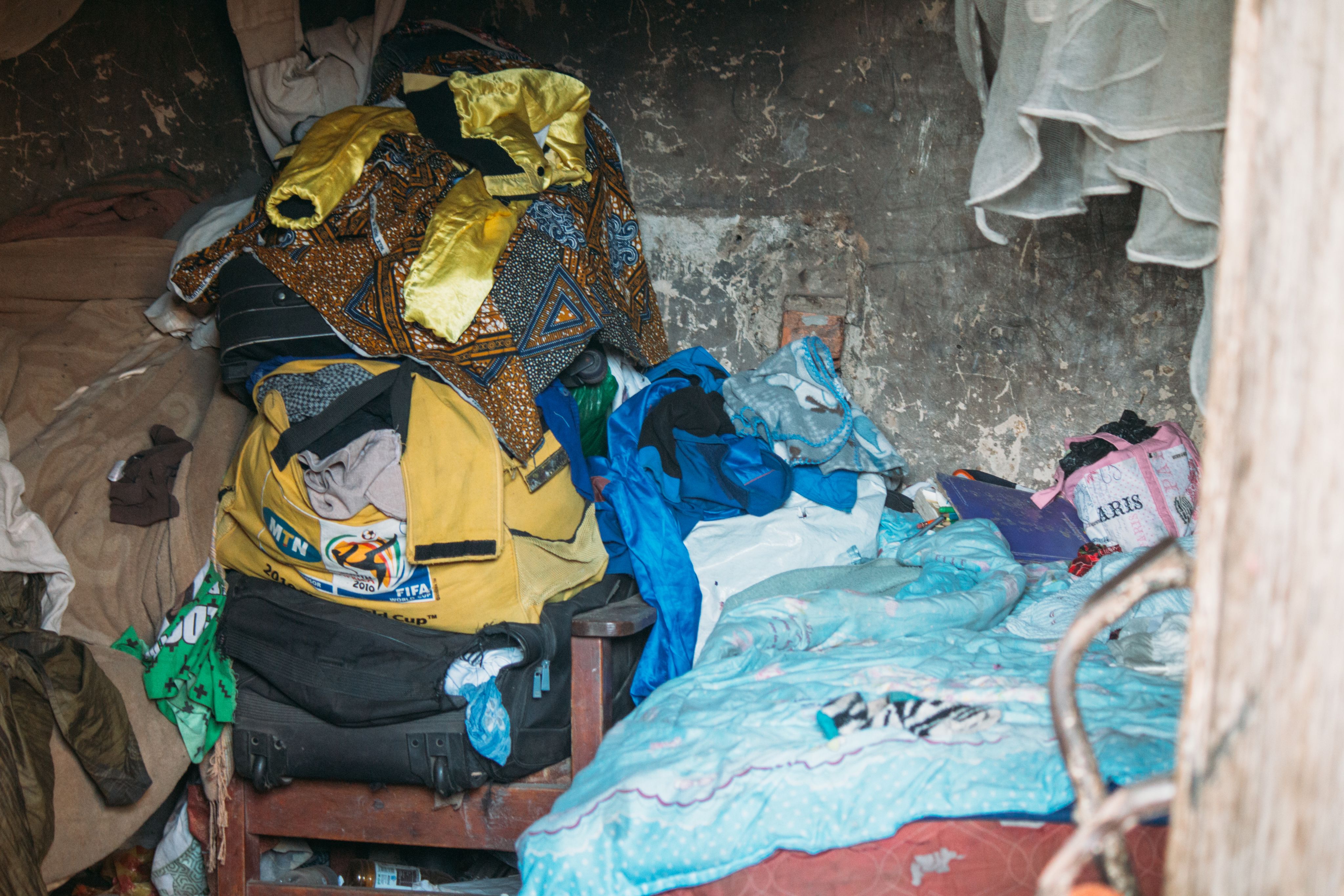
Inside the cement room is a single mattress covered in blankets, the only bed for the 13 people living there.
Inside the cement room is a single mattress covered in blankets, the only bed for the 13 people living there.

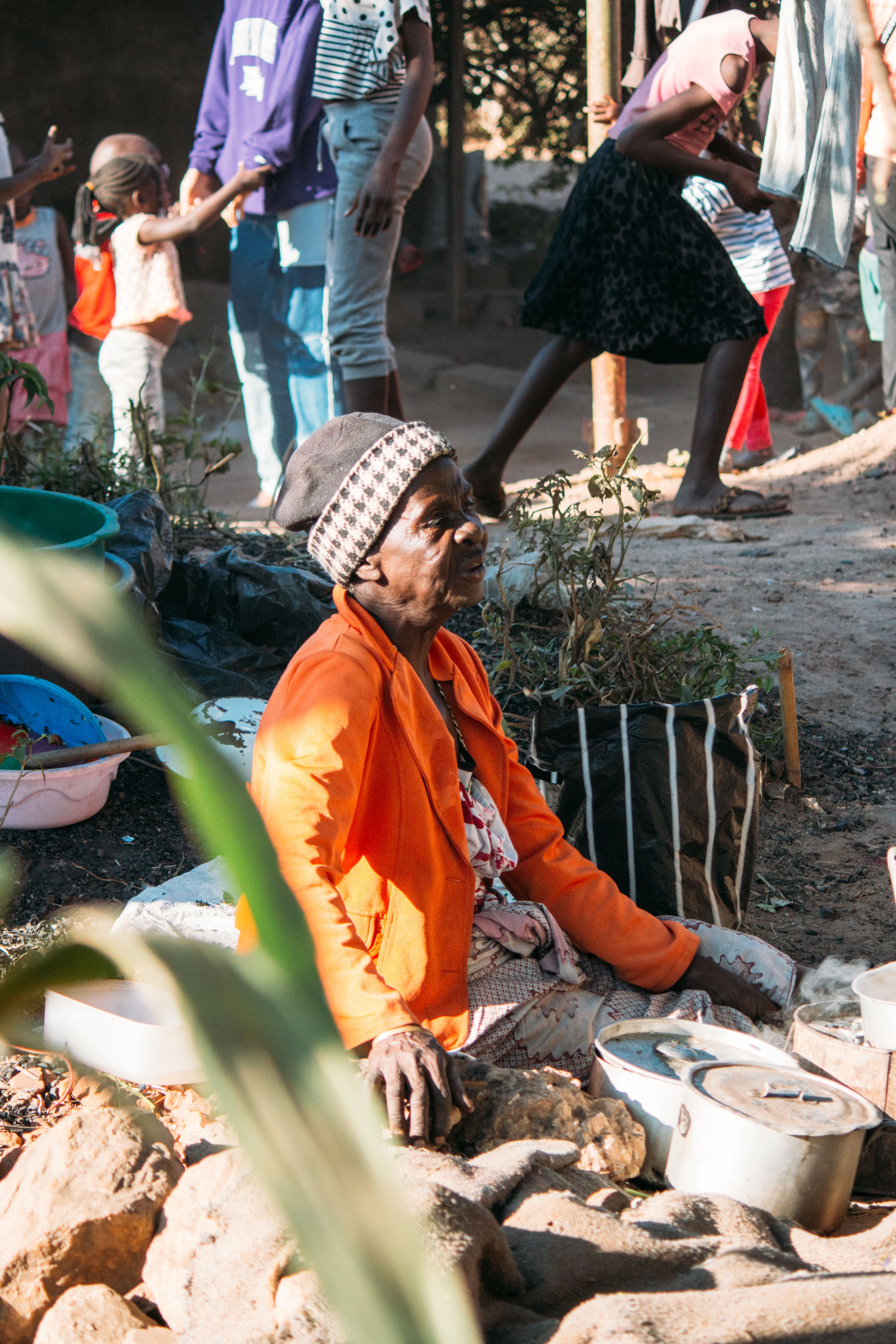
The grandmother sits outside the house, surrounded by the large rocks that she will crush until it becomes gravel
The grandmother sits outside the house, surrounded by the large rocks that she will crush until it becomes gravel
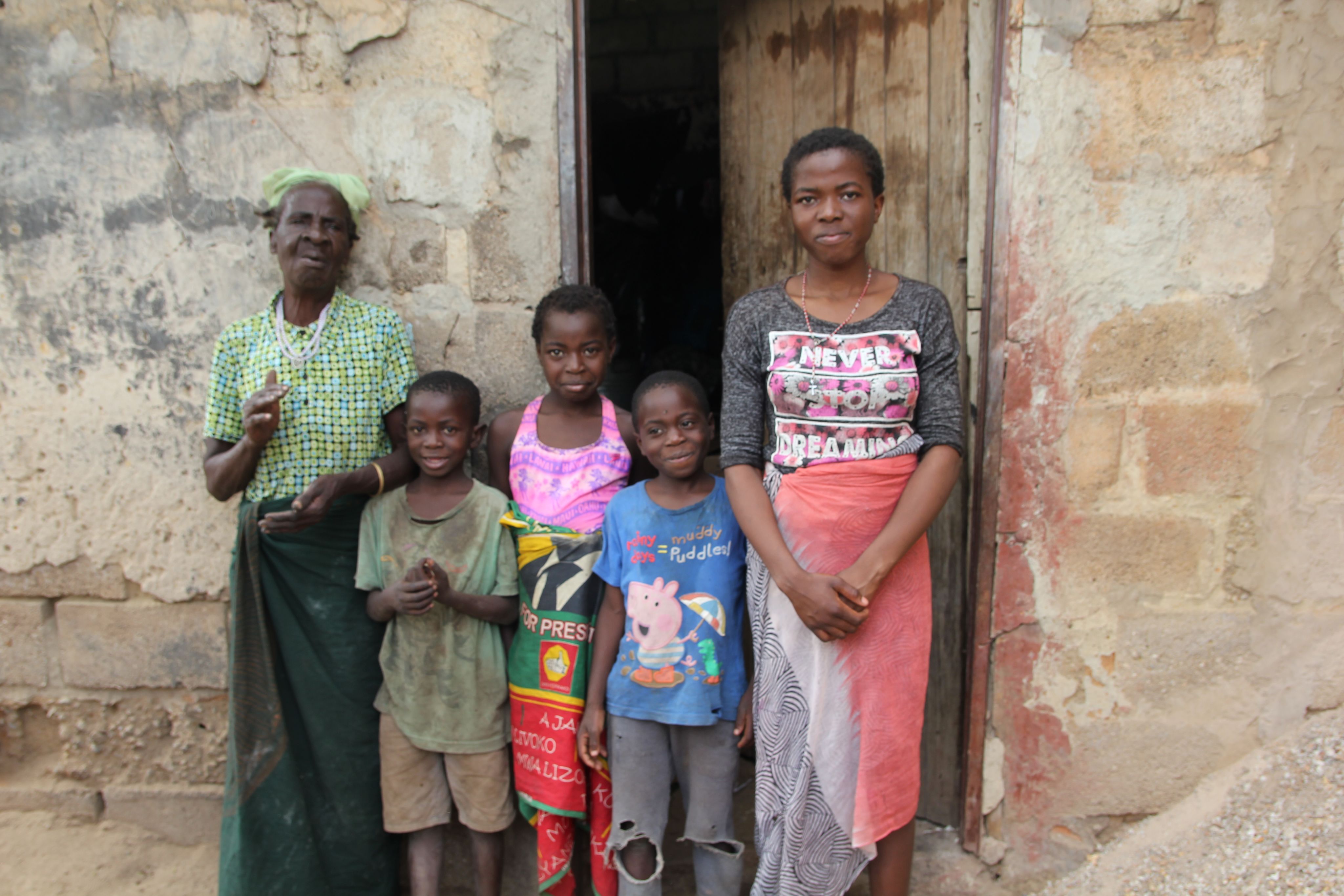
The grandmother with her great grandchildren whom she provides for.
The grandmother with her great grandchildren whom she provides for.
Trevor's Testimony
How he came to African Vision of Hope and his current role as a child protection officer.

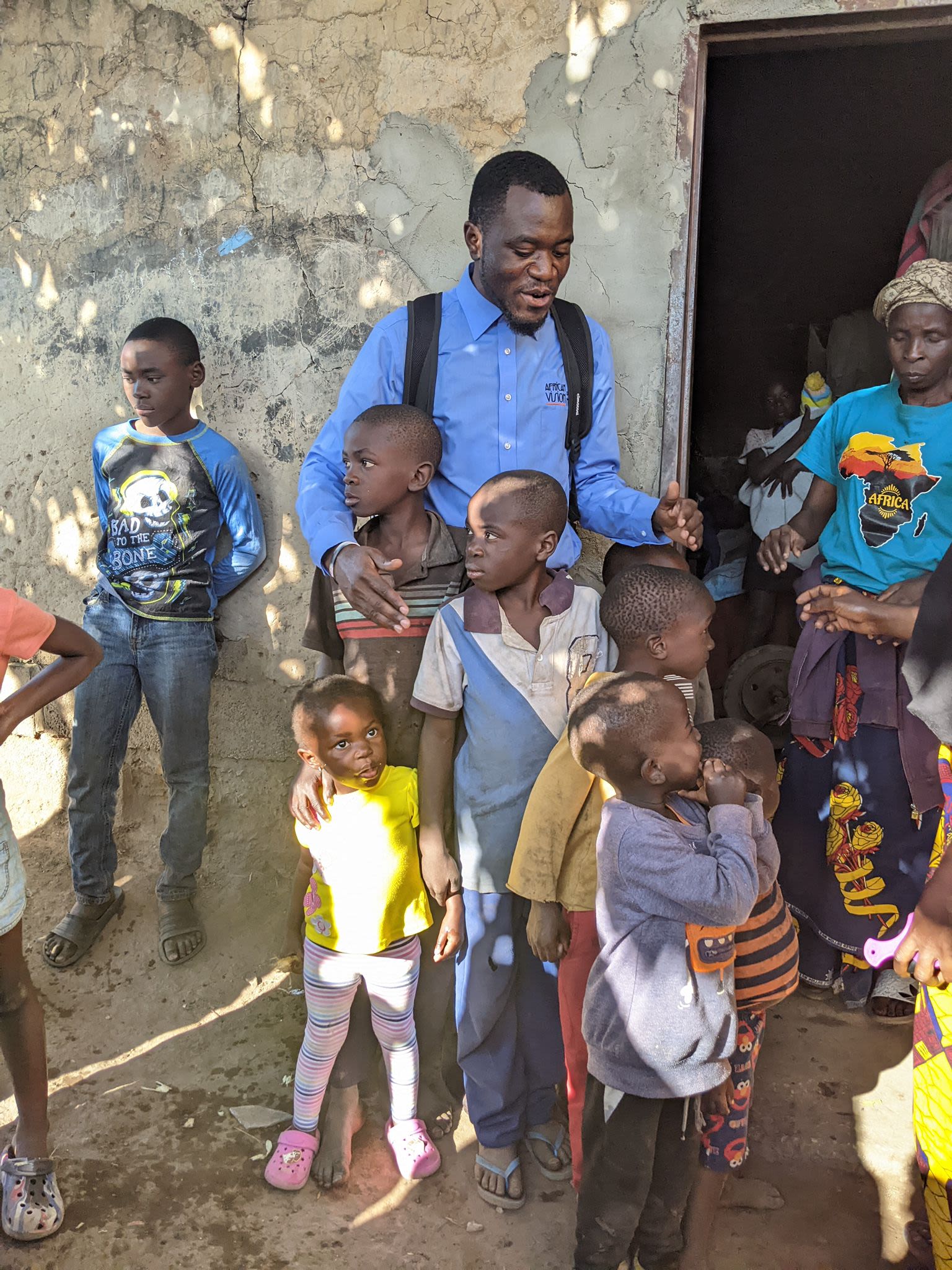
African Vision of Hope Child Protection Officers (CPOs) are stationed at each of our five campuses, and their job entails identifying children who are living in vulnerable situations, rescue them, and give them a safe place to call home. Child Protection Officers are trained to identify and rescue children forced into child marriage, child labor, human trafficking, and abuse.
African Vision of Hope Child Protection Officers (CPOs) are stationed at each of our five campuses, and their job entails identifying children who are living in vulnerable situations, rescue them, and give them a safe place to call home. Child Protection Officers are trained to identify and rescue children forced into child marriage, child labor, human trafficking, and abuse.

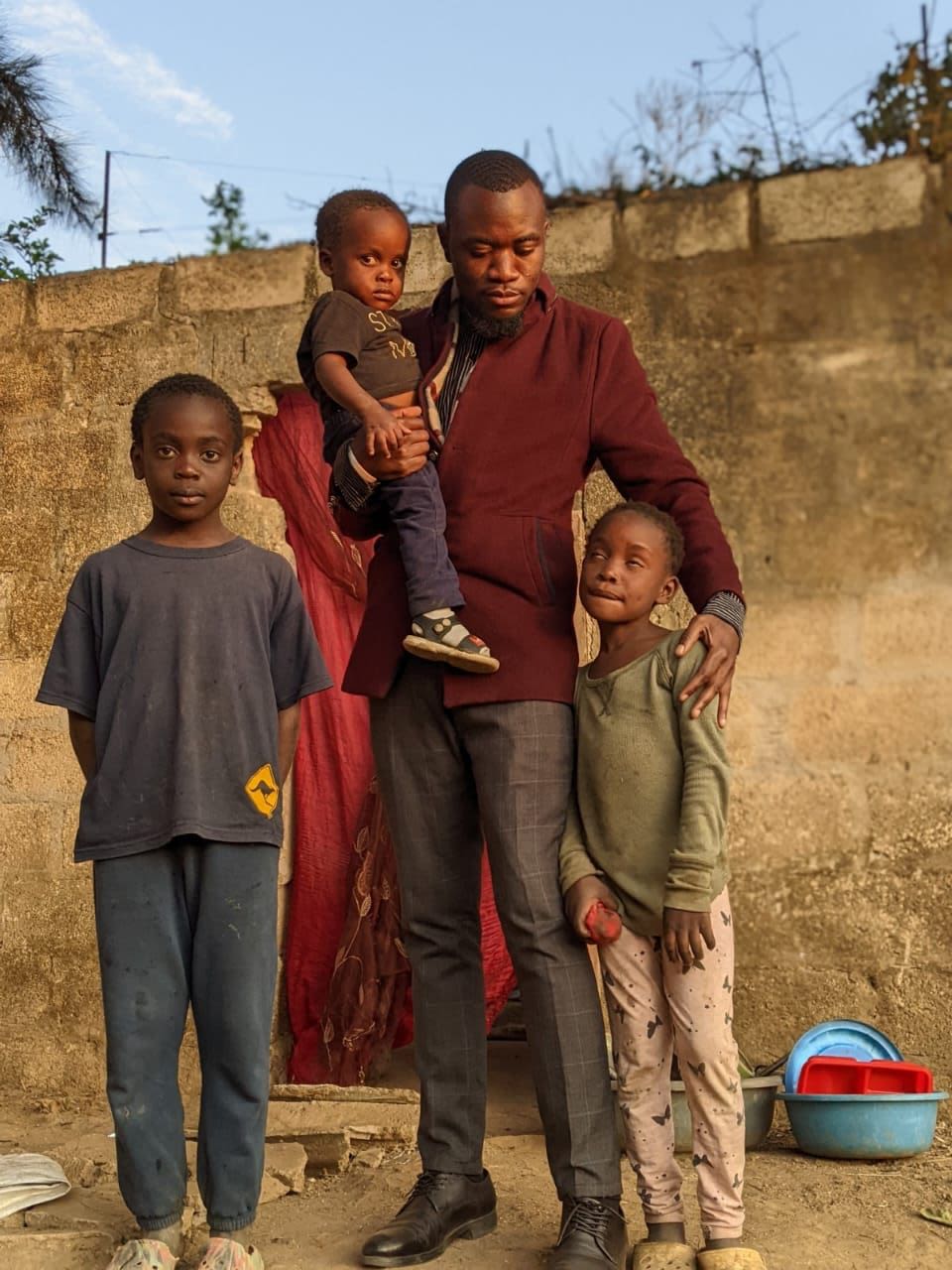
Sachibaba with three children he found abandoned in the compounds, rescuing them through providing shelter, food, and an education through African Vision of Hope
Sachibaba with three children he found abandoned in the compounds, rescuing them through providing shelter, food, and an education through African Vision of Hope

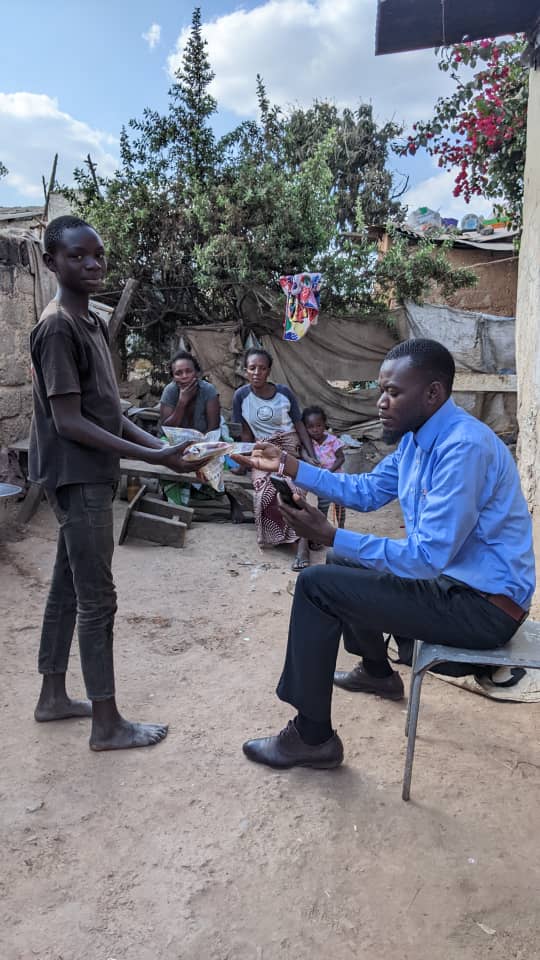
Sachiba mentoring children in a compound near the Kabulonga school. Every day he confronts abusers, advocates for girls who are being forced into child marriage, and reaches out a hand to children who are losing their way.
Sachiba mentoring children in a compound near the Kabulonga school. Every day he confronts abusers, advocates for girls who are being forced into child marriage, and reaches out a hand to children who are losing their way.
Child protection officers employed by African Vision of Hope within their communities and bring the children to the school. Trevor Sachibaba was a former student at African Vision of Hope who now works as a child protection officer.
The youngest of three, Sachibaba lived with father after his parents separated and his mother abandoned the family.
“Sometimes people asked me where my mother was, but I could not answer because I literally forgot what my mother looked like,” he said." “My journey consisted of waiting for my mother by the roadside and on several occasions, I would run to random women thinking that is my mother but no it was never her.”
His family lived in a woven grass hut constructed next to a stream. At night red ants invaded the straw house biting them while they slept. In an attempt to get rid of the red ants, a piece of firewood was lit inside the house. The dry grass hut erupted into flames, leaving the family with nothing but the clothes on their back.
“Everything was burnt including my father’s pictures. Now I don’t have any memory or pictures left of my father,” Trevor said. “I even forgot what he looks like because I was so young when it happened. My family says I look like my father, I guess I am the only image of him that is left.”
The family lived in the bush, already home to the lions, leopards, rhinoceros, elephants, African buffalos and pythons.
Isolated and malnourished, Sachibaba contracted Cerebral Malaria from an infected mosquito. He went into a coma and his father carried him seven kilometers on his back to seek help.
In an effort to give his children a more secure life, Sachibaba said his father sent them to live with a local farm owner who promised food and education, the opportunity to escape the continuous cycle of poverty.
Instead, he said they were forced labor working daily in the field as the sun beat down on their backs, until night when the owner took over the sun’s role.
They returned to their father but found that he was gravely ill. There was no money for a hospital. He didn’t even leave them with enough money to buy him a coffin.
Their mother returned but only took custody of Sachibaba and his older sister, taking them to Kalikiliki. It was the last time he saw his older brother.
In 2003 Trevor enrolled in grade one, tormented by his classmates since he was ten - three years older than the other students in his class. In 2007 Trevor was found by African Vision of Hope and was given the opportunity to enroll in grade 5 at the Kabulonga school.
“That was the moment when my whole life was transformed. African Vision of Hope provided me with everything I needed, from the time I arrived I never lacked anything, shoes, uniforms, books, bags and pens and all the necessary things were free till the time I completed school.”
In March 2022 Trevor was offered the role as a child protection officer to find the children who were once him, providing them the path and resources to escape poverty.
“I love what I do because this is where my interest and passion lies. I am happy to be part of the African Vision of Hope team that made me who I am today, and I am giving back to what I have learned. Standing before the students and providing my service at African Vision of Hope, brings me joy, making my dream come true because I was once one of the students. Hence standing before them and talking to them and encouraging them brings so much peace and joy in my heart.”
“I am who I am because of the African Vision of Hope,” Sachibaba said. “They gave me hope which I did not have by providing me with free education from primary to tertiary level; Through them allowing me to be educated, my life has been transformed.”
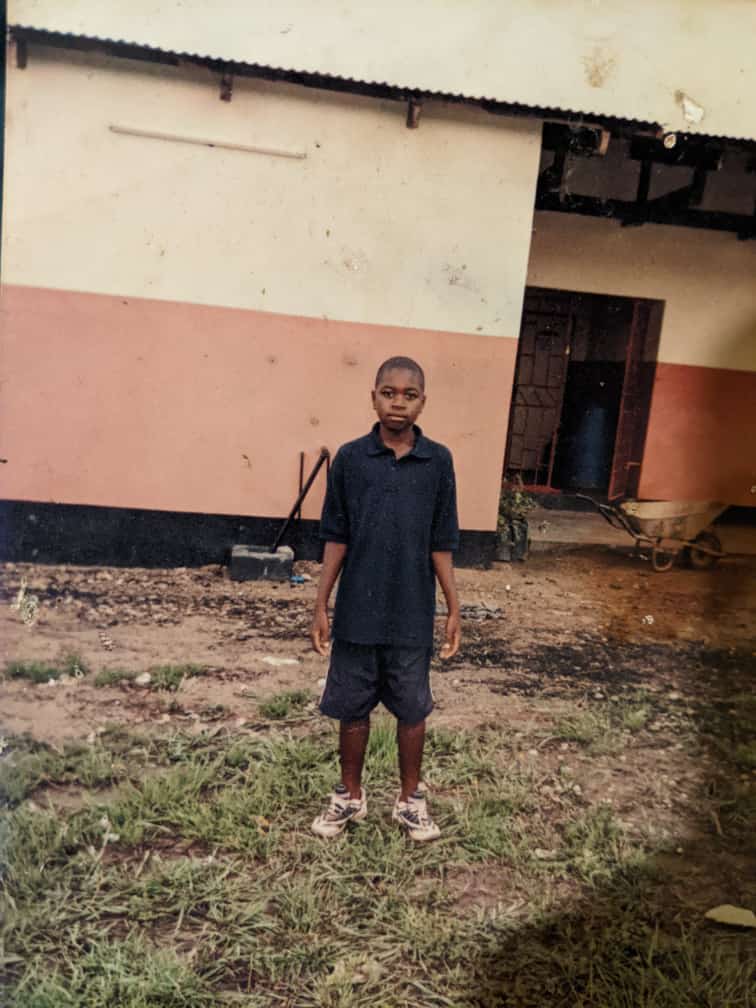
Sachibaba when he first arrived at African Vision of Hope in 2007.
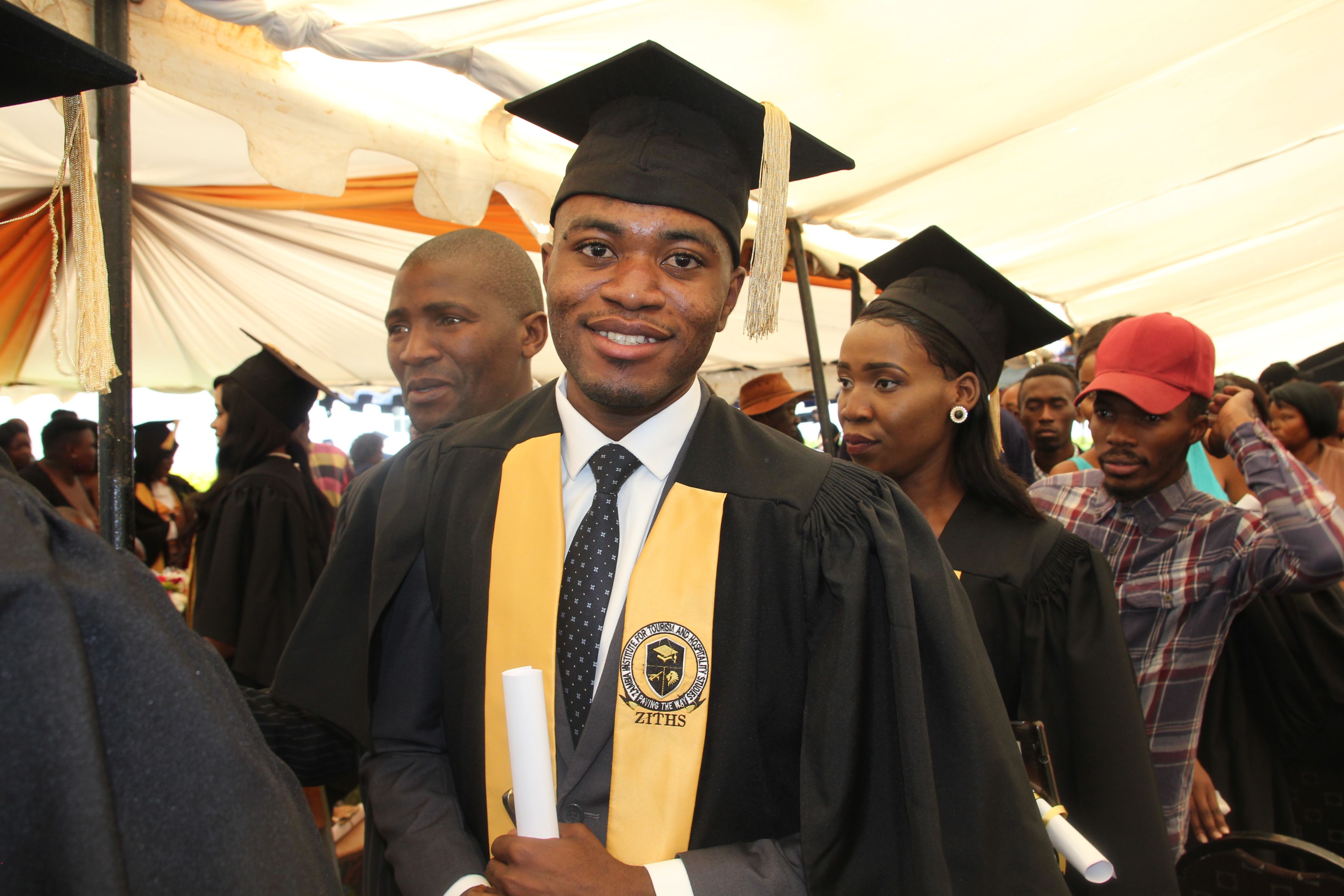
Sachibaba in 2019, when he graduated from college, financed by African Vision of Hope.
Expansion of African Vision of Hope
Through the education and resources provided by African Vision of Hope, the children of Zambia are being lifted out of extreme poverty and their lives are filled with possibility. While thousands of students' lives have been transformed over the past 19 years of African Vision of Hope, there are still millions in need.
African Vision of Hope is expanding, adding a STEM high school. with classroom space for up to 400 students.
Recognizing that STEM education is considered an important factor in a nation's overall economic health, ground has been broken at the site of the African Vision of Hope STEM high school, and construction will be underway throughout 2022. Trained STEM graduates contribute to Africa’s economy by solving local problems with local solutions. This school will offer vital programs such as science, robotics, technology, and agriculture.
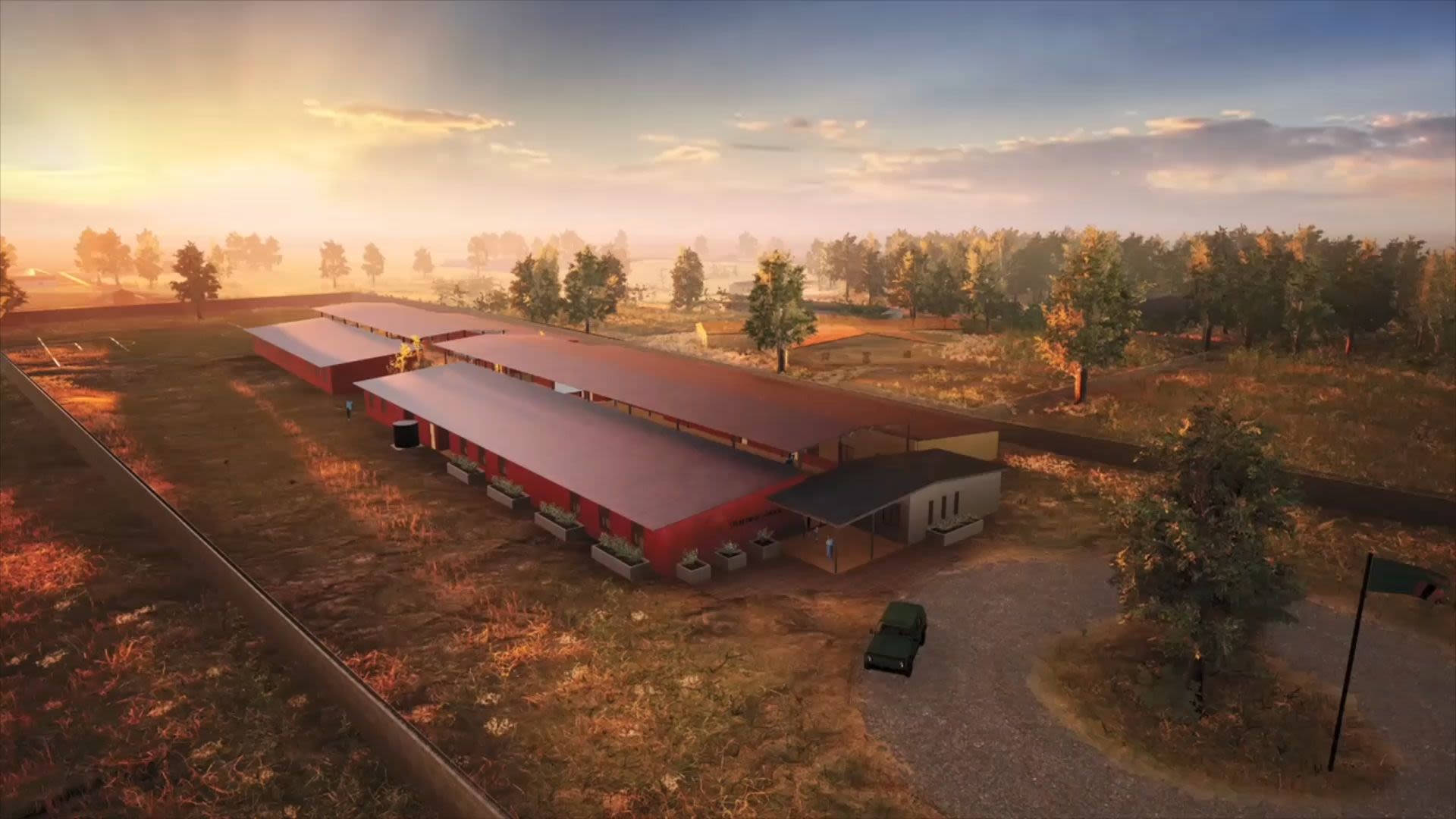
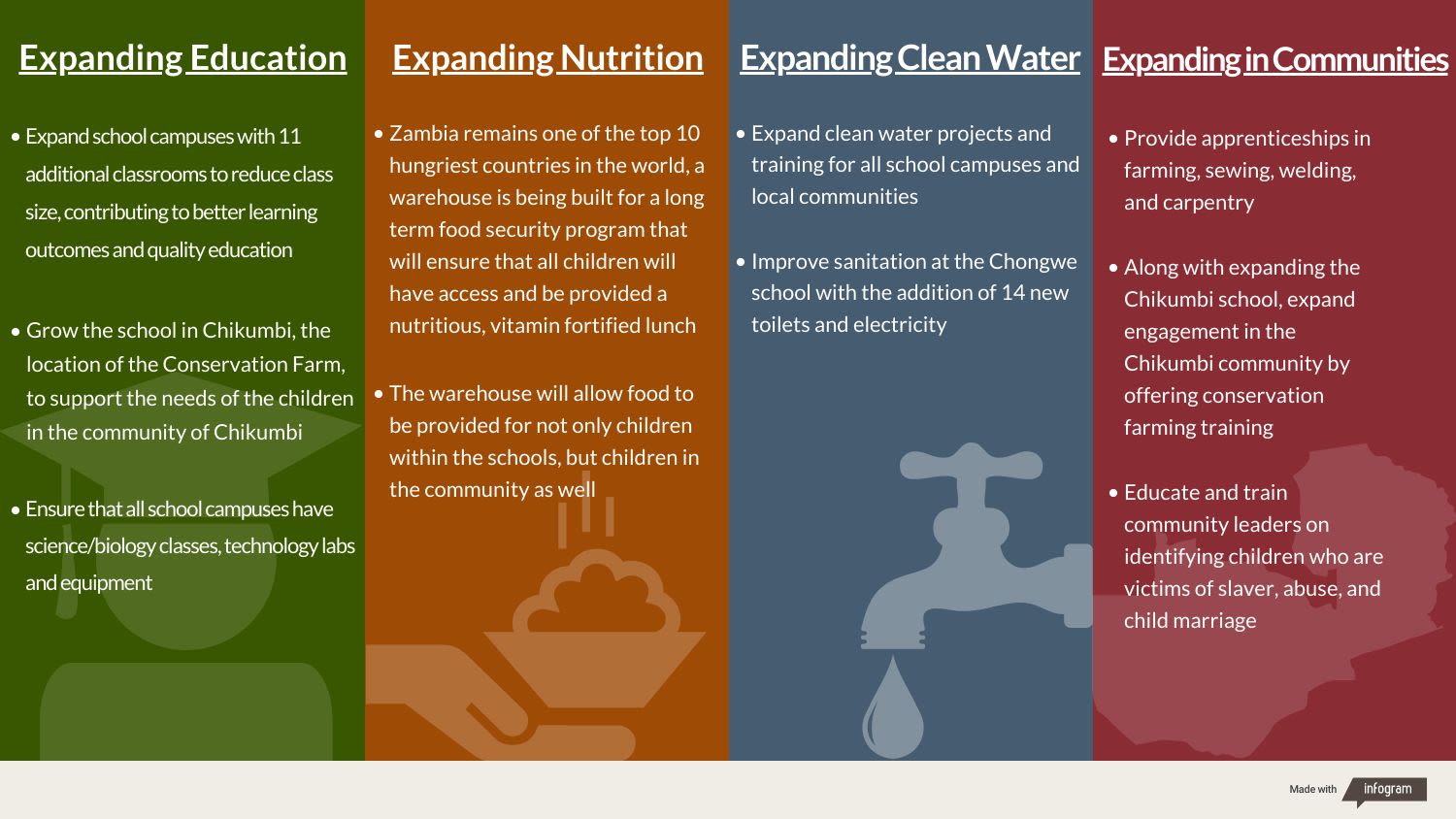
Along with the addition of a sixth school, African Vision of Hope will expand within all areas of their organization

 Built with Shorthand