
Ed Landreth Hall
How the changing history of the building will help bring growth to the departments inside of it
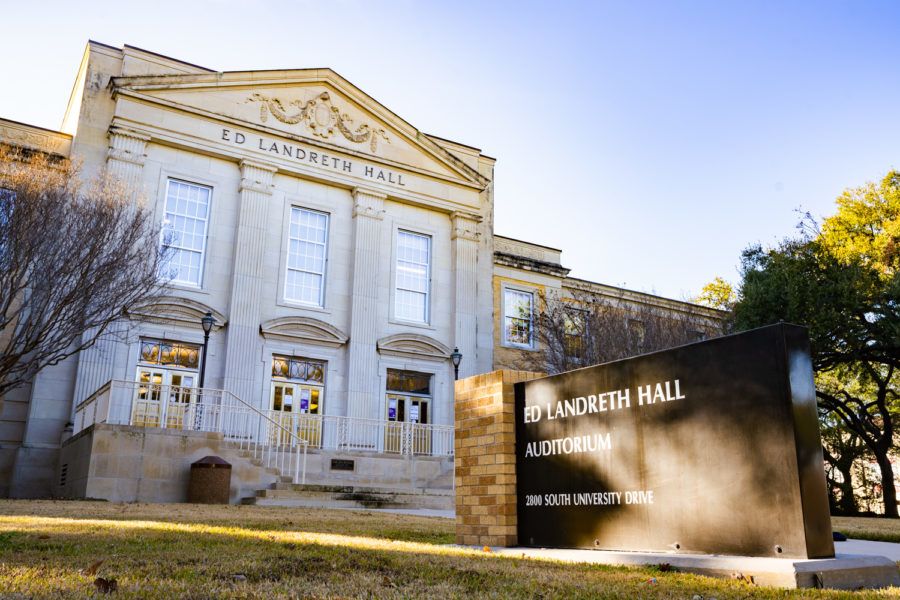

With the upcoming renovations of one of Texas Christian University's oldest buildings, the people that make up Ed Landreth Hall look back on their time and the history of the building before it changes.
Approved by the TCU's Board of Trustees in early 2025, the renovation of Ed Landreth Hall and its auditorium mark a major milestone in TCU’s campus transformation under the “Lead On: Values in Action” plan.
The roughly $66- to $80-million project will modernize the building that was constructed in 1948, expanding and updating nearly 93,000 square feet of academic, rehearsal and performance space.
It's expected to be ready for the 2028-2029 academic year. The revamped facility will include new teaching studios, contemporary rehearsal spaces and a redesigned auditorium featuring improved acoustics, expanded wings, fresh seating and a full fly tower. This will allow for more ambitious lighting, scenic and technical capabilities for theatrical and orchestral performances.
For the school’s theatre and music departments, that have been based in Ed Landreth Hall since its construction, the changes represent more than just renovations. They signal a reinvestment in the arts at TCU and a commitment to nurture creative talent in a space that blends the university’s heritage with 21st-century demands.
Edward Alvin Landreth
Texas Oil
Edward A. Landreth built his career on Texas oil.
Born in 1891 in Springfield, Illinois, he grew up in Joplin, Missouri, where his family worked in mining machinery. He first came to Texas in 1919 on a sales trip to the Breckenridge oil field, but instead of selling equipment, he ended up joining the industry that would define his life.
He launched one of the field’s early gasoline-processing plants and later drilled roughly 60 wells before selling his first major holdings to Phillips Petroleum in 1926.
Landreth returned to wildcatting, rigging for oil away from known drilling areas, almost immediately.
By 1927 he was pushing deeper into West Texas and the Permian Basin, making notable strikes in the Hendricks, Taylor-Link, Penwell and Hobbs fields.
He developed storage tanks, pipelines and processing sites, often financing projects himself rather than relying on large partnerships.
In 1954 he received the Texas Mid-Continent Oil and Gas Association’s Distinguished Service Award for his contributions to the state’s petroleum development and conservation efforts.
Industry leaders described him as steady, principled and unusually grounded for someone who survived multiple oil booms.
Community Service Efforts
Landreth was known for supporting local hospitals, youth programs and community services, often stepping in as both a donor and a fundraiser when organizations needed steady backing.
His giving was consistent rather than flashy, and many of his contributions went toward operational needs that kept institutions functioning.
Landreth also supported causes connected to education and public welfare.
He contributed to youth camps, such as Worth Ranch, a Boy Scouts camp in Palo Pinto County, medical facilities, like Harris Methodist Hospital, and community organizations across the region.
This carried into his work at TCU, but his civic involvement remained broader than the university alone.
Texas Christian University
Landreth joined the university’s Board of Trustees in 1940 and quickly became one of the most influential figures in its post-war expansion.
As finance chairman of a major building campaign during the 1940s, Landreth helped raise about 80% of the funds needed to construct or renovate 16 campus buildings.
With enrollment growing after World War II, TCU needed new academic spaces, dorms and specialized facilities to support returning veterans and a rapidly growing student body.
Landreth’s fundraising leadership made much of that expansion possible and strengthened the university’s ability to compete with other rising regional institutions.
In 1948, TCU honored that contribution by naming its new Fine Arts building and auditorium after him.
Ed Landreth Hall went on to house generations of theatre, music and art students, becoming the most recognizable arts facilities on campus.

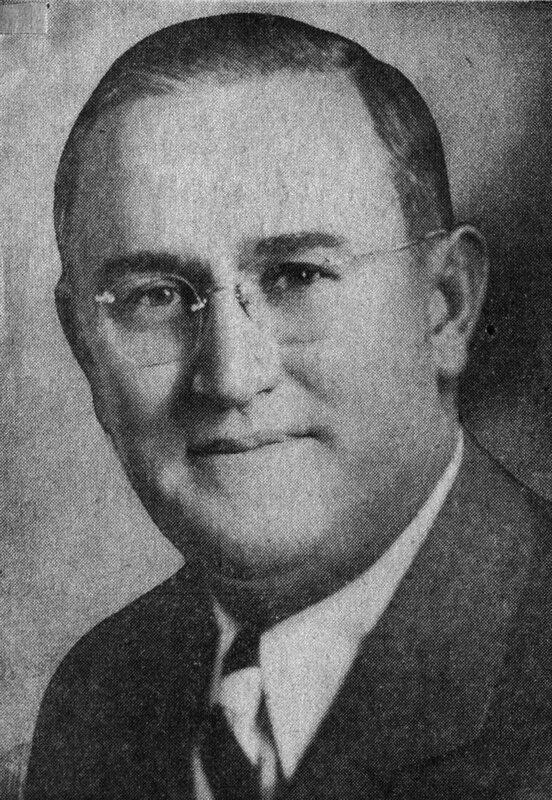
Ed Landreth (TCU Library/Fort Worth Star Telegram)
Ed Landreth (TCU Library/Fort Worth Star Telegram)

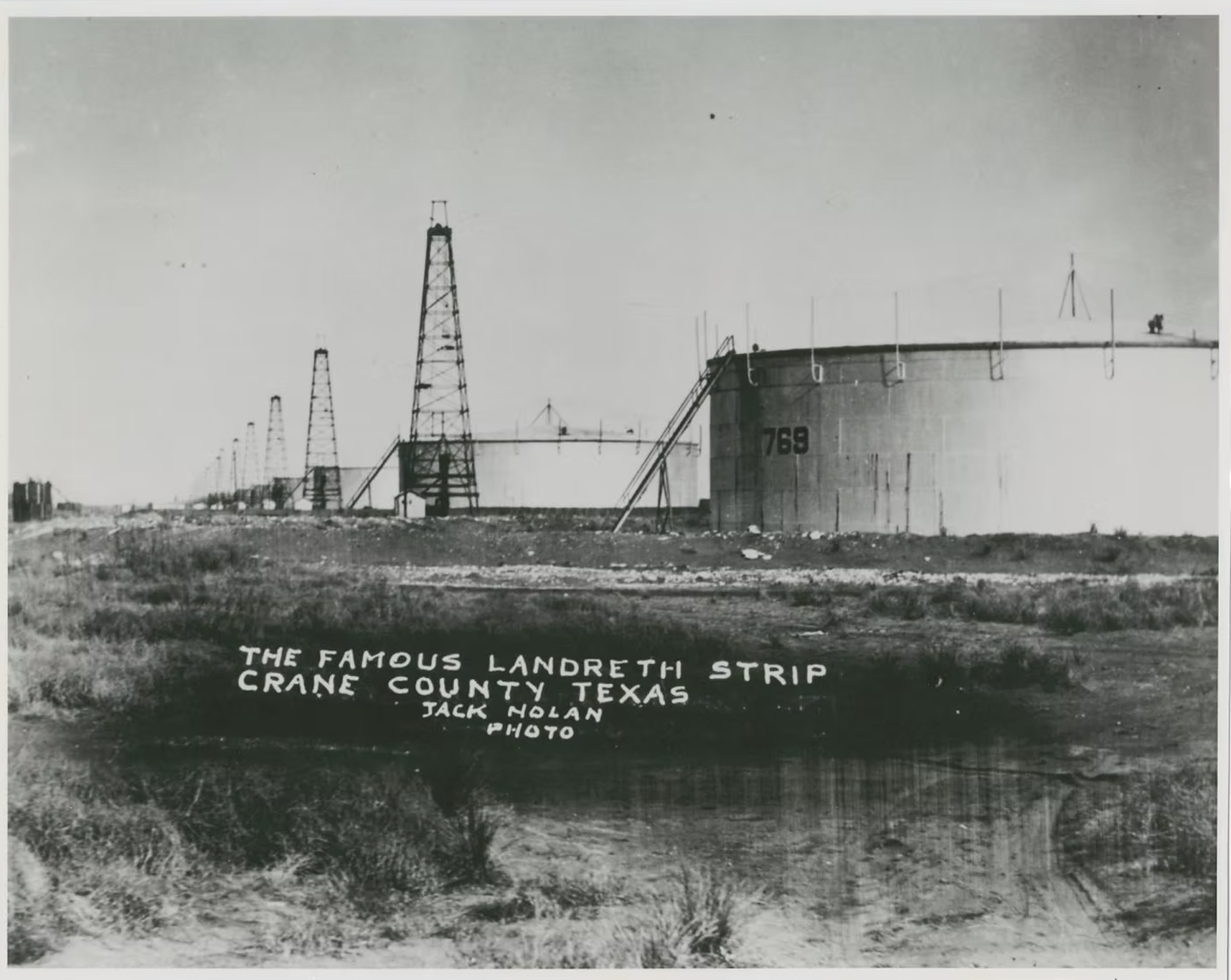
Ed Landreth Strip in Crane County, TX. The county is located in the Permian Basin, which stretches from West Texas to Southeast New Mexico. (oilystuff.com The Landreth Strip)
Ed Landreth Strip in Crane County, TX. The county is located in the Permian Basin, which stretches from West Texas to Southeast New Mexico. (oilystuff.com The Landreth Strip)

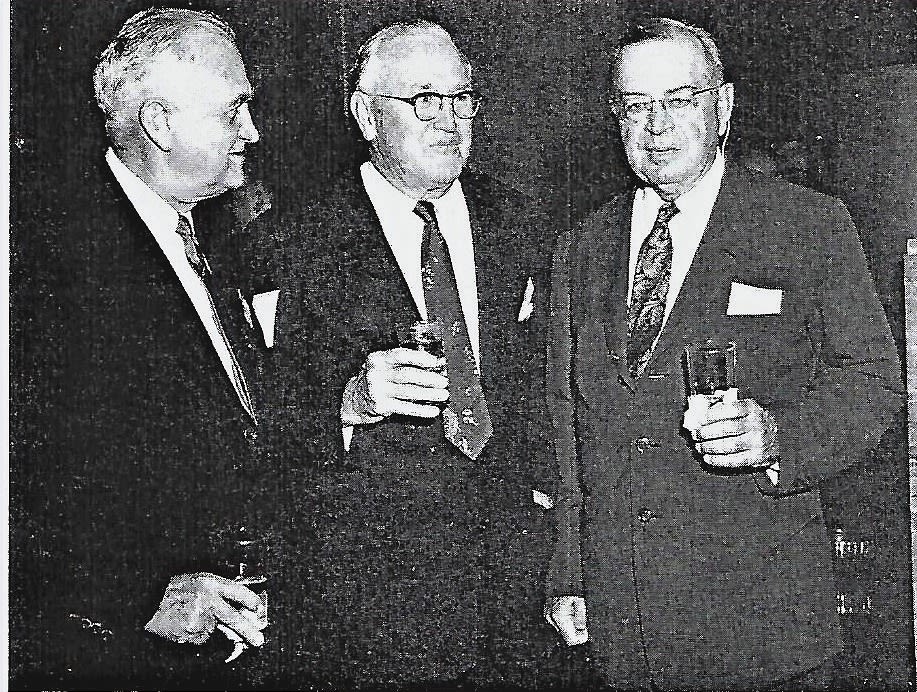
L.H. True, left, Ed Landreth, middle and Arthur Seeligson, right (oilystuff.com The Landreth Strip)
L.H. True, left, Ed Landreth, middle and Arthur Seeligson, right (oilystuff.com The Landreth Strip)

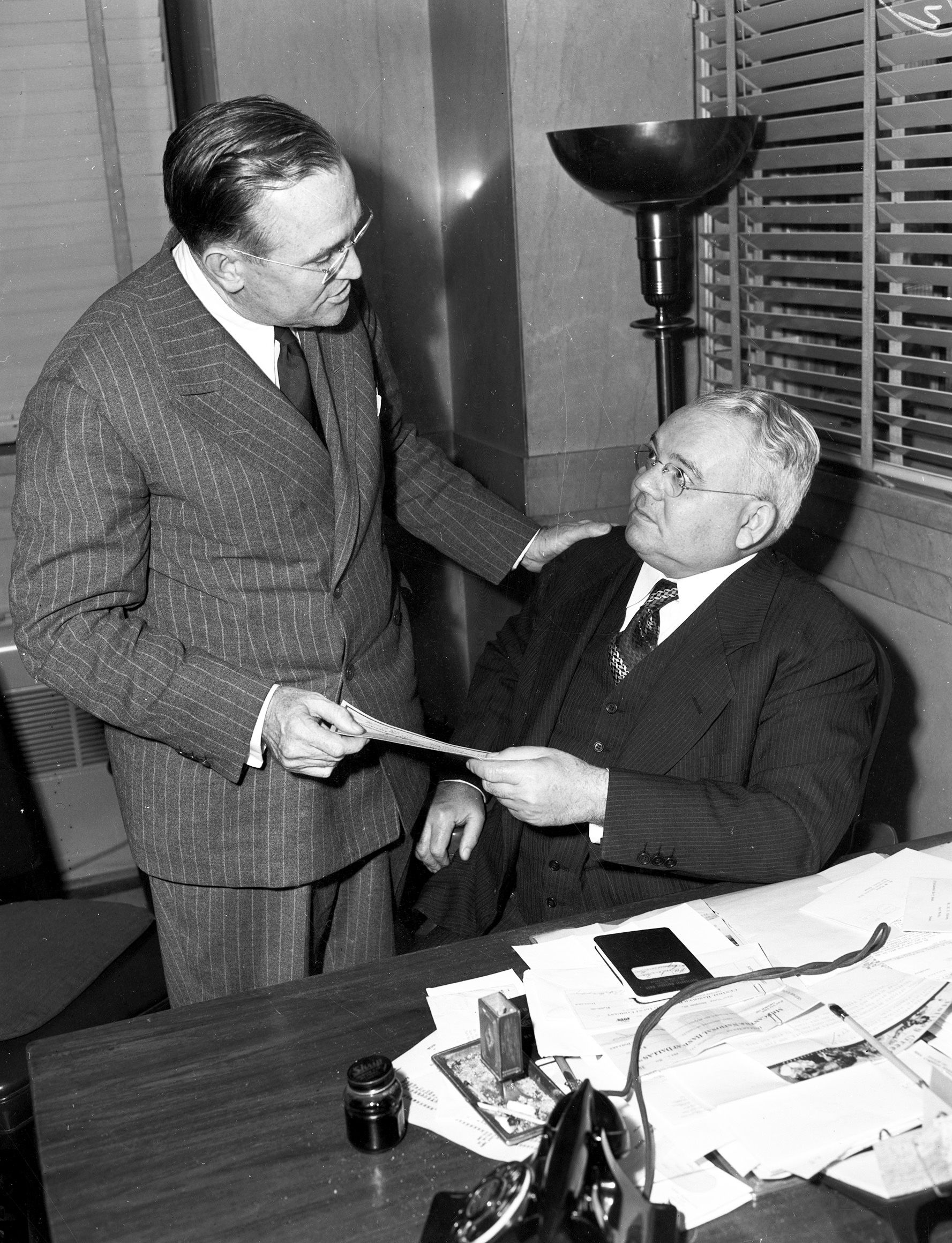
E. A. Landreth giving Ed H. Winton check for Texas Christian University fund 1941. (UTA Library Digital Gallery)
E. A. Landreth giving Ed H. Winton check for Texas Christian University fund 1941. (UTA Library Digital Gallery)

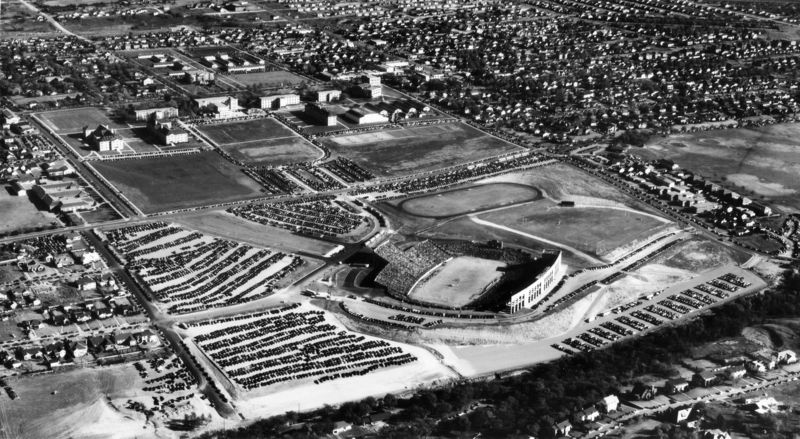
1948



The departments housed in Ed Landreth Hall
The Department of Art
The most popular majors in the department were painting, commercial art and art education.
“The Department of Art has a great deal of equipment with which to carry on the work in the various areas," according to a page in The School of Fine Arts bulletin in April 1948. "Such things as easels and drawing boards are a matter of course."
The Department of Music
The hall was designed as a comprehensive music facility with classrooms, rehearsal rooms and faculty studios, giving the program its first dedicated home on campus.
Ed Landreth Auditorium, the 1,200-seat performance hall, hosted student and faculty recitals for decades and was the original site of the early rounds of the Van Cliburn International Piano Competition, helping establish TCU’s presence in the national classical-music community.
For much of the 20th century, nearly every part of the music program operated inside Ed Landreth: lessons, ensemble rehearsals, chamber music coaching and academic courses.
As the program expanded, the building’s mid-century design began to show limitations.
TCU addressed those space and acoustic challenges with the construction of the TCU Music Center, later named the Megan and Victor Boschini Music Center.
The center, which opened in 2020, included modern rehearsal halls, new teaching spaces and updated faculty studios.
Within the center, the Van Cliburn Concert Hall, a 717-seat venue, shifted most major performances out of Ed Landreth. Still, the older building remains a core part of daily life for the School of Music.
The Department of Speech, Drama and Radio
Theatre at TCU traces back to student-led dramatics under public speaking and oratory classes in the early 20th century, when theatrical productions were extracurricular.
Over time, radio and drama courses were added, by 1938 the Department of Public Speaking began offering radio technique courses.
After World War II, as schooling in the arts expanded, drama and theatre became more formalized.
In 1945, the university renamed the department to Department of Speech and Drama and in 1946 hired its first dedicated theatre director, marking the start of organized theatre education at TCU.
When the new Fine Arts Building, now Ed Landreth Hall, opened in 1949, it included a “Little Theatre” (later known as University Theatre and now the Buschman Theatre), giving the new theatre program a permanent home.
By 1958, rising enrollment and expanded theatre activities prompted a formal separation. Theatre separated from speech, creating the Department of Theatre Arts, offering dedicated theatre degrees.
In the late 1990s, TCU expanded its theatre infrastructure by adding the Mary F. and Thomas D. Walsh Performing Arts Complex adjoining Ed Landreth Hall. Walsh was also used by the music department.
This added a scenic studio, another dressing room and a second theatre venue called the Marlene and Spencer Hays Theatre.
The original theatre in Ed Landreth Hall, now named the Jerita Foley Buschman Theatre, was renovated in 2005 to include updated facilities, such as a new lobby, box office, studios, rehearsal rooms and faculty offices.
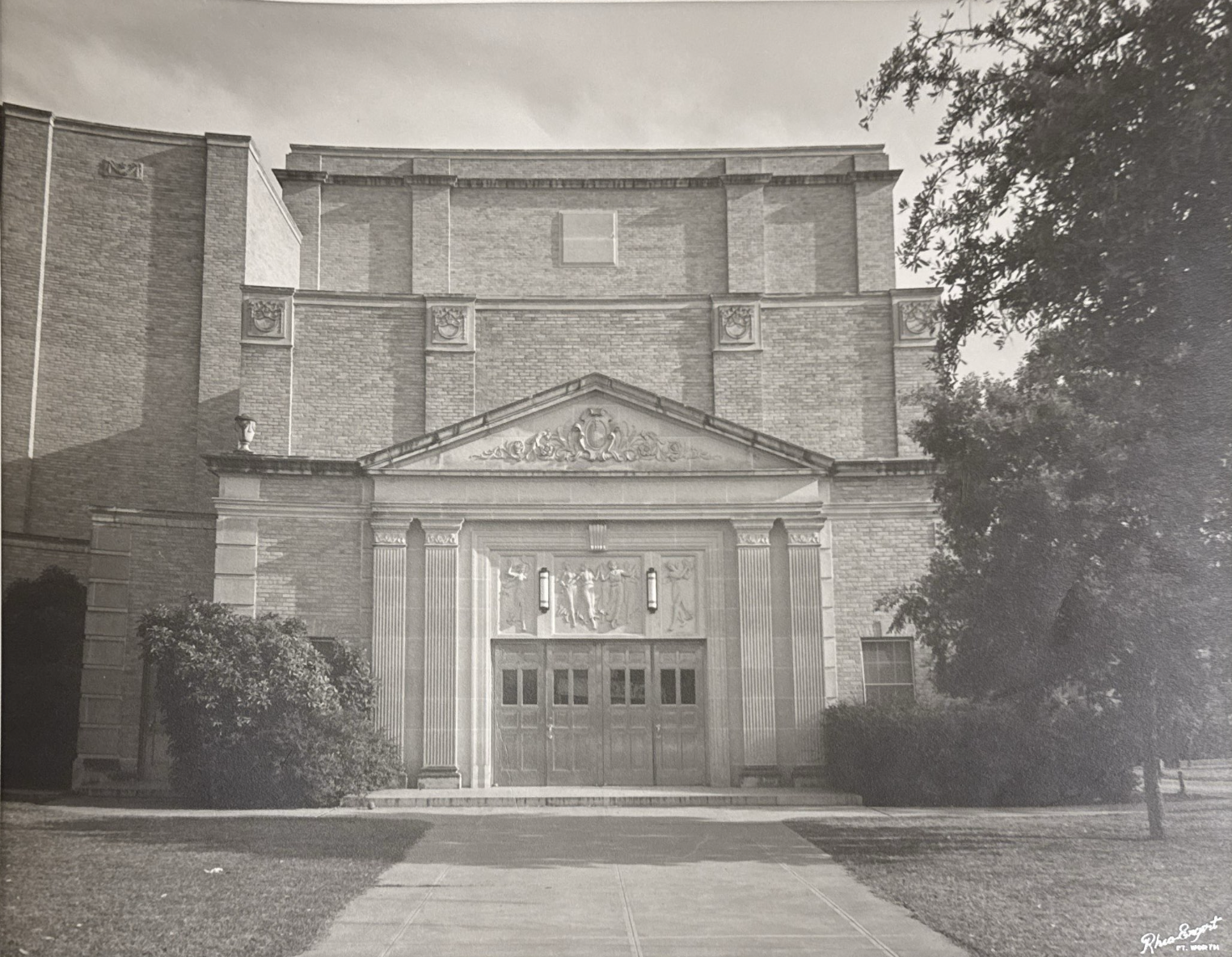
Ed Landreth Hall construction in 2005
The renovations in 2005 were done in benefit of the Theatre Department.
In 2005, the original theatre space in Ed Landreth Hall formerly known as “University Theatre” was extensively renovated and rededicated as the Jerita Foley Buschman Theatre.
Improvements included a new first-floor lobby called the LaLonnie Lehman Lobby, plus a new box office for the theatre.
Four new offices were added on the second floor for theatre faculty, along with a studio, now known as 217 and a rehearsal room, known as 301.
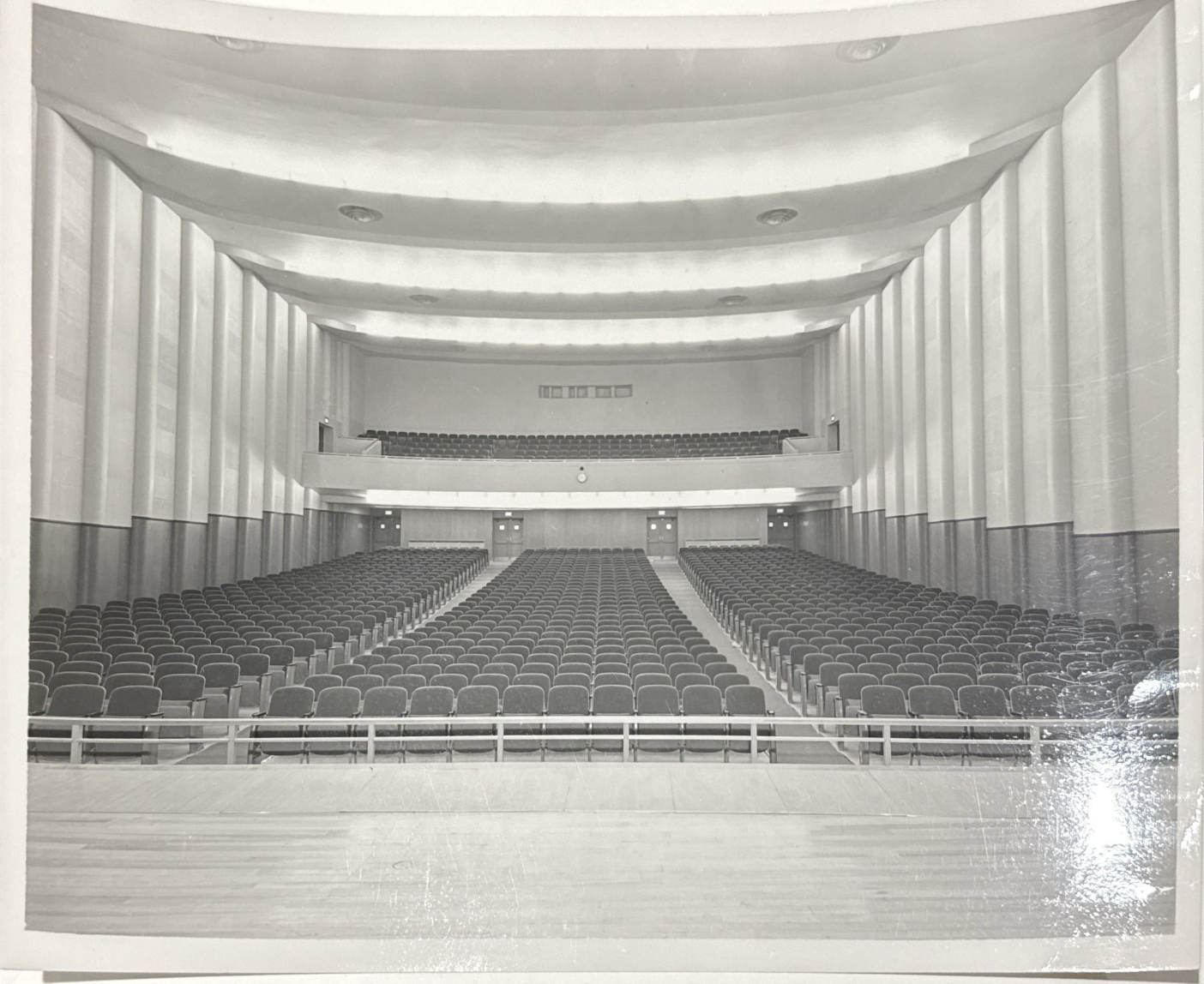
The Ed Landreth Hall auditorium interior was upgraded with new seats, new carpet and new house lighting.
Performance Venues
Ed Landreth Auditorium
The building’s larger venue, Ed Landreth Auditorium, has long served as one of the university’s signature performance halls.
With seating for more than 1,000, it hosted concerts, guest artists and community events for decades.
It also played a role in the early years of the Van Cliburn International Piano Competition, giving the hall a profile beyond campus.
The Little Theatre
The smaller venue, first called the Little Theatre, became the primary home for student productions and acting classes.
As the program grew, the space was renamed University Theatre in 2003 and later rededicated in 2005 as the Jerita Foley Buschman Theatre after a donation of $550,000 allowed for renovations that added.
Growth of the Departments inside of Ed Landreth
TCU is now preparing for a full renovation of Ed Landreth Hall that will modernize the auditorium and do away with the Buschman Theatre.
“I would think that once we have a 300 seat proscenium theater with full fly house and wing space and an orchestra pit and good lighting positions and comfortable seating and great sight lines and all these things that we haven't had ... I mean, it all depends on leadership, but I think there's a really great chance that there's going to be a summer program here,” said Harry Parker, previous head of the theatre department and now professor.
Renovations to Ed Landreth Hall are expected to give both departments the kind of space they’ve never had access to on campus.
The redesigned auditorium is also expected to strengthen collaboration between music and theater, especially in productions that rely on live accompaniment, including operas with full orchestras.
Leaders in both programs note that updated rehearsal rooms and studios will relieve long-standing space shortages that often forced students to work off-site.
The Van Cliburn festival in Ed Landreth Hall

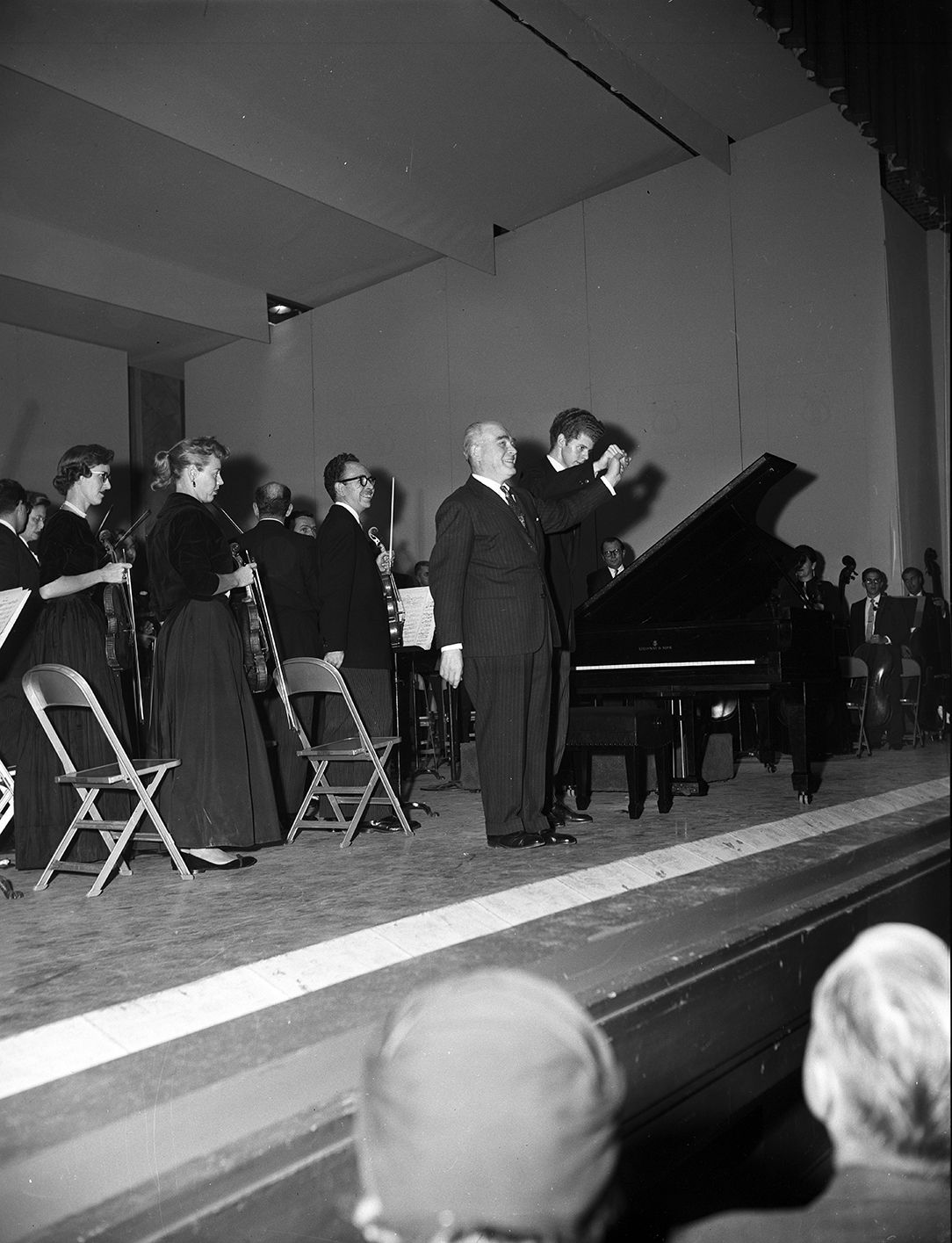
Ed Landreth Auditorium on the TCU campus was the original home for the Van Cliburn International Piano Competition when it launched in 1962 in honor of the famed Texan pianist.
For many years, preliminary and semifinal rounds of the Cliburn competition were held in Ed Landreth Hall before larger venues became necessary for the growing festival.
The competition later moved most performances downtown to Bass Performance Hall, but the connection to TCU’s music community remained strong.
TCU also built a collaborative and educational connection with the festival over decades, including institutes and master classes tied to the school’s music program.
With the opening of the Van Cliburn Concert Hall at TCU’s new Music Center, the festival’s early round performances returned to the university’s campus venues in recent years.

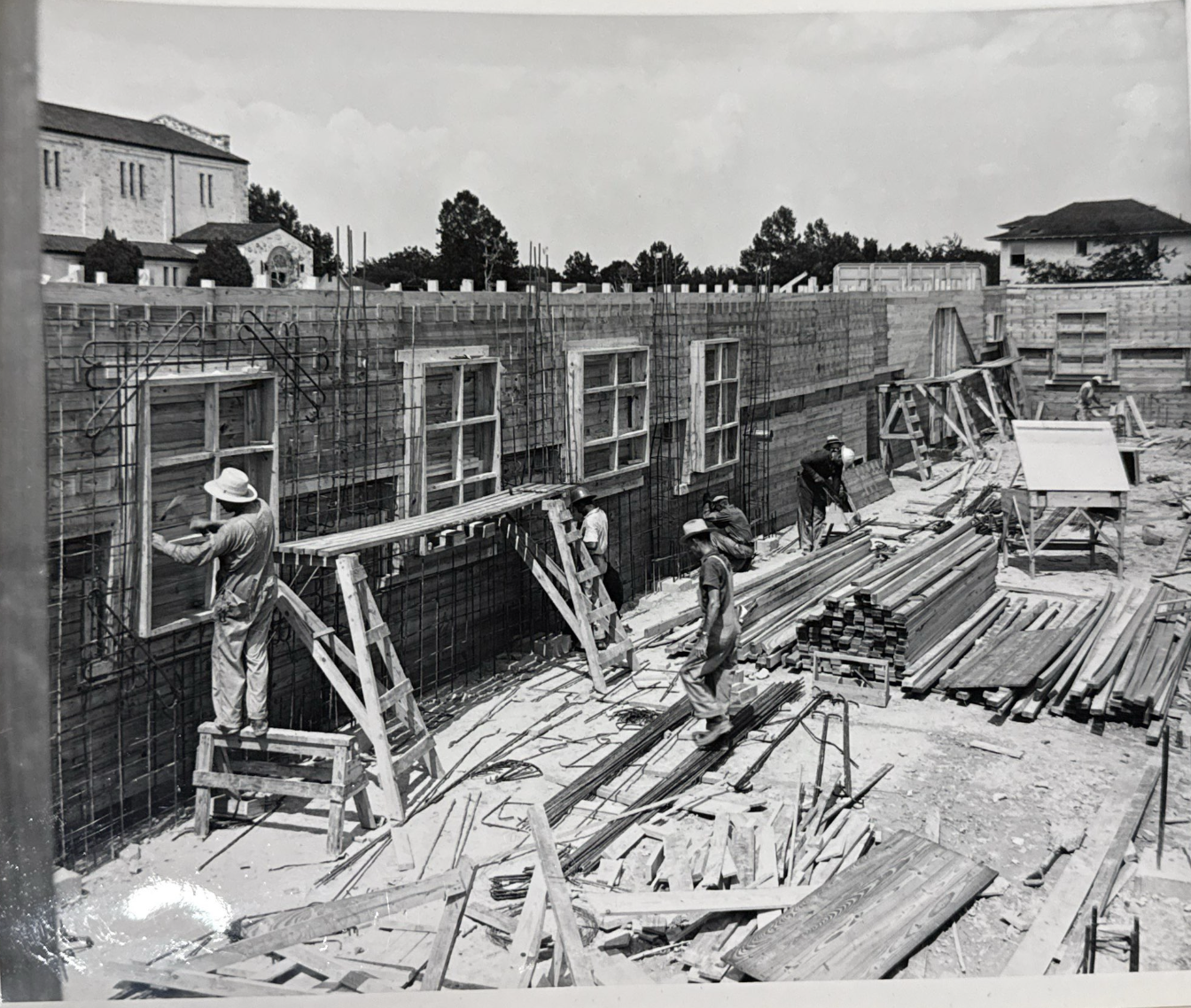
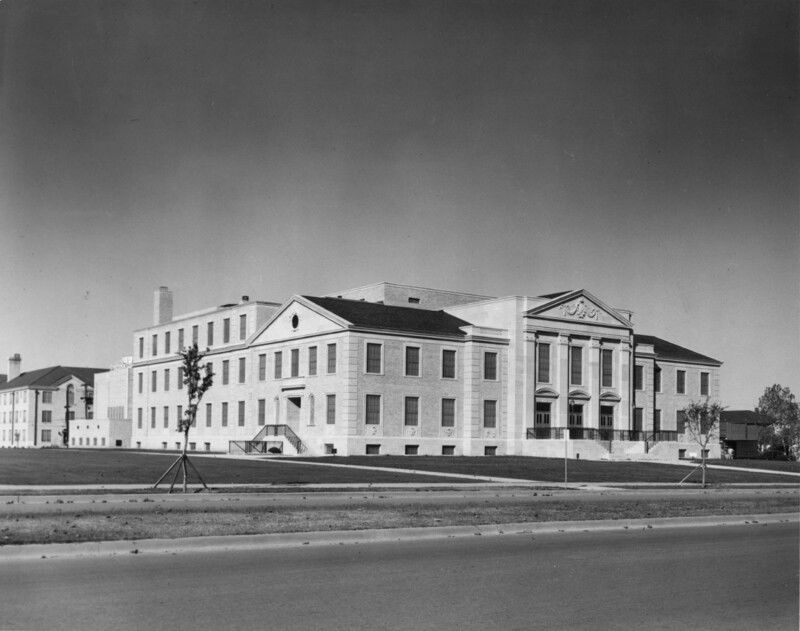
Construction on TCU Fine Arts Building in 1948 (Fort Worth Star Telegram/TCU Special Collections)
Construction on TCU Fine Arts Building in 1948 (Fort Worth Star Telegram/TCU Special Collections)


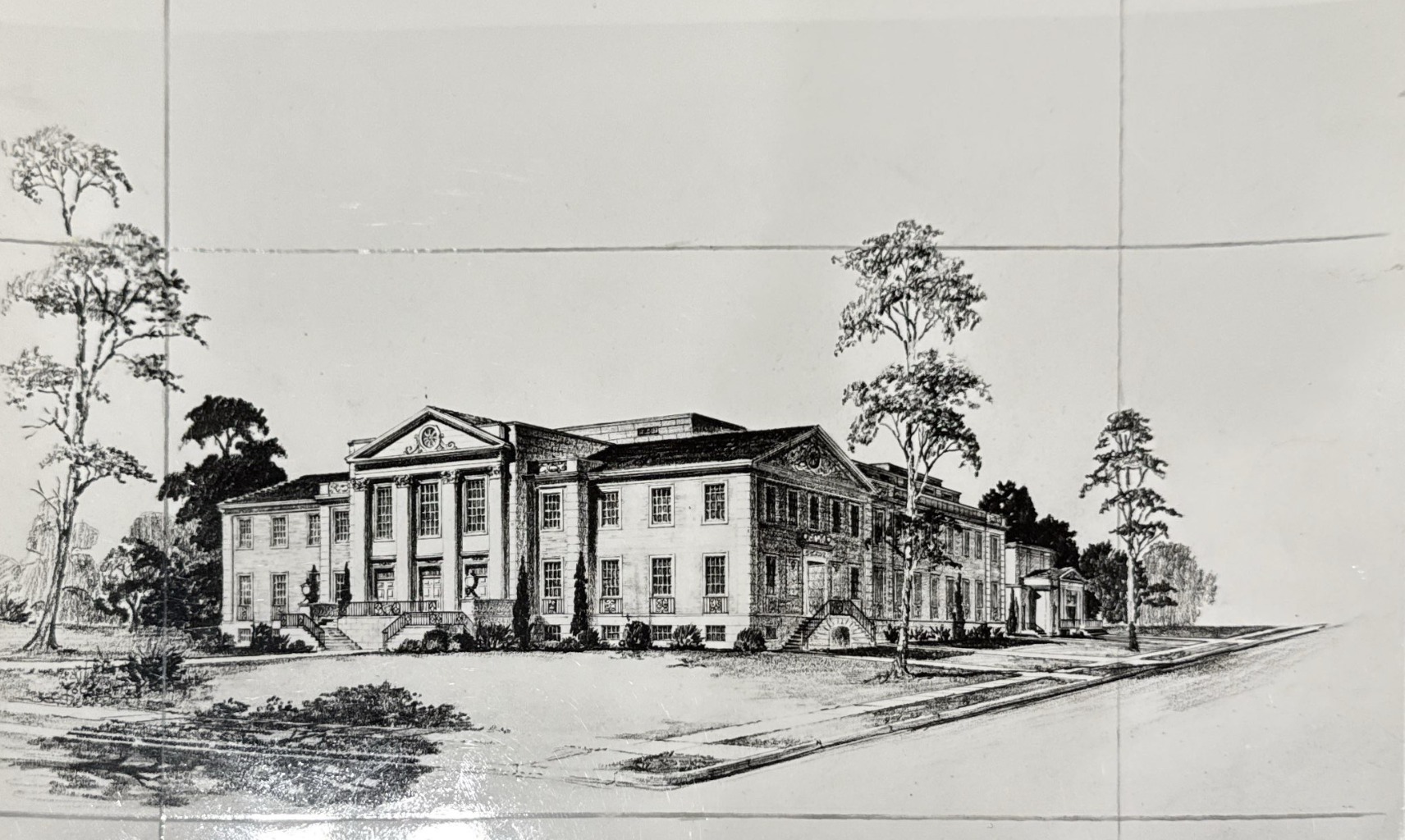
Architectural rendering and drawing of the new Fine Arts Building in 1947/48. (TCU Special Collections)
Architectural rendering and drawing of the new Fine Arts Building in 1947/48. (TCU Special Collections)
Faculty who have spent decades inside Ed Landreth Hall describe its long history as both an anchor and an obstacle.
The building has carried generations of performers, teachers and technicians, even as its limited size forced departments to share hallways, rehearsal rooms and backstage space that never matched their growing needs.
Those pressures shaped a culture that survived on creativity and adaptability.
Faculty built programs in spite of the walls around them, making do with outdated HVAC systems, aging theaters and rehearsal spaces carved from whatever corners were available.
What grew inside Ed Landreth endured because people made it work.
The new facilities promise a different future. Expanded theaters, modern classrooms and dedicated rehearsal studios will give students the space they’ve never had.
Programs that once competed for square footage will finally have room to operate without compromise.
For many, the renovation represents more than a construction project. It signals a chance to reset long-standing limitations and to imagine what TCU’s performing arts can become with the tools they have always lacked.
While the building that defined eras of music and theater will change, its role in shaping generations of artists remains the through-line.
"The new facilities will bring in more audiences, for sure."
 Built with Shorthand