
Chasing purpose, finding hope
by Faith Lester
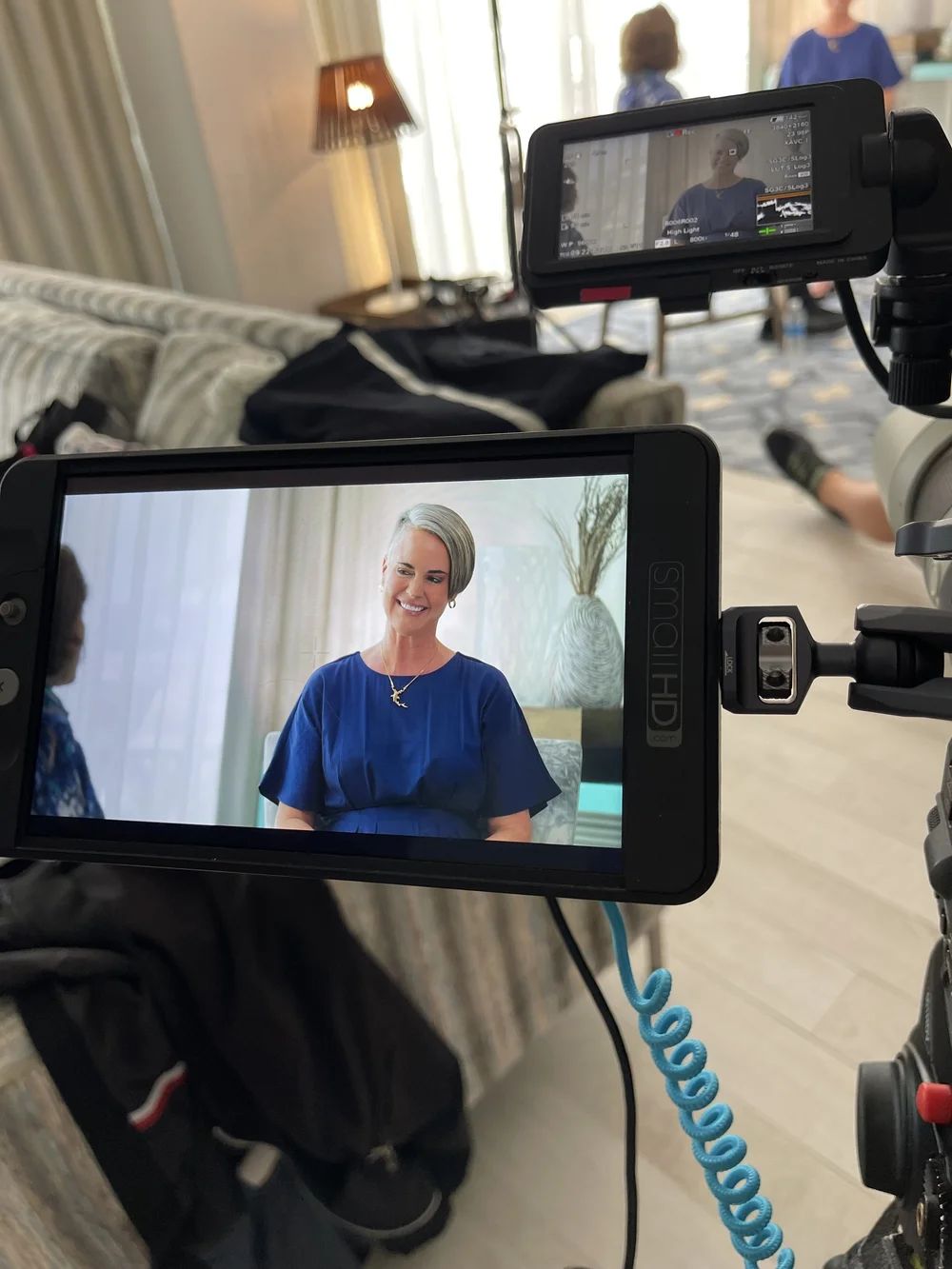

Four circles: God, science, people and a camera lens orbited around one woman who did not yet know how they fit together. For years, Diane Simpson chased meaning across disciplines and careers, collecting degrees in theology and science, volunteering through faith-based organizations and trying to define her purpose. Only later did she realize the thread connecting them all: storytelling.
“I’m supposed to make films,” said Simpson, now executive producer and founder of BRS Media. “I want to share all that I’m passionate about.”
Simpson graduated from Texas State University with a Bachelor of Arts in biology and a minor in anthropology.
“I've always had a love of the ocean, science and conservation,” Simpson said. Sprinkled in between science classes, Simpson would take photography, journalism and writing classes, where she found a passion in documenting. Later on, Simpson earned her master’s in practical theology from The King’s University at Gateway Church.
Building BRS Media: Taking the Leap
BRS Media all started with a bubble diagram of a dream.
“To be an organization helping other organizations financially, and also filming those organizations for exposure, while educating the general public about issues they may not be aware of,” Simpson said.
This is what BRS Media’s goal always was. Simpson also knew she wanted an organization to honor her father.
“Without his hard work, none of this would be possible,” Simpson said. That was the birth of Bobby Ray Simpson Media.
“Once I finally decided to jump off the cliff and go for it, I started with the basics. I knew I needed help, so I hired my niece to help carry the load,” Simpson said.
Simpson needed a website and business cards, so she developed a logo and secured website domains. She let her niece, Brooklyn, develop the website. The website would include a mission statement and a general vision for BRS Media.
Simpson began on the logistics. “I retained an entertainment attorney to help me understand the industry, set up the company and do all the legal stuff,” Simpson said.
Simpson and her husband, Anthony, own a realty company, so she understands how to run a business, but an independent film company is a whole new ball game. Simpson hired Meticulous Image, a video production company, from a friend’s referral and went for it.
“It’s like stepping off a cliff every day, trusting that God has you and will lead the way,” she said.


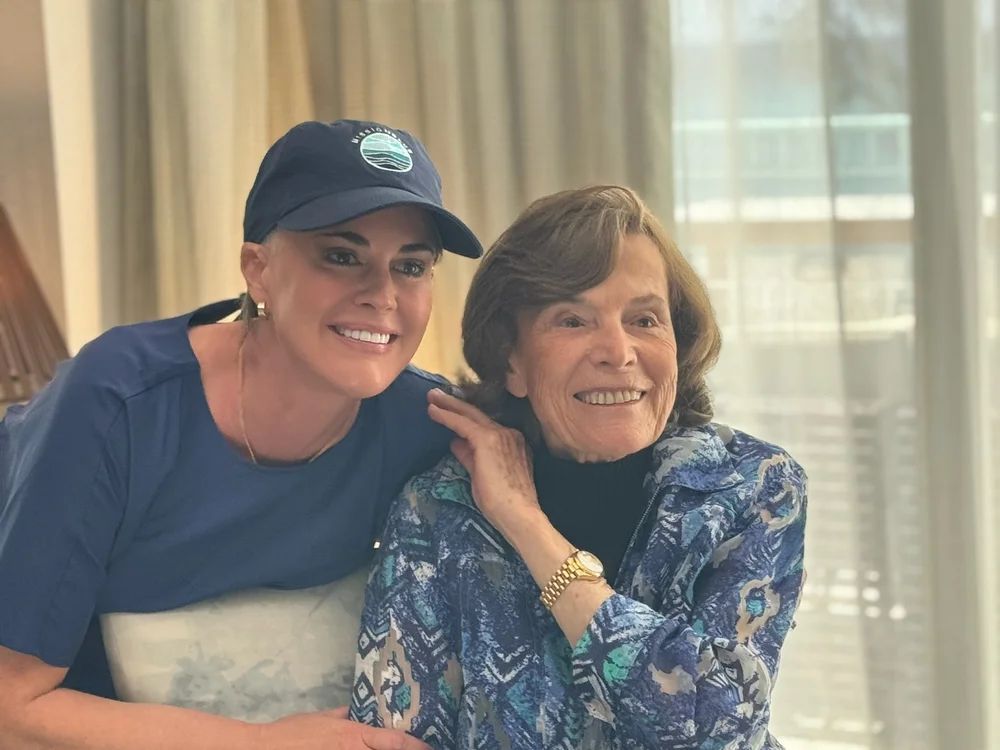
Diane Simpson and Dr. Earle (Photo courtesy of BRS Media)
Diane Simpson and Dr. Earle (Photo courtesy of BRS Media)

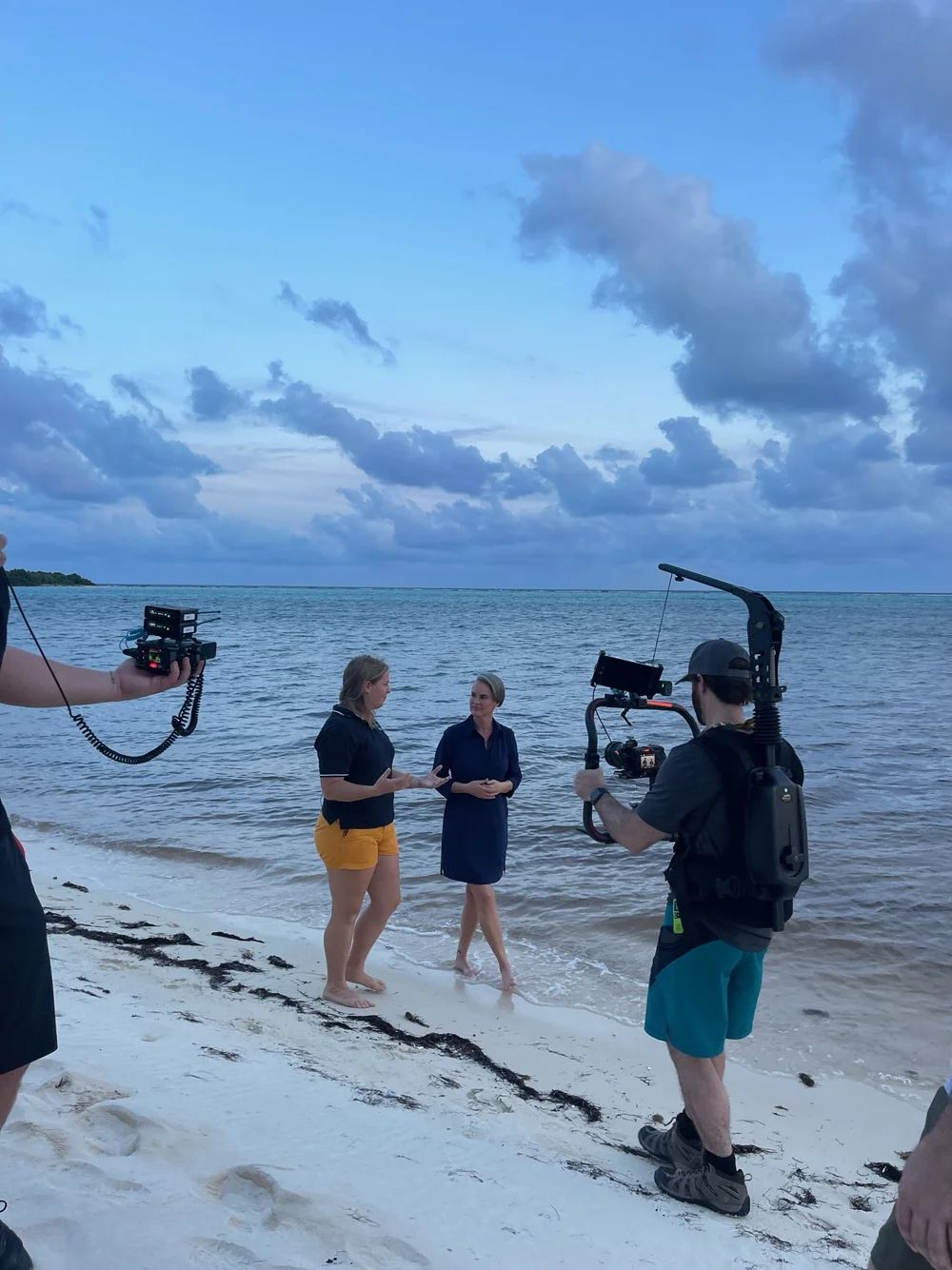
Simpson conducting interviews in the Cayman Islands (Photo courtesy of BRS Media)
Simpson conducting interviews in the Cayman Islands (Photo courtesy of BRS Media)
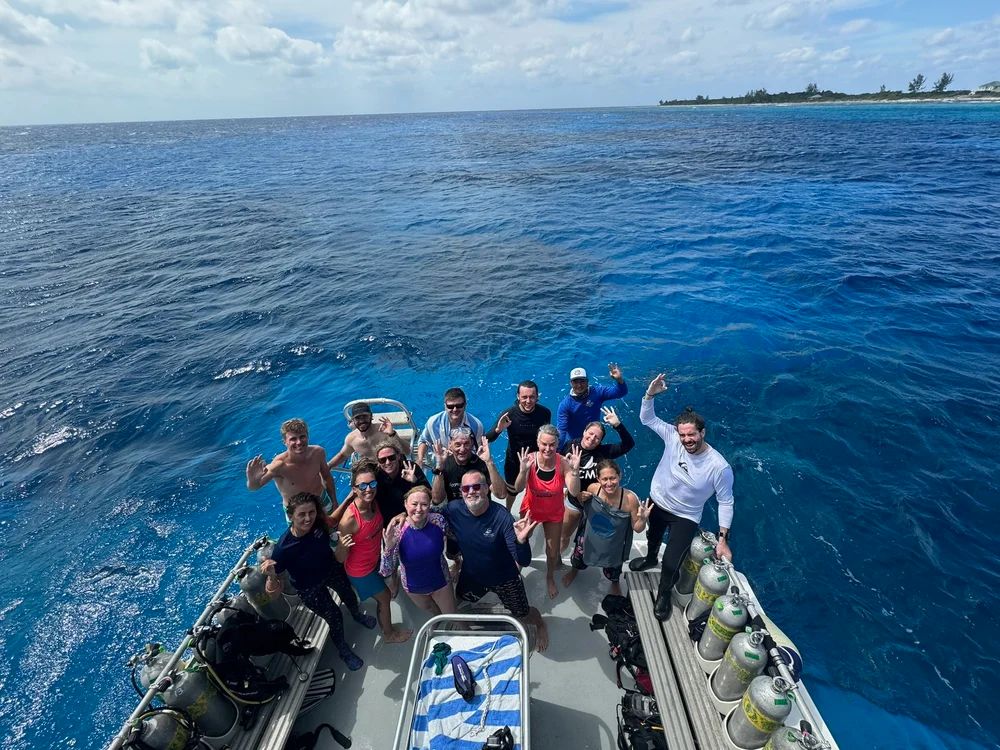
The crew in the Cayman Islands (Photo courtesy of BRS Media)
The crew in the Cayman Islands (Photo courtesy of BRS Media)
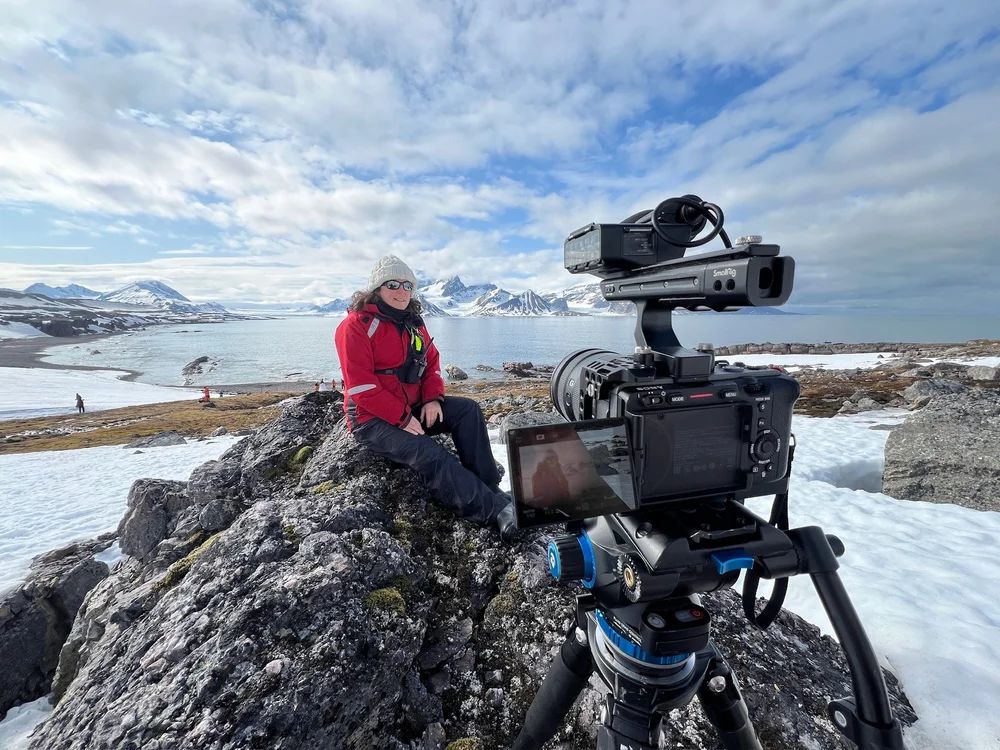
Photoshoot for Operation Blue (Photo courtesy of BRS Media)
Photoshoot for Operation Blue (Photo courtesy of BRS Media)
Finding the First Story: Chasing Hope Takes Shape
As Simpson was developing BRS Media, the mentors around her kept telling her she needed to be more specific, that she had to find her niche.
“I think one of my talents is organization and structure,” Simpson said. She knew she could build this company; she felt like God was calling her to do this, but she had never done film before. Eventually, Simpson narrowed her interest down to what she was passionate about: telling stories. That clarity took shape in her first series: “Chasing Hope”.
“Chasing Hope” will become the debut series of BRS Media and Simpson's filmmaking career. The series will contain four documentaries in the form of episodes that tell stories of different people and organizations finding hope in places usually framed only by crisis.
Episode One: Into the Blue With Sylvia Earle
The first episode of the series “Chasing Hope” will feature Sylvia Earle, a lifelong marine biologist and oceanographer. When Simpson started thinking of Chasing Hope, she thought of the people she already knew and the stories they had to tell.
In 2019, Simpson was asked by her husband what she wanted for her birthday. Simpson's response, “to meet Dr. Sylvia Earle.” With a determination to get his wife the best gift she had ever gotten, Anthony emailed Mission Blue, Earle’s ocean conservation organization. In light of that email, the Simpsons got invited to an annual dinner at the Explorers Club in New York City. That moment quietly planted the seed for a future film. Simpson was sitting next to someone she had always looked up to, Sylvia Earle.
Soon after, Simpson and Earle became friends. Years later, when Simpson was looking for a story to tell, she knew Earle was a great one to start with. Simpson was granted permission to cover Earle and her ocean exploration, so the production team hit the ground running and flew to the Cayman Islands to shoot the episode. While there, Simpson helped create the Little Cayman Hope Spot, an identified place that inspires protection and community action for vital areas, as well as the Central Caribbean Marine Institute (CCMI). These two locations helped garner donors and donor support for the ocean and its conservation. This was all through Mission Blue, which “inspires an upwelling of public awareness, access and support for a worldwide network of marine protected areas", according to the Mission Blue website.
In the Cayman Islands, Simpson and her team were joining Earle’s expedition team. “We decided to go with a combination of classic style interviews, which is both people on camera, and single person interviews. I was nervous. I would be on camera for the first time conducting interviews,” Simpson said.
Simpson met and interviewed people at CCMI, mostly scientists whom she knew from helping to create the Hope Spot. The scientists worked with the local youth to educate them about the importance of the ocean and are currently working to help restore coral health in the region.
Simpson and Meticulous Image even went diving with Mission Blue. Dan Maitland, the co-founder of Meticulous Image and director of photography, is an experienced diver and is familiar with underwater camerawork.
“I’ve been scuba diving for many years, part of my childhood was actually spent living on a boat in the Caribbean,” Maitland said. Underwater camerawork is a challenge of its own. It includes currents, limited air supply, wildlife swimming around you, and keeping expensive equipment safe. “....but that combination of difficulty and reward is exactly why I love it.”
Maitland said what made this project stand out, though, was the mission behind it.
“[Diane's] work with BRS Media is genuinely important, documenting environmental issues, reef health, and the state of our oceans through storytelling,” Maitland said. “Being able to contribute to that through Meticulous Image felt like meaningful work, not just another production.”
Ocean expeditions were only one part of Simpson's education as a new filmmaker. If the Cayman Islands taught her how to capture stories in motion, her next challenge taught her how to stage them.


Dr. Earle and Simpson in an interview (Photo courtesy of BRS Media)
Dr. Earle and Simpson in an interview (Photo courtesy of BRS Media)
Behind the Scenes: A TED Stage in a Warehouse
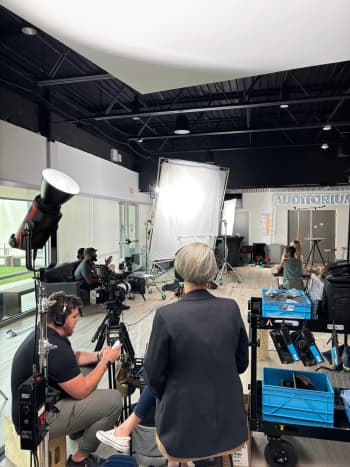
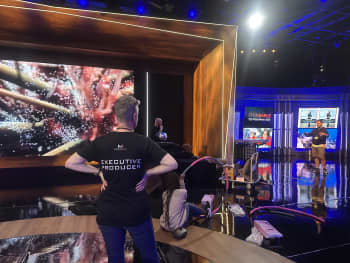
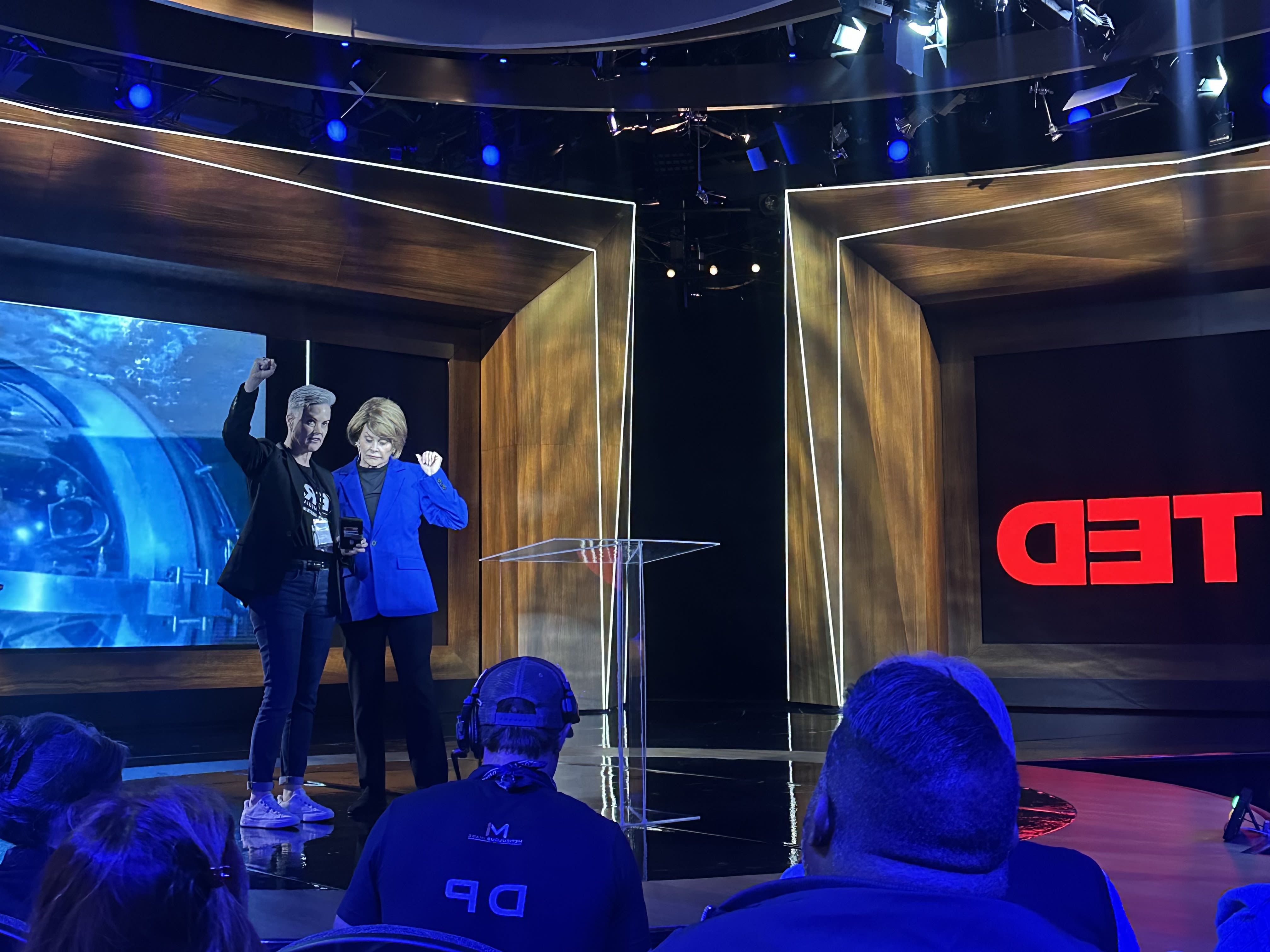
A scene Simpson wanted to incorporate into the Operation Blue Hope episode was Earle getting her TED prize. The goal was to recreate the scene of Earle receiving her prize and giving a speech. I had the opportunity to shadow Simpson setting up the day before the shoot, as well as the shoot day. The day before the shoot included setting up the background of the stage, testing audio and lighting, rehearsing shots from the shot list.
When I walked in, the studio was already humming with quiet activity. A few crew members were checking the lights, their faces glowing under the soft white bulbs. Someone crouched at the podium, wiping it down with glass cleaner until it gleamed under the stage lights. Nearby, a dolly rolled in, stacked with Amazon boxes waist high. Towers of cardboard hinted at the chaos behind the order of filmmaking.
Simpson was in the middle of it all, directing traffic. She opened boxes, pulling out props and describing what she saw in her mind’s eye. The tables, she noticed, were wrong. Round tops but square bases, nothing like the sleek, circular ones from Earle’s original TED stage. “We can fix that,” she said, half to herself, and handed a crew member a box of hula hoops. The idea was to use them to round out the tables’ silhouettes. It was ingenious, except the hoops were too big.
Instead of giving up, Simpson improvised. She tore strips of extra tablecloth, experimenting with how to drape them for a more seamless look. When that didn’t work, she flipped a wooden box onto its side, propping up one of the tables and sliding the hula hoop underneath to create the illusion of symmetry. It wasn’t perfect, but it worked.
Seeing Simpson, the executive producer, on her hands and knees, tugging at fabric and testing angles, said more than any title card ever could. It was the kind of hands-on commitment that defines independent filmmaking. A mix of creativity, stubbornness and absolute devotion to the craft.
After covering so much of Mission Blue and Earle, Simpson has developed a relationship with her. “I will be hosting a small gathering for her in my home this coming spring. It’s been an incredible journey so far,” Simpson said.
Episode one grounded Simpson in environmental storytelling, but “Chasing Hope” was always designed to span multiple forms of struggle and resilience. The next two episodes would take her far from coral reefs and into one of the darkest crises affecting communities across the globe. Human trafficking, she learned, is as hidden as the deep sea.




Episode Two and Three: Exposing the Hidden Crisis
For episodes two and three of “Chasing Hope”, human trafficking is at the forefront. Simpson volunteered with Unbound Now, an organization fueled through faith to fight against human trafficking, for over a decade. 13 years ago, Simpson went to an annual conference called World Mandate, put on by her home church, Antioch, in Waco, TX. Unbound Now was there, speaking at the conference.
“They were meeting and educating law enforcement on the effects of human trafficking and how common it is right under our noses,” Simpson said. It was eye-opening for Simpson and Anthony. That’s when they got involved.
“Human trafficking is an issue close to my heart, mostly due to the misunderstanding we have here in the states about trafficking,” Simpson said. “It’s not an ‘over there’ problem or an international problem, it’s happening everyday, here on our own soil and in our own backyards. I wanted to give a voice to the truth of the problem.”
Before Meticulous Image and Simpson did any filming, they decided on the organizations they wanted to focus on. Unbound Now was at the top of that list. “We wanted to be able to tell a survivor’s story, but most survivor’s, for safety reasons, do not like media attention,” Simpson said.
Simpson hired a consultant who used to work for Unbound Now to make sure they were getting everything right. The consultant found someone willing to tell her story on camera, Yevette Christy, who was already working on her own autobiography. Christy was in, so Simpson and her team partnered up with her for an episode of Chasing Hope.
The second episode about trafficking, “follows the story of a fictionalized but not fictionalized character. Her character is based on the story of several survivors amalgamated together,” Simpson said.
She hopes to show the viewer how trafficking can look today, specifically via online avenues. “What I learned the most from the filming of these episodes is how much I enjoy the process of film making. Yes, it’s a serious topic and we take the weight of what we are telling very seriously,” Simpson said.
Simpson had fun in the filmmaking process by capturing a story in a dramatized way, doing re-enactments of a real story.
“From finding props and wardrobe, to securing talent and locations, to approving scripts and character development, it is hard work but it’s very enjoyable," Simpson said. "I have found my passion and what I believe I was born to do.”
After spending months immersed in some of the heaviest subjects imaginable, Simpson wanted the final episode to highlight resilience in a different form: Healing, community and the long road home for those who serve. That shift in tone led her to the fourth and final episode of “Chasing Hope:" Run For The Wall.
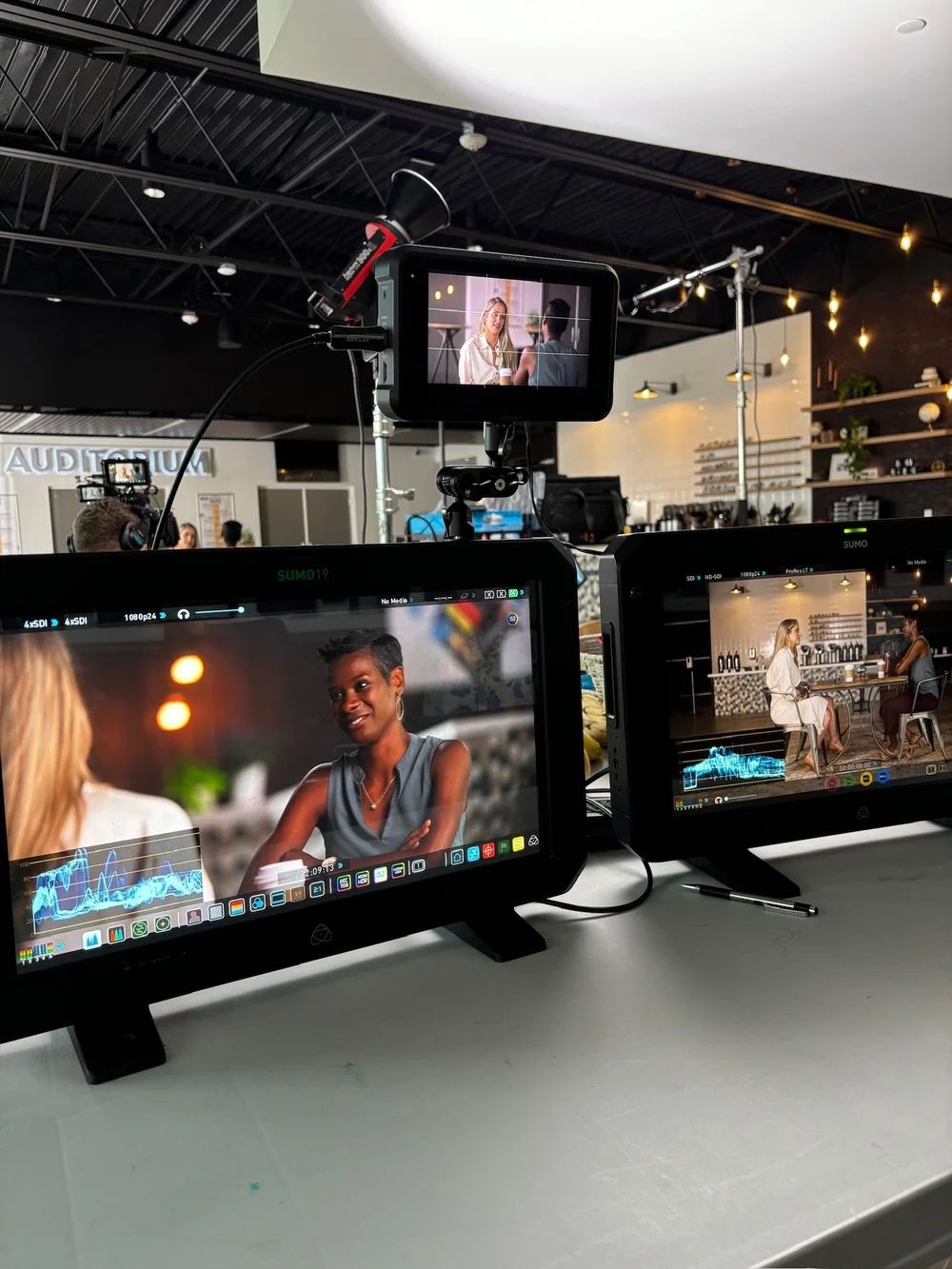
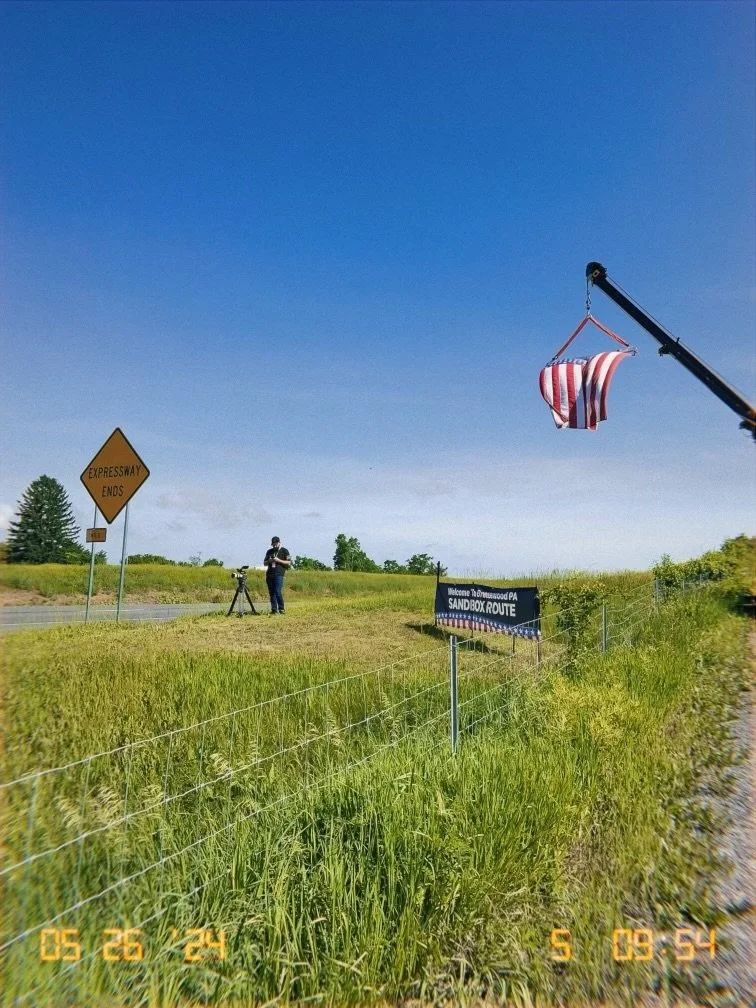
Filming of Operation Traffick911 (Photo courtesy of BRS Media)
Filming of Operation Traffick911 (Photo courtesy of BRS Media)
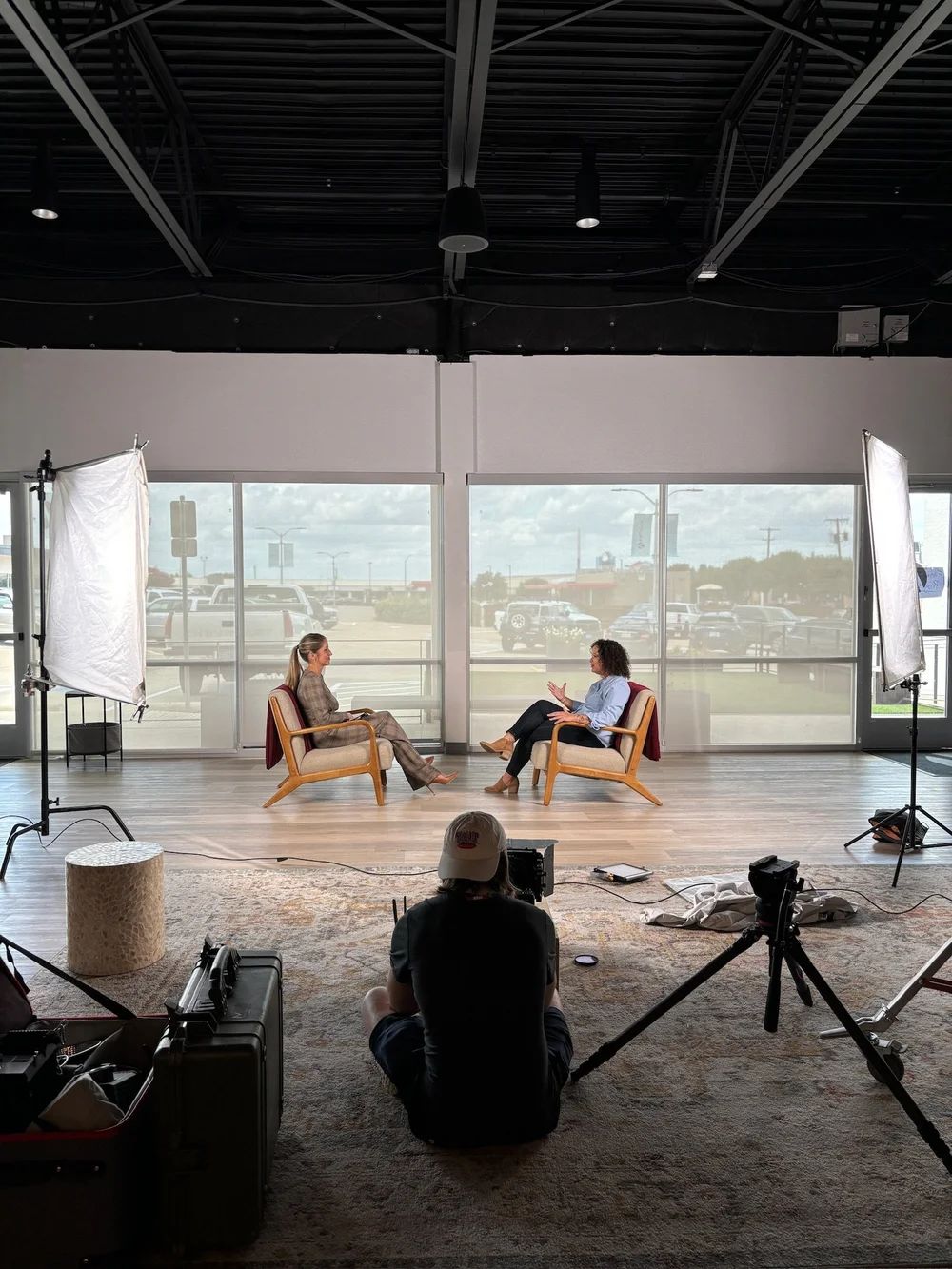
Filming of Operation Traffick911 (Photo courtesy of BRS Media)
Filming of Operation Traffick911 (Photo courtesy of BRS Media)
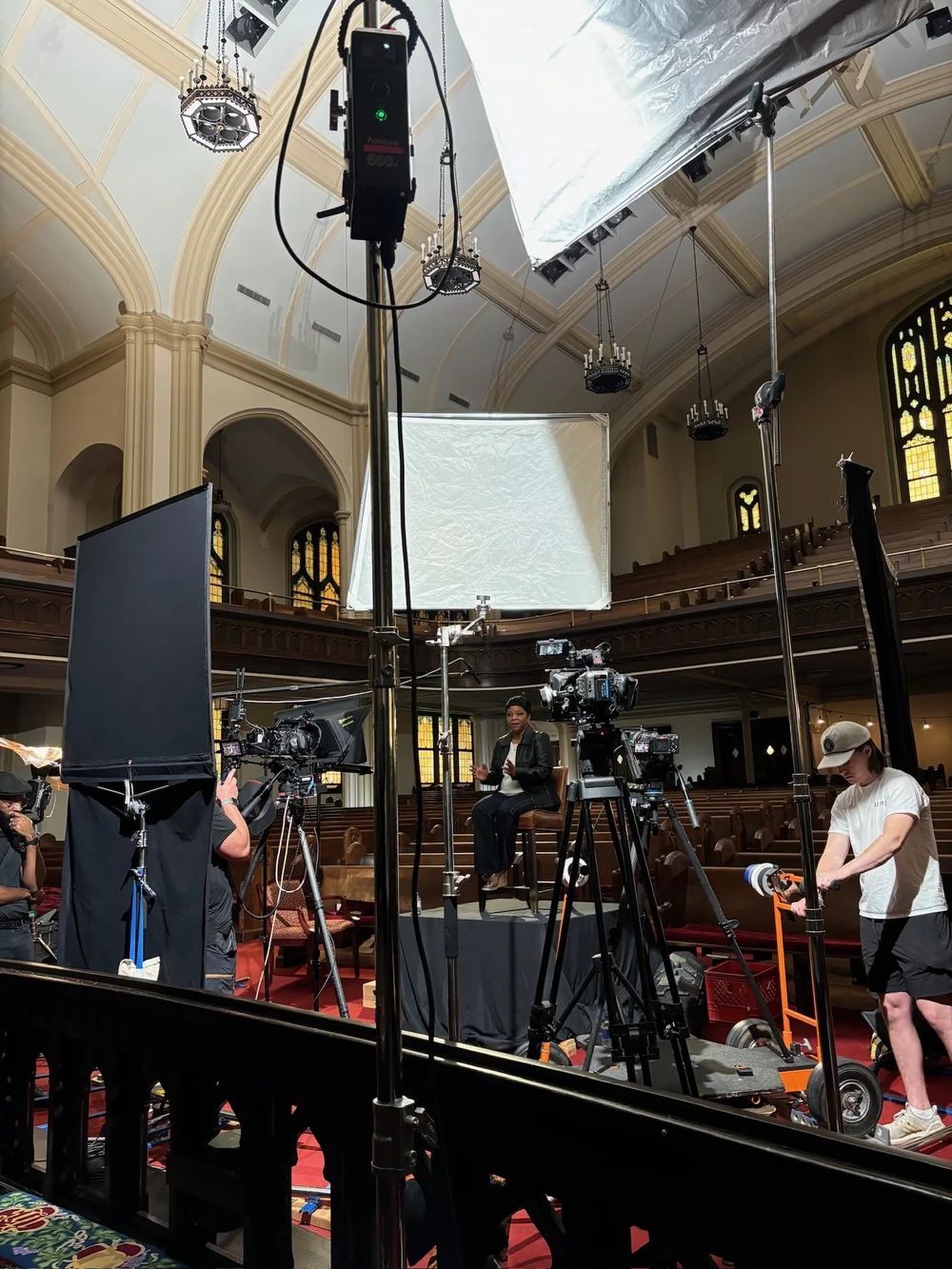
Filming of Operation Traffick911 (Photo courtesy of BRS Media)
Filming of Operation Traffick911 (Photo courtesy of BRS Media)
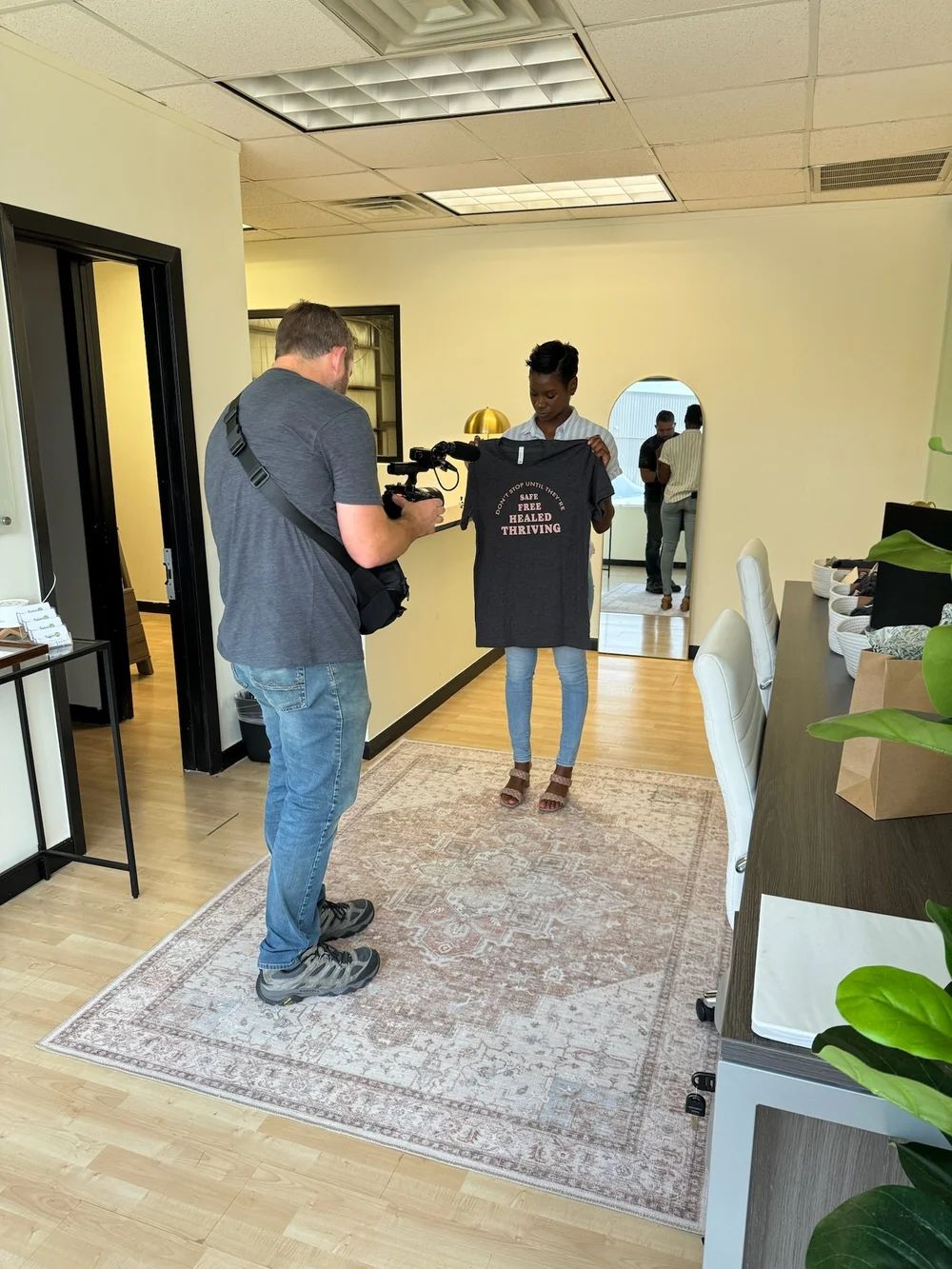
Filming of Operation Traffick911 (Photo courtesy of BRS Media)
Filming of Operation Traffick911 (Photo courtesy of BRS Media)
Episode Four: The Road Home
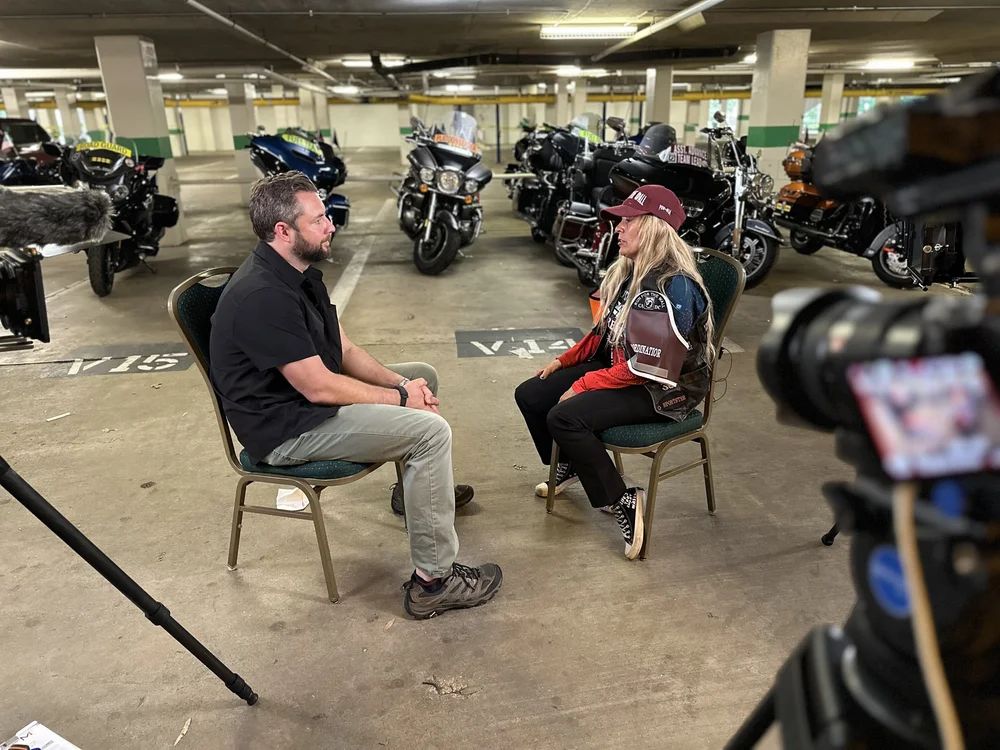
The fourth and final episode of “Chasing Hope” will feature Run For The Wall, an annual motorcycle trip across the country that thousands of veterans, family members, friends and supporters take, visiting memorials and raising awareness for those still missing as Prisoners of War and Missing in Action. Austin, the series Director, had a heart for the veterans that were a part of this organization.
Simpson said, “I believed I could send my team off to film this one and they would do a great job based on their passion alone. And they did.”
Austin Hines, co-founder of Meticulous Image, was connected with the organization prior to meeting Simpson and had filmed with them before, so it was an easy ask to include them in the “Chasing Hope” series.
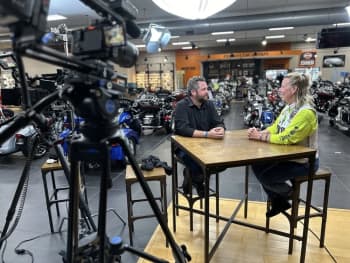
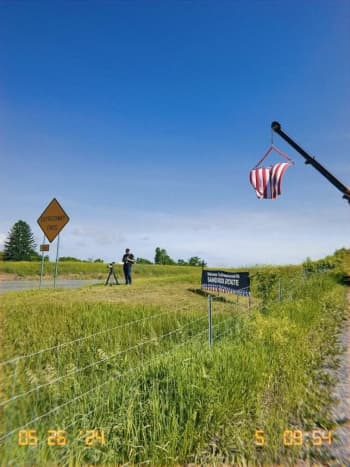
Hines and Meticulous Image took two minivans and two crews to cover this trip. Crew one would always be ahead of the motorcyclist to scout locations and prepare for places to interview. Crew two would stay with the group and film everything they did. The minivans were great for this as they had a lot of space, and the cameramen could shoot out of the side doors.
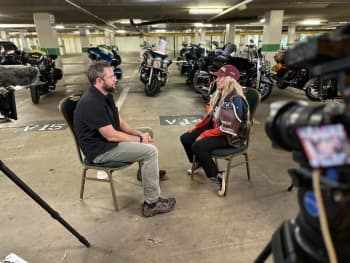
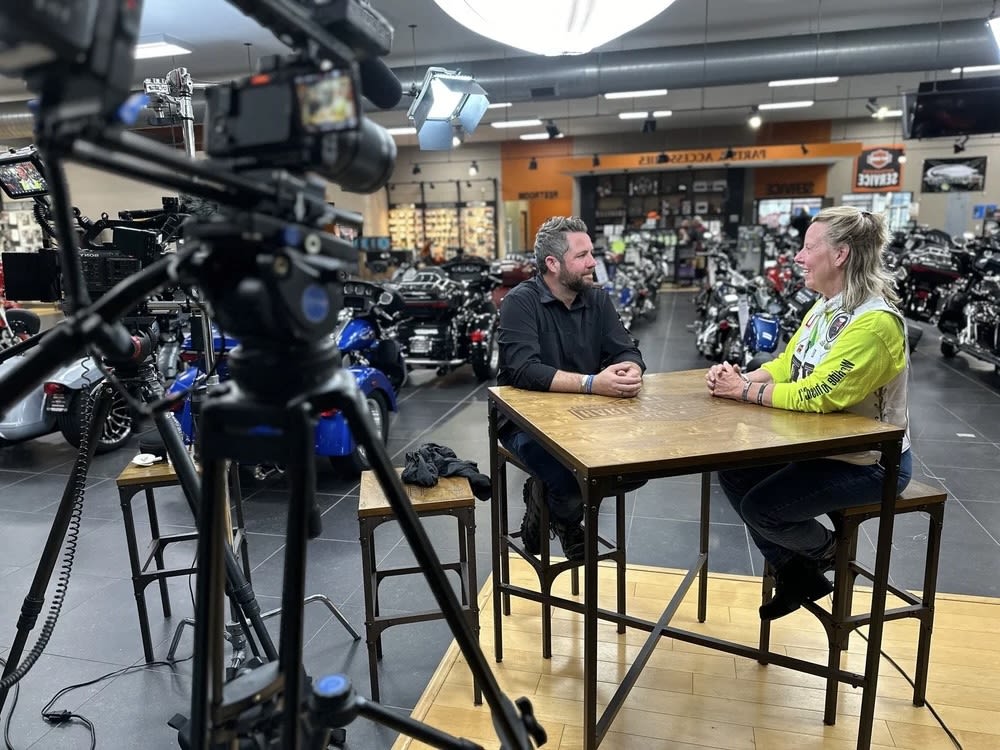
“All the bikes together would be over half a mile on a highway,” Hines said. “They normally would have police escorts through big cities or when there were major highway changes. They treated this like a military operation. Everything was very organized and safe.” Meticulous Image would have 30 minutes to an hour on stops and meal breaks to grab people and ask them questions. Interviews took place on a park bench, in a garage or wherever they could find.
Hines’ main goal for interviews was to find people who had never been on the ride before. Given how emotional the ride could get, seeing a loved one’s name on a memorial, Hines wanted to capture that. “It's an emotional journey. What these vets have gone through and the healing they experience on the ride is life-changing,” said Hines.
In this episode of “Chasing Hope”, Simpson, Hines and the Meticulous Image team are trying to shed light on another misunderstood topic: coming home from war or service, and struggling to get by, both with emotional issues (PTSD) and finances. Also, remembering the fallen veterans or those still missing.
“This series is essentially story time. Real, raw, meaningful human stories,” Maitland said. “What we’re creating with BRS and [Diane] isn’t just visually unique; it’s emotionally powerful. These are true stories with depth, purpose, and hopefully, a hopeful resolution that fits the spirit of “Chasing Hope”.”
Completing the four episodes didn’t just teach Simpson how to tell stories; it taught her what it meant to run a production. As the series took shape, she found herself stepping into a role she’d never imagined but quickly had to master.
That’s when she began learning how the film world works: the hierarchy, the expectations and the power dynamics.

The Weight of Leadership: A Woman at the Helm
Simpson didn’t understand the “ranking system” when it came to behind-the-scenes of filmmaking. Traditionally, there are above-the-line and below-the-line roles in filmmaking. Above-the-line roles include producers, directors and writers. Below-the-line roles are the production and technical roles, camera operators, sound mixers, wardrobe, hair and makeup. The person above everyone else and makes every final decision is the Executive Producer, that is, Diane Simpson.
“...the amount of respect that I was given as the executive producer, I was just kind of blown away by like, I'm the boss, right?” Everyone tended to her needs. “Was that a good take? Did you like that? Do you need to do anything different? Can I get you some water?”
Behind the camera on set is a man's world.
“I hope that I'm setting a good example for other young ladies to follow suit,” Simpson said.
Director of photography, man. Director of men, man. Lighting, man. Audio, man. The rest of the crew consists of Simpson and her assistant, Brooklyn, who also doubles as her niece. Brooklyn is Simpson's right-hand man, or should I say woman. She does everything from reconcile accounts for both Simpson and her husband’s realty business, to BRS Media QuickBooks, organizing, decorating and wardrobe, you name it.
“When I'm working with her, it's always professional, but it's always fun too,” Brooklyn said.
“[Diane] is a uniquely strong leader because she listens first,” Maitland said. In an industry where people boss each other around and have a lot of opinions, Simpson is like a sponge. She absorbs and thinks before she makes decisions, but Simpson is often appreciated for her decisiveness; she knows exactly what she wants and chooses with certainty.
The Balancing Act
Simpson hopes for the world to change, and it’s not changing soon enough. “You can have children and run a company, you can if God calls you to do it,” Simpson said. Priorities have to be straight when running a business.
“If you're a mom, you need to make sure you're being a good mom. If you're married, you need to make sure your marriage is taken care of. If God calls you to it, he'll see you through it. So yes, it is possible to wear five different hats and do a good job at it,” Simpson said.
The Vision Forward
After the completion of the four episodes, Simpson hopes to get to distribution as soon as possible. “We intend to pitch everywhere,” Simpson said. Whether it be streaming services like Netflix, Amazon Prime, Hulu or a more niche route like airlines. Simpson is aiming for May 2026 to be done filming, editing her series and be ready to pitch.
Pursuing this dream has changed every aspect of Simpson's life. There are only so many hours in a day, and Simpson uses as many of them as she can to balance being a mom, wife and owner of two businesses.
“She’s a great mother and has a remarkable intuition in understanding our daughter very well,” Anthony said. “God has blessed [Diane] with resources and she has known her whole life that she was to be used for a greater purpose, something bigger than herself.”
Every day, Simpson is usually home around 4 p.m. “I have to have boundaries with my work,” Simpson said. “I'm not always great at them because I love what I do.” Simpson works four days of the week, instead of five, giving her time to focus on household business while running two of her own.
Simpson said “intentional” is a big word in the Simpson home. Despite her having a long day at work, she intentionally sits down with her daughter to talk about school and help with homework.
The only time Simpson will work late is if they are shooting. Working for her on shoot days will start around 9-10 a.m. and generally goes for about 8-9 hours. The one time Simpson had a night shoot, she was there until midnight.
“Anthony and I have learned that we talk before the long shoots, because the shoot doesn’t just start that day, I have to start preparing a week before,” Simpson said. Anthony picks up the slack around the house when Simpson works late, or sometimes Anthony and their daughter join Simpson. “When we had the night shoot that went until midnight, our daughter was there with us. We include her as much as we can.”
Shaping the Future Through Her Lens
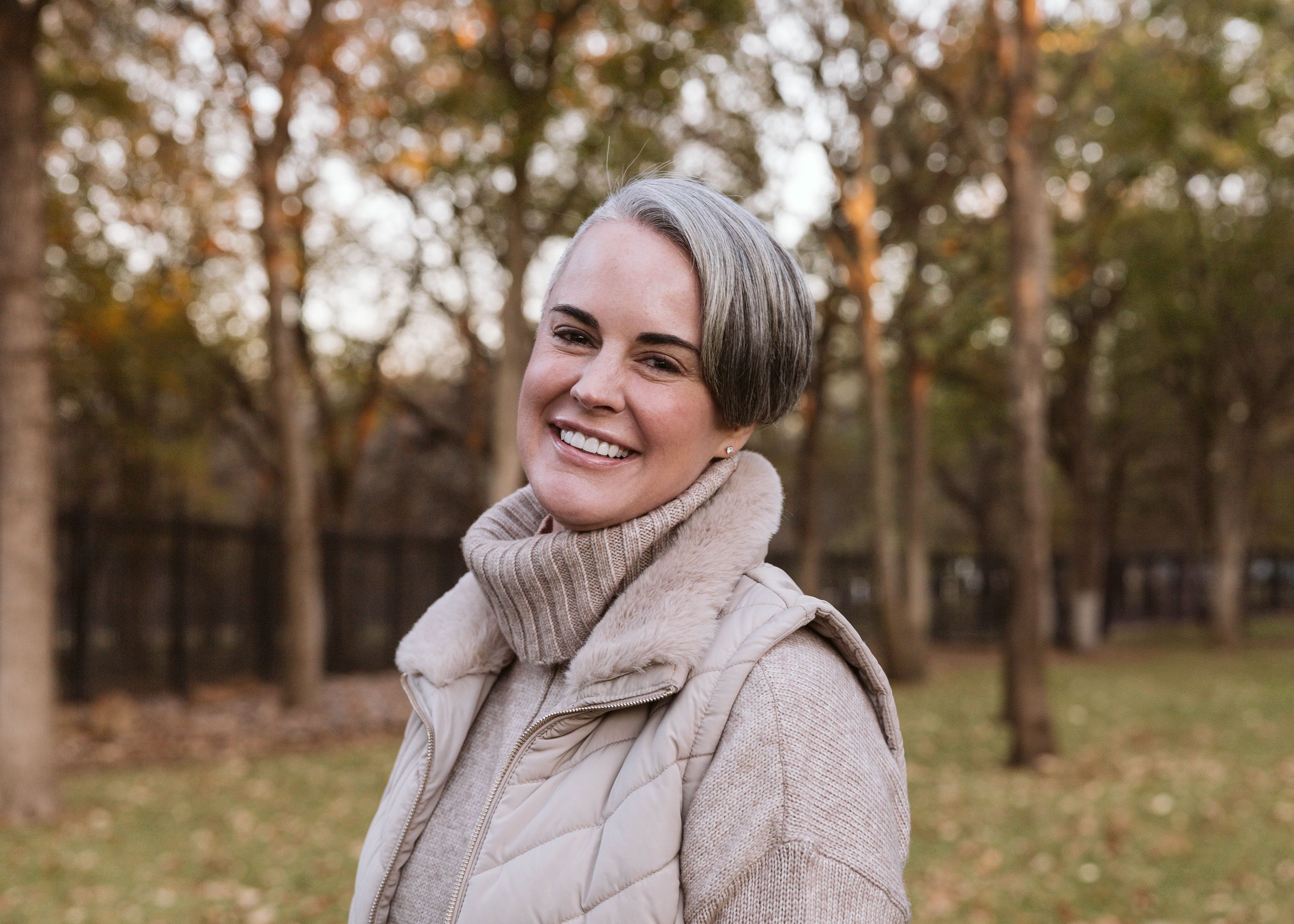
Diane Simpson hopes to be portrayed as a budding filmmaker and journalist with a heart to inspire people to action, educate and help. “I don’t give up when it gets hard because dreams don’t make themselves happen.” Simpson wants to be an example to others, that women can do this.
“I am hard working, tenacious and strong, while still being kind, generous, and loving," Simpson said. "These two personalities don’t have to be at odds; they can work together in a beautiful way.”
After the filming of Simpson's first series, she finally understands how her four circles fit together, completing the sphere of who she is.

 Built with Shorthand