Behind the excellence
Dexx Moore's first year leading the
Aledo Bearcat Regiment
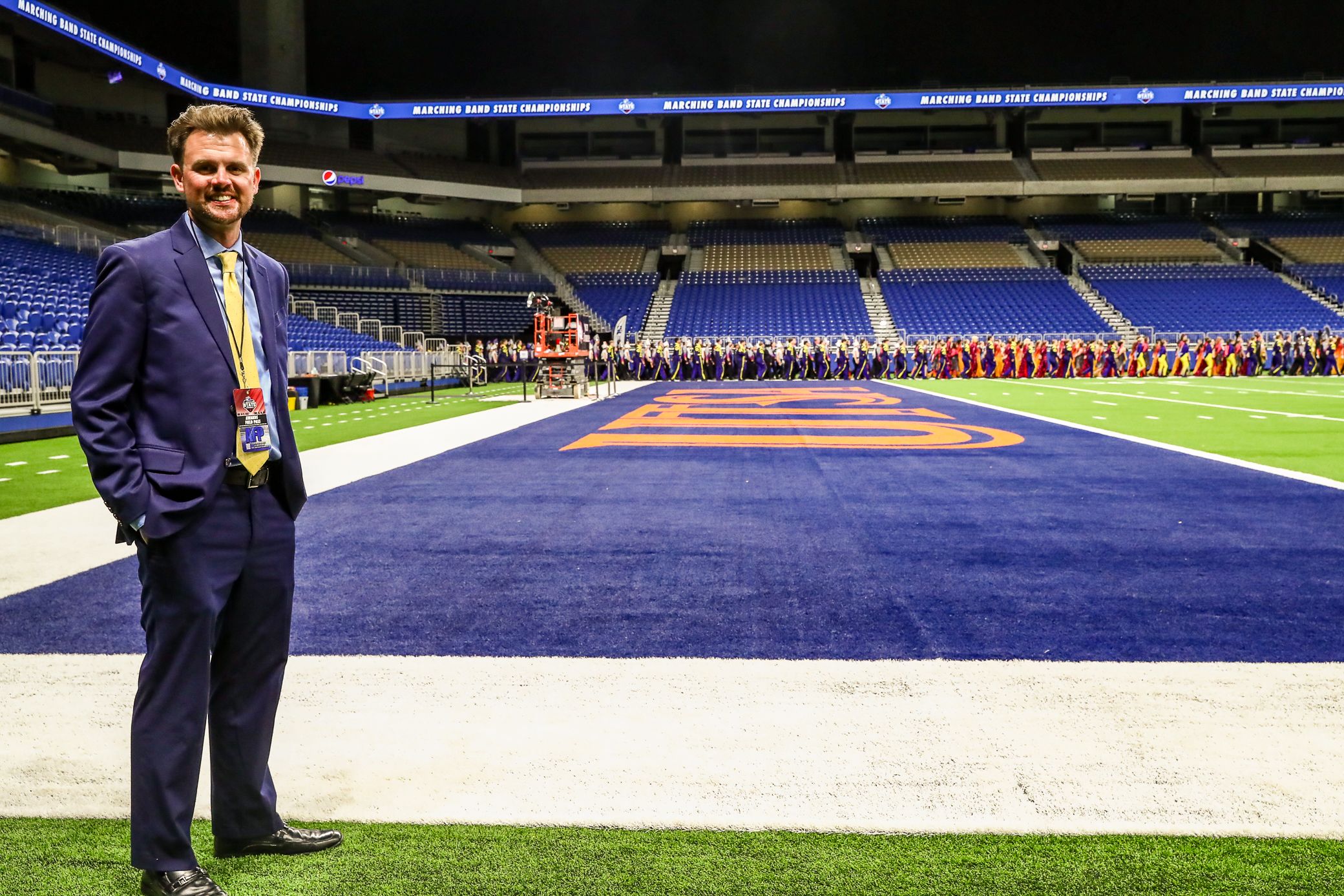

As the final note of the Bearcat Regiment’s show faded into the stands of the Alamodome, dozens of students embraced and shared high fives as they stepped off the field.
That Tuesday in November, the Bearcats placed seventh in the state competition in the 5A category. Emotions ran high, some students shed tears as a season’s work ended.
It had started toward the end of July under the Texas heat. That’s when band programs could start learning and practicing routines they hoped would take them to San Antonio for the State Marching Contest.
Although he’d been at Aledo High School for seven years, this was the first year Dexx Moore was the director of the Bearcat Regiment. For Moore every moment leading up to that final performance is the product of hundreds of decisions, hours, and conversations, many of which happen long before the first note of the season is ever played.
Moore shifted the band’s focus.

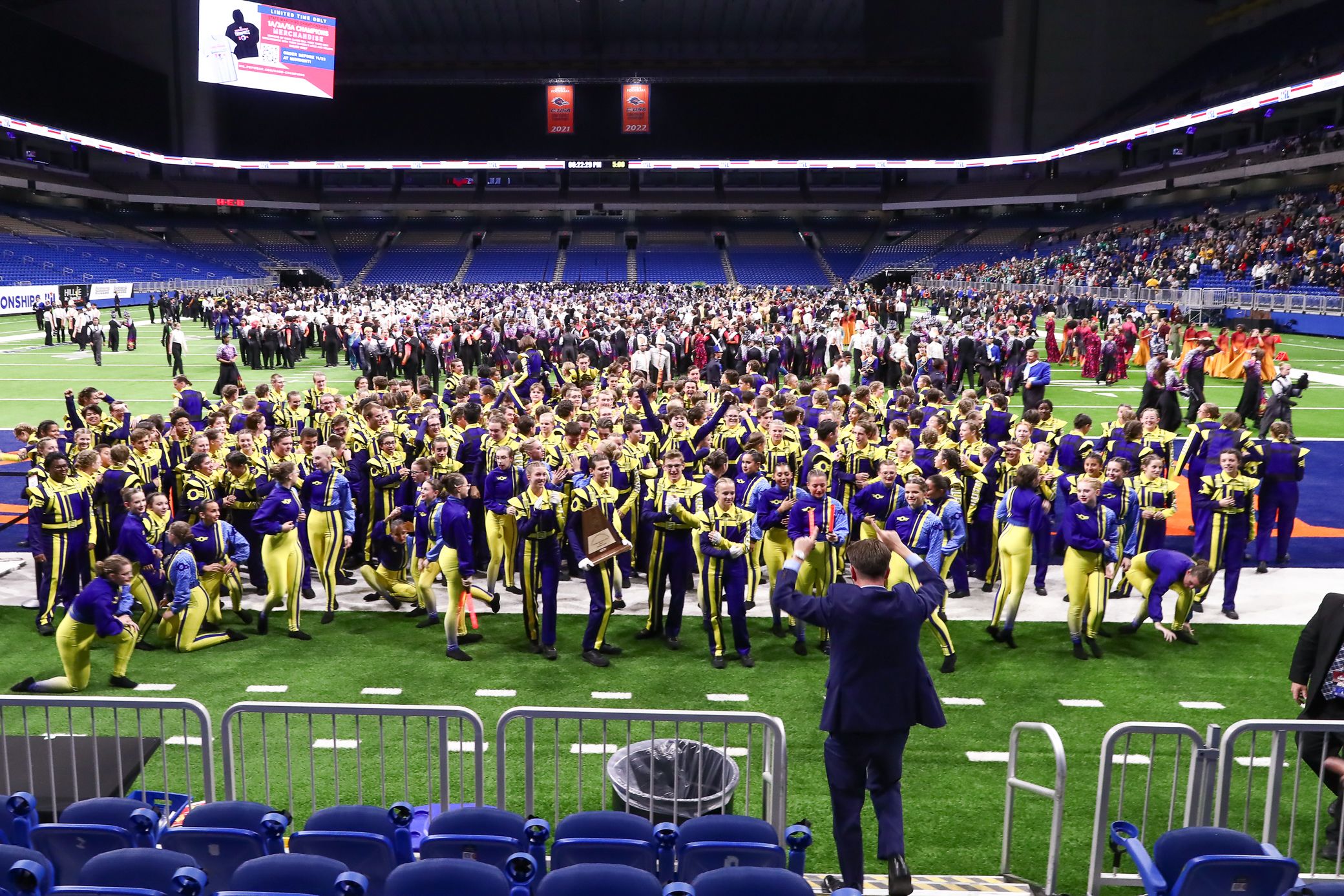
The Bearcat Regiment celebrating placing 7th in the State Marching Contest (Courtesy of Kris Rudzinski)
The Bearcat Regiment celebrating placing 7th in the State Marching Contest (Courtesy of Kris Rudzinski)
Instead of talking about placements or scores, he asked his students to concentrate on something more personal. How they wanted to feel after finishing their final set, tossing their final thing, and playing their final note.
“There's gonna be one of two thoughts that go through your head,” he said. “‘I wish I had…’ or ‘I’m glad I did.’ And I wanted them to guarantee that second feeling.”
That mindset became the heartbeat of the season; it meant accountability. When the group finished their final run at state with tears running down their faces and hugs and cheers of joy, Moore knew they had accomplished exactly what he had hoped.
“In that moment, it's like we won our own race,” he said. “That was our competition with ourselves, and we won and that's it.”

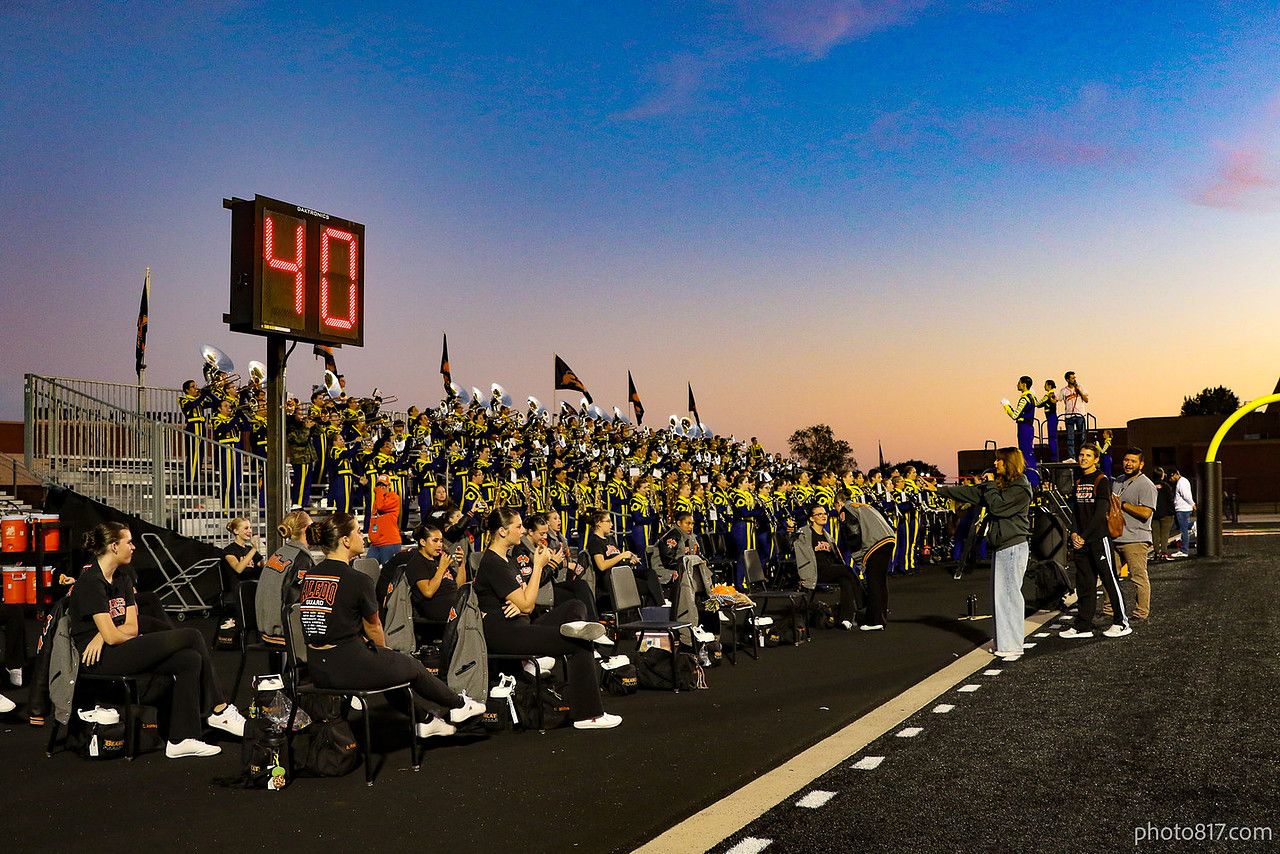
The Bearcat Regiment at a football game (Courtesy of Kris Rudzinski)
The Bearcat Regiment at a football game (Courtesy of Kris Rudzinski)

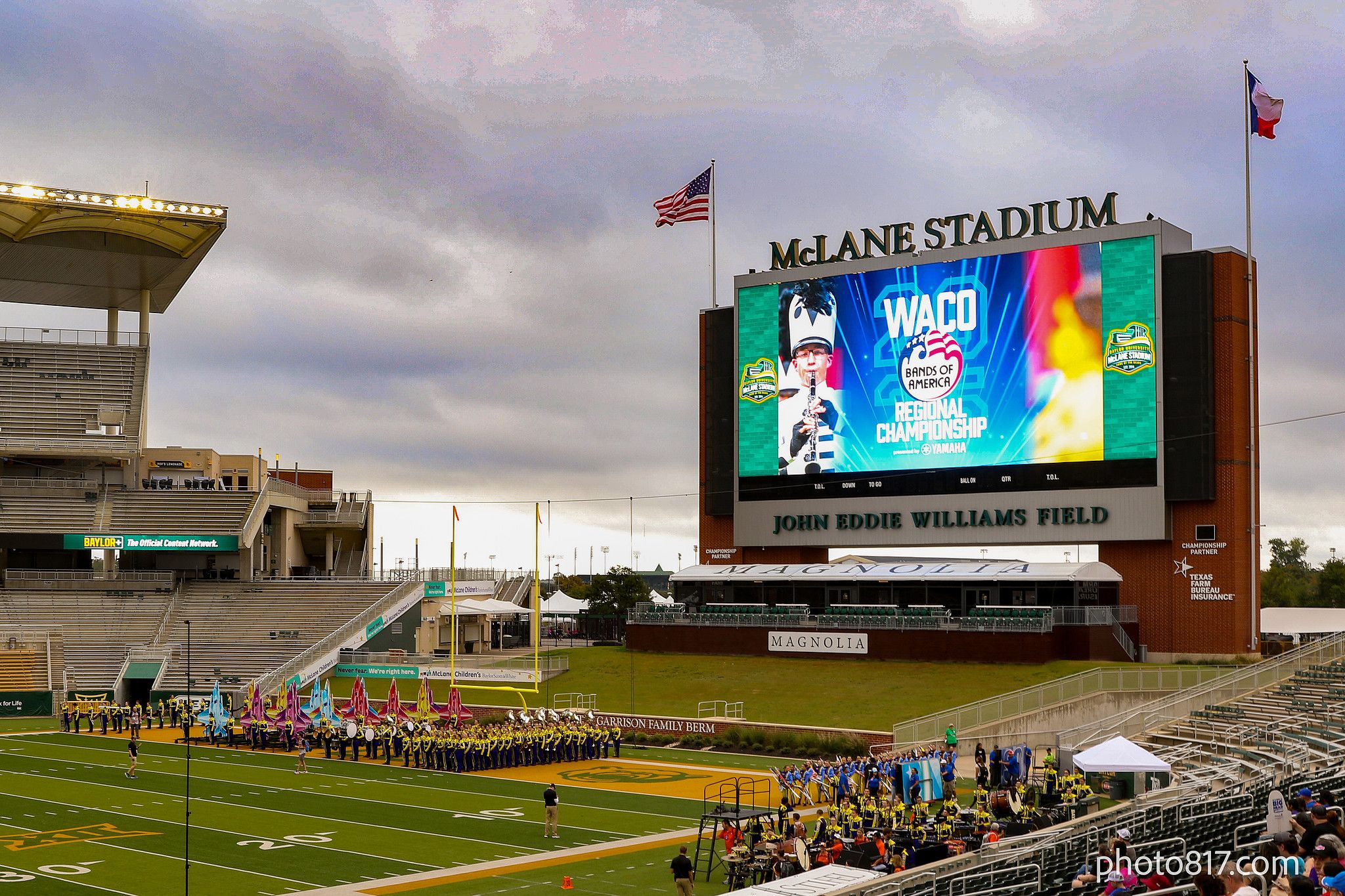
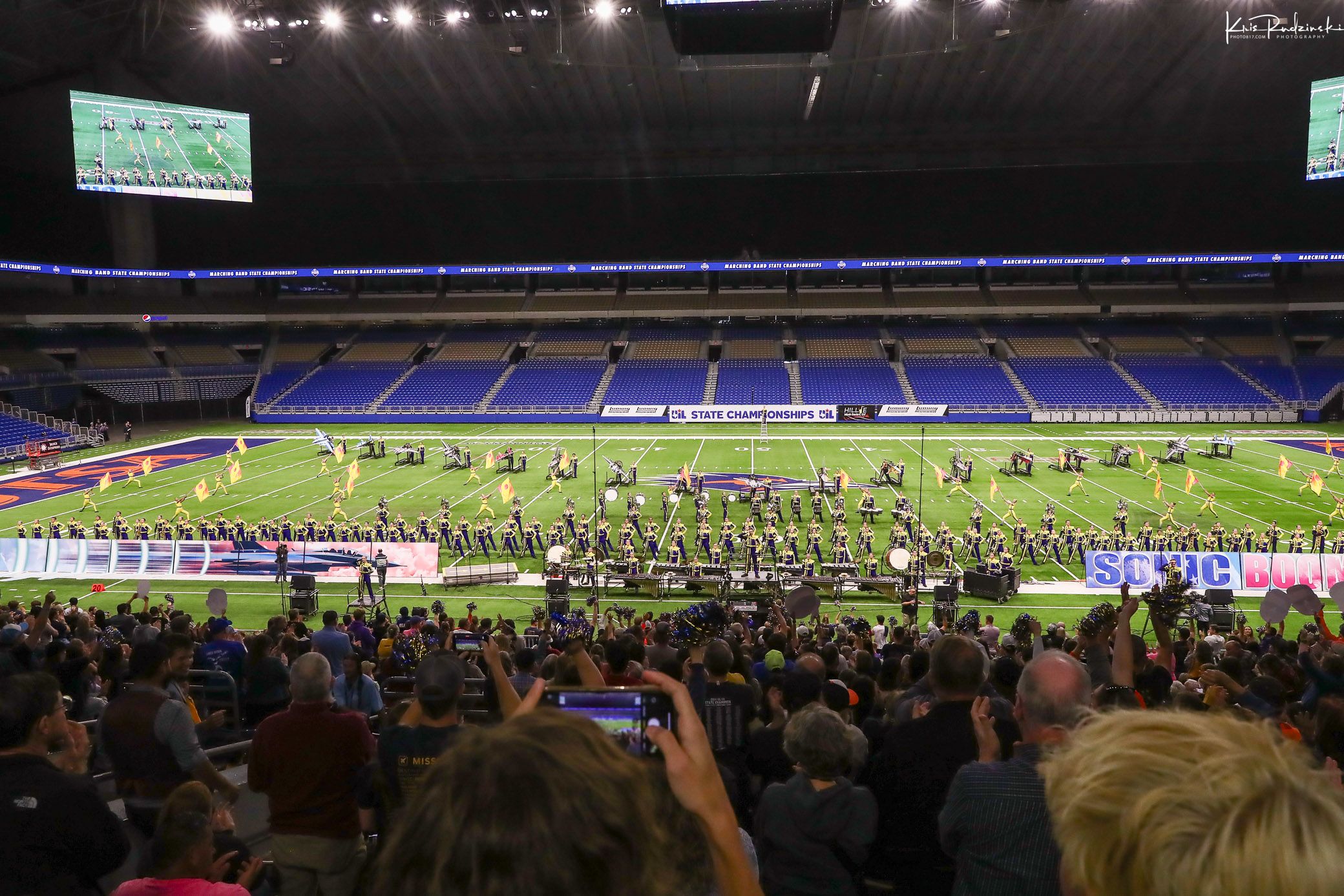
The Bearcat Regiment getting ready to take the field for the Bands of America contest (Courtesy of Kris Rudzinski)
The Bearcat Regiment getting ready to take the field for the Bands of America contest (Courtesy of Kris Rudzinski)
The balance of school and music
There are long hours behind the shows bands perform at halftime. Friday night football games often bleed into early Saturday morning call times.
University Interscholastic League, or UIL, the governing body for public school extracurricular activities, sets the rules for everything from practice times to how long a band can be on the field.
UIL limits practice to no more than eight hours a week outside of the academic school day.
Moore takes it further, giving students time to study as well as perform.
At a Bands of America contest in Waco this year, the program had a long break between performances, leaving students with hours to fill, so Moore rented out a ballroom at the Waco Convention Center for five hours to have rest time and homework time.
“I think our kids have an obsession over completing their homework and preparing for tests,” he said. "So giving them that balance of some time to do that really helped them.”
“We try to make sure every single area has a high achievement and a high sense of excellence,” Moore said.
Aledo’s band culture is centered on universal excellence, not just for top groups, but for every ensemble and every student.
“Our concert bands are playing music that is two grade levels more difficult than what's required,” Moore explained. “The middle school, same thing playing music that is way outside of their requirement, and achieving it in high ratings.”
Every group, like the jazz band, percussion, and the guard groups are all achieving at high levels.
“It's important that we challenge the lower groups to also achieve and stand out,” Moore said. “It's not just we're doing hard things just to do them, we're actually achieving them.”
Moore said excellence also comes with effort.
“We value effort. Are you actually trying?” Moore said. “And if you are, then keep pushing along and keep trying.”
The Bearcat Regiment consists of two groups, the varsity portion, who march in the show, and the production team, students who move props and equipment.
The roles of the production team can sometimes be overlooked in other programs, but for Aledo, they ensure that those students feel just as important.
“We work tirelessly to make sure that those kids don't feel devalued in any way,” Moore said. “That they are a part of the production and that they have a real contribution to the bands.”

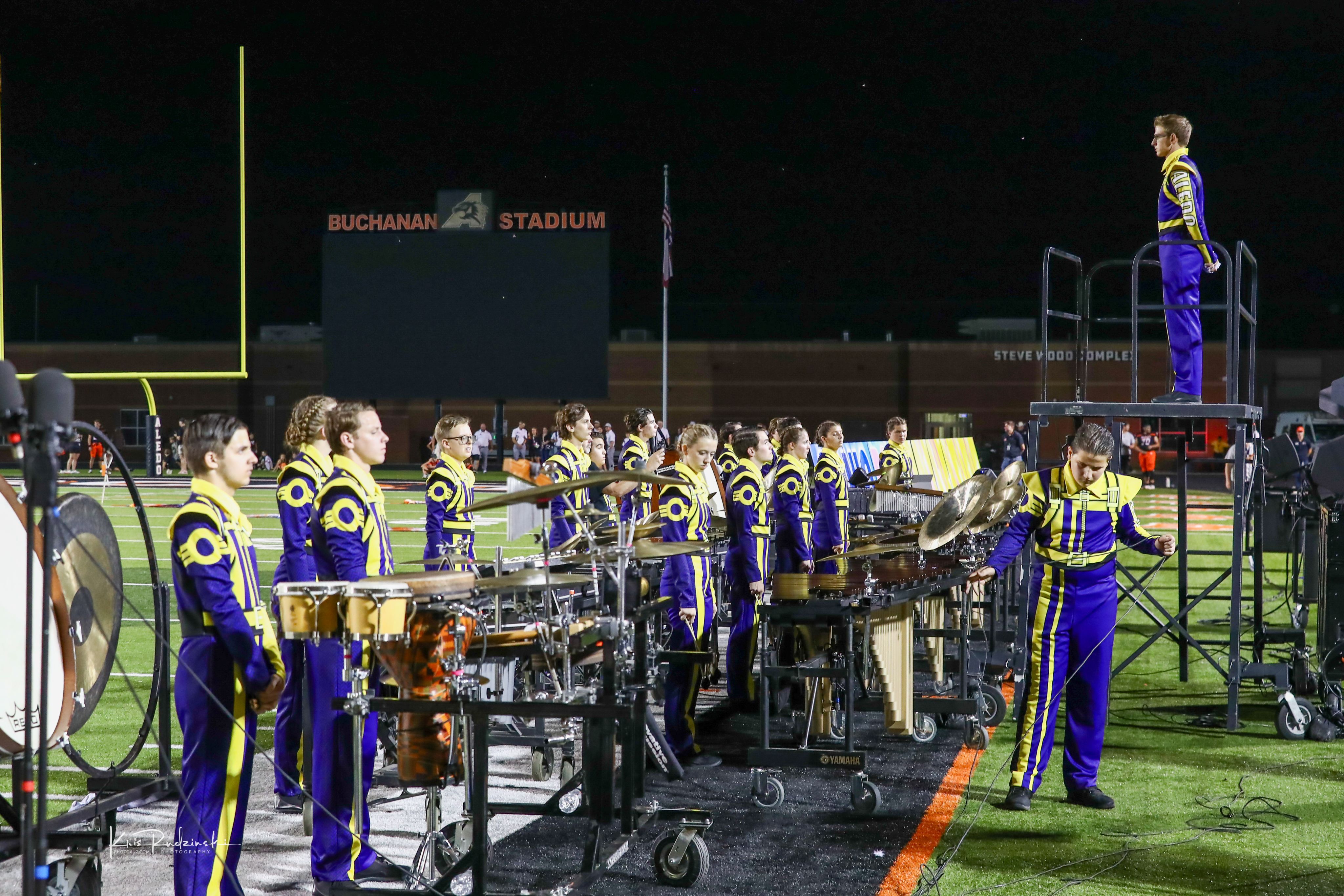
The front ensemble portion of percussion gets ready to perform at half-time (Courtesy of Kris Rudzinski)
The front ensemble portion of percussion gets ready to perform at half-time (Courtesy of Kris Rudzinski)
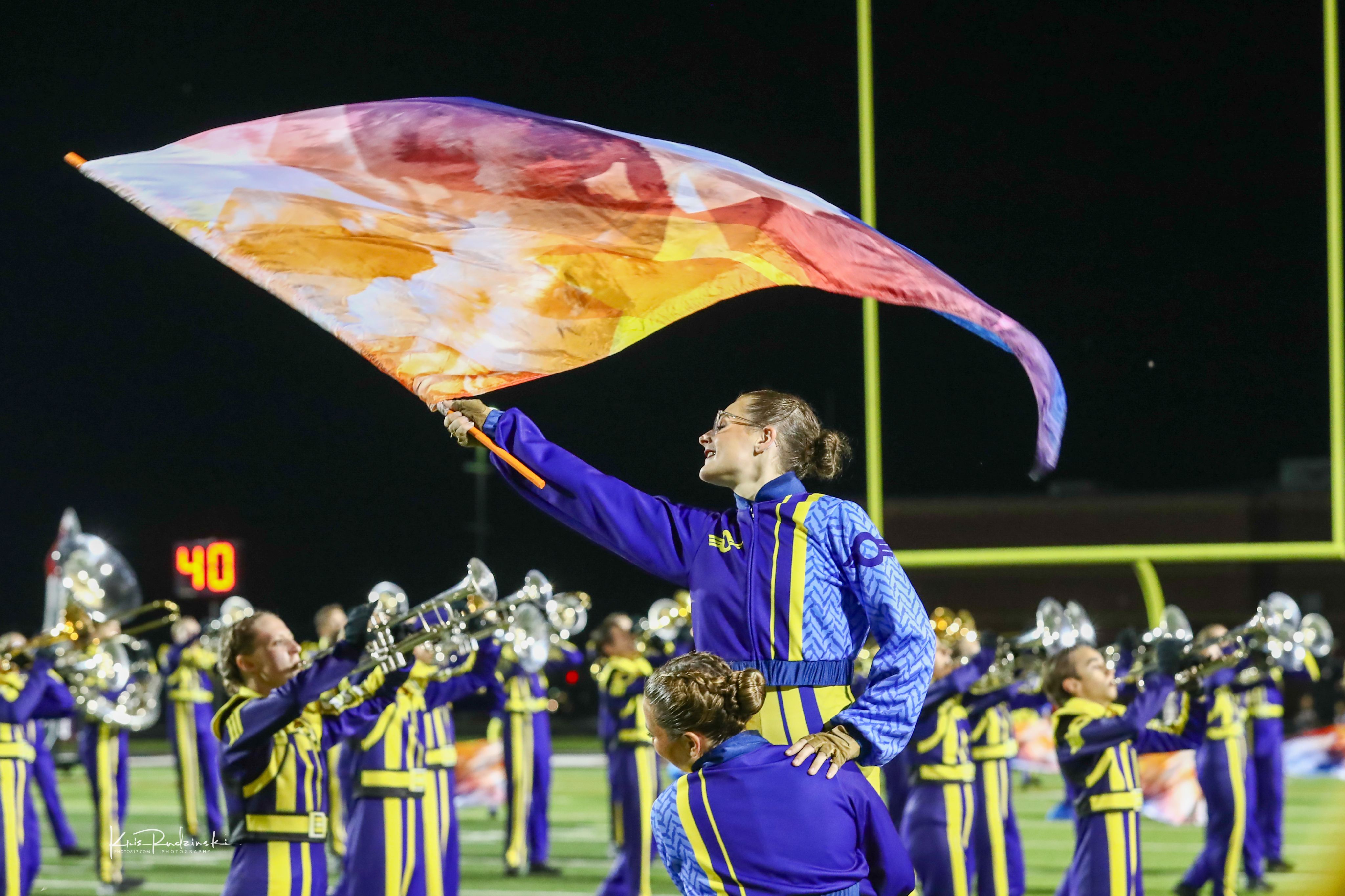
A color guard member performing at half-time during a football game (Courtesy of Kris Rudzinski)
A color guard member performing at half-time during a football game (Courtesy of Kris Rudzinski)
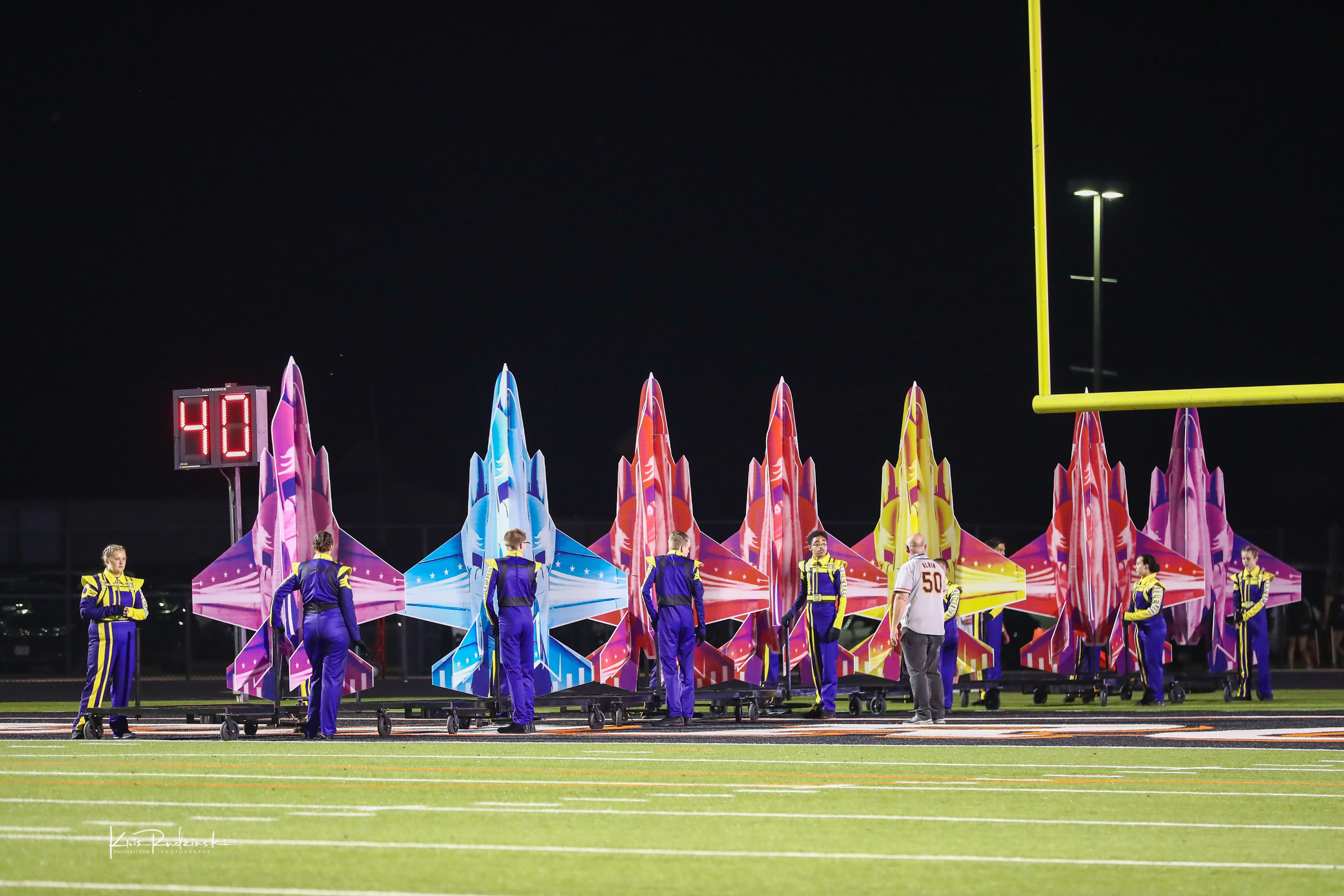
The production team getting ready to perform (Courtesy of Kris Rudzinski)
The production team getting ready to perform (Courtesy of Kris Rudzinski)
The support from behind the scenes
Behind the scenes, the program relies on the community that strengthens the entire program. With the band program operating at a 30% budget deficit, the band booster club has stepped in in remarkable ways with fundraising, providing private lesson scholarships, and even decorating the band hall.
With the parents' continued support at many different contests, yelling kids’ names makes a difference for them.
“They do some other small things, like if we make the state marching contest, they decorate the band hall with decorations that are handmade,” Moore said. “Small things like that make everybody feel special.”
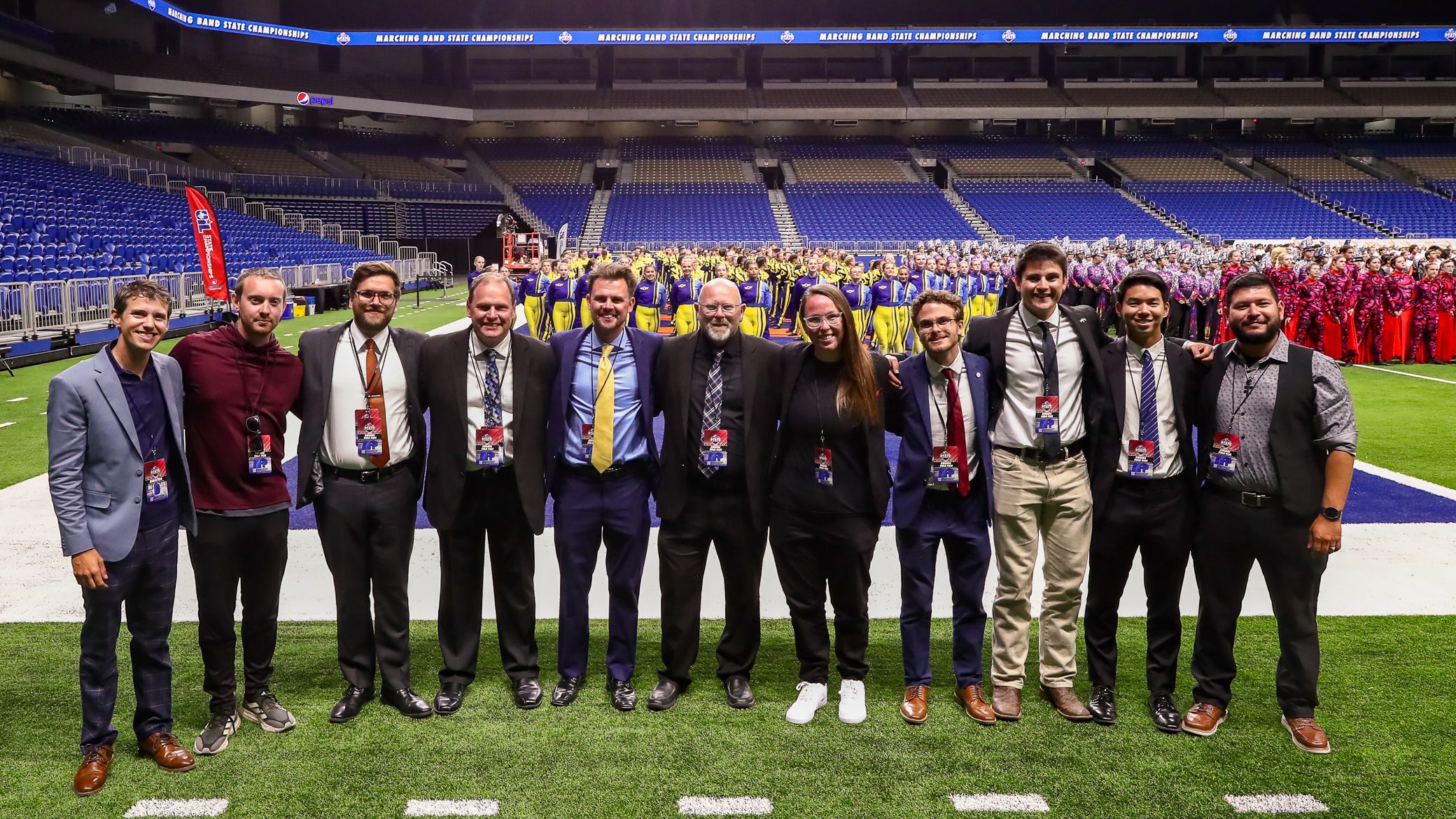
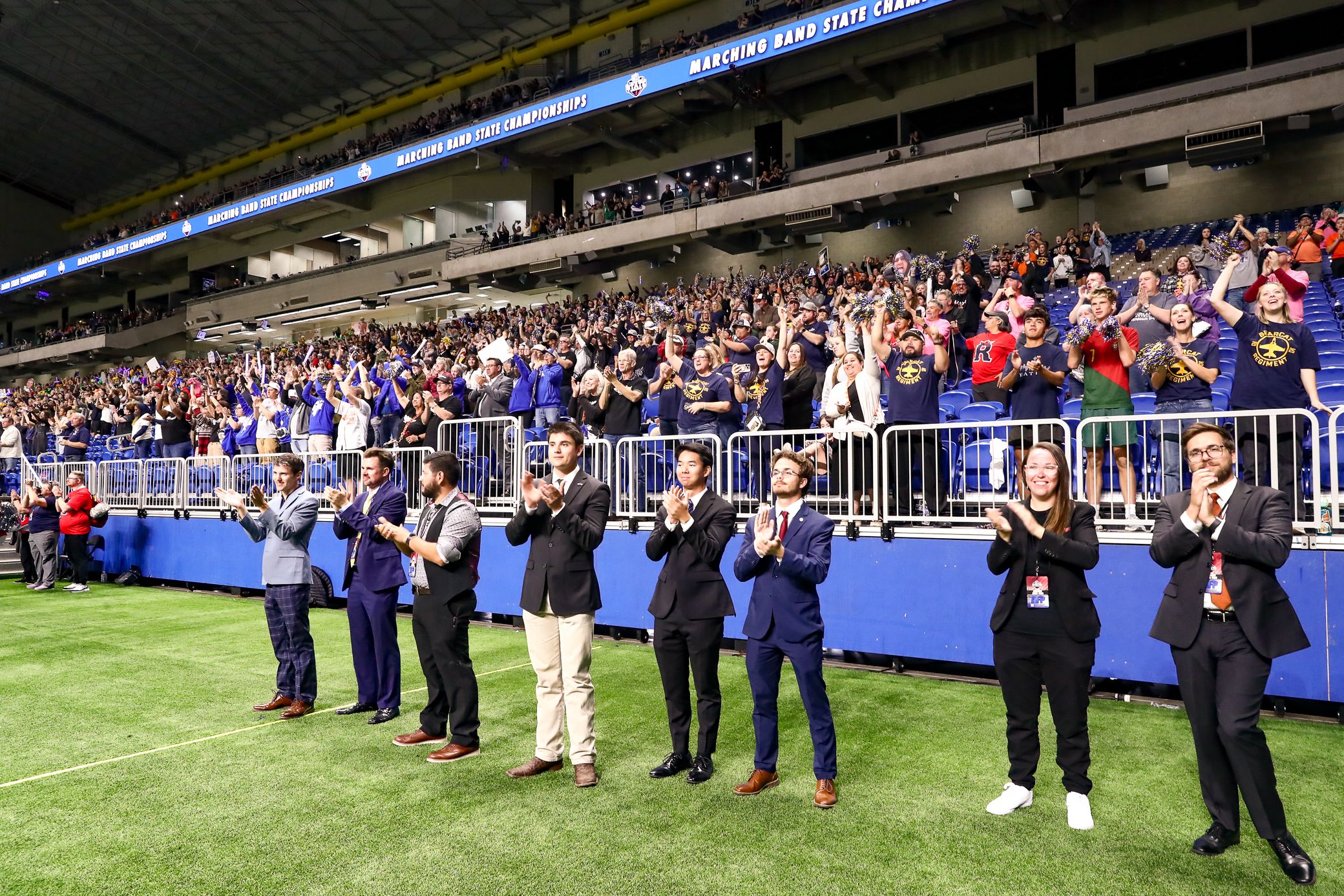
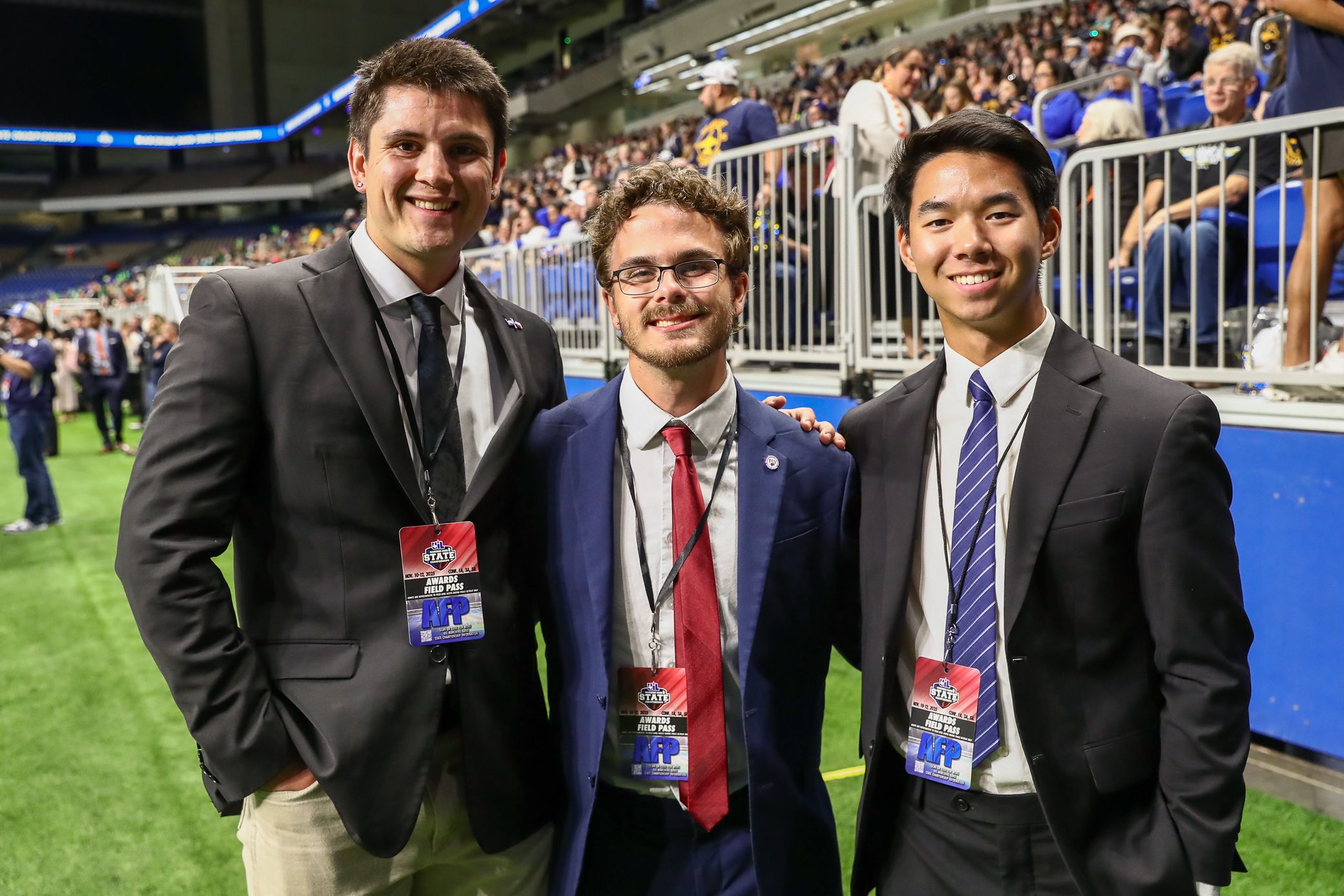
Not only do the parents make a difference, but the marching techs as well.
On the field, marching techs serve as a set of eyes and ears at ground level.
“The role of the marching tech is to take the information that's coming from the tower and make sure that's happening on the field level.” Moore explains.” I kind of look at them like a fine-tooth comb.”
They work one-on-one with students, especially younger ones, giving them tools to work through issues they may be having.
On the reverse side, their feedback shapes his teaching.
“I'm always asking them, what are they seeing? What are they hearing?” Moore explained. “So that I can teach differently with the entire group based on what they’re seeing on a more individual level.”

Outside summer leadership
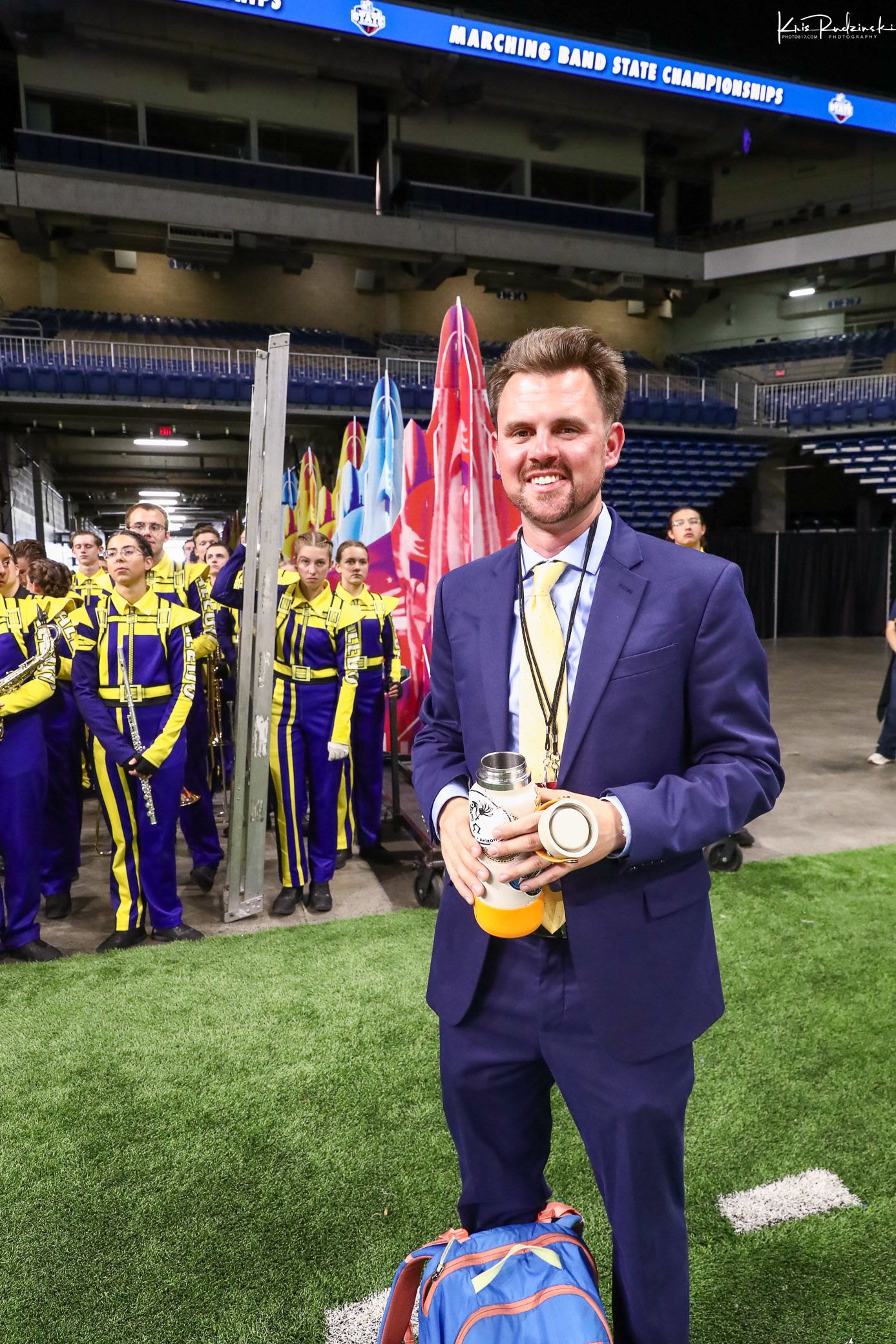
Moore’s leadership stretches beyond Aledo and into the summers, working with the Santa Clara Vanguard, one of the top drum corps in the world. With a position on the brass staff, he continues to grow as a director.
“I think that has had a great impact on me on what I need to bring to Aledo,” Moore said. “Over the years, through working at SCV, there's been some simplification of some things and essentially doing less things better.”
Moore also takes on the role of writing choreography for the wind section of the Bearcat Regiment. He adapts his lessons from Santa Clara Vanguard to his work in Aledo.
“There are definitely some movements and emotions that I've been able to pull from and bring it into some Aledo shows,” he said. “Obviously high school is a little different so it's challenged me to think outside the box.”

Moore’s impact is seen far beyond the band program.
“During his time at Aledo, I’ve seen tremendous growth in Mr. Moore as a director,” Micheal Martinak, the principal at Aledo High School, said. “He consistently pours himself into his work, fully immersing himself in the production, design, and execution of our performances.”
His connection with his students is what sets him apart.
“He knows how to motivate and inspire them to give their absolute best,” Martinak said. “He models discipline, resilience, and passion every single day, and our students rise to that example.”
Not only does he make his impact be heard, but he’s also admired by many.
Outside of the band, Moore’s influence bleeds into the future of his students, making sure they have the skills to be successful. Emphasizing that it’s okay to fully pour yourself into something if you feel like you're getting something memorable or useful out of it.
“I think if they can take those lessons into life, they're going to have great decision-making abilities,” Moore said. “And be able to contribute to their teams whether it's a working team or their family.”
A former section leader, JJ Guess, now a first year Applied Health Science major at TCU, credits Aledo’s program for shaping her work ethic.
“The leadership experience I got as a section leader made me more confident and a better communicator.” Guess said.
Learning that with hard work comes great success.
“It made me realize how satisfying it is to work hard toward something and to see the amazing results.“ Guess said.

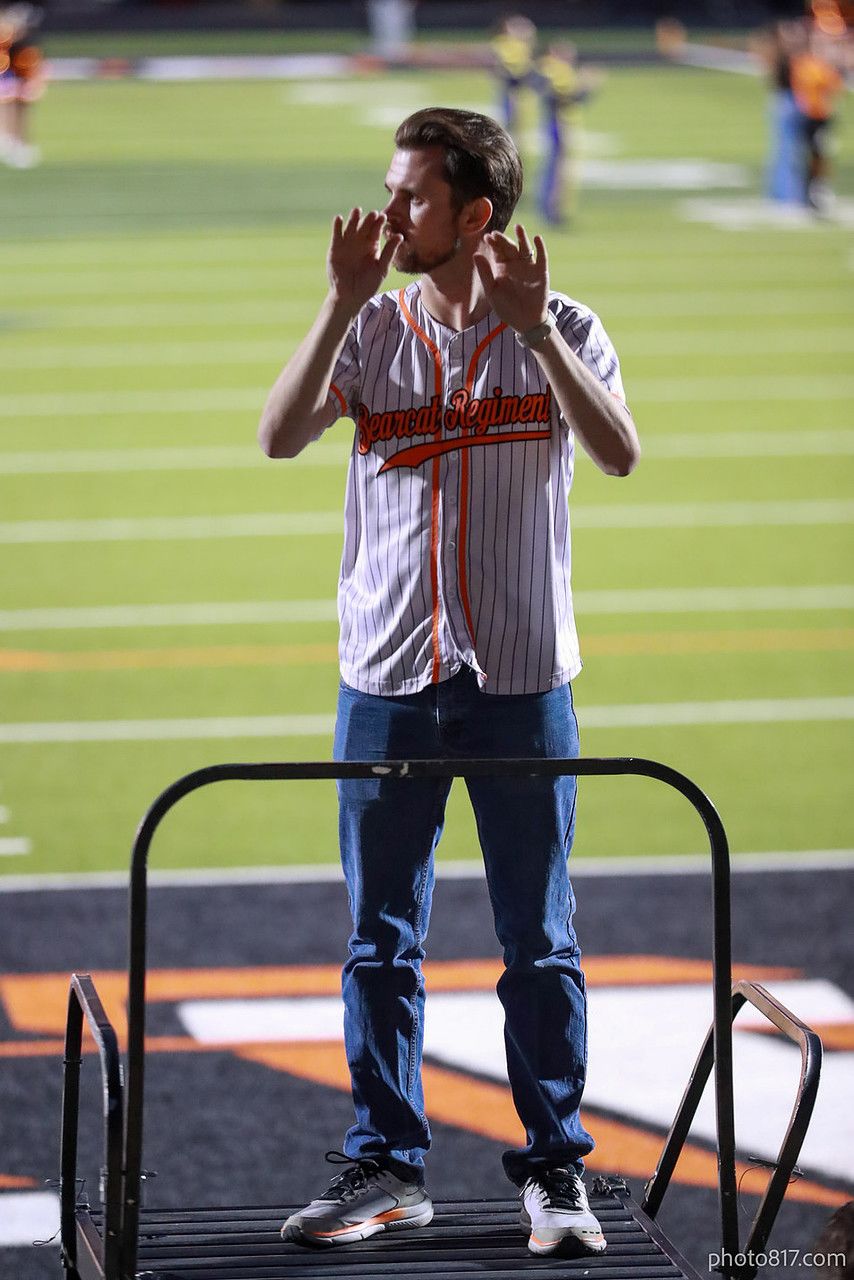
That influence can be seen far beyond just his students.
“Mr. Moore takes the time to know each student personally, making sure they feel seen and supported,” Jaedeanne Von Hatten, the Aledo band booster president, said.” He challenges them to do hard things while reminding them they have what it takes to succeed.”
Moore spent his time throughout the season telling students to understand that if they've been a part of something truly great, think back to the amount of time and effort used.
“If you can take that work and effort level to something else in your life and put that into something and make it truly special, clear and intentional.” he said. “You are going to shine in whatever field you decide to apply yourself to.”
“But the things that are truly great, don’t just magically come together.” Moore said.

 Built with Shorthand