A gem among the ivory
Life lessons from a longtime piano professor
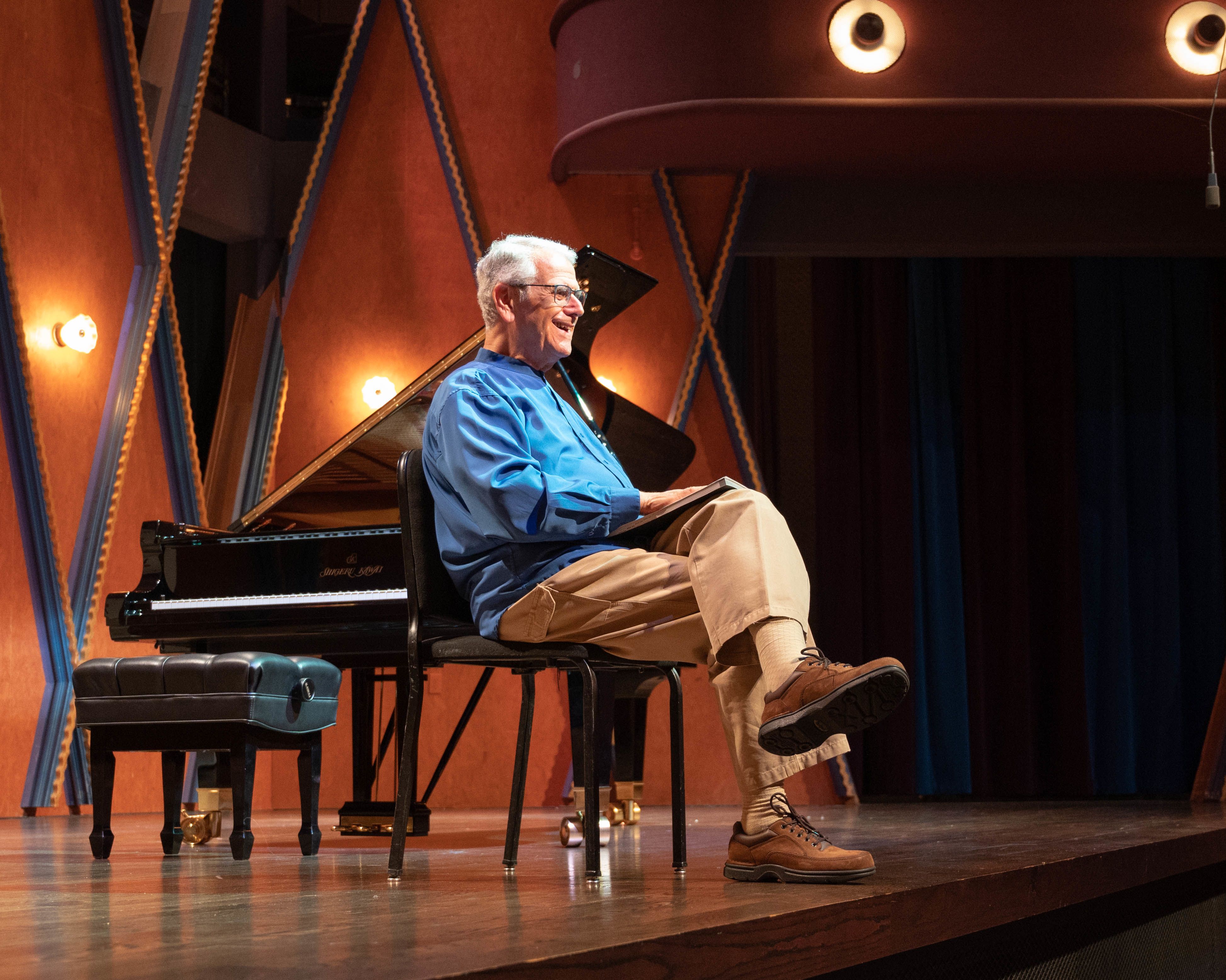

It was 2023, and TCU was recognizing the service and dedication of long-time faculty members.
University leaders prepared to recognize a faculty member who had been on campus for 44 years for having the longest tenure.
Then, a tall man with silver-white hair, a wooden cane by his side, raised his hand. He had entered late and found a seat near then-President Daniel Pullin.
“Well,” he said with a slight Hungarian accent, “I’ve been here for 45.”
This year marked 47 years for Tamás Ungár, a professor of music who teaches students about the keys of life and piano. His presence and passion as performer and educator extend well beyond the Fort Worth campus. This century alone, he performed well over 70 concerts all over the world. He teaches, he travels and he still helms an international music festival he founded. Until his students stop learning from him and he stops learning from his students, Ungár said, he’ll keep teaching.
“If I have to say why am I here, it is not for the students, but for the humanity that this student will pass on and on and on,” Ungár said. “That's why I'm here. I'm here not only for music, but for some odd reason, I feel that I'm here and I'm doing it because I make it a better world to a few people.”

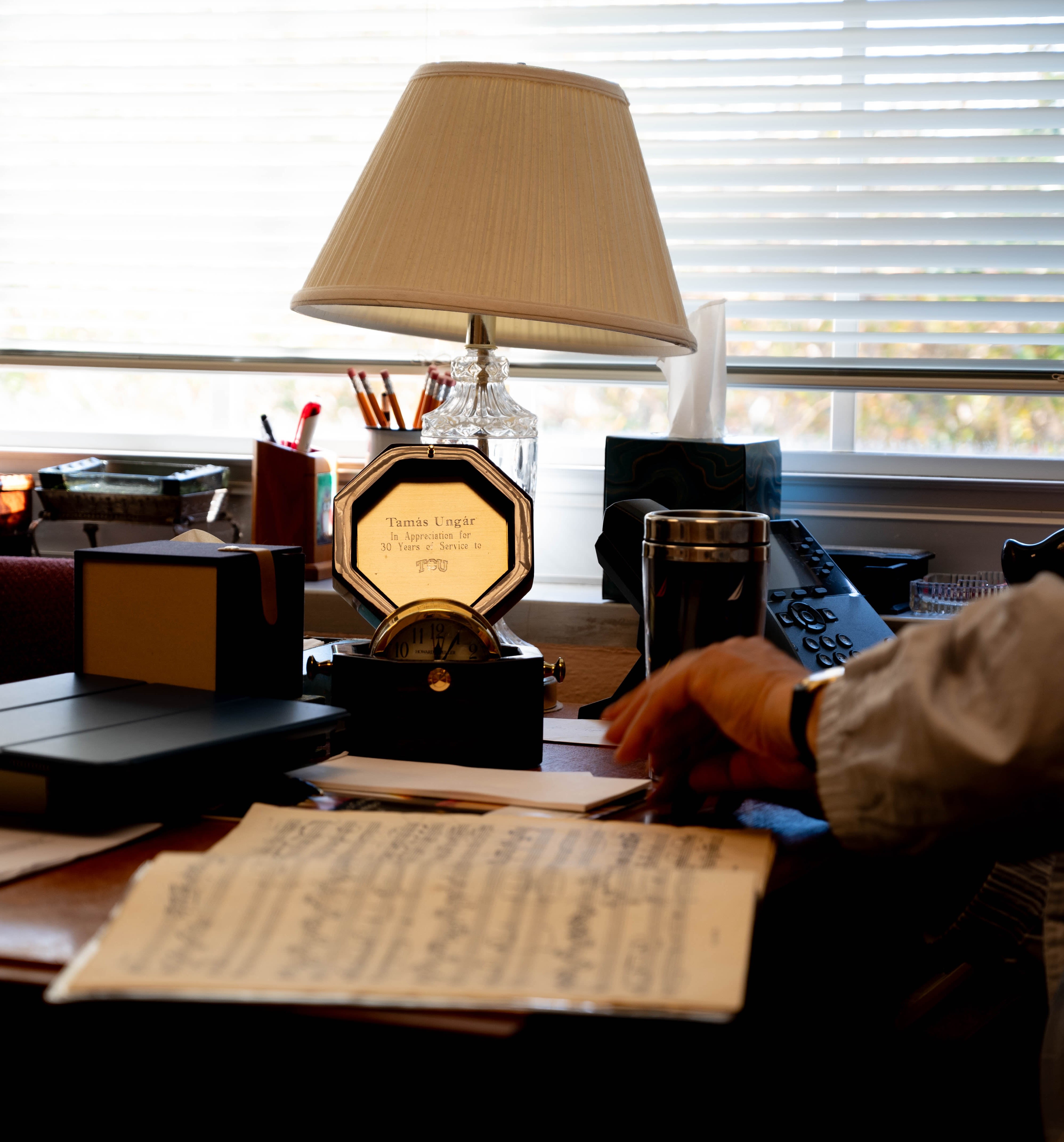
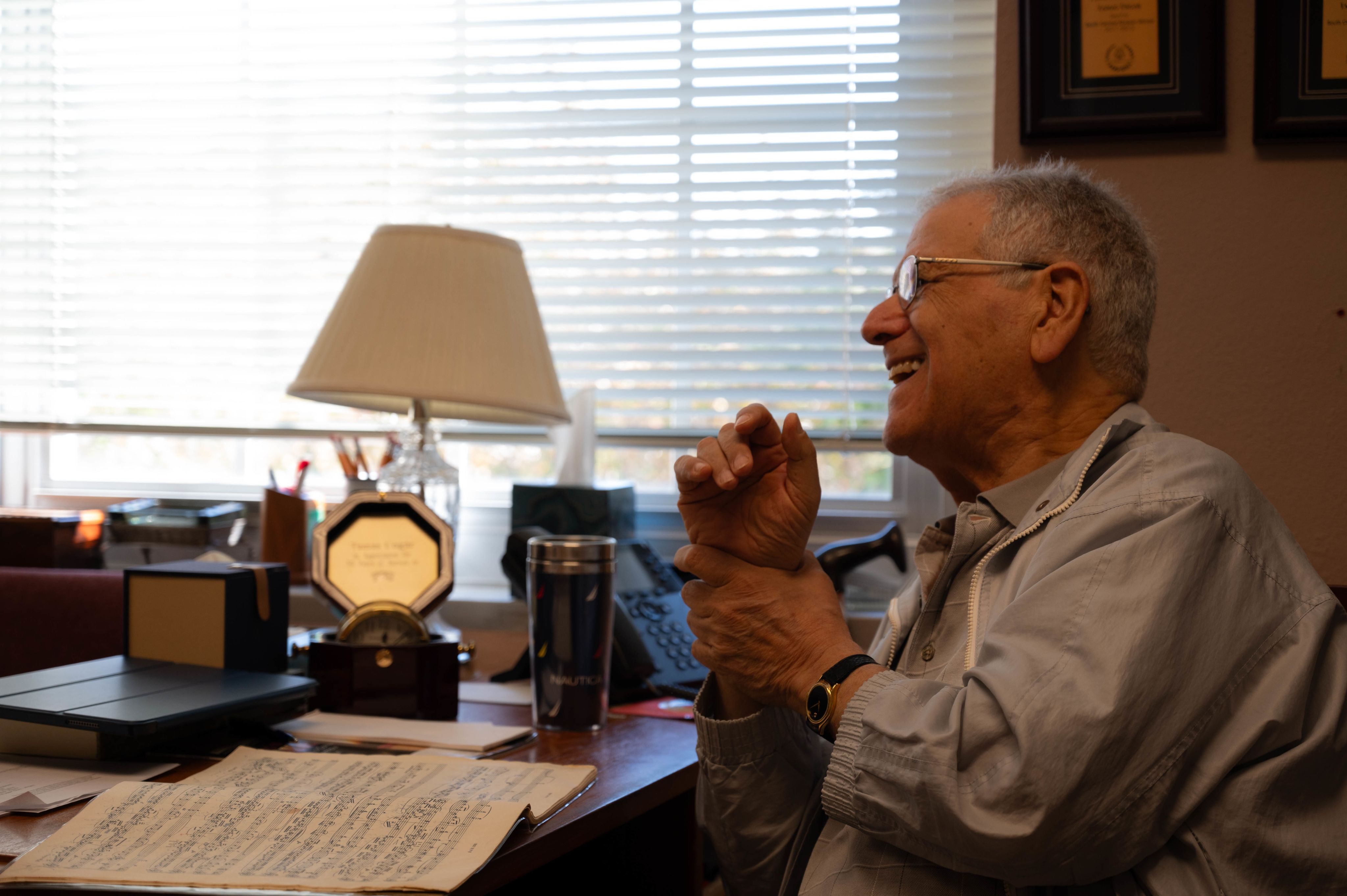
Ungár's 30-year award sits propped open on his desk as he teaches. (Caleb Gottry)
Ungár's 30-year award sits propped open on his desk as he teaches. (Caleb Gottry)

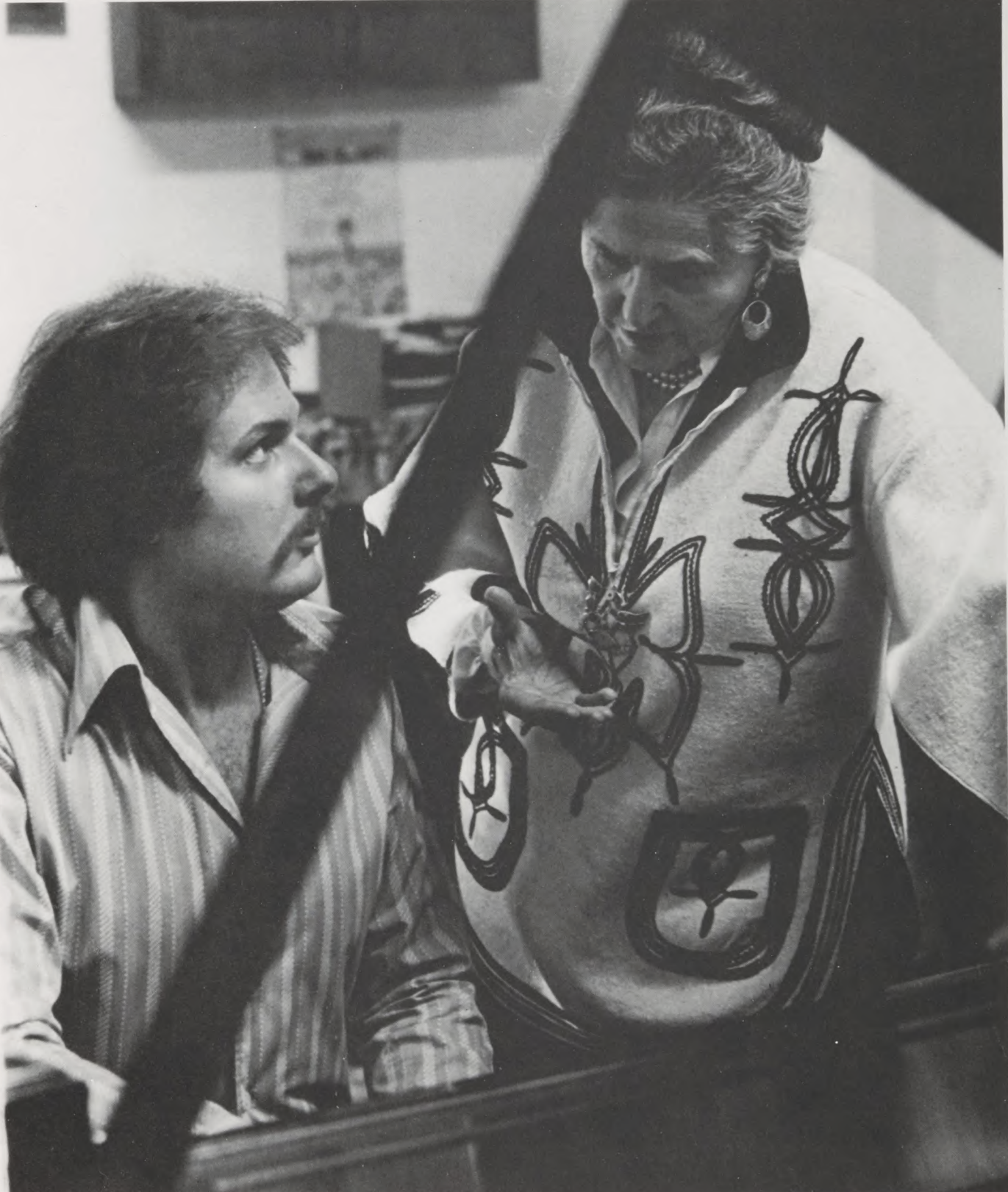
Lili Kraus with a TCU piano student in 1979 (The Horned Frog Archives)
Lili Kraus with a TCU piano student in 1979 (The Horned Frog Archives)
Tamás Ungár arrived at TCU in 1978 at the urging of the late Lili Kraus, a contemporary who was visiting the Horned Frogs as an artist in residence when a job came open. He was teaching at the University of California San Diego.
“She said, ‘You must come to TCU,’” Ungár said.
“This was just at the beginning of ‘78, and I said ‘Where is TCU?’
“‘Oh, it’s where the Cliburn is, and it’s a good, good place’”
Ungár has attended every Van Cliburn International Piano Competition since 1981.
“The Cliburn,” as it’s often referred to, is in an international piano competition that was founded in Fort Worth to recognize its namesake, Van Cliburn, who in 1958 won the first International Tchaikovsky Competition.
It was housed in TCU’s Ed Landreth Hall until 2001, when it moved to the newly built Bass Performance Hall in downtown Fort Worth. The prelims are hosted at the Van Cliburn Concert Hall at TCU. The prestigious once-every-four-years competition draws young pianists from across the globe.
Back then, TCU was a small regional university with a total enrollment of around 5,874, less than half the size of today. There were about 500 students in the School of Fine Arts, and the ground had only just been broken on the J.M. Moudy complex that would become its home.
“He shows no signs of slowing down,” said Director of the School of Music Marc Reed, who was born in 1978. “I mean, he’s full steam ahead to the next thing you know. We're already planning for 2026 and talking about 2027 and funding and how everything works.”
Planning in part for the 46th annual PianoTexas festival. Ungár created this educational arm of the Cliburn festival in 1981.
Van Cliburn called PianoTexas “phenomenal.” It is now an independent program that is considered one of the most famous and successful international festivals of its kind.
In 2025, 127 participants from around the world came to TCU to compete in four categories: young artists, juniors, teachers and amateurs.
“I don't think that I could have done what I've done in New York or Lawrence, Kansas, or anywhere else. Somehow, this place is ripe for what I feel about PianoTexas — not I — what PianoTexas needed.”
Tamás Ungár

For 47 years and counting, Ungár has grown both a following and a family at TCU.
His work in the classroom and with PianoTexas has drawn generations of piano students to Fort Worth.
“The TCU piano program has benefitted from Piano Texas by bringing the ‘cream’ of young pianists to our campus to see our facilities, meet and study with some of our faculty and witness the Fort Worth community's support for piano and love of the arts,” wrote John Owings, former chair of the TCU piano division, and award winning pianist.
Melody Ouyang, a professional pianist, educator and founder of the Music Institute of North Texas joined as director of operations in 2024, and in 2025, she was named the executive director. Ungár is the artistic director.
Some of Ungár’s former students serve in assistant and staff pianist roles with PianoTexas as well.
“It hasn't got the following yet, by far, of what the Cliburn has, but it has some loyalty among the people who genuinely feel that this is something worth something,” he said.
Be it in 10 years or two, Ungár’s departure will not be without a mark left in Fort Worth most especially in his PianoTexas.
"To have somebody that comes in and has a vision as a really new faculty member to start PianoTexas and see that become what has become is probably even more so amazing than just his tenure here,” Reed said.
Ouyang said that vision — to make TCU and Fort Worth “Pianotown” — has never wavered.

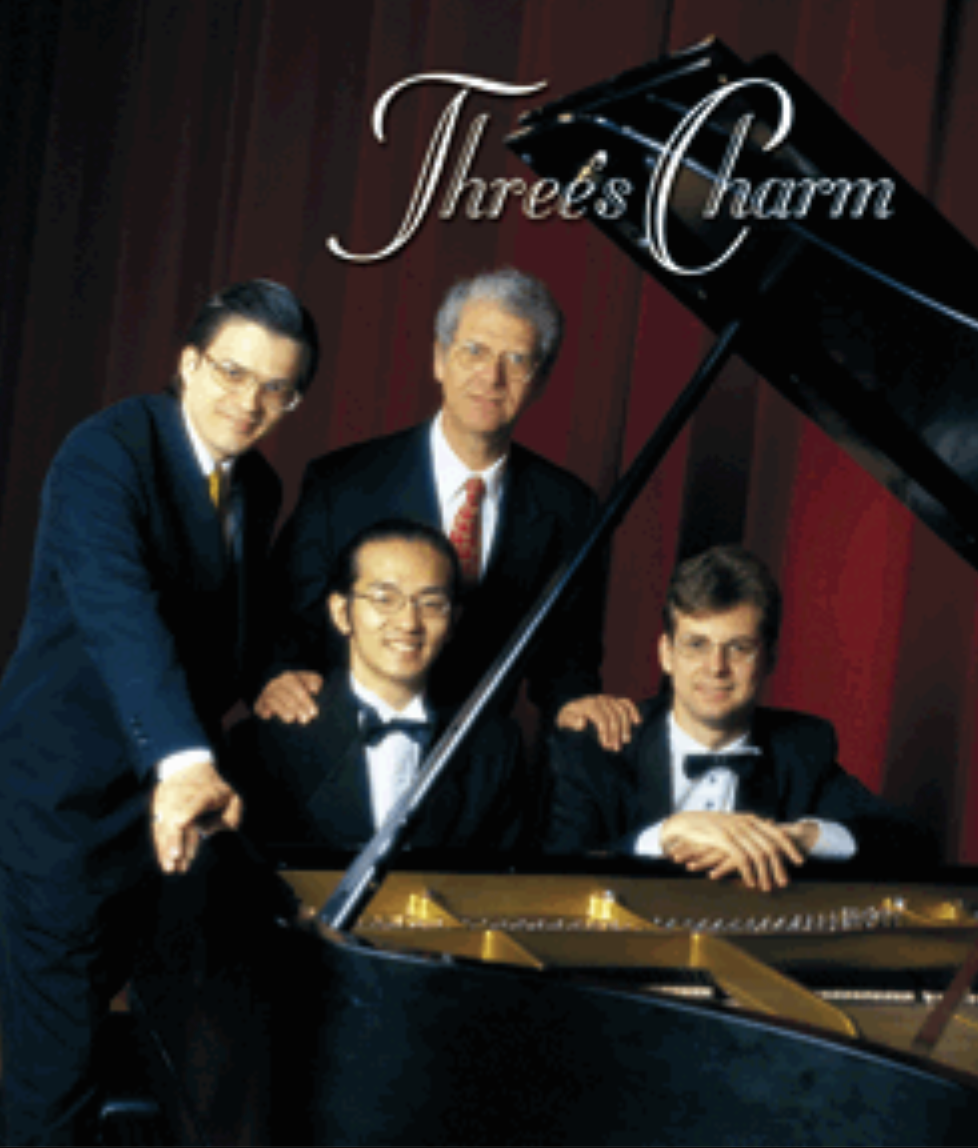
In 2001, Ungár sent three students to the Van Cliburn International Piano Competition. TCU Magazine wrote the story. (magarchive.tcu.edu)
In 2001, Ungár sent three students to the Van Cliburn International Piano Competition. TCU Magazine wrote the story. (magarchive.tcu.edu)

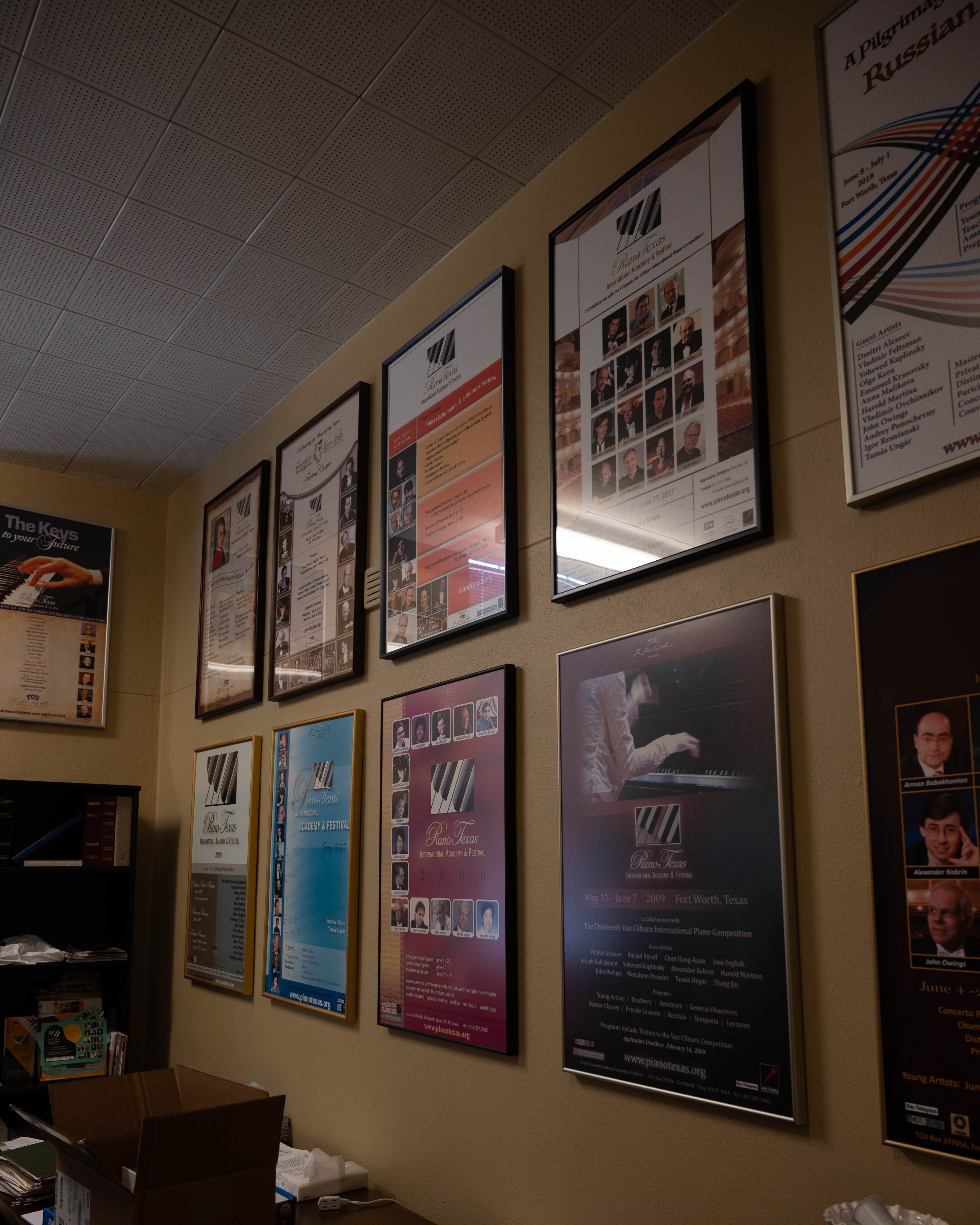
PianoTexas posters line the walls of his office, once his studio, now the PianoTexas home office where Ungár and Ouyang both work. (Caleb Gottry)
PianoTexas posters line the walls of his office, once his studio, now the PianoTexas home office where Ungár and Ouyang both work. (Caleb Gottry)
PianoTexas posters line the walls of his office, once his studio, now the PianoTexas home office where Ungár and Ouyang both work. (Caleb Gottry)
PianoTexas posters line the walls of his office, once his studio, now the PianoTexas home office where Ungár and Ouyang both work. (Caleb Gottry)
PianoTexas posters line the walls of his office, once his studio, now the PianoTexas home office where Ungár and Ouyang both work. (Caleb Gottry)
PianoTexas posters line the walls of his office, once his studio, now the PianoTexas home office where Ungár and Ouyang both work. (Caleb Gottry)
“Somehow he's very persistent of it, and somehow he makes it work,” Ouyang said. “You know, without much funding and all that, somehow he’d rather take a pay cut himself, if anything, you know, for more funding than letting it go.”
The pinnacle moment of his vision comes when young students play their concertos with the Fort Worth Symphony Orchestra.
“The moment that you've been working for is when the orchestra strikes up, and there is that somebody there who's for the first time playing a concerto and never played with an orchestra,” Ungár said. “And that experience is irreplaceable. The value of that is not possible to measure. That's when I start to feel and tears come down my eyes to say, ‘Well, you did it.’”
Ungár and PianoTexas drew Iren Pilikyan, a senior piano performance major from Armenia, to TCU.
They first met when she was 14 and took a lesson with Ungár at PianoTexas.
“And we kind of kept in touch, because I found a very good connection with him, and he was very welcoming,” Pilikyan said.
They saw each other at different European festivals, and when it came time to apply for college, Pilikyan came to TCU to study with Ungár. He helped her find scholarships and facilitated virtual auditions from across the globe.

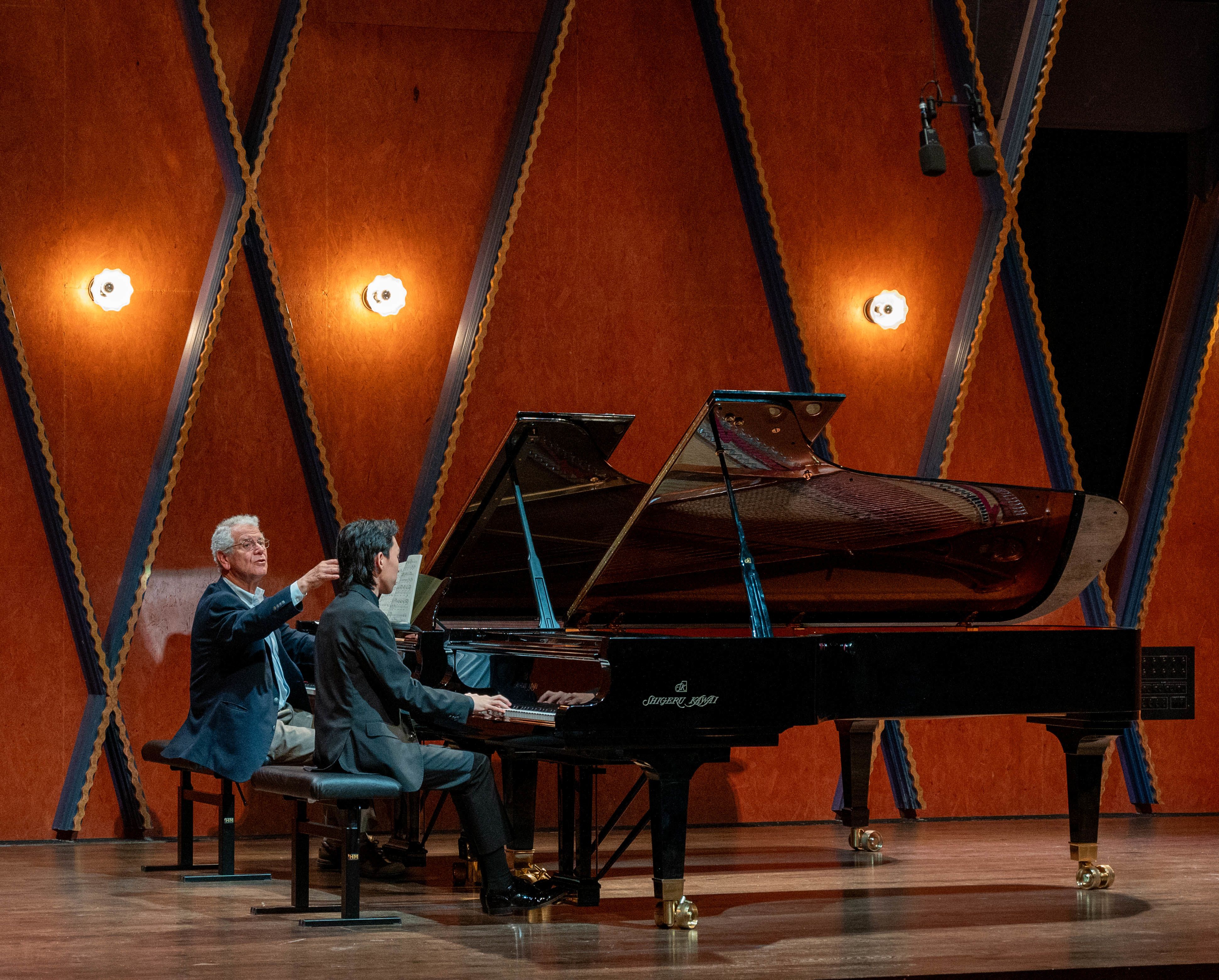
His students are quick to say he’s a gem among the ivory.
“He's the only reason I applied to TCU,” said Joshua Stanczak, a senior piano performance major from Murfreesboro, Tennessee. “I had known nothing about the school. Only through his reputation, reaching far and wide, did I get his name and his recommendation by other professionals that I should check it out.”
Stanczak still recalls his first visit to TCU when he met with Ungár and talked about studying with him.
“He was here til 10 p.m. that night,” said Stanczak, who added that it was only at the end of their meeting that Ungár mentioned that his daughter-in-law had just died.
When his youngest son’s wife died in August of 2021, he and two of Ungár’s grandchildren relocated to Fort Worth from Washington D.C. to live with Ungár and his wife.
Both grandchildren now take lessons with one of Ungár’s former students.
As a first year at TCU, Pilikyan babysat his grandchildren.
Ungár’s students — his TCU family — know Ungár’s biological family well.


Ungár and his wife, Jutka, have two children, Peter and Michael, and six grandchildren. His eldest, Peter, is a destination restaurant owner near Boston, still with a great appreciation for music, taking his children to the Boston Symphony. “When I was practicing, they went to sleep,” Ungár said, remembering when his sons were younger. “So, there were times when he, himself, said that when he went to a concert, he fell asleep immediately.” (Photo courtesy of Tamás Ungár)
Ungár and his wife, Jutka, have two children, Peter and Michael, and six grandchildren. His eldest, Peter, is a destination restaurant owner near Boston, still with a great appreciation for music, taking his children to the Boston Symphony. “When I was practicing, they went to sleep,” Ungár said, remembering when his sons were younger. “So, there were times when he, himself, said that when he went to a concert, he fell asleep immediately.” (Photo courtesy of Tamás Ungár)

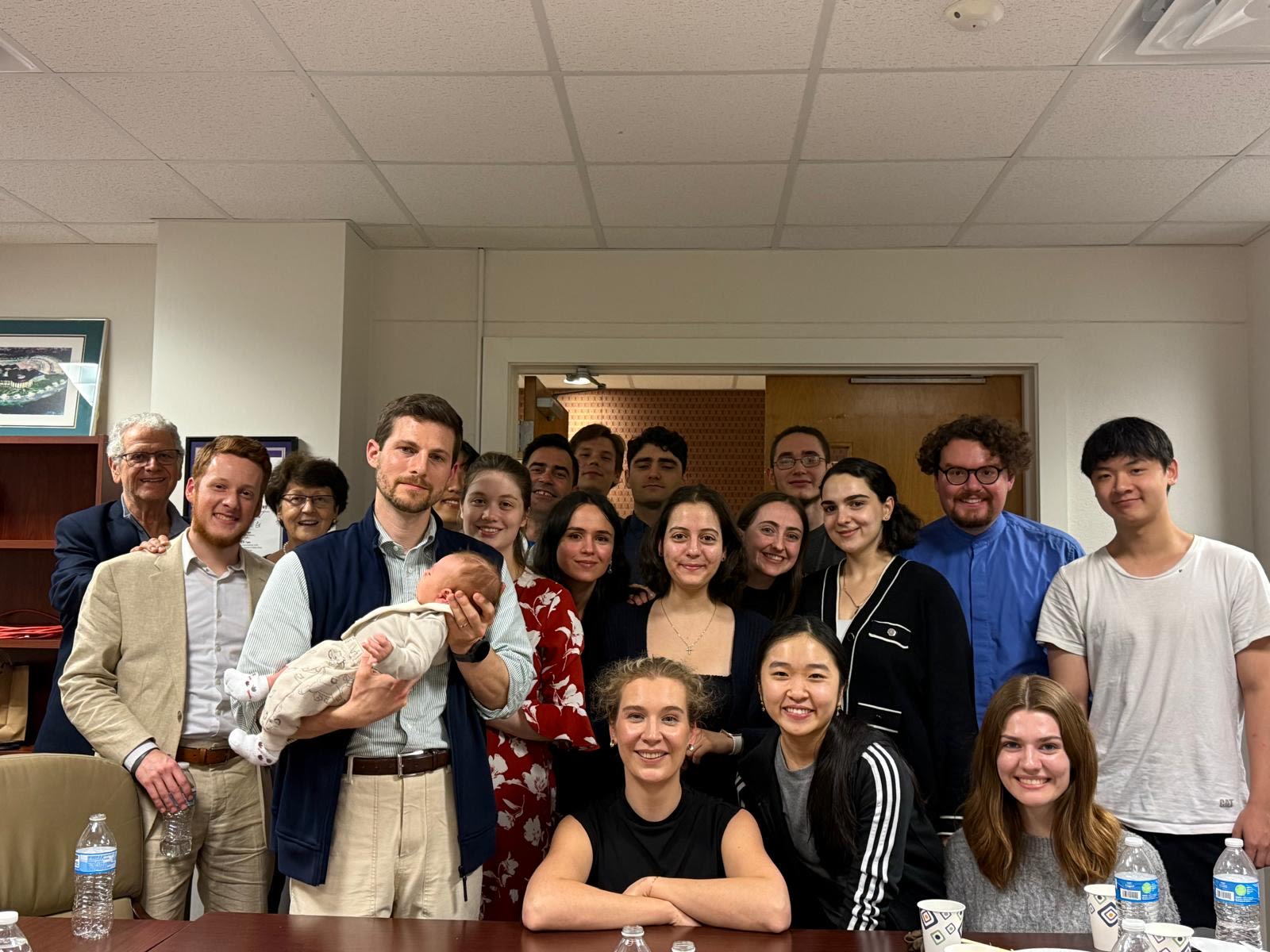
Ungár often celebrates the end of the year with a party like this one from spring 2025. "That's the legacy," Ungár said. "We can't even put it down as just music, because it's the totality of it. You know, a mentor is somebody who really cares." (Photo courtesy of Josh Stanczak)
Ungár often celebrates the end of the year with a party like this one from spring 2025. "That's the legacy," Ungár said. "We can't even put it down as just music, because it's the totality of it. You know, a mentor is somebody who really cares." (Photo courtesy of Josh Stanczak)
“He's kind of like an adopted father to everyone,” said Ola Czerniecka, a piano performance graduate student from Poland.
“I feel like that's what makes the studio so homey and family-like, at least like, I have never experienced that before coming here to be so close with my studio.”
Elijah Ong, a staff pianist at TCU, said he also felt accepted in Ungár’s studio when he was a student at TCU under a different professor.
Ungár would do anything to protect the “collective spirit of pianism,” he said.
The affection isn’t one-sided.
“I look on them as part of my family — an extended family,” Ungár said.
“I have had this deep respect from them, love of them and this genuine feeling of uniform through the last 46 years of really precious moments.”
As he’s gotten older, Ungár has undergone several surgeries. He is often in pain moving around. He lost sight in his right eye.
His last performance was in 2020.
Still, he keeps teaching.
“I sit down, and for a second, there is the feeling of, ‘What would happen if I just go home and lie down and rest, or what would happen if the next person cancels,’” Ungár said.
“They never cancel.
“So when they come and say, ‘Hi,’ and they come into the door, and I always say, ‘Well, what's for today?’
“And then they say, ‘Oh, I got the second Sonata.’
“And suddenly, I don't know what happens to me. I can't analyze it, or I would. There's a surge of expectancy, a surge of anticipation.
“It’s a surge of energy that, five seconds ago, I did not have, and then I start again. There is no explanation for that.”


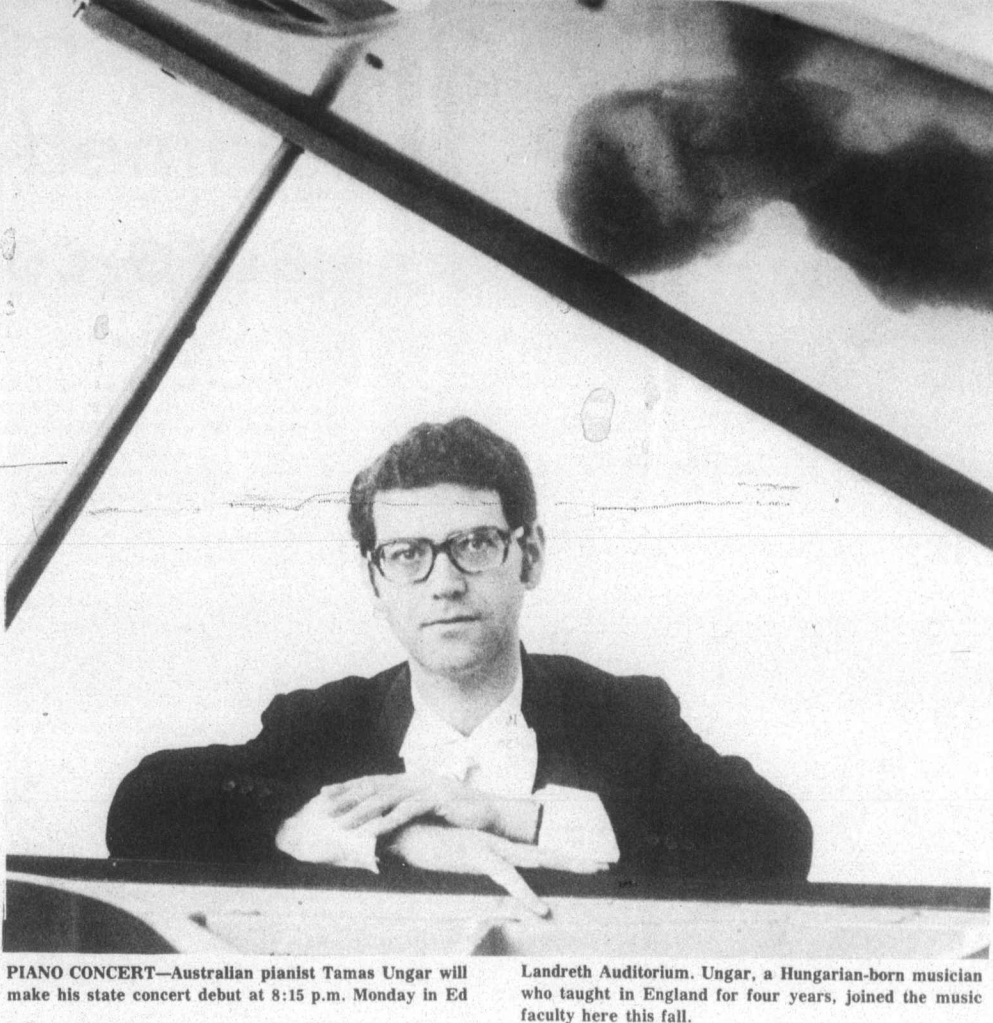
In 1978, The Daily Skiff ran an article announcing Ungár's stage debut at Ed Landreth Auditorium. (TCU Archives)
In 1978, The Daily Skiff ran an article announcing Ungár's stage debut at Ed Landreth Auditorium. (TCU Archives)
By all documented records, Ungár is among the longest serving professors in TCU’s modern history, and yet, he doesn’t have a TCU shirt.
He got both his master's and his doctorate at Indiana University, but he never went to a basketball game, and he doesn’t have an IU shirt.
“In my youth, I had to belong, to a certain extent, to the socialist or communist party where I was growing up,” Ungár said. “If you didn't belong, your parents were ostracized. If you didn't belong, you never had a chance to go into the university or anything. So, belonging was very important, but I hated it, because all the individualism was taken out. And so for me to wear a shirt which designates me with somebody else, even today, designates a not the most pleasant feeling.”
Though he expressed a certain fondness for TCU from being here so long, he has a greater fondness for his students, of whom he treats each uniquely.
“He is who he needs to be for that person,” Pilikyan said. “I’m very blunt, so he's blunt with me. And then I see him communicate with some very sweet and cute people. And then I’m like, ‘What? You can do that?’”
When he was teaching at UC San Diego, he said students would come in from the beach and leave their surfboards outside his studio before their lessons.
At TCU, he found a much more serious music environment — one where he could push students to give recitals every semester.
“That is probably one of the best things that could have ever happened, because I don't think other professors would do that, like not many of them,” Stanczak said. “You just go into the system, and you do what their requirements say. But like for everybody, he pushes us in different ways.”
Ungár has never missed a student’s recital. He makes it a point to be ever-available.
“That's one of the joys of teaching: how to induce Josh (Stanczak) to come to understand Mozart,” Ungár said, speaking of the classical composer as if he were an old friend.
He brings a depth of knowledge that impresses other faculty members.
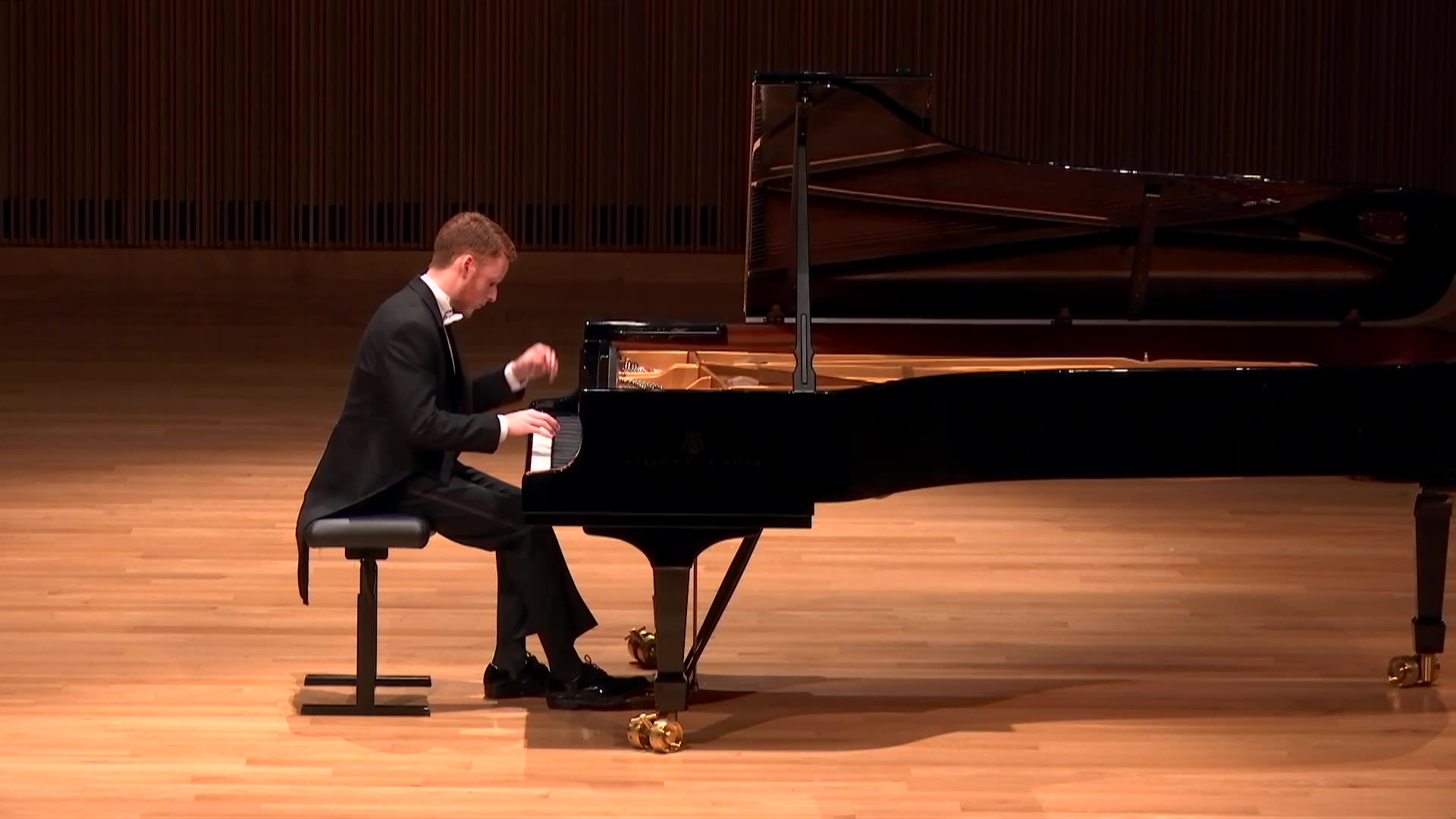

“The piano repertoire is enormous, and I'd say it's safe to say he knows most of it, if not all of it,” said Richard Gipson, former director of the school of music and former interim dean of the College of Fine Arts.
Technique and the right notes are important, but Ungár said he is more focused on developing long-term musical maturity and creativity.
“I'm never all for this wonder child business where they can, at the age of 11, play fast,” Ungár said. “There's nothing in it, just a lot of hours of mother telling him to practice.”
His students said Ungár’s focus is to make them incredible artists and better people.
“Whether you get a grade A or B, it doesn’t matter in many ways,” Ungár said. “As I walk on stage, I get nervous in the middle of a performance. How can I control that? How can I move my mind away from how I feel instead of how Beethoven feels? All these things are very important moments, yet it cannot be prepared. It can be only experienced and deduced from experience for the next possible experience.”

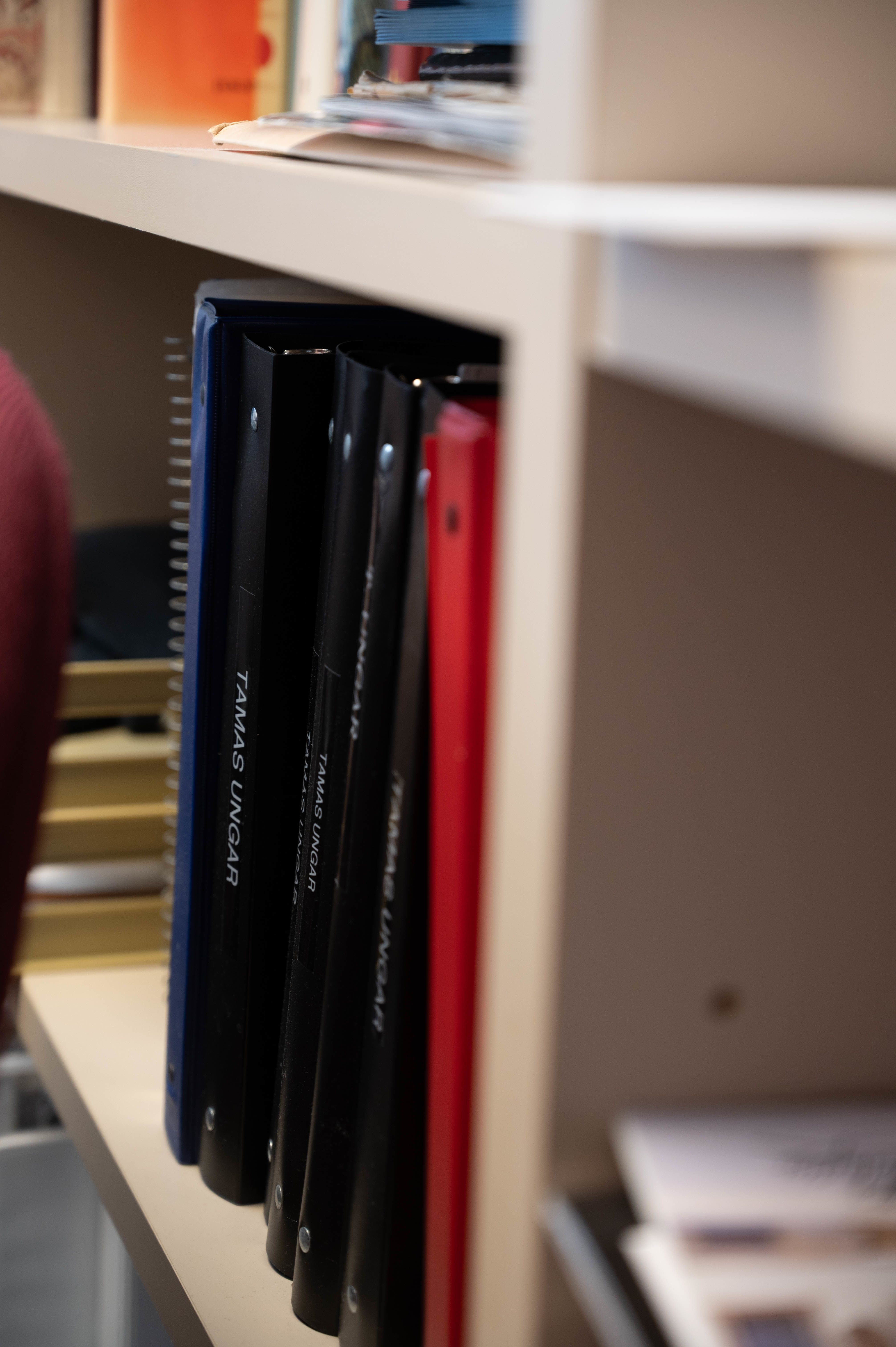
These are a few of many music books on shelves that line the walls of both his offices. (Caleb Gottry)
These are a few of many music books on shelves that line the walls of both his offices. (Caleb Gottry)
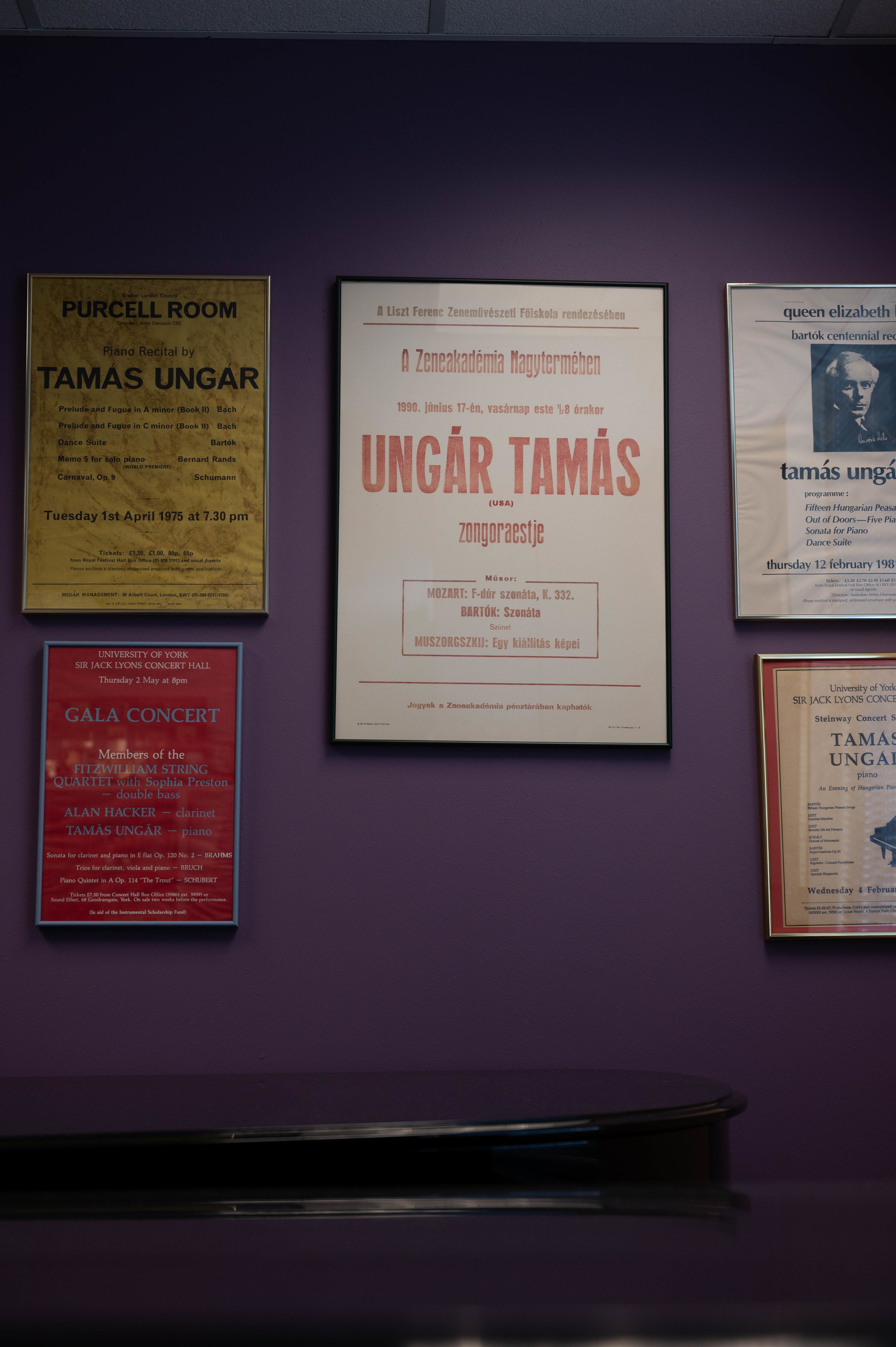
On the opposite wall hangs many posters for Ungár's past recitals all over the world. (Caleb Gottry)
On the opposite wall hangs many posters for Ungár's past recitals all over the world. (Caleb Gottry)
“The students tend to think of music as playing, whereas it's a story, where it's a feeling, where it creates emotions.”
Tamás Ungár
The goal in every lesson and performance opportunity is more than academic for Ungár’s students.
He said his goal is to prepare students for “the most awakening moment” of their educational journey: the day after graduation when they have to make it on their own.
For Ungár, that moment came partway through his doctoral studies at IU.
“I went to London to survive and to do things which I've never done before, and to be in a situation where nobody told me to get up and nobody told me to read 300 pages by next Tuesday,” he said. “I had to find my own way and carve it out in a city which is saturated with musicians — see if I can survive.”

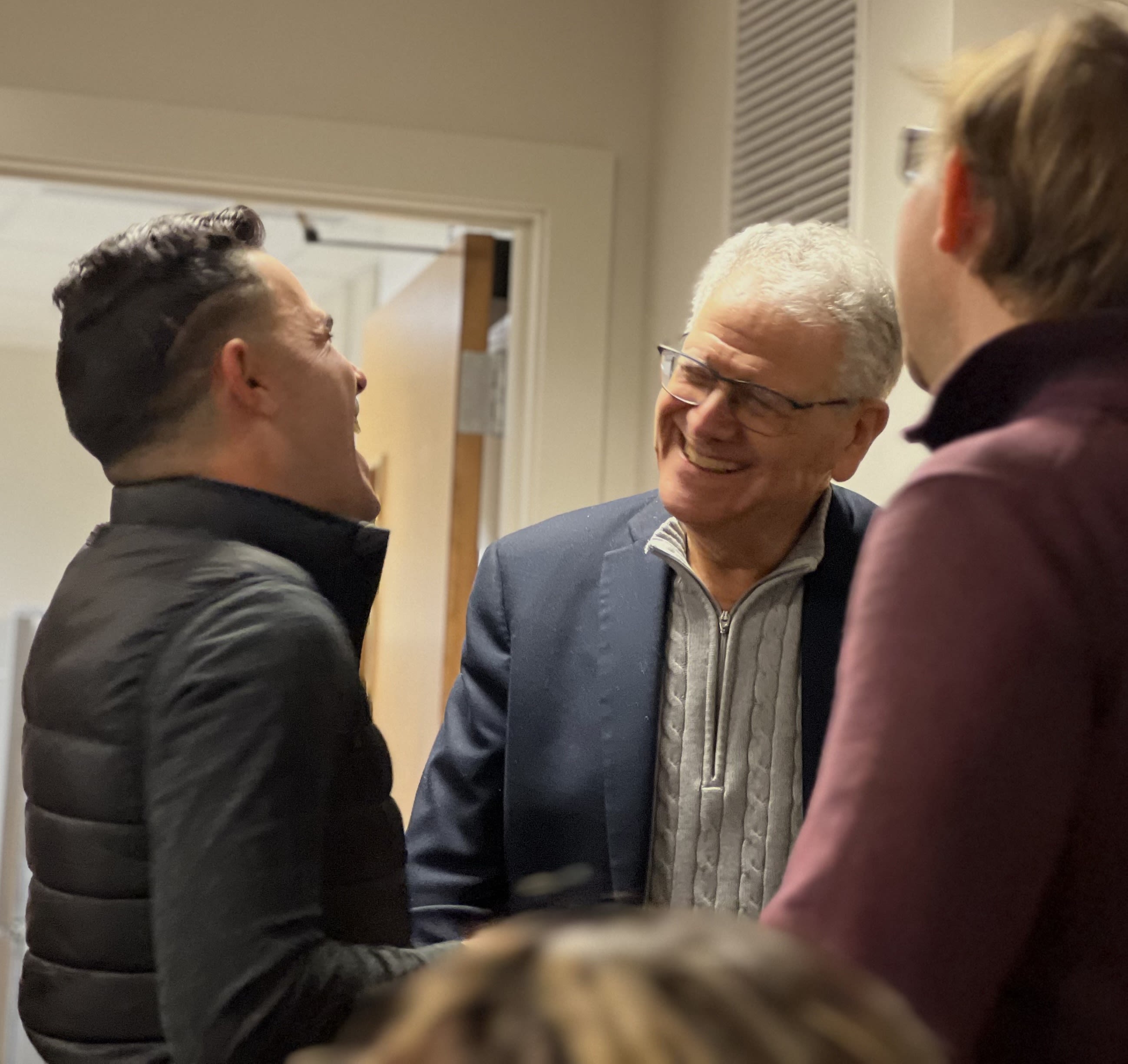
Ungár socializes with students at a January 2025 studio party. (Photo courtesy of Iren Pilikyan)
Ungár socializes with students at a January 2025 studio party. (Photo courtesy of Iren Pilikyan)
He and his wife — they married in 1972 — spent three years in London. There, he taught and performed before returning to IU to finish his doctorate.
Ungár understands the piano career field is limited. “Principally because people like me don’t retire,” he said. Still, he pushes students to that awakening moment.
“He knows what to say, even if you play good, but he knows that you can play better, he will say something to support you to grow,” said Svetlana Eminova, an artist diploma piano performance student from Russia.
His students said he never tells them they cannot do something.
“If you tell that person that they cannot climb up to 2,000 meters, then they will stop at 1,000,” Ungár said.
Practically, this means giving students plenty of performance opportunities, publicly and in studio class, a three hour time in the PepsiCo Recital Hall where peer criticism and practice recordings take place.
“He treats us as artists and not students,” Czerniecka said. “He always says, ‘Play like an artist. Every note counts.’”
“Teaching becomes, to some extent, the performance, because you create the same way as you expect them to create. And that is the beauty of it. That’s why I find it not only a challenge, but something I cannot give up.”
Tamás Ungár
Every experience matters.
Ungár is not shy to talk about his hardships, be it the death of his daughter-in-law, losing his sight and energy or even the changing community at TCU.
Next year, Ed Landreth Auditorium, where Ungár has had his office on the second floor since he arrived, will be gutted and remodeled.
“Buildings are buildings, right,” he said. “They go and come, you know, literally, but people are the ones that make the building come alive.”
Ungár remembers when there was a faculty lounge in Sadler Hall. He would get to meet younger faculty, especially those outside of music.
Now, he said, he’s cordial, but misses the camaraderie and unity of truly getting to know other faculty members, instead settling for brief conversations in meetings and walking to and from his office.
Till Meyn, a TCU music professor, said an end-of-year faculty party gave him the opportunity to talk with Ungár.

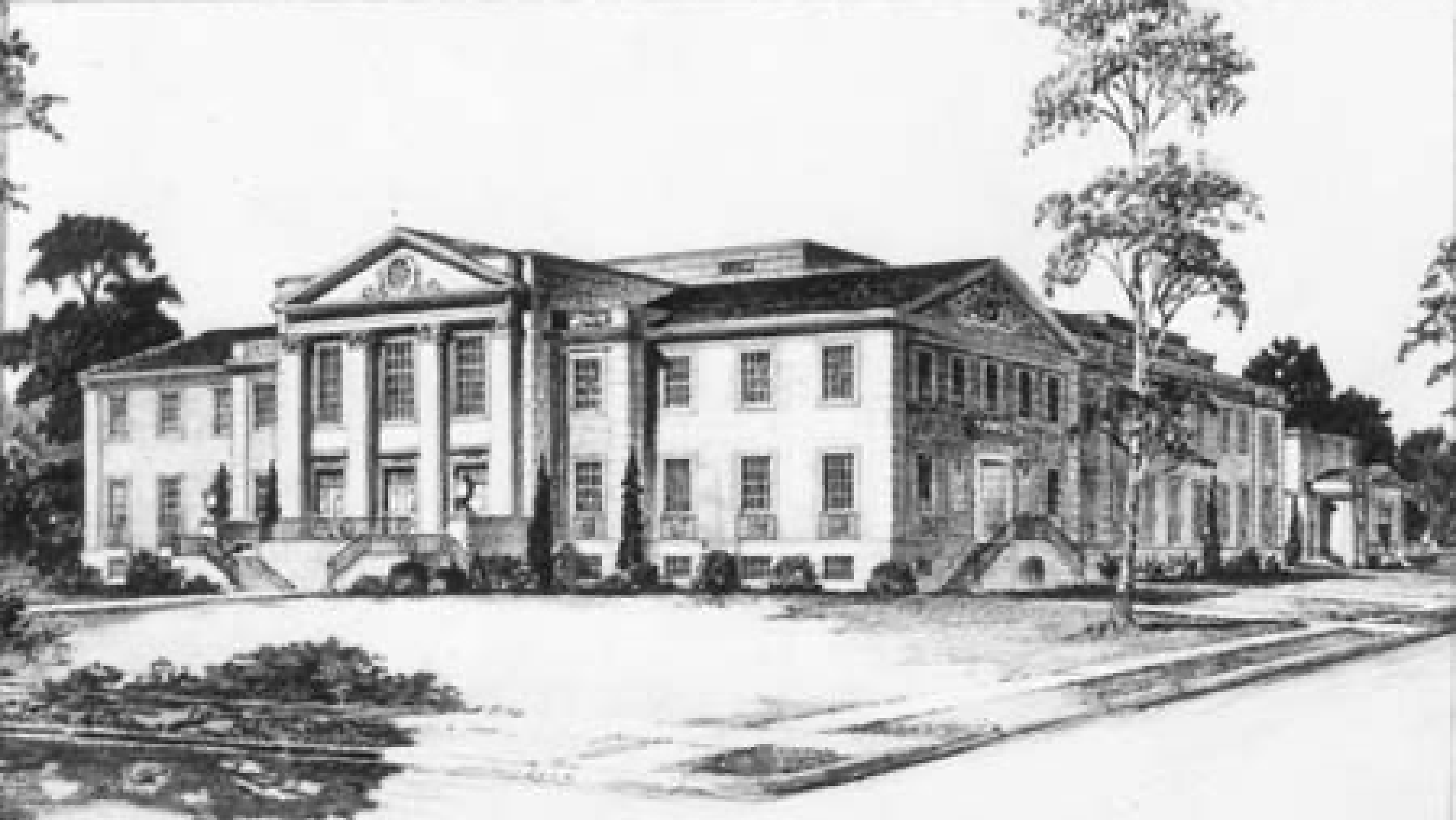
Ed Landreth Hall c. 1948, in outside appearance nearly identical to the current building. For Ungar, he remembers hearing piano legends perform in the concert hall that will soon be gutted and remodeled. (TCU Archives)
Ed Landreth Hall c. 1948, in outside appearance nearly identical to the current building. For Ungar, he remembers hearing piano legends perform in the concert hall that will soon be gutted and remodeled. (TCU Archives)

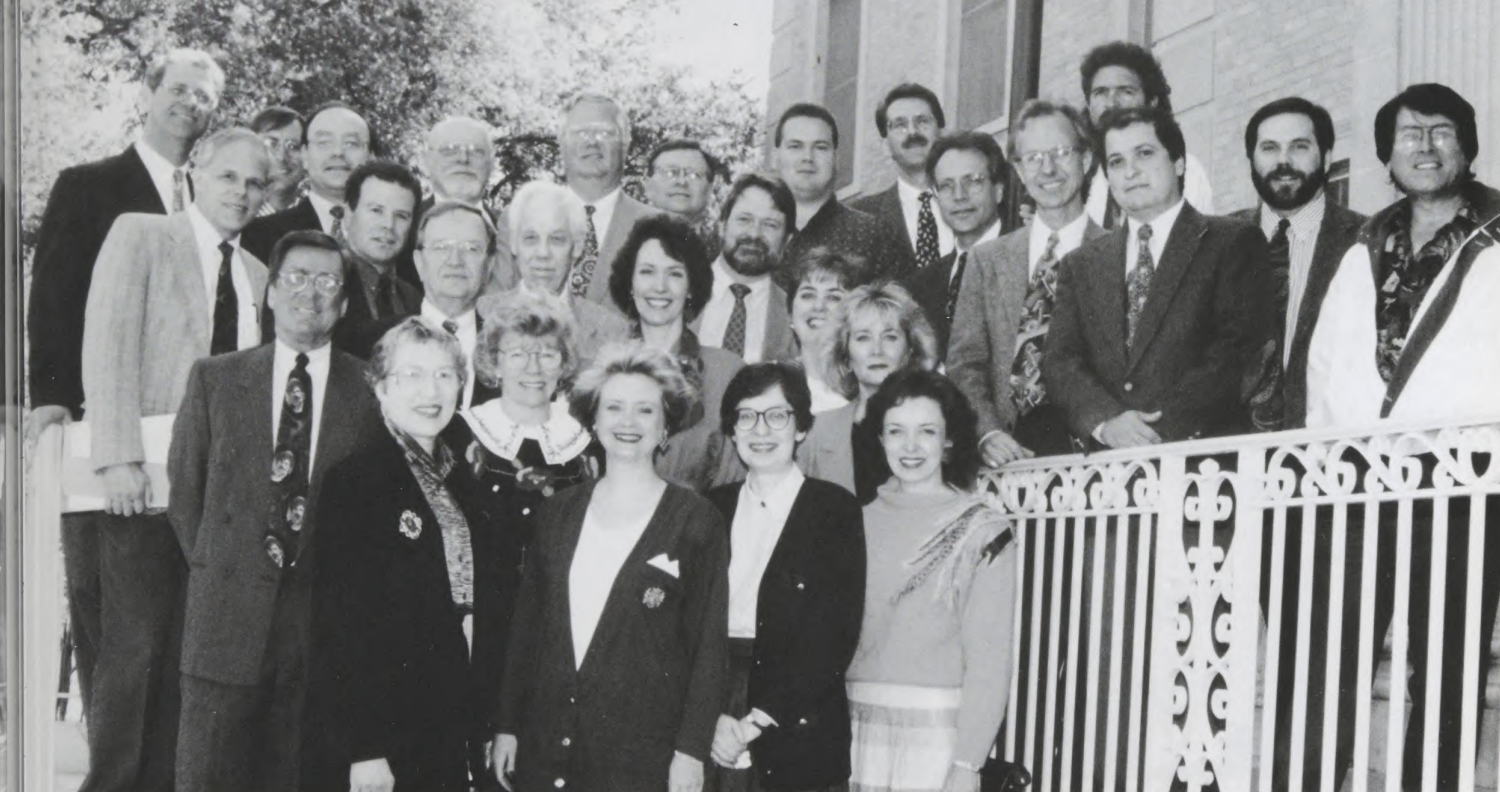
Ungár stands top left with the other TCU music faculty from 1994. "The university has changed surrounding me," Ungár said. "I must say, the sadness about it is that when I came in together with a group of younger faculty, we have kept together, and we know each other, and we acknowledge each other. But the new ones — the new faculty — often I don't know who they are.” (The Horned Frog Archives)
Ungár stands top left with the other TCU music faculty from 1994. "The university has changed surrounding me," Ungár said. "I must say, the sadness about it is that when I came in together with a group of younger faculty, we have kept together, and we know each other, and we acknowledge each other. But the new ones — the new faculty — often I don't know who they are.” (The Horned Frog Archives)
“We just got to chatting, and it just seemed like, wow, here's this guy who knows so much and is such a great musician and such a professional, and yet I felt honored that I had the opportunity to talk,” Meyn said. “I felt like a young faculty member. I was new, and he, you know, took the time to get to know me.”
Ungár said his days now are spent toggling between his office, which includes two pianos, and the PianoTexas office next door, which was his only office until 1988.
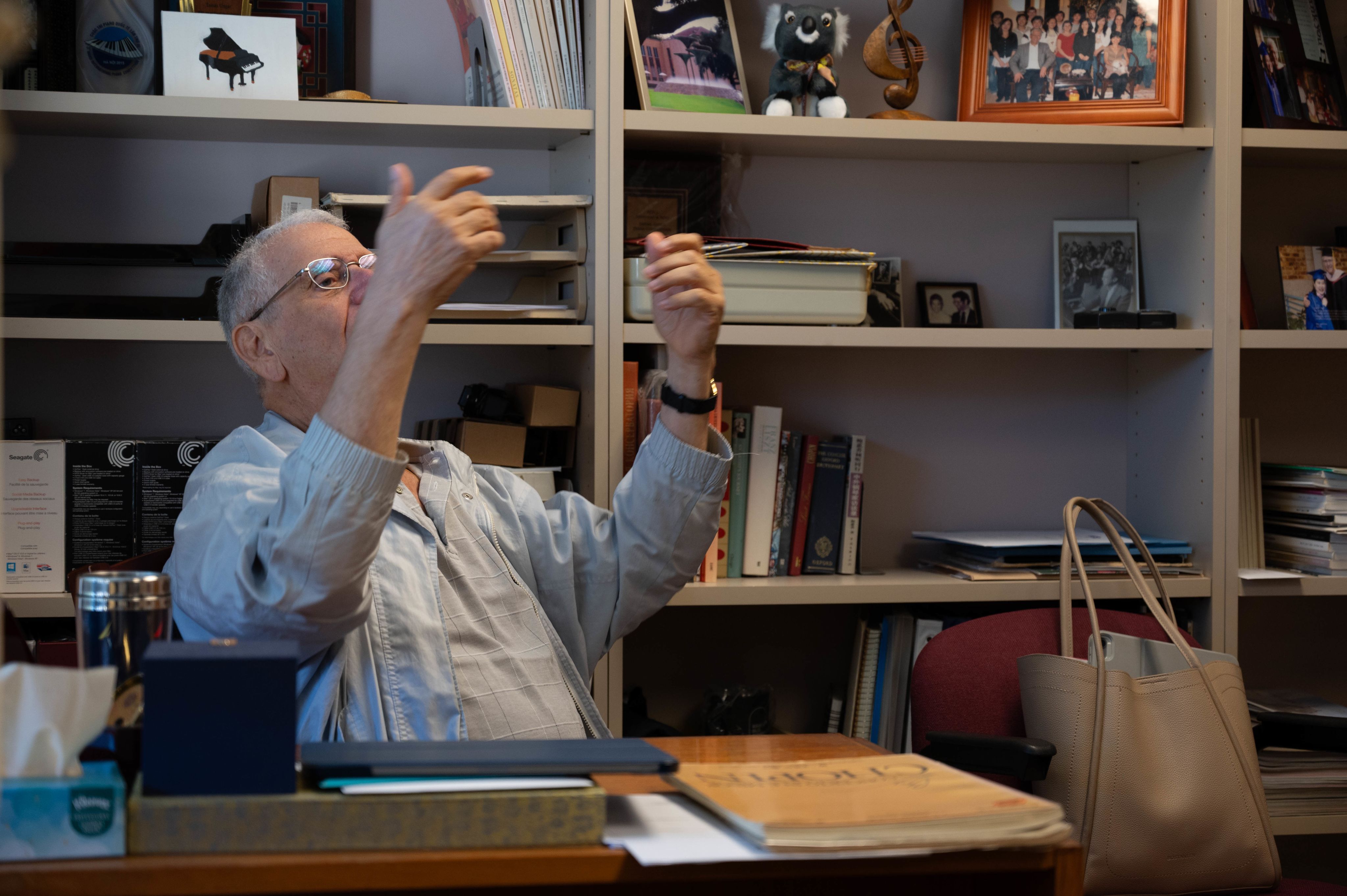
He said his office is where he is “transported into the world of music” as he conducts imaginary orchestras that accompany his students’ concertos.
He teaches students to understand the composer's wishes, to emote their intent and to bring the music alive, even asking questions like what color a piece of music is.
His students said he’s asked him what piece of furniture the music represents or what season.
They said they see him as a brown or green earthy shade.
His dedication is without question.
“I was tossed out of this building, literally in COVID when they announced that everybody should go home,” Ungár said. “I was still teaching until the police came to take me away. I'm not proud of it. I just taught. I mean, I didn't think of it as a negative thing.”
Once a week, he also meets with piano faculty, led by Ann Gipson, TCU Piano’s division chair and director of piano pedagogy studies. She said Ungár is unafraid to share his opinions.
“He knows that I have an agenda, but he will walk in and start talking about ‘We need to talk about this,’ and just kind of dive right in,” Gipson said.
Ungár’s historical perspective, she said, is markedly valuable, in addition to an observable deep care for the students.
His impact spans from these one-on-one lessons and closed doors faculty meetings to internationally acclaimed students and festivals.
“I must reiterate that his devotion to students has created a living legacy,” TCU piano professor Enrico Elisi wrote in an email. “Generations of pianists trained under him remain in close touch, and many now hold distinguished posts in the United States and abroad. Their careers bear witness to his profound mentorship, his insistence on excellence, and his gift for inspiring artistry that endures.”
When Ungár was just 8 years old, he won a piano competition in Hungary and got to perform live on Budapest radio.
By 15, he was teaching for pocket money. He would go on to study with those one degree removed from the likes of Bartok, Prokofiev and Rachmaninoff.
Now, at 79, his former students play concert halls across the world far removed from that Budapest radio audience.

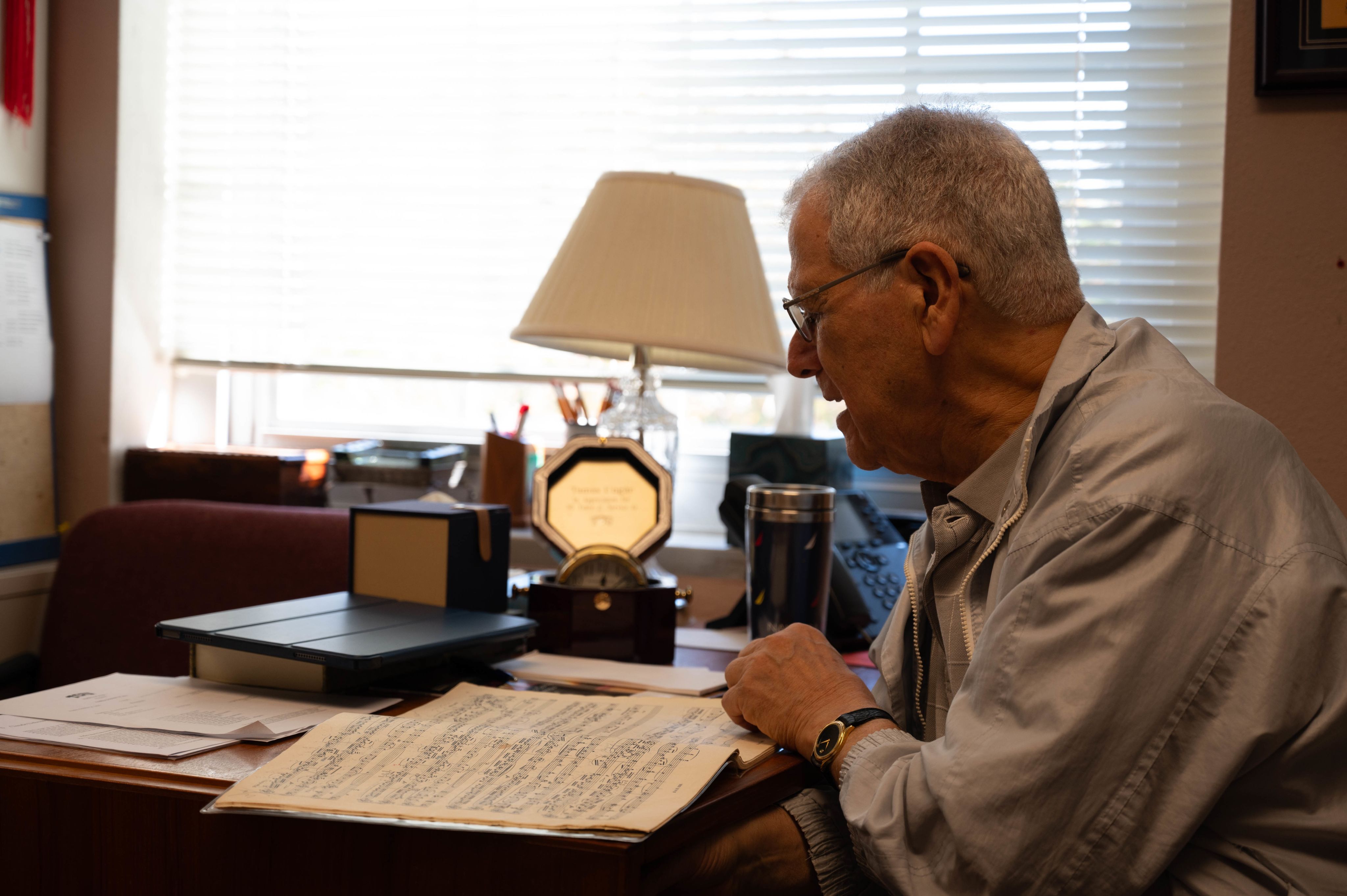
Ungár peruses the music as he gives specific instructions to his student. (Caleb Gottry)
Ungár peruses the music as he gives specific instructions to his student. (Caleb Gottry)

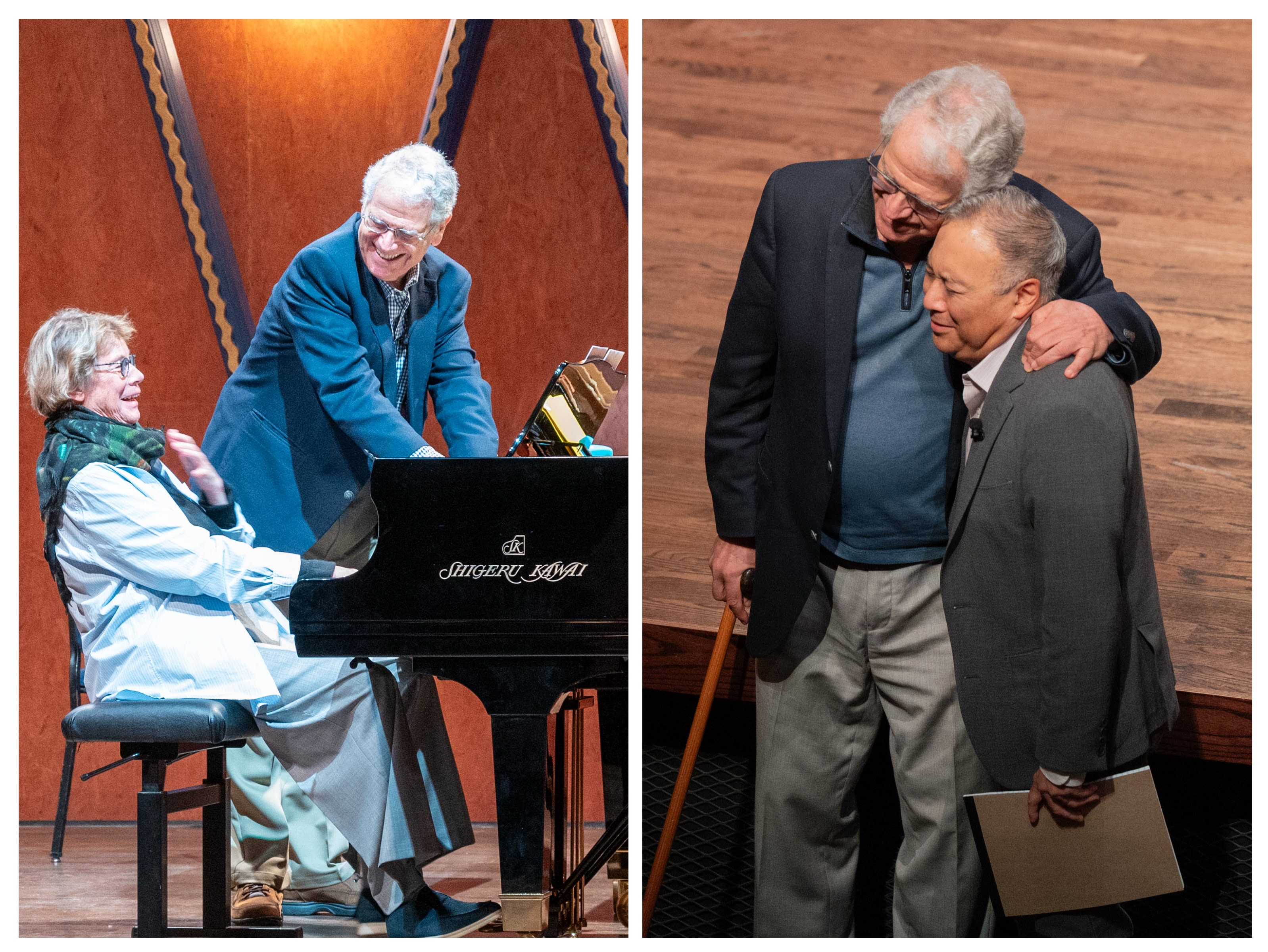
PianoTexas 2024 and 2025 (Colin Black and Fabian Alvidrez)
PianoTexas 2024 and 2025 (Colin Black and Fabian Alvidrez)
“You teach, not with the idea that this is going to be a great pianist; you get teaching for them to understand themselves better. Because you start to understand the steps to maturity within a piece, then it spreads to maturity, not only in music, but in understanding literature or art. It leads to a better human being.”
Tamás Ungár
Ungár said he is grateful for all the opportunities he’s had and made to make that impact.
“I'm not saying that I'm unique in that way,” Ungár said. “There’s a lot of great teachers, and they live through and you remember them with great reverence, but without teaching, without experiencing this, my life would be very poor.”
His teaching style was shaped by those who taught him.
“We all respect our teachers, and I did too, so much, but there was always a surprise that was unexpected,” he said. “It made me not only want to go for lessons, but made me practice harder so that the surprises are less.”
Ungár’s students said the same.
In long conversations with old and new faculty and students, not one unkind word was said about him.

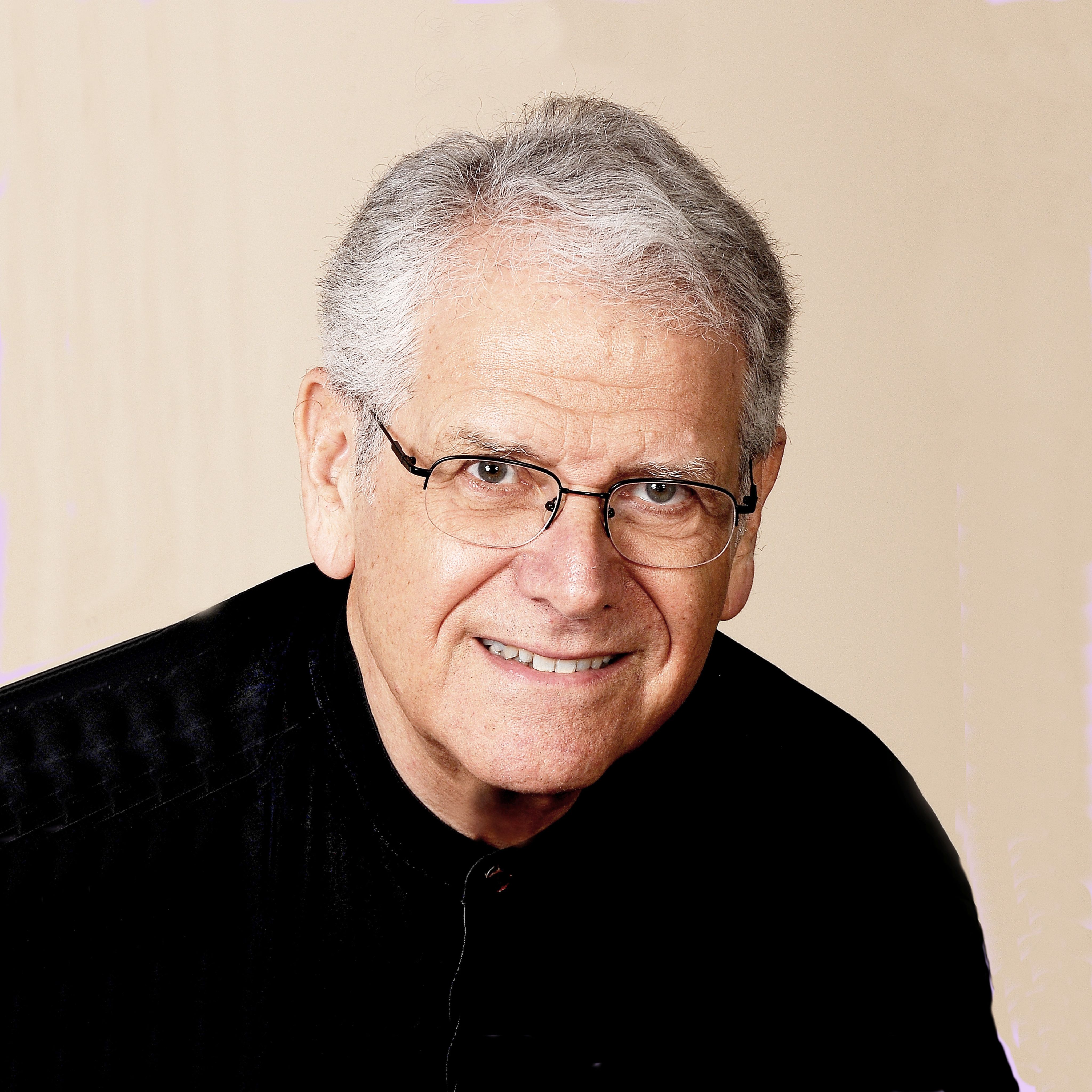
Tamás Ungár (Photo courtesy of Tamás Ungár)
Tamás Ungár (Photo courtesy of Tamás Ungár)
“I think I’ve led a fairly good life,” Ungár said.
Reed was impressed by his commitment and ongoing vision. For Meyn it was his professionalism and kindness. Richard and Ann Gipson speak of his heart for and devotion to music and his students.
“You grow up, and you realize how right he is in everything he does,” Pilikyan said.
For Ungár, it’s a purpose and a responsibility to shape future musicians and humans, but it also brings him joy.
He said he gets several thank you notes from students here at TCU and from various masterclasses throughout the world.
To each, Ungár responds, “It was a joy to be with you, and thank you for teaching me.”
 Built with Shorthand