Campus safety at TCU: Perception vs. reality
Despite the low crime rates, perception gaps persist among different student groups

On paper, TCU has built a strong shield to protect its campus. Layered safety measures — from patrols to smartphone apps — are in place, and more than 90% of students say they feel safe. Yet, dig a little deeper, and cracks start to show in how well students actually understand and use those resources.
Through interviews and a campuswide survey of more than 100 students, a familiar pattern emerged: students feel secure, but many are in the dark about the tools that are meant to protect them.

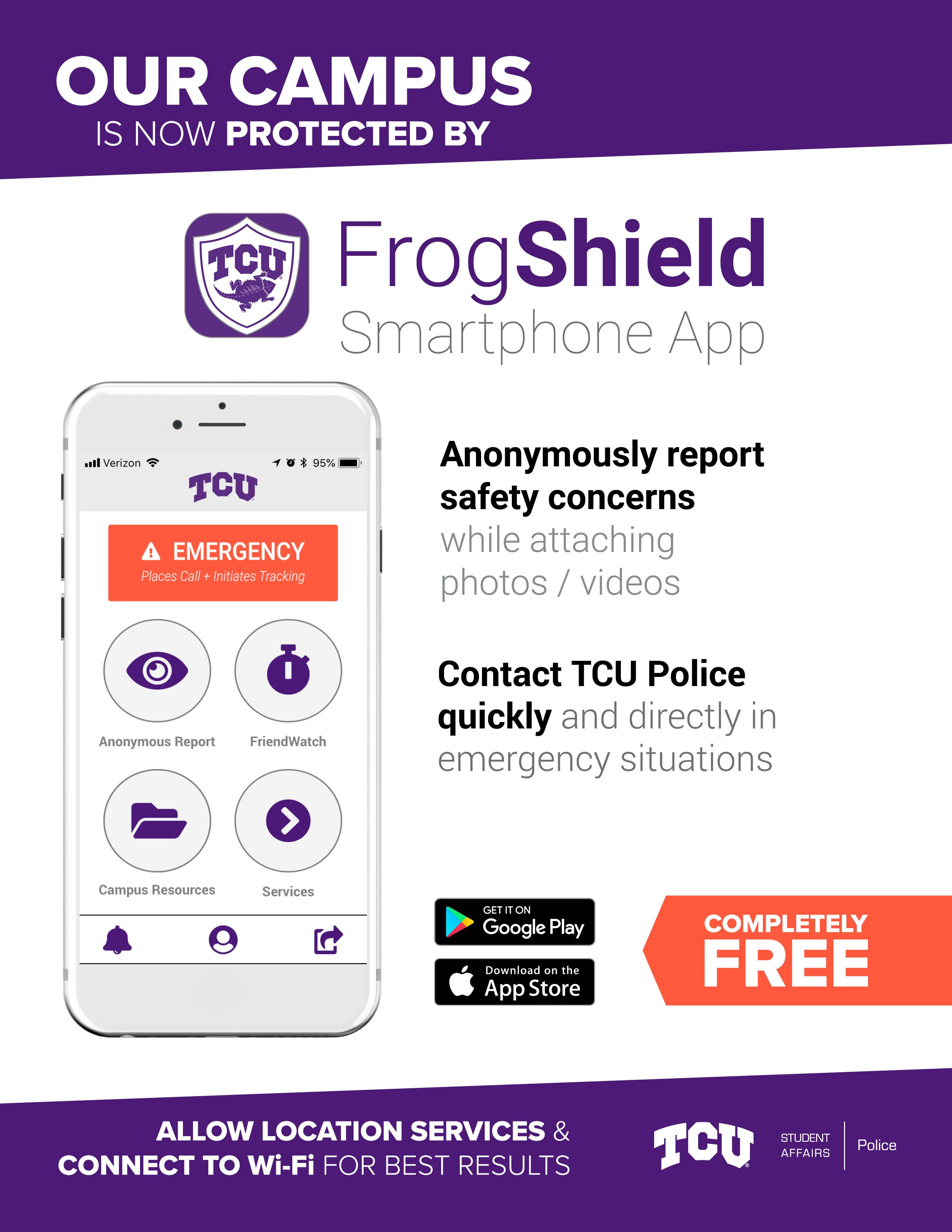
"I feel safe most of the time," said senior BIS and finance double major Jolie Bui. "But if you asked me to name all the safety apps or classes available, I probably couldn’t."
That knowledge gap concerns experts. While security cameras, visible patrols and emergency alerts are staples of TCU’s strategy, campus safety is about more than physical protections.
"Campus security isn’t just about having systems in place; it’s about ensuring people know how and when to use them," said Anthony White, a criminal justice adjunct professor at TCU, who also serves as a police sergeant with the Fort Worth Police Department.
TCU follows what’s called a "layered approach" to campus security. Alongside officer patrols and environmental design strategies, digital tools like the Frog Shield app and escort services are intended to offer extra reassurance. National research supports this model, emphasizing how small factors — better lighting, visible staff and simplified access controls — can help prevent crime, according to the Readiness and Emergency Management for Schools (REMS) Technical Assistance Center.
However, even the best systems can fall short if users aren’t aware or don’t fully understand them.
A prime example is Froggie 5-0, TCU’s student safety escort service designated to provide safe rides to people walking alone and those who need an escort to or from remote areas of campus. According to TCU Police Department, the service runs between 7 p.m. and 12:30 a.m. during the fall and spring semesters — a schedule some students say is too limited to be practical. Many surveyed were also confused about when and how to use it.
"I thought Froggie 5-0 was only for emergencies," said sophomore marketing major Chloe Tran. "I didn’t realize I could use it if I just felt uneasy walking back from the library. And if you leave late after studying, it might not even be running anymore."
This misunderstanding leaves some students hesitant to call for help — exactly the opposite of what campus security aims to achieve.

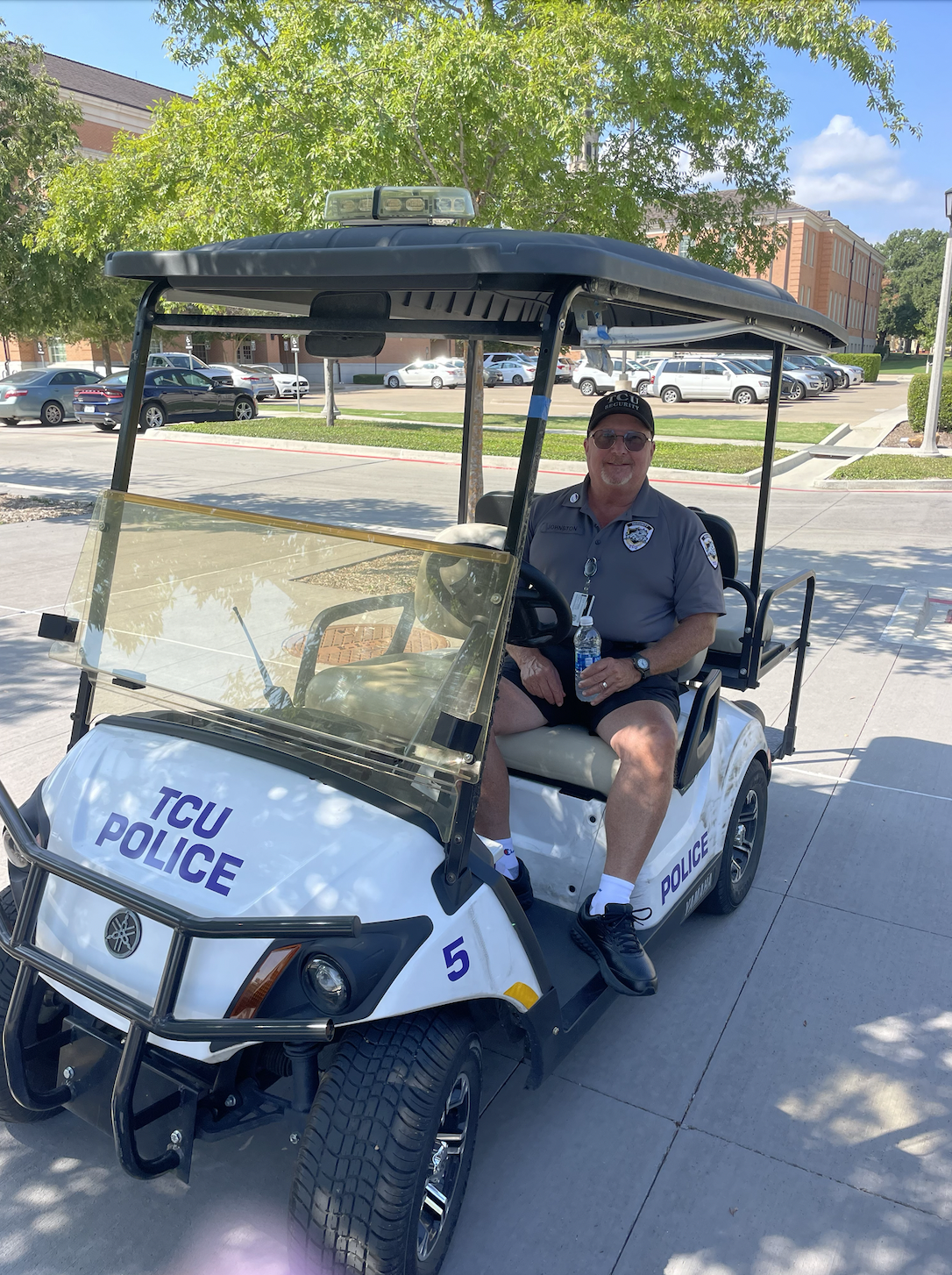
TCU police and safety escorts are available to all students throughout the weekdays and weekends. (Photo by Stewart Anne Murdock/TCU 360 Archives)
TCU police and safety escorts are available to all students throughout the weekdays and weekends. (Photo by Stewart Anne Murdock/TCU 360 Archives)

TCU police in the distance (Esau Rodriguez Olvera/TCU 360 Archives)
TCU police in the distance (Esau Rodriguez Olvera/TCU 360 Archives)

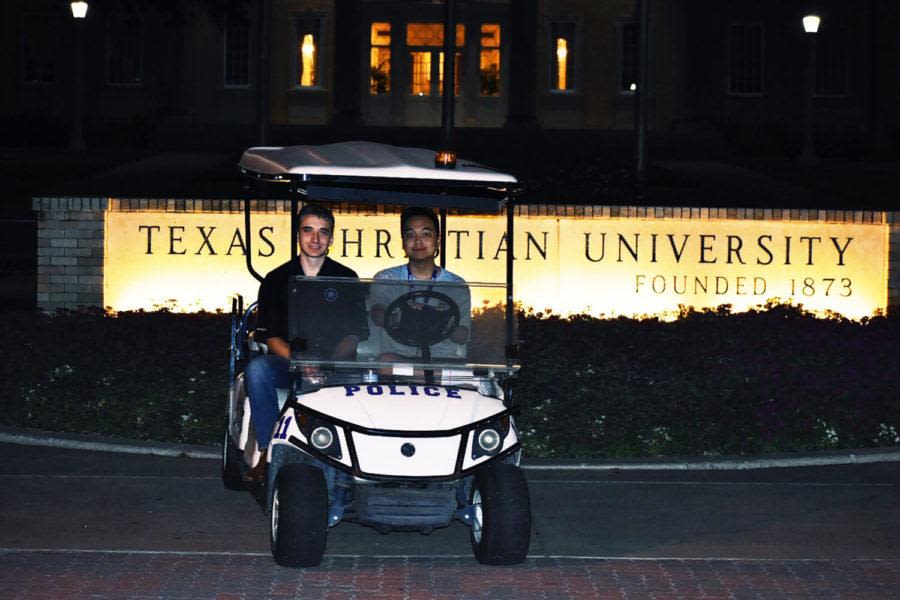
A Froggie 5-0 cart transports a student across campus late at night. (Photo courtesy of Riley Garlinghouse)
A Froggie 5-0 cart transports a student across campus late at night. (Photo courtesy of Riley Garlinghouse)
Other resources face similar challenges. While the Frog Shield app offers functions like emergency reporting and real-time alerts, many students said they either do not use it or forgot about it entirely.
"I downloaded it because they told us to at orientation, but I don’t think I’ve opened it since," said Tran.
The disconnect between resources and student engagement points to a broader issue, according to Justin Guinn, a former DEA agent and a criminal justice professor at TCU.
"Students need to feel like safety tools are there for them, not just something you hear about once and never use," Guinn said. "Perception is as important as the tool itself."
That sentiment was echoed in survey responses. Many students said they would be more likely to use safety resources if they were woven into daily life or introduced more effectively during orientation and Frog Camp. Others suggested offering incentives for participating in safety programs, such as self-defense classes.
"If safety is part of the culture from day one, students will engage naturally," White said.
The research also flagged other areas for potential improvement. Narcan boxes, stocked with medication to reverse opioid overdoses, have recently been installed on campus. But their presence is hardly common knowledge among students.
"Having Narcan is one thing," Guinn said. "Knowing where it is and how to use it could save a life."
What's Next?

Looking ahead, future studies could explore how TCU’s layered safety model stacks up against similar institutions. Comparative analysis may offer insights into what works best and how communication strategies can evolve.
"I think TCU is doing a lot," Tran said. "But students need to know more than that resources exist — they need to know they can rely on them."
In an era where both perception and reality shape campus security, bridging that knowledge gap may be just as critical as any patrol car or emergency app, White said.
 Built with Shorthand